
TL;DR
The Nobel Prize committee in 1961 did not consider J.R.R. Tolkien’s Lord of the Rings for the award, citing prose quality. Recent archive research uncovers this historical decision. The rejection reflects longstanding critical views but also highlights Tolkien’s literary influence.
The Nobel Prize committee in 1961 declined to award J.R.R. Tolkien’s Lord of the Rings, citing the prose as not measuring up to the highest storytelling standards, according to newly uncovered archival documents.
Historical records from the Nobel archives, recently examined by Swedish journalist Andreas Ekström, show that Tolkien was considered but ultimately rejected by the Nobel committee in 1961. The decision was based on a jury member’s assessment that Tolkien’s prose ‘has not in any way measured up to storytelling of the highest quality.’
The archives reveal that Tolkien’s name appeared on a list of potential candidates largely due to the advocacy of his close friend and supporter, C.S. Lewis. Despite Lewis’s praise and efforts to promote Tolkien’s work, the committee’s judgment focused on literary style rather than popularity or influence.
Archival notes indicate that the committee preferred Yugoslavian writer Ivo Andrić, who was awarded the Nobel that year. The decision to exclude Tolkien was consistent with prior critical assessments of his prose style, which some critics had described as prosaically amateurish, despite the imaginative richness of his world-building.
Why It Matters
This development is significant because it challenges the common perception of Tolkien as a universally acclaimed literary figure. The rejection by the Nobel committee underscores the enduring debate over the criteria of literary excellence—style versus storytelling—and highlights how critical opinions can influence recognition in the literary world.
Understanding this historical decision also sheds light on how Tolkien’s work was received during his lifetime and shortly thereafter, despite its lasting cultural and literary impact, which has grown significantly over the decades.

The Hobbit And The Lord Of The Rings: Deluxe Pocket Boxed Set
As an affiliate, we earn on qualifying purchases.
As an affiliate, we earn on qualifying purchases.
Background
During the 1950s and early 1960s, Tolkien’s Lord of the Rings was gaining popularity but was also subject to critical scrutiny. The Nobel archives reveal that the committee’s decision was influenced by contemporary literary standards, which at the time, prioritized prose style and narrative craft. Tolkien’s work, praised for its imagination, faced criticism for its prose, a factor that contributed to its exclusion from consideration for the Nobel Prize in 1961.
The decision was made despite the strong advocacy of Lewis and the book’s increasing readership, illustrating the tension between critical judgment and popular success. The archives also show that Tolkien’s name was only considered once, largely due to personal connections, and was not a favored candidate among the jury members.
“has not in any way measured up to storytelling of the highest quality”
— Anders Österling, Nobel jury member
“The first time I have seen Tolkien’s name among suggested candidates in the Nobel archives”
— Andreas Ekström, Swedish journalist
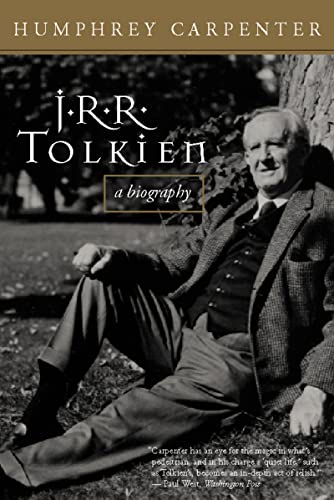
J.r.r. Tolkien: A Biography
- Author: J R R Tolkien by Humphrey Carpenter
As an affiliate, we earn on qualifying purchases.
As an affiliate, we earn on qualifying purchases.
What Remains Unclear
It remains unclear whether subsequent reviews or other committee members might have viewed Tolkien’s work differently, or if the decision was influenced by external factors such as literary trends or personal biases. The archives only provide a snapshot of the deliberations in 1961, and no further details on internal debates are available.

The Remains of the Day: Winner of the Nobel Prize in Literature
- Author: Kazuo Ishiguro
- Publisher: Vintage International
- Page Count: 245 pages
As an affiliate, we earn on qualifying purchases.
As an affiliate, we earn on qualifying purchases.
What’s Next
Further research into the Nobel archives may reveal more about the committee’s overall evaluation process during that period. Additionally, literary historians may analyze how this rejection influenced Tolkien’s reputation and the recognition of fantasy literature in the broader literary canon.

Exploring J.r.r. Tolkien's "the Hobbit": A Thoughtful Literary Analysis for Book Lovers and Fantasy Enthusiasts
- Condition: Used book in good condition
As an affiliate, we earn on qualifying purchases.
As an affiliate, we earn on qualifying purchases.
Key Questions
Why was Tolkien’s Lord of the Rings rejected by the Nobel committee in 1961?
According to archival documents, the committee rejected it because Tolkien’s prose was deemed not to meet the highest storytelling standards, despite the book’s imagination and popularity.
Did Tolkien ever get nominated for the Nobel Prize?
The archives show Tolkien was only briefly considered in 1961, largely due to C.S. Lewis’s support, but he was ultimately not nominated for the award.
How does this rejection affect Tolkien’s literary legacy?
While the Nobel decision was a setback at the time, Tolkien’s influence has only grown, and he is now regarded as a foundational figure in fantasy literature.
Yes, the archives and historical records show that many influential writers have been overlooked or rejected over the years, often due to changing literary standards or committee preferences.