
TL;DR

Get the latest gadgets delivered free with Prime
- Fast, free delivery on millions of items
- Prime Video, Amazon Music and more included
- Member-only deals all year
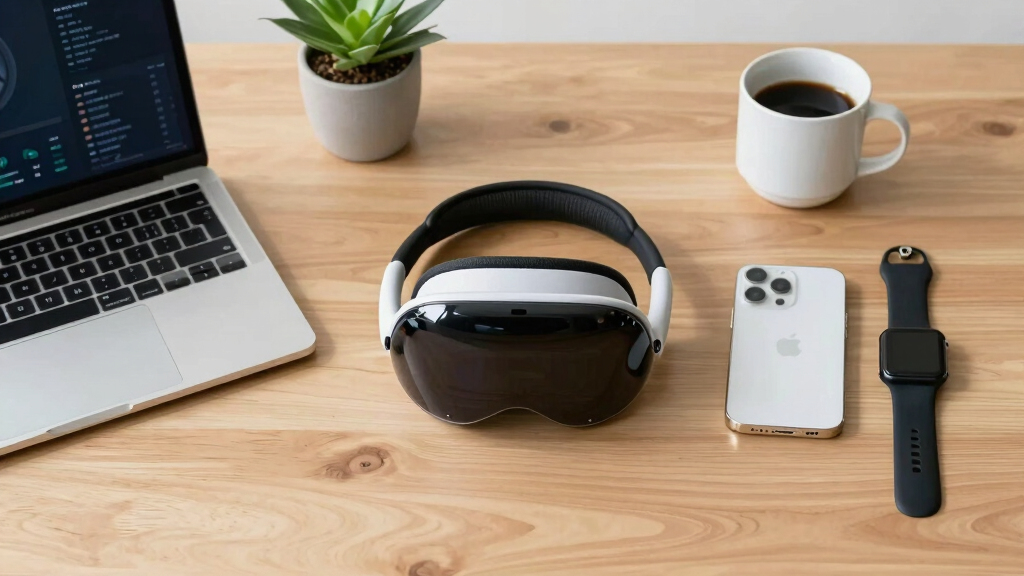
Apple has released comprehensive technical specifications for third-party motion controllers compatible with Vision Pro. This marks a shift from initial limited support to an open platform for accessory development. The specifications detail hardware and interface requirements, enabling third-party manufacturers to create compatible controllers.
Apple has officially released detailed technical specifications for third-party motion controllers compatible with Vision Pro. This includes new capabilities for immersive video. This development indicates a shift toward an open ecosystem for accessories, allowing external manufacturers to create controllers that interface directly with the headset. The specifications are published in Apple’s latest Accessory Design Guidelines, providing comprehensive technical requirements for hardware design and communication protocols. For more on immersive experiences, see Amplium’s recent updates.
The newly published 74-page section titled Spatial Accessories outlines exact hardware and interface standards for third-party controllers, including LED wavelength and radiance specifications, hardware layout, and communication protocols. Notably, Apple’s documentation includes an example of a complete third-party controller design, which was used in a developer session at last month’s WWDC.
Initially, Apple’s Vision Pro launched without support for motion controllers, leading to speculation about the platform’s openness. Learn how Amplium is expanding immersive video options. However, over the past two years, user feedback and developer interest appear to have influenced the company’s approach. The new specifications suggest a move toward supporting external controllers, enabling more immersive and versatile experiences for users and developers.
Implications of Apple’s Open Controller Specification
This development is significant because it signals a more open ecosystem for Vision Pro accessories, potentially expanding the device’s capabilities and appeal. By providing detailed technical standards, Apple facilitates third-party innovation, which could lead to a broader range of controllers and input methods. This move may also influence the competitive landscape, encouraging other headset makers to adopt similar open standards to attract developers and consumers.
For developers and accessory manufacturers, the specifications lower barriers to creating compatible controllers, potentially accelerating the availability of diverse input options and enhancing user experience. For consumers, this could mean more choices and improved functionality for their Vision Pro devices.
third-party motion controllers for Vision Pro
As an affiliate, we earn on qualifying purchases.
As an affiliate, we earn on qualifying purchases.
Background on Vision Pro and Controller Support
When Vision Pro was launched, Apple emphasized its spatial computing capabilities, but notably lacked support for external motion controllers. This was seen as a departure from other mixed reality platforms, which often support a variety of input devices. Over time, feedback from developers and users indicated a desire for more versatile input options.
At last month’s WWDC, Apple demonstrated a prototype of a third-party controller, hinting at future support. The recent publication of detailed technical specifications confirms that Apple is formalizing this support, providing clear guidelines for external device development. This evolution aligns with Apple’s broader strategy to foster an open ecosystem for accessories across its devices.
“Apple’s detailed specifications indicate a strategic move towards an open accessory ecosystem for Vision Pro, encouraging third-party innovation.”
— an anonymous researcher
As an affiliate, we earn on qualifying purchases.
Unanswered Questions About Controller Implementation
While the specifications are now publicly available, it remains unclear when third-party controllers will be commercially available and how quickly manufacturers will adopt these standards. Additionally, it is not yet confirmed whether Apple will support a broad range of hardware or limit support to specific designs. The practical performance and user experience of third-party controllers are also still untested.
As an affiliate, we earn on qualifying purchases.
Next Steps for Developers and Manufacturers
Manufacturers and developers are expected to begin designing controllers based on the published specifications. Apple may host developer programs or demonstrations to encourage adoption. The first third-party controllers could appear within the next year, potentially coinciding with software updates or new hardware releases. Monitoring Apple’s official channels will be essential for updates on commercial availability and supported features.
As an affiliate, we earn on qualifying purchases.
Key Questions
When will third-party Vision Pro controllers be available?
It is not yet confirmed when controllers will be commercially released, but manufacturers are expected to start development soon, with products possibly arriving within the next year.
What hardware requirements must third-party controllers meet?
The specifications detail LED wavelength and radiance, hardware layout, and communication protocols, including example circuit designs provided by Apple.
Will Apple support a wide range of third-party controllers?
This remains unclear. While the specifications are comprehensive, it is not confirmed whether Apple will endorse multiple designs or limit support to specific hardware.
How will this affect the user experience of Vision Pro?
Support for third-party controllers could enhance interaction options, making the device more versatile and appealing for different use cases and user preferences.
Does this mean Apple is abandoning its initial approach?
Not necessarily abandoning, but shifting toward a more open ecosystem that encourages external accessory development, as evidenced by the detailed specifications now published.
Source: Road to VR
Columbus Day / Indigenous Peoples' Day Picks
long weekend sales
As an affiliate, we earn on qualifying purchases.