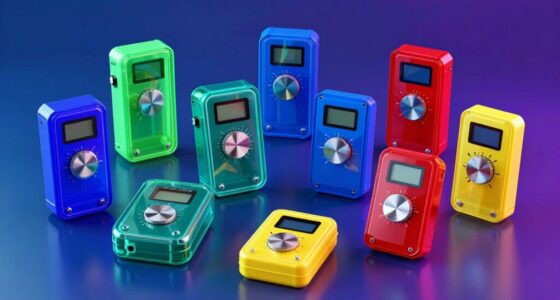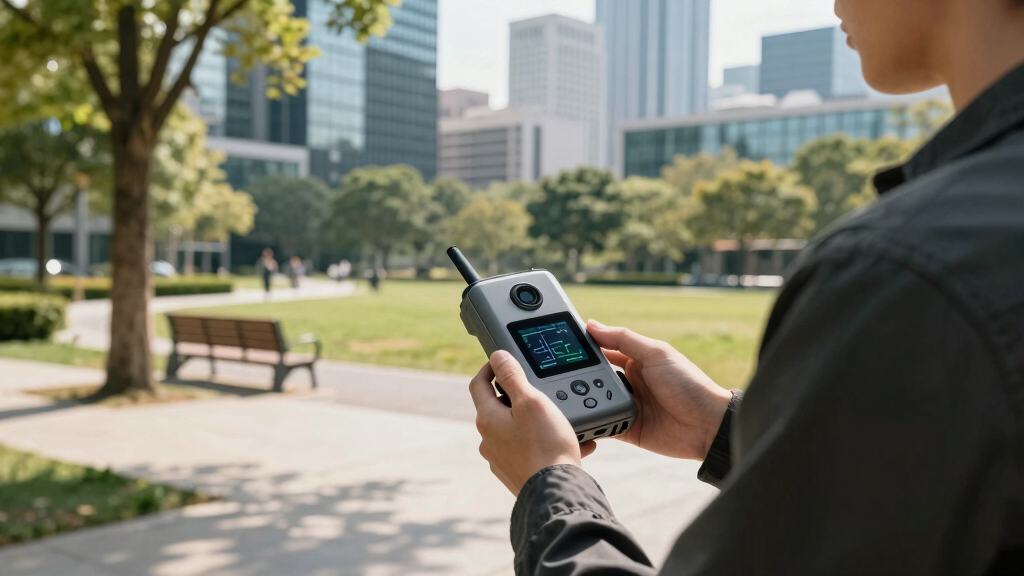
The Police Drone & Pilot Detection Kit is my best overall pick among the best drone detectors because it combines real-time alerts with drone and pilot tracking in a handheld format. The Drone Tracking Detection Kit is the stronger premium choice for buyers who need detection records, while the mobile-compatible Police Drone Detection Kit offers a more approachable setup for beginners. The main tradeoffs are detection range, identification detail, portability, logging capability, and whether a device detects drones specifically or merely scans for broad RF activity. Several products here are privacy scanners or Remote ID accessories rather than complete airspace-monitoring systems, so matching the device to the job matters more than choosing the longest feature list. Continue reading for my full breakdown of where each option fits and which buyers should skip it.
Complete the kit



Key Takeaways
- Purpose-built drone detection beats generic RF scanning: the Police Drone & Pilot Detection Kit ranks first because its alerts and tracking functions are more relevant to airspace awareness than hidden-camera detection.
- Logging separates the premium tier: the Drone Tracking Detection Kit makes more sense for security teams that need a record of activity, not merely an alarm when a signal appears.
- Phone compatibility lowers the learning curve: the iOS- and Android-compatible Police Drone Detection Kit is my beginner pick because familiar mobile controls can make field use less cumbersome.
- A wide frequency label does not guarantee identification: the Detect 0-6GHz model may find activity across a broad band, but buyers still need to verify whether it can distinguish drones from Wi-Fi and other transmitters.
- Three products serve adjacent needs rather than true drone surveillance: the privacy pens focus on RF or hidden-camera searches, while the Ruko R111S broadcasts Remote ID information for its host aircraft instead of detecting nearby drones.
| Police Drone & Pilot Detection Kit – Handheld Drone Detection & Tracking Tool with Real-Time Alerts |  | Best Overall | Detection technology: Remote ID radio-frequency signals | Device compatibility: iOS and Android | Connectivity: USB | VIEW LATEST PRICE | See Our Full Breakdown |
| Hidden Camera Detector, RF Signal & WiFi Scanner, Portable Privacy Pen |  | Best Pocket RF Scanner | Frequency range: 100MHz–8GHz | Detection modes: Infrared, wireless signal, RF lens, and GPS tracker detection | Weight: 24g | VIEW LATEST PRICE | See Our Full Breakdown |
| Police Drone Detection Kit – Portable Drone Tracking Device Compatible with iOS and Android | | Best for Activity Logging | Detection type: FAA Remote ID-compliant drones | Mobile compatibility: iOS and Android | Alerts: Real-time notifications | VIEW LATEST PRICE | See Our Full Breakdown |
| 7-in-1 Hidden Camera and RF Detector, Privacy Pen, GPS Tracker Detector, Anti-Spy Device for Travel, Office, Hotel |  | Best Adjustable Privacy Detector | Product type: 7-in-1 privacy detector | Frequency range: 1MHz–8GHz | Sensitivity levels: 6 adjustable levels | VIEW LATEST PRICE | See Our Full Breakdown |
| Ruko R111S RC Aircraft GPS Tracker with Beeper, FAA Compliant Remote ID Module, 3 Hours Battery Life |  | Best Remote ID Compliance Accessory | Device type: FAA-compliant Remote ID module and GPS tracker | Weight: 13.5g | Dimensions: 1.3 × 1.1 × 0.5 inches | VIEW LATEST PRICE | See Our Full Breakdown |
| Hidden Camera Detectors, 3-in-1 GPS Tracker and RF Bug Detector, Ultra-Long Battery Life |  | Best Privacy Add-On | Detection Functions: Camera, GPS tracker, and infrared detection | Primary Application: Privacy checks in hotels, homes, and offices | Battery Type: Rechargeable | VIEW LATEST PRICE | See Our Full Breakdown |
| Detect 0-6GHz Frequency Drone Detector with Handheld Alarm Support (Russian & English) |  | Best Wide-Frequency Handheld | Frequency Range: 0-6GHz | Detection Method: UAV radio-frequency signal monitoring | Alert Feature: Alarm support | VIEW LATEST PRICE | See Our Full Breakdown |
| Drone Tracking Detection Kit – Real-Time Drone Detection & Logging | | Best for Detection Logging | Detection Type: Remote ID-compliant drones | Monitoring Mode: Real-time detection | Data Streaming: Remote ID streaming | VIEW LATEST PRICE | See Our Full Breakdown |
More Details on Our Top Picks
Police Drone & Pilot Detection Kit – Handheld Drone Detection & Tracking Tool with Real-Time Alerts
I rank the DroneTracker Bridge Kit first because it most directly serves the roundup’s purpose: identifying nearby drones and helping a field team react quickly. Its Remote ID detection, rugged handheld enclosure, external antenna connection, and phone-based alerts make it better suited to mobile security work than the Police Drone Detection Kit, which places more emphasis on activity logs. Smartphone integration also keeps the interface familiar for rotating personnel. The tradeoff is a sizable blind spot: it can see only aircraft broadcasting compliant Remote ID signals, and buildings or radio congestion may shorten reception. Unlike the Detect 0-6GHz Frequency Drone Detector, it does not scan broadly for unidentified control links. I see this as the strongest balanced choice for lawful, portable monitoring, but not as a complete counter-drone system.
Pros:- Real-time Remote ID alerts support faster field response
- Rugged handheld format is practical for mobile patrols
- External antenna connection provides deployment flexibility
- Works with both iOS and Android smartphones
Cons:- Cannot identify drones that do not broadcast compliant Remote ID
- Buildings, terrain, and radio congestion may reduce usable range
- Operation depends on a compatible smartphone and initial setup
Best for: Police, emergency-response, and event-security teams needing portable Remote ID alerts tied to a smartphone
Not ideal for: High-security sites that must identify modified, legacy, or noncompliant drones that do not broadcast Remote ID
- Detection technology:Remote ID radio-frequency signals
- Device compatibility:iOS and Android
- Connectivity:USB
- Antenna support:External antenna connection
- Interface:Smartphone integration
- Design:Handheld rugged enclosure
- Alert type:Real-time drone alerts
- Detection range:Varies by environment and drone broadcast
Our verdict“I recommend this first for mobile public-safety teams that value simple Remote ID awareness more than broad RF coverage.”
Hidden Camera Detector, RF Signal & WiFi Scanner, Portable Privacy Pen
I include this 4-in-1 privacy pen as a highly portable RF screening option, not as a dedicated drone identifier. Its 100MHz–8GHz coverage may alert a buyer to nearby wireless activity, while infrared and lens scanning add value in hotels, vehicles, and offices. At just 24g, it is far easier to carry than the Police Drone & Pilot Detection Kit, and its 25-hour working time suits extended travel. That convenience comes with much weaker identification: an RF alert does not confirm that a drone caused it, and busy Wi-Fi environments may require careful sensitivity adjustments. Compared with the 7-in-1 Hidden Camera and RF Detector, this model has fewer advertised sensitivity levels but weighs less. I would choose it for discreet personal sweeps, while professional airspace monitoring calls for a true Remote ID detector.
Pros:- Very compact 24g pen format fits easily in travel gear
- Scans RF and Wi-Fi signals across a broad stated frequency band
- Infrared and lens-scanning modes address non-drone privacy threats
- Up to 25 hours of working time reduces charging frequency
Cons:- Cannot reliably classify an RF signal as a drone
- Operation and sensitivity tuning may be difficult without detailed instructions
- Advanced or low-power hidden devices may remain undetected
Best for: Frequent travelers who want a pocket-size scanner for hidden cameras, trackers, and unidentified RF activity
Not ideal for: Security teams needing verified drone identity, pilot data, flight logging, or dependable perimeter coverage
- Frequency range:100MHz–8GHz
- Detection modes:Infrared, wireless signal, RF lens, and GPS tracker detection
- Weight:24g
- Dimensions:0.63 × 0.83 × 3.46 inches
- Battery capacity:800mAh
- Charging time:2.5 hours
- Working time:Up to 25 hours
- Standby time:Up to 30 days
Our verdict“I would buy this for discreet travel privacy checks, not for confirming or tracking drone incursions.”
Police Drone Detection Kit – Portable Drone Tracking Device Compatible with iOS and Android
I place the Police Drone Detection Kit behind the DroneTracker Bridge Kit because both depend on FAA Remote ID broadcasts, but this model’s clearest advantage is its diary logging and Remote ID streaming. Those records are useful when a security manager needs to document recurring flights, prepare incident reports, or move the same equipment between fixed and mobile posts. The Bridge Kit is the more compelling first choice for rugged handheld response, while this one better serves buyers focused on retaining activity history. Its limitations follow directly from the technology: modified, legacy, or noncompliant aircraft can pass without an alert, so silence does not prove clear airspace. It also lacks the wider signal-searching scope of the Detect 0-6GHz Frequency Drone Detector. I favor it for reporting workflows, provided buyers accept that it monitors cooperative broadcasts rather than every drone.
Pros:- Diary logs provide a record for reports and recurring-flight analysis
- Real-time alerts support active security monitoring
- Remote ID streaming improves live situational awareness
- Portable setup works at both fixed posts and mobile deployments
Cons:- Misses aircraft that lack or disable Remote ID broadcasts
- Detection coverage is narrower than a broad-band RF scanner
- A compliant signal is required before alerts and logs can be generated
Best for: Law-enforcement and facility-security teams that need portable Remote ID monitoring with retained incident records
Not ideal for: Critical-infrastructure operators requiring detection of nonbroadcasting drones or broad-spectrum RF threat analysis
- Detection type:FAA Remote ID-compliant drones
- Mobile compatibility:iOS and Android
- Alerts:Real-time notifications
- Logging:Drone activity diary logs
- Data feature:Remote ID streaming
- Deployment style:Fixed or mobile monitoring
- Form factor:Portable setup
- Company:Veteran-owned U.S. company
Our verdict“I favor this kit for teams that need an auditable Remote ID activity history alongside live alerts.”
7-in-1 Hidden Camera and RF Detector, Privacy Pen, GPS Tracker Detector, Anti-Spy Device for Travel, Office, Hotel
I see this 7-in-1 anti-spy detector as the better privacy-sweeping choice for buyers who want more control than the 4-in-1 Hidden Camera Detector provides. Its six sensitivity levels can help narrow down a nearby transmitter, while sound, vibration, and flashing-light alerts suit both discreet hotel checks and louder office sweeps. The stated 1MHz–8GHz range is broad, but broad reception is not the same as drone recognition: Wi-Fi routers, phones, trackers, and other electronics may all trigger responses. Manual adjustment also adds a learning curve, and the unspecified battery duration makes planning harder than with the 4-in-1 pen’s stated 25-hour runtime. At 2 oz, it remains travel-friendly. I include it for flexible RF investigation, yet I would choose either Police Drone Detection Kit when verified Remote ID data matters more than general signal discovery.
Pros:- Six sensitivity settings help users narrow the source of nearby signals
- Sound, vibration, and LED modes support discreet or visible alerts
- Broad stated frequency coverage addresses varied wireless threats
- Compact 2 oz design is easy to carry between locations
Cons:- General RF alerts cannot verify that a detected signal belongs to a drone
- Manual sensitivity adjustment can produce confusion in signal-dense areas
- No specific battery-runtime figure is provided
Best for: Travelers and office managers who want adjustable RF, camera, bug, and tracker screening with discreet alert choices
Not ideal for: Airspace-security personnel who need drone classification, Remote ID details, mapped tracking, or logged flight evidence
- Product type:7-in-1 privacy detector
- Frequency range:1MHz–8GHz
- Sensitivity levels:6 adjustable levels
- Alert modes:Sound, vibration, and flashing LEDs
- Detection targets:Hidden cameras, GPS trackers, and RF bugs
- Weight:2 oz
- Battery description:Long-lasting; exact runtime not stated
Our verdict“I recommend this for adjustable personal privacy sweeps, while dedicated drone monitoring demands a Remote ID or specialized RF system.”
Ruko R111S RC Aircraft GPS Tracker with Beeper, FAA Compliant Remote ID Module, 3 Hours Battery Life
I include the Ruko R111S only as a compliance-side accessory: it is a Remote ID module and aircraft tracker, not a detector of other drones. Mounted on a compatible RC aircraft, it broadcasts required identification data and offers GPS tracking plus a beeper that can help recover the aircraft after landing. Its 13.5g weight and 40-minute charge are practical advantages over bulkier onboard gear, although the three-hour maximum runtime requires routine charging. Compared with the Police Drone Detection Kit, the relationship is reversed: Ruko supplies the compliant signal, while the police kit receives broadcasts from nearby aircraft. Its 500–1,000m tracking range may be insufficient for long-distance flights, and buzzer use cuts runtime to about 2.5 hours. I would select it for responsible aircraft setup, never as a solution for monitoring surrounding airspace.
Pros:- Adds FAA-compliant Remote ID capability to compatible registered aircraft
- 13.5g construction limits the effect on aircraft payload
- Built-in GPS tracking and beeper assist with aircraft recovery
- Forty-minute charging supports relatively quick turnaround
Cons:- It broadcasts and tracks its host aircraft rather than detecting nearby drones
- The 500–1,000m stated range may not suit long-distance operations
- Beeper use reduces battery life from three hours to about 2.5 hours
Best for: Owners of registered RC drones, helicopters, or planes over 250g that need a lightweight FAA Remote ID module
Not ideal for: Property owners or security teams shopping for a device that detects, identifies, or logs other people’s drones
- Device type:FAA-compliant Remote ID module and GPS tracker
- Weight:13.5g
- Dimensions:1.3 × 1.1 × 0.5 inches
- Tracking range:500–1,000 meters
- Battery life:Up to 3 hours with buzzer off
- Battery life with beeper:Up to 2.5 hours
- Charging time:40 minutes
- Aircraft compatibility:Various RC drones, helicopters, and planes over 250g
- Recovery feature:Built-in beeper
Our verdict“I recommend the R111S to pilots needing Remote ID compliance and recovery support, not to buyers seeking a drone detector.”
Hidden Camera Detectors, 3-in-1 GPS Tracker and RF Bug Detector, Ultra-Long Battery Life
I rank the 3-in-1 Hidden Camera Detector as a privacy companion rather than a primary drone detector. Its camera, GPS, and infrared detection targets hotel rooms, offices, vehicles, and rental properties, while the Detect 0-6GHz Frequency Drone Detector is the stronger choice for identifying UAV radio activity. The simple controls and compact body make this model more approachable than specialist security equipment, and up to 30 days of standby suits travelers who may leave it packed between checks. That versatility earns it a place in the wider lineup, but buyers focused solely on drones should skip it: the supplied data gives no drone-specific range, frequency coverage, or alert details. Manual sensitivity adjustment also adds trial and error, and active use may shorten battery life well below the standby claim.
Pros:- Combines camera, GPS tracker, and infrared detection in one device
- Beginner-friendly interface suits occasional privacy checks
- Compact, lightweight design is easy to pack
- Up to 30 days of standby reduces charging frequency
Cons:- No stated drone-specific detection capability or frequency coverage
- Detection range is not disclosed
- Manual sensitivity adjustment can produce inconsistent results for inexperienced users
Best for: Frequent travelers and rental-property users who want one portable device for hidden-camera, tracker, and infrared privacy checks alongside a separate drone detector
Not ideal for: Security teams seeking dedicated UAV identification, since no drone-specific frequency coverage, detection range, or tracking capability is provided
- Detection Functions:Camera, GPS tracker, and infrared detection
- Primary Application:Privacy checks in hotels, homes, and offices
- Battery Type:Rechargeable
- Standby Battery Life:Up to 30 days
- Form Factor:Compact and portable
- Color:Black
- Warranty:One year
Our verdict“I would choose this as a travel privacy add-on, not as the main detector for anyone whose priority is finding drones.”
Detect 0-6GHz Frequency Drone Detector with Handheld Alarm Support (Russian & English)
The Detect 0-6GHz Frequency Drone Detector earns its position through broad RF coverage in a handheld format. Compared with the 3-in-1 Hidden Camera Detector, it is far better aligned with UAV monitoring because it listens across frequencies associated with varied radio-controlled aircraft rather than centering on travel privacy checks. Its alarm function can draw attention to detected activity without constant screen watching, while Russian and English support gives it a distinct audience advantage. I see it as a practical mobile option for patrols and temporary observation points. The tradeoff is limited intelligence: frequency detection does not equal drone identification, location tracking, or event logging. The Drone Tracking Detection Kit supplies richer records for Remote ID aircraft. Here, undisclosed range and battery specifications make field endurance difficult to judge, and effective sensitivity setup may require RF knowledge.
Pros:- Broad 0-6GHz monitoring range covers varied UAV radio activity
- Handheld design supports patrol and temporary-site use
- Alarm function provides prompt notice of detected signals
- Russian and English interfaces serve bilingual teams
Cons:- Provides no detailed signal analysis, identification, or tracking
- Detection distance and battery endurance are not disclosed
- Frequency alerts may require technical knowledge to interpret and tune
Best for: Mobile security personnel who need broad handheld RF monitoring and can interpret frequency-based alerts in Russian or English
Not ideal for: Investigators who need drone identity, mapped location, pilot position, or logged evidence rather than a basic frequency alarm
- Frequency Range:0-6GHz
- Detection Method:UAV radio-frequency signal monitoring
- Alert Feature:Alarm support
- Language Support:Russian and English
- Design:Handheld
- Portability:Compact and lightweight
- Intended Use:Mobile UAV detection tasks
Our verdict“I would pick this for portable, wide-band warning when basic RF awareness matters more than identification, mapping, or reporting.”
Drone Tracking Detection Kit – Real-Time Drone Detection & Logging
I place the Drone Tracking Detection Kit highest among these three for teams that need records, not merely an alarm. It detects Remote ID broadcasts in real time, streams data to compatible mobile apps, and creates a timeline with location details that can support incident reviews and security reports. That makes it more useful for event security and law enforcement documentation than the Detect 0-6GHz Frequency Drone Detector, which offers wider RF monitoring but little stated signal analysis. Setup is also portable enough for changing observation sites. Its central limitation shapes the buying decision: Remote ID coverage is selective. Older, modified, noncompliant, or nonbroadcasting aircraft can remain invisible, whereas a frequency-based detector may still notice their control links. The kit also depends on compatible software and correct configuration, so it is not a self-contained universal detector.
Pros:- Provides real-time detection and alerts for Remote ID-compliant drones
- Logs timeline and location data for reporting and later analysis
- Streams Remote ID information to compatible mobile apps
- Lightweight setup can move between events or monitored properties
Cons:- Cannot detect drones that do not transmit compliant Remote ID data
- Compatible apps and correct configuration are required
- Less useful than broad RF detection when the target aircraft is unknown or modified
Best for: Event-security teams, property managers, and law-enforcement personnel who need time-and-location records of compliant drone activity
Not ideal for: Operators protecting sites against older, modified, or noncompliant drones that may not broadcast Remote ID
- Detection Type:Remote ID-compliant drones
- Monitoring Mode:Real-time detection
- Data Streaming:Remote ID streaming
- App Connectivity:Compatible mobile app integration
- Logging:Detection-history recording
- Recorded Details:Timeline and location data
- Portability:Lightweight and portable
- Supported Use Cases:Security, law enforcement, event monitoring, and property surveillance
Our verdict“I recommend this kit for accountable Remote ID monitoring and report creation, provided nonbroadcasting drones are not the main threat.”
How We Picked
I ranked these options by how directly they answer the buyer’s core need: detecting and interpreting nearby drone activity. My evaluation weighs drone-specific identification, alert speed, tracking detail, useful range, false-alarm risk, portability, interface clarity, battery demands, and the ability to retain event records. I gave more weight to actionable information—such as drone or pilot location—than to a broad frequency range with limited signal classification.
I also separated dedicated detectors from multipurpose privacy scanners and Remote ID transmitters. The Police Drone & Pilot Detection Kit takes the top position because its stated purpose aligns most closely with portable airspace awareness, while the logging-focused kit ranks as the premium option. Mobile compatibility helps the other police detection kit earn the beginner role. Generic RF detectors rank lower because they can alert users to radio activity without always proving that the source is a drone.
Factors to Consider When Choosing Best Drone Detectors
I would start by defining the decision the detector must support: finding possible drone activity, identifying an aircraft, locating its operator, or preserving a record for later review. Those jobs require different hardware and software, and one handheld device rarely handles all of them equally well. The factors below help separate useful detection from a stream of ambiguous RF alerts.
Choose Detection Technology Based on the Threat
RF detection listens for communication between a drone and its controller, making it practical for portable equipment and early warnings. It may miss aircraft flying autonomous routes, and crowded Wi-Fi environments can produce unrelated signals. Remote ID reception can provide richer identity and location data when the aircraft is broadcasting a compatible message, but not every nearby aircraft will be visible. Radar, acoustic sensors, and cameras cover different gaps, though they usually require larger budgets and fixed installations. I would choose a dedicated RF or Remote ID detector for portable use and a layered system for a site facing repeated incursions. Buyers should ask exactly what the device detects rather than treating every radio scanner as a drone detector.
Demand Actionable Identification, Not Just an Alarm
A beep only confirms that the device found something within its detection rules. For security work, I would look for aircraft type, signal strength, direction, location, or pilot position because those details guide the response. Classification also reduces time wasted investigating routers, phones, and other transmitters. Consumer privacy scanners may be useful for checking a hotel room, yet their broad alerts can be too vague for monitoring outdoor airspace. Ask whether the screen names the detected protocol or merely displays a frequency. A detector with narrower coverage but better classification may be more useful than one advertising a wider band.
Match Range Claims to the Operating Environment
Published range figures usually come from conditions that may not resemble a city, wooded property, or industrial site. Buildings, terrain, interference, antenna orientation, and the drone’s transmission power can all reduce practical coverage. I would treat maximum range as a best-case figure, then ask for typical performance in an environment similar to the intended location. Directional antennas can extend reach but require more deliberate aiming, while omnidirectional designs are easier during patrols. A large property may need several fixed sensors rather than one handheld detector with an ambitious range claim. Buyers should also check whether the stated figure refers to detecting a signal, identifying the aircraft, or locating the controller.
Decide Whether Portability or Persistent Monitoring Matters More
A handheld detector suits patrols, temporary events, travel, and quick checks at different locations. Its limits are battery life, dependence on an operator, and gaps when nobody is watching the display. Persistent monitoring calls for external power, fixed antennas, remote notifications, and reliable event storage. Logging is especially useful when a team needs to compare repeated flights by time, identifier, or location. I would pay more for those features at airports, campuses, critical facilities, and recurring event sites. For occasional residential checks, a simpler portable unit may deliver better value without adding software administration.
Check Legal Boundaries and Data Handling
Detection is different from disrupting or taking control of an aircraft. Rules governing jamming, interception, surveillance, and personal data vary by location, and many buyers are not authorized to interfere with radio links. I would favor a device that provides passive awareness and clear records without encouraging an unlawful response. If the system stores identifiers or pilot locations, access controls and retention settings deserve attention. Teams should define who reviews alerts, how incidents are verified, and when local authorities are contacted. A technically capable detector has limited value when its output cannot be handled through a lawful, documented process.
Frequently Asked Questions
Can a hidden-camera or RF bug detector reliably detect drones?
It may react to a drone’s control or video signal, but that does not make it a reliable drone-identification tool. Generic scanners also respond to Wi-Fi routers, phones, trackers, and wireless cameras, creating ambiguity in busy locations. They make sense when the buyer wants one inexpensive device for broad privacy sweeps and accepts manual investigation. For recurring airspace monitoring, I would choose a purpose-built detector that classifies drone protocols or receives Remote ID messages. That extra context is what turns a radio alert into useful evidence.
Will a drone detector find aircraft flying without an active controller link?
An RF-only detector may miss a drone following a preloaded route if it is not exchanging a detectable signal. A Remote ID receiver could still see the aircraft when it is broadcasting compatible identification data. Radar, acoustic sensing, or optical cameras can cover some of the remaining gap, though each brings cost and placement limits. I would ask vendors how their systems handle autonomous flights and low-emission aircraft. Buyers facing a serious security risk should not rely on one sensing method.
Is a Remote ID module such as the Ruko R111S a drone detector?
No. The Ruko R111S is a broadcast module designed to help its attached aircraft transmit identification information; it does not scan the area for other drones. It belongs in this comparison because product listings can blur the difference between Remote ID broadcasting and reception. Owners seeking FAA-compliant identification for their own compatible aircraft may find it useful. Buyers trying to monitor nearby flights need a Remote ID receiver or another detection system instead. Confusing those roles can leave a property with no detection capability at all.
When is event logging worth paying extra for?
Logging earns its cost when incidents repeat, several staff members review alerts, or the buyer must document activity for security records. A saved history can reveal recurring times, identifiers, flight paths, and possible operator locations. It also helps separate a one-off alert from a pattern that warrants a response. I would choose the Drone Tracking Detection Kit over a basic alarm for facilities, organized events, or investigations built around repeat activity. Home users who only want immediate awareness may not benefit enough to justify the added expense.
How can I judge whether a claimed detection range is realistic?
Ask for both the maximum figure and a typical range measured in conditions similar to the intended site. The vendor should explain the antenna type, drone protocol, interference level, line of sight, and whether the measurement reflects detection or confirmed identification. I would be cautious when a listing gives one large number without test conditions. A return window or on-site demonstration is valuable because local RF noise can change results. Range should be judged alongside false alarms and classification accuracy, not as a stand-alone score.
Conclusion
For most buyers seeking portable, drone-specific awareness, my best overall choice is the Police Drone & Pilot Detection Kit because its real-time alerts and tracking focus most closely match the job. The Hidden Camera Detector, RF Signal & WiFi Scanner is my value pick only for shoppers who also want general privacy scanning and can tolerate less-specific alerts. Beginners should start with the mobile-compatible Police Drone Detection Kit, while professional teams needing incident history should choose the premium Drone Tracking Detection Kit. The Detect 0-6GHz Frequency Drone Detector fits buyers who prioritize broad RF coverage and bilingual handheld operation, provided they verify its classification performance. Travelers wanting a compact multipurpose sweep can choose the 7-in-1 privacy pen, long-runtime privacy checks suit the 3-in-1 detector, and aircraft owners needing a broadcast module—not detection—should choose the Ruko R111S.