
📊 Full opportunity report: How AMIE’s AI System Is Transforming Live Clinical Video Consultations For Medical Settings on ThorstenMeyerAI.com — validation score, market gap, and execution plan.
TL;DR
Google’s AMIE AI system has demonstrated the ability to conduct real-time clinical video consultations using audiovisual cues. While evaluators rated its performance favorably, the system is not yet approved for clinical use. Further validation is needed before deployment.
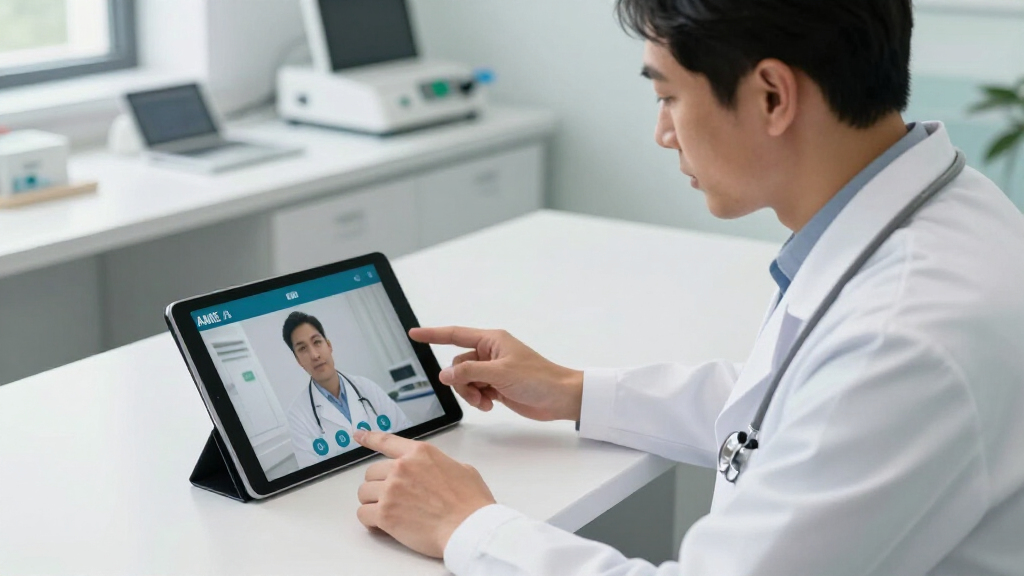
Google Research and DeepMind have revealed that their experimental AI system, AMIE, can now conduct real-time clinical video consultations, interpreting visual and auditory cues while guiding simulated patients through physical examinations. For more details, see the original analysis. This development extends AI capabilities beyond text chat, but the system remains in a research phase and is not yet approved for clinical deployment.
In a demonstration involving patient actors, Google reported that evaluators assessed AMIE favorably across key clinical competencies such as history-taking, diagnostic reasoning, and communication. The evaluation was part of a controlled study, though Google has not disclosed detailed results, sample size, or statistical measures. The system utilizes a multi-agent architecture incorporating Gemini and Project Astra, enabling it to process speech, visual symptoms, and patient behavior in real time.
The move from text to video allows AMIE to observe clinical signals like cough, movement, or visible discomfort, which are often critical in diagnosis and management decisions. Google highlighted that if further studies confirm these findings, systems like AMIE could broaden the scope of AI-assisted remote healthcare. However, Google emphasizes that the current demonstration is experimental and does not establish safety or readiness for real-world clinical use.
Implications of AI-Driven Video Consultations in Healthcare
This development signals a potential shift in telemedicine, where AI systems could assist clinicians by interpreting audiovisual cues during live consultations. If validated, AMIE or similar systems might enhance remote diagnostics, improve access to care, and support clinicians in busy settings. Nonetheless, the technology remains experimental, and regulatory, safety, and ethical considerations must be addressed before widespread adoption.
telemedicine video consultation equipment
As an affiliate, we earn on qualifying purchases.
As an affiliate, we earn on qualifying purchases.
Background on AI in Medical Consultations
Prior to this demonstration, AI systems like AMIE focused primarily on text-based interactions, gathering patient history and suggesting diagnoses without visual or auditory input. Google’s recent move to incorporate multimodal data marks a significant evolution, aiming to mimic more closely the nuances of in-person clinical assessments. The research aligns with ongoing efforts to expand AI’s role in telehealth, especially amid increasing demand for remote care solutions.
“This demonstration shows that AI can interpret live audiovisual signals during clinical interactions, a step toward more realistic remote diagnostics.”
— an anonymous researcher
As an affiliate, we earn on qualifying purchases.
Unanswered Questions About AI Safety and Effectiveness
Google has not disclosed detailed performance metrics, error rates, or the diversity of cases tested. It remains unclear how AMIE handles ambiguous symptoms, emergencies, or cases outside primary care. The demonstration involved actors rather than real patients, limiting conclusions about actual clinical outcomes. Independent peer review and real-world validation are still pending, and regulatory approval has not been sought or granted.
As an affiliate, we earn on qualifying purchases.
Next Steps for Validation and Potential Deployment
Google plans to conduct further research involving broader patient groups and diverse medical conditions. Future studies will need to publish detailed results, compare AI performance against clinicians independently, and address issues of privacy, bias, and safety. No timeline has been announced for clinical trials, regulatory review, or potential deployment of AMIE in healthcare settings.
As an affiliate, we earn on qualifying purchases.
Key Questions
What is AMIE?
AMIE is a Google research AI system designed to conduct clinical conversations, interpret audiovisual cues, and assist in diagnosis during live video consultations. It remains experimental and is not yet available for patient use.
Can AMIE replace doctors now?
No. The system is still in the research phase and has not undergone the validation or regulatory approval necessary for clinical deployment.
What capabilities does AMIE have during a video consultation?
According to Google, AMIE can interpret speech, observe visible symptoms, guide patients through physical examination steps, and reason about diagnoses in real time, but only in controlled research settings.
When might AMIE be used in real healthcare settings?
Google has not announced a timeline. Extensive further validation, peer review, and regulatory approval are required before considering clinical deployment.
What are the main concerns with AI-based video consultations?
Key concerns include safety, accuracy, handling of emergencies, privacy, bias, and accountability. These issues must be addressed through rigorous testing and regulation before widespread use.
Source: ThorstenMeyerAI.com