
TL;DR

Get the latest gadgets delivered free with Prime
- Fast, free delivery on millions of items
- Prime Video, Amazon Music and more included
- Member-only deals all year
Portable power stations store energy in batteries to power devices without noise or fumes. Knowing their capacity, output, and recharge options helps you pick the right model for camping, emergencies, or remote work. They’re not a full-home backup but excel for modest, portable power needs.
Imagine this: you’re deep in the woods, miles from the nearest outlet. Your phone, laptop, and even a mini fridge need power, and the roar of a gas generator feels out of place. That’s where a portable power station becomes your silent, steadfast companion.
These rechargeable battery systems pack energy in a box that’s easier, cleaner, and quieter than traditional generators. In this guide, you’ll learn what makes a good power station, how to pick one that fits your needs, and the real-world tricks to keep your gear running when it matters most.
Prioritize battery chemistry: LiFePO₄ offers over 2,000 full cycles, doubling lifespan compared to older lithium-ion options.
Match capacity and output to your device needs—don’t overbuy or underestimate runtime.
Use solar panels wisely: monitor weather and alignment, and stay within the station’s input limits for safe, effective recharging.
Understand device demands: high-startup loads or heavy appliances often exceed small stations’ capabilities.
Follow safety guidelines: proper storage, charging, and disposal extend your investment’s life and keep you safe.
What exactly is a portable power station—and why does it matter?
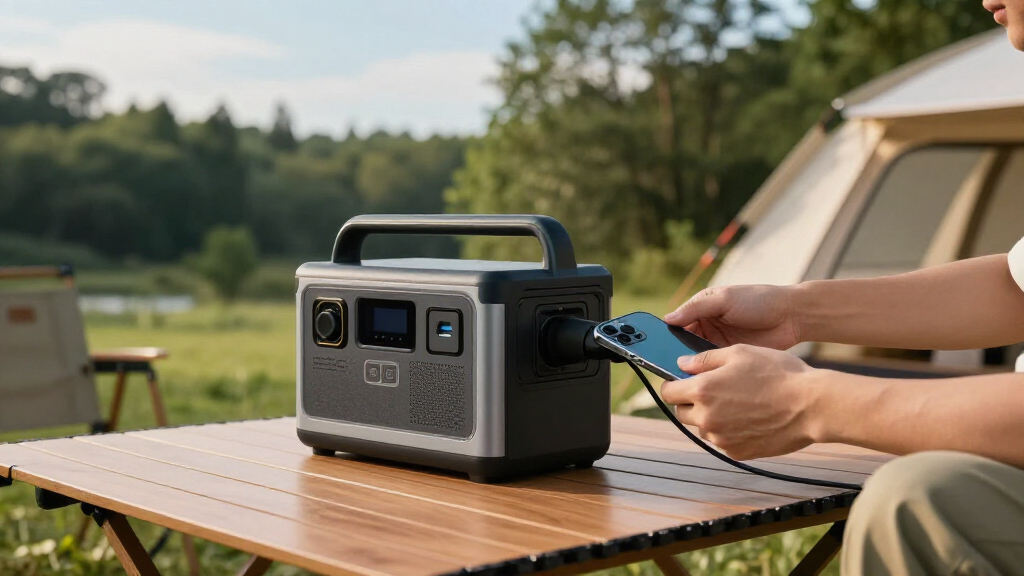
A portable power station is essentially a big rechargeable battery with outlets and ports to power your devices. Unlike gas generators, they produce no fumes, run quietly, and require no fuel or oil. Think of it like a giant power bank, but for your home, RV, or campsite.
For example, a typical unit with 1000 Wh capacity can run a laptop for around 10 hours or a small fridge for about 8 hours. They’re invaluable during power outages, outdoor adventures, or remote work setups where access to electricity is limited.
Understanding what makes them tick helps you pick the right model. From wattage and battery chemistry to ports and expandability, each feature shapes how well a power station fits your lifestyle.
Choosing the right model involves understanding the tradeoffs: higher capacity means more weight and cost, but longer runtime; more ports add versatility but can increase size and complexity. Recognizing these implications helps you balance convenience, portability, and performance based on your specific needs.
portable power station with solar panel
As an affiliate, we earn on qualifying purchases.
As an affiliate, we earn on qualifying purchases.
How to read specs and pick a power station that really works for you
When shopping, focus on three key specs: battery capacity (Wh), continuous output (W), and surge power. These numbers tell you how long you can run devices and whether the station can start big appliances.
For example, a 1,500 Wh station with a 1,200 W continuous output can power most laptops, phones, and small appliances. But if you want to run a refrigerator or power tools, check that the surge rating exceeds the startup wattage of your biggest device.
Understanding these specs is crucial because they directly influence your station’s real-world performance. A high capacity (Wh) ensures longer runtimes, but without sufficient continuous power (W), you might not run your devices efficiently. Conversely, a large surge capacity is vital for equipment with motors or compressors that require extra power at startup, which, if overlooked, could cause devices to fail to start or shut down unexpectedly.
Here’s a quick comparison of common specs:
| Model | Capacity (Wh) | Continuous Power (W) | Peak Power (W) |
|---|---|---|---|
| MiniGo 500 | 500 | 300 | 600 |
| Adventure 1000 | 1000 | 1000 | 2000 |
| PowerPro 2000 | 2000 | 2000 | 4000 |
Choosing a model that exceeds your device wattage needs and offers a margin for safety ensures reliable performance, reducing the risk of overloads or damage, especially during critical moments like emergencies or outdoor adventures.
lithium iron phosphate portable power station
As an affiliate, we earn on qualifying purchases.
As an affiliate, we earn on qualifying purchases.
Real-world tips to extend your power station’s life and runtime
Maximize your power station’s runtime by matching it to your device’s needs. For example, if your fridge consumes 100 W on average, a 1,000 Wh station can run it for roughly 8–9 hours. Add 20–30% extra capacity for safety and unexpected load spikes.
Here are some practical tips:
- Charge fully before long trips or outages to ensure maximum available energy when needed.
- Use energy-efficient devices whenever possible to reduce load and extend runtime, which also preserves battery health over time.
- Limit device startup surges by powering off unnecessary electronics, as big surges can stress the battery and reduce its lifespan.
- Keep the station in a cool, dry place to prevent battery degradation caused by heat or moisture, which can shorten overall lifespan.
- Use solar panels for sustainable recharging—just remember, real-world sunlight is less intense than ideal specs, so plan for longer recharge times and avoid overexposure to harsh conditions.
For instance, a camper running a 50 W laptop and a small fan can expect 15–20 hours of operation from a 1,000 Wh unit. Planning your load carefully and monitoring battery levels helps avoid unexpected shutdowns, ensuring continuous power in critical moments.
high capacity portable power station
As an affiliate, we earn on qualifying purchases.
As an affiliate, we earn on qualifying purchases.
How solar charging turns your station into a renewable powerhouse
Solar panels are the eco-friendly way to top off your power station. But don’t assume a 200 W panel will always deliver 200 W. Output depends on weather, angle, and temperature. A sunny afternoon might produce 150–180 W, but a cloudy day drops that significantly.
For example, if your station supports 200 W input, adding a 200 W panel could fully recharge a 1,000 Wh battery in about 5–6 hours under perfect conditions. In reality, expect closer to 7–8 hours with variable sunlight.
Understanding these variables is essential because they influence your recharge time and overall energy management. Overestimating solar input can lead to inadequate planning, leaving you without power when you need it most. Conversely, underestimating your solar capacity may result in longer recharge times, so choosing panels that match your station’s input ratings and considering seasonal and weather variations helps optimize your renewable energy use.
Important points to remember:
- Match panel voltage and current to your station’s input specs to avoid damage and inefficiency.
- Use quality cables and avoid shading to maximize energy collection.
- Monitor battery temperature and avoid overvoltage to prevent damage and ensure safety.
- Don’t exceed the manufacturer’s recommended input limits—overvoltage can cause permanent damage to electronics and reduce lifespan.
For instance, a camping trip with a 200 W panel can fully recharge a 1,500 Wh station by midday, providing a reliable, silent, and emission-free power source that’s ideal for remote adventures and emergency preparedness.
quiet portable generator alternative
As an affiliate, we earn on qualifying purchases.
As an affiliate, we earn on qualifying purchases.
What you can and cannot power with a portable station
A portable power station is best suited for electronics—laptops, phones, small appliances, and LED lighting. These devices generally have predictable, manageable power demands, making them ideal for portable power solutions. However, they are not designed for heavy-duty appliances like air conditioners, ovens, or well pumps, which often require higher voltage and surge capacities that small stations cannot reliably provide.
For example, a small portable station can comfortably power your laptop (around 50 W), a phone (10 W), and LED lights (10 W) for hours, which is perfect for camping or emergency use. But attempting to run a microwave or a large refrigerator might cause the station to overload or shut down unexpectedly. The key is understanding the power requirements of your devices and matching them to your station’s capabilities. Heavy appliances with motors or compressors typically need dedicated, high-capacity backup systems designed for such loads, often with higher surge ratings and specialized outlets. Recognizing these limits prevents frustration and equipment damage, ensuring your portable power remains a reliable and safe resource.
The pros and cons: why a portable power station might be your best or worst choice
Portable power stations are a quiet, clean, and low-maintenance alternative to gas generators. They emit no fumes, operate quietly, and can be safely used indoors—making them ideal for apartments, RVs, and indoor emergencies. Their convenience and safety features greatly reduce environmental and health concerns associated with traditional fuel-powered generators.
However, they come with notable limitations that influence their suitability for different needs. Their energy is finite; a 1,500 Wh unit can power a small fridge for about 12 hours but cannot sustain an entire household during prolonged outages. Additionally, their weight can be significant—larger capacities often weigh 30–50 pounds or more—potentially limiting portability for some users. Battery degradation over time also affects long-term reliability, and higher-capacity models tend to have higher upfront costs per watt-hour, which can be a barrier for budget-conscious buyers. Recognizing these tradeoffs helps you decide whether a portable power station aligns with your priorities—be it quiet, emissions-free operation or extended, high-capacity backup power—so you can select the best option for your specific scenario.
Latest trends and what they mean for your next portable power station
The landscape is shifting fast. LiFePO₄ batteries now dominate new models, offering over 2,000 full charge cycles, which significantly extends the lifespan and reduces replacement costs compared to older lithium-ion packs that typically last 500–1,000 cycles. This technological shift means your investment lasts longer and maintains performance over more recharges, making it more cost-effective over time.
Fast-charging technology is also advancing—many units now recharge from zero to full in under 2 hours using AC power, reducing downtime and increasing convenience. Some models are expanding their capabilities to include additional batteries or solar panels, allowing users to scale their power capacity as needs evolve, which is especially useful for long-term outdoor or emergency setups.
Smart features like mobile app control, real-time solar data monitoring, and UPS (Uninterruptible Power Supply) functions are becoming standard, offering greater control and reliability. These features enable scheduling, remote status checks, and seamless switching between grid and battery power, enhancing user experience and system resilience.
Emerging research into alternative chemistries, such as sodium-ion batteries, promises cheaper, more temperature-tolerant options in the future. While still early in development, these innovations could further improve affordability and safety, broadening the range of applications and accessibility for consumers.
Overall, these trends indicate a future where portable power stations are more durable, efficient, and adaptable—empowering users with smarter, more reliable off-grid energy solutions for camping, emergencies, or mobile work.
Safety tips and ownership hacks for peace of mind
Safety is paramount when using portable power stations. Never connect a power station directly into household wiring without proper transfer switches or professional installation, as improper connections can cause backfeed or electrical hazards. Always use only compatible solar panels and cables that meet the station’s voltage and current specifications, to prevent damage or safety issues.
Keep units dry, well-ventilated, and away from heat sources. Regularly inspect for swelling, leaks, or unusual odors, which are signs of internal damage or battery failure. If any abnormalities are detected, discontinue use immediately to prevent hazards.
Store batteries in a cool, dry environment, and recharge periodically if stored long-term to prevent capacity loss. Avoid overcharging or discharging below recommended levels, as deep discharges can shorten battery life and cause irreversible damage. Proper storage and maintenance extend the lifespan of your investment.
Always dispose of lithium batteries responsibly by recycling through authorized facilities, preventing environmental harm. Large stations are generally not airline-friendly; plan ahead if traveling to avoid issues at security checks or during transit.
By following these safety guidelines and ownership hacks—such as regular maintenance, proper storage, and cautious usage—you ensure your power system remains reliable and safe over many years, providing peace of mind when you need power most.
How to size your power station—because bigger isn’t always better
Start with your device list. Add up each device’s wattage and estimate daily use in watt-hours. Then, add 20–30% to cover losses, cold weather, and unexpected needs. This approach ensures you select a capacity that meets your actual power demands without overburdening the system or making it unnecessarily heavy and costly.
Check three things:
- Does the station’s continuous output exceed your total load? If not, your devices may not run simultaneously without issues.
- Can it handle the surge power of your biggest device? Surges occur at startup, so it’s vital to have a margin here to prevent shutdowns or damage.
- Is its capacity enough for your desired runtime? Ensure the watt-hour rating aligns with how long you need your devices powered, considering efficiency losses and potential future needs.
For example, if you want to run a 100 W laptop and a 50 W light for 10 hours, you need at least 1,500 Wh—plus a safety margin. Planning ahead for recharging is equally important; a larger capacity provides more flexibility and less concern about running out of power unexpectedly.
Remember, bigger batteries add weight and size, which may reduce portability. Finding the right balance between capacity, weight, and your mobility requirements is key to choosing an effective power station.
FAQs: real questions, real answers about portable power stations
Q: How long will a portable power station run a refrigerator? It varies based on the refrigerator’s energy consumption and startup surge. A typical 1,000 Wh unit can power a small fridge (~100 W) for about 8–10 hours, but factors like door openings, compressor cycles, and ambient temperature influence actual runtime. Using a watt-meter during initial testing helps tailor expectations and optimize usage.
Q: Can it run a CPAP machine overnight? Yes, many stations can support CPAP devices for 8–12 hours, provided the power draw matches the station’s capacity. Be aware that humidifiers or heated hoses can significantly increase power needs, so testing your setup beforehand and consulting device guidelines ensures reliable operation.
Q: Can it power an air conditioner? Small portable stations can run tiny, low-wattage units for short periods; however, full-size air conditioners require much higher surge and continuous power, often exceeding portable station limits. For reliable cooling, specialized high-capacity systems or dedicated generators are necessary.
Q: Can it be used as a whole-house backup? Small or portable models are limited to powering specific devices or circuits. Larger, integrated systems with proper electrical transfer setups can support essential circuits but are not substitutes for full-home generators. Planning for your critical loads ensures you get the most effective backup solution.
Q: Is a larger watt rating always better? Not necessarily. Wattage indicates power output, but watt-hours reflect energy capacity and runtime. A high-wattage station may run demanding devices but could still run out quickly if capacity is low. Balancing both specs according to your needs prevents overinvestment and ensures practical, reliable backup power.
Frequently Asked Questions
How long will a portable power station run a refrigerator?
It depends on the fridge’s energy consumption and startup surge. A typical 1,000 Wh unit can run a small fridge (~100 W) for about 8–10 hours, but real-world factors like door openings and compressor cycles affect this.Can it run a CPAP machine overnight?
Yes, many stations can power CPAPs for 8–12 hours, but check your device’s power needs, especially if humidifiers or heated hoses are involved. Pre-test your setup for peace of mind.Can it power an air conditioner?
Only small portable units with low wattage. Full-size ACs demand much higher surge and continuous power, requiring dedicated, high-capacity backup systems.Can it be used as a whole-house backup?
Small or portable models support only select devices. Larger, modular systems with proper electrical integration can power specific circuits but aren’t a substitute for a proper home generator.Is a larger watt rating always better?
Not necessarily. Wattage indicates power output, but watt-hours tell you how long it can run devices. Balance both specs to match your actual needs without excessive weight or cost.Conclusion
Your next adventure or emergency backup isn’t complete without understanding what a portable power station can—and can’t—do. Think of it as a reliable, silent partner that keeps your essential devices alive. But size, specs, and safety matter just as much as convenience.
Choose wisely, respect the limits, and you’ll have dependable power when you need it most—quiet, clean, and ready to go.
Halloween Picks
halloween
As an affiliate, we earn on qualifying purchases.