
Choosing the right server platform in 2026 means balancing performance, expandability, and budget. For enterprise environments demanding raw power, the Dell PowerEdge R640 stands out with dual high-core processors and large RAM capacity. For high-density, high-speed data centers, the MikroTik RDS2216 offers ultra-fast networking and NVMe storage. Meanwhile, small-scale or specialized use cases might favor the TK Node Mini PC with pre-installed virtualization and automation tools, or the ZimaBlade 7700 for DIY NAS and media streaming. The Rosewill RSV-H424 provides expansive storage in a rackmount chassis for large-scale data storage. Each platform has distinct tradeoffs—power, complexity, size—that matter depending on your specific server needs.

Get the latest gadgets delivered free with Prime
- Fast, free delivery on millions of items
- Prime Video, Amazon Music and more included
- Member-only deals all year
Complete the kit



Key Takeaways
- Enterprise-grade servers like the Dell PowerEdge R640 excel in high-performance, demanding workloads but come with higher power consumption and potentially limited warranty on renewed units.
- High-density data center platforms like MikroTik RDS2216 combine fast networking with large NVMe storage but require advanced technical setup and are overkill for smaller projects.
- Mini PCs such as the TK Node offer pre-installed virtualization tools ideal for home labs, yet they are limited in RAM and GPU capacity for intensive tasks.
- DIY builders and small business users benefit from versatile options like the ZimaBlade 7700, which supports multiple displays and expandable RAM but needs technical expertise for setup.
- Rackmount chassis like the Rosewill RSV-H424 provide massive storage capacity, suitable for large-scale data needs, but occupy significant space and are louder and more expensive.


| server platform | Processor | RAM |
|---|---|---|
| Dell PowerEdge R640 Server 2x | 2x Gold 6148 2.40GHz | 256GB |
| MikroTik RDS2216 ROSE Data Ser | 16-core 2 GHz ARM64 | 32GB DDR4 |
| TK Node Mini PC | AMD Ryzen R2514 | 16GB (expandable to 64GB) |
| ZimaBlade 7700 x86 Home Server | Intel Quad-Core | 16GB |
| Rosewill RSV-H424 4U Rackmount | — | — |
More Details on Our Top Picks
Dell PowerEdge R640 Server 2x Gold 6148 2.40GHz 40-Core 256GB RAM + 8 Caddies (Renewed)
The Dell PowerEdge R640 makes a compelling case for demanding enterprise environments with its dual Intel Gold 6148 processors, providing 40 cores of raw processing power. It’s designed to handle intensive workloads like virtualization, database hosting, and large-scale applications. Compared to other options, it offers extensive RAM capacity—256GB—supporting memory-heavy tasks. Its multiple caddies mean high expandability, though the renewal status introduces a potential risk with warranty limitations. Power consumption is higher due to its high-end specs, but for large data centers, this tradeoff is often justified. It’s less suitable for small businesses or hobbyists due to its size and cost.
Pros:- High-performance dual processors with 40 cores
- Massive RAM capacity for demanding workloads
- Includes multiple caddies and essential parts
Cons:- Renewed product may have limited warranty
- No detailed storage specs provided
- Potentially higher power consumption
Best for: Large enterprises and data centers needing maximum performance and expandability
Not ideal for: Small-scale projects, home use, or users seeking budget-friendly options
- Processor:2x Gold 6148 2.40GHz
- Cores:40-Core
- RAM:256GB
- Condition:Renewed
- Caddies:8
- Includes:Power cords and parts
Our verdict“A powerhouse ideal for enterprise data centers that require scalable, high-performance servers despite higher operational costs.”
MikroTik RDS2216 ROSE Data Server, 16-Core ARM CPU, 32GB RAM, 20× U.2 NVMe Storage, 2× 100G QSFP28, 4× 25G SFP28, 4× 10G SFP+
The MikroTik RDS2216 stands out for its ultra-fast networking and high-density NVMe storage, making it ideal for data centers running demanding applications, cloud services, or high-performance computing tasks. Its 16-core ARM processor provides solid performance, especially for network-heavy workloads, while the support for up to 20 NVMe drives ensures rapid data access. Compared with traditional x86 servers, this platform offers a lighter footprint and more integrated networking, but its complex setup and enterprise focus might be overwhelming for smaller teams or hobbyists. Its dual hot-swappable power supplies bolster reliability in continuous operation scenarios.
Pros:- High-density NVMe storage supports demanding workloads
- Ultra-fast multi-gigabit network connectivity
- Enterprise features like RAID and dual power supplies
Cons:- Setup can be complex and requires technical skill
- Designed primarily for enterprise use, overkill for small projects
Best for: Data centers and cloud providers needing high-speed networking and storage
Not ideal for: Small businesses or users with limited technical expertise
- Processor:16-core 2 GHz ARM64
- RAM:32GB DDR4
- Storage Capacity:Supports up to 20 NVMe SSDs
- Network Ports:2× 100G QSFP28, 4× 25G SFP28, 4× 10G SFP+
- Form Factor:1U rackmount
- Additional Features:Dual hot-swappable power, RAID
Our verdict“A robust platform for high-performance data center needs, especially where fast networking and storage are priorities.”
TK Node Mini PC – Proxmox + Home Assistant preinstalled, AMD Ryzen R2514, 16GB RAM, 512GB SSD
The TK Node Mini PC offers a compact, reliable solution for home labs, small businesses, or automation enthusiasts. Preloaded with Proxmox virtualization and Home Assistant, it simplifies deployment for DIY projects. Its AMD Ryzen R2514 processor delivers solid performance for virtualization and automation tasks, while the support for up to 64GB RAM and 4TB NVMe SSDs makes it surprisingly versatile despite its small size. The ability to support multiple 4K displays adds to its appeal for media or control room setups. However, the base 16GB RAM may limit heavy multi-VM workloads without upgrades, and it’s not suitable for graphics-intensive tasks due to the absence of a dedicated GPU.
Pros:- Preinstalled with Proxmox and Home Assistant for quick setup
- Compact size fits in tight spaces
- Supports multiple high-resolution displays
Cons:- Limited RAM in base configuration
- Requires technical knowledge for advanced customization
- No dedicated GPU for graphics tasks
Best for: Home labs, automation projects, and small-scale virtualization
Not ideal for: Heavy workloads, gaming, or enterprise data centers
- Processor:AMD Ryzen R2514
- RAM:16GB (expandable to 64GB)
- Storage:512GB SSD (up to 4TB NVMe)
- Display Support:Up to 3x 4K via HDMI, DisplayPort, USB-C
- Connectivity:Gigabit Ethernet, WiFi, Bluetooth
- Dimensions:5″ x 5″ x 1.7″
- Warranty:2-year US-based limited
Our verdict“An excellent choice for hobbyists and small projects needing virtualization and automation in a small form factor.”
ZimaBlade 7700 x86 Home Server & 2-Bay NAS Kit, Intel Quad-Core, 16GB RAM
The ZimaBlade 7700 offers a flexible x86 platform for building custom NAS, media servers, or self-hosted cloud solutions. Its Intel quad-core processor provides reliable performance for file sharing, media streaming, and light virtualization. The two drive bays support dual SATA drives, making it suitable for small-scale storage needs, while the PCIe expansion slot allows future upgrades. Its support for 4K media streaming with Plex adds to its versatility. The setup requires some technical skill, especially for configuring storage and network settings, but it’s ideal for DIY enthusiasts who want control over their server environment. Noise levels and size are manageable, though it’s not designed for large-scale storage or heavy workloads.
Pros:- Flexible x86 platform compatible with various OS
- Supports 4K media streaming
- Includes necessary components for immediate build
Cons:- Requires technical expertise for configuration
- Limited to 2 storage bays
- No pre-installed OS
Best for: DIY NAS, media streaming, and home server projects
Not ideal for: Enterprise workloads or large-scale storage needs
- Processor:Intel Quad-Core
- RAM:16GB
- Storage Bays:2
- Expansion Slot:PCIe
- Included:Power supply, drive cage, SATA cables
Our verdict“A solid DIY platform for media and small storage projects, best suited for users comfortable with technical setup.”
Rosewill RSV-H424 4U Rackmount Server Chassis – 24-Bay 3.5″ Hot Swap SATA/SAS
The Rosewill RSV-H424 is built for large-scale storage and custom server builds. Its 4U rackmount form factor supports up to 24 hot-swap 3.5″ drives, making it ideal for data centers, enterprise storage, or DIY server farms. It supports high-core-count motherboards and extensive RAM, with multiple PCIe slots for expansion. The hot-swappable PWM fans and dual redundant PSUs enhance reliability and ease maintenance. However, its size and weight mean it’s not practical for small setups or home environments. The cost can escalate with high-capacity drives and enterprise-grade components, but for users needing massive storage capacity, this chassis offers unmatched scalability.
Pros:- Massive 24-bay hot-swap storage capacity in 4U form
- Supports large, high-core-count motherboards
- Hot-swappable fans and dual PSUs for reliability
Cons:- Takes up significant rack space
- Heavy and loud due to enterprise cooling
- Additional costs for drives and enterprise components
Best for: Large storage arrays, enterprise data centers, and DIY high-capacity servers
Not ideal for: Small businesses, home users, or those with space constraints
- Form Factor:4U Rackmount
- Drive Bays:24 x 3.5″ hot-swap
- Drive Interface:12Gbps SATA/SAS
- Motherboard Support:E-ATX, SSI-EEB
- Fans:3 x 120x38mm PWM hot-swap
- PSU Support:2 x 2U redundant PSU
- Model:RSV-H424
Our verdict“An ideal chassis for massive storage needs, demanding space and budget but offering unrivaled expandability.”
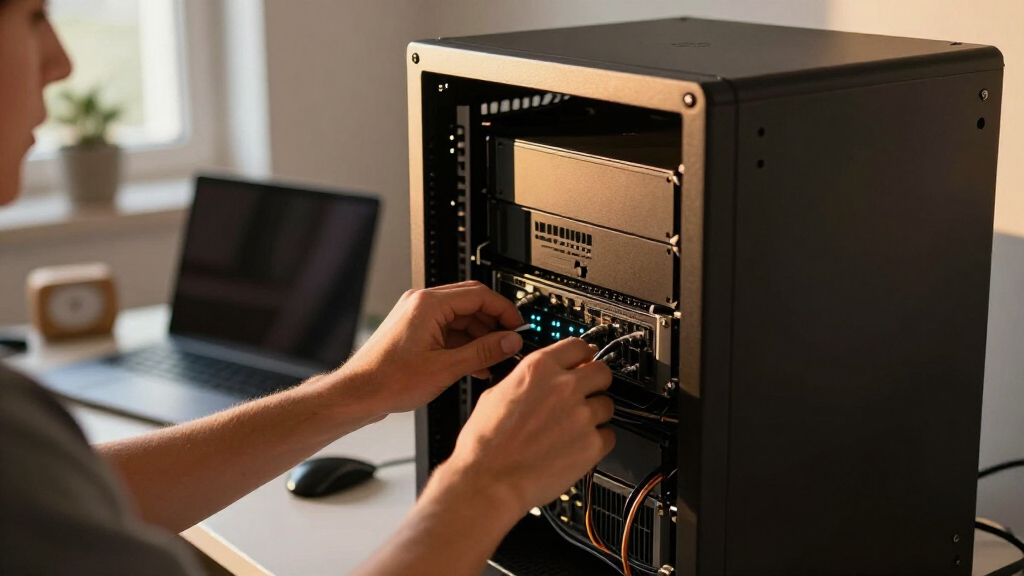
How We Picked
Our selection process focused on balancing performance, expandability, ease of use, and value. I prioritized platforms that cater to different use cases—enterprise, high-density, DIY, and storage—while ensuring each offers clear advantages and tradeoffs. We examined specs like processing power, storage options, connectivity, and reliability features, comparing them against real-world needs like virtualization, data center deployment, or home labs. The goal was to identify options that stand out for their specific roles, rather than generic all-rounders, providing a curated list for various buyer profiles.
Factors to Consider When Choosing Best Server Platforms
Selecting the best server platform involves understanding your workload, scale, and future growth plans. Whether you need enterprise-grade performance, dense data center connectivity, or a compact home lab, each option has unique features that cater to specific needs. Key considerations include processor power, storage capacity, expandability, form factor, and ease of maintenance. Balancing these factors against your budget and technical expertise will help you find the right fit for your project.
Performance and Scalability
High-performance servers like the Dell PowerEdge R640 excel in environments demanding maximum CPU power, large RAM, and high expandability. These choices are best for enterprise workloads such as virtualization, databases, or large-scale applications. For smaller or specialized tasks, compact systems like the TK Node Mini PC or DIY NAS chassis can deliver sufficient performance with added flexibility and lower costs.
Storage and Networking Needs
Storage-heavy setups benefit from chassis like the Rosewill RSV-H424, which supports numerous hot-swap drives for large data arrays. High-density NVMe servers like MikroTik’s platform suit data centers requiring swift data access and high-speed networking. For small-scale media or home automation, solutions with fewer drive bays and simplified connectivity, like the ZimaBlade or the mini PC, are often more appropriate.
Ease of Use and Technical Complexity
Preconfigured systems like the TK Node Mini PC offer quick deployment with minimal setup, ideal for non-technical users or hobbyists. In contrast, enterprise platforms and rackmount chassis require more technical knowledge for assembly, configuration, and maintenance. Consider your comfort level with server hardware and networking when choosing between plug-and-play versus customizable solutions.
Frequently Asked Questions
What is the main difference between enterprise servers and mini PCs?
Enterprise servers are designed for high performance, scalability, and reliability, often featuring multiple processors, large RAM capacities, and extensive expandability options. Mini PCs, on the other hand, prioritize compact size, ease of setup, and energy efficiency, making them suitable for small-scale or specialized tasks like virtualization and automation. The choice depends on your workload demands and space constraints.
How important is expandability in choosing a server platform?
Expandability is crucial if you anticipate future growth or need to add storage, memory, or networking capacity over time. Platforms like the Dell PowerEdge R640 and Rosewill RSV-H424 excel in this area, supporting multiple drives, PCIe cards, and high-core processors. For static or small workloads, a less expandable system may suffice, simplifying setup and reducing costs.
Are pre-installed systems better for beginners?
Yes, pre-installed systems such as the TK Node Mini PC or the ZimaBlade 7700 reduce setup complexity, allowing users to deploy virtualization or media services quickly. These options are ideal for those new to server hardware or who want to avoid intricate configuration. However, they may offer less room for customization or expansion compared to enterprise-grade platforms.
What should I consider when choosing storage capacity?
Assess your current data needs and future growth. Large-scale storage solutions like the Rosewill RSV-H424 offer massive drive capacity suitable for data centers, while smaller systems support fewer drives but can be expanded with external or networked storage. Ensure the platform supports the drive types and interfaces you require, like SATA, SAS, or NVMe, to meet your performance expectations.
Is high network connectivity necessary for all server platforms?
Not necessarily. For data centers or workloads requiring rapid data transfer, high-speed networking like 100G ports in MikroTik servers can be vital. For small projects or home labs, gigabit Ethernet or WiFi may be sufficient. The key is matching your network needs with your intended workload to avoid overspending on unnecessary features.
Conclusion
For large enterprises and data centers focused on scalability and raw power, the Dell PowerEdge R640 offers unmatched performance, though at a higher cost and complexity. Small businesses, hobbyists, or home automation enthusiasts will find the TK Node Mini PC or ZimaBlade 7700 more accessible and sufficient for their needs. Users requiring extensive storage capabilities should consider the Rosewill RSV-H424, provided they have the space and budget. Ultimately, matching the platform to your workload, technical skills, and future plans is key to making the best choice.
Halloween Picks
halloween
As an affiliate, we earn on qualifying purchases.