
To create depth in your drawings, focus on understanding light and shadow by establishing a clear light source. Use contrast by shading darker in areas away from the light and keeping highlights lighter to mimic natural illumination. Layer your tones gradually, starting with broad, light shades and building up darker shadows for realism. Balancing sharp contrasts with smooth progressions helps achieve a three-dimensional effect. Keep practicing these techniques to make your artwork more lifelike and engaging.
Key Takeaways
- Establish a clear light source to determine where highlights and shadows fall.
- Use high contrast between light and dark areas to enhance depth and make objects stand out.
- Gradually build shading with multiple layers, starting with light tones and adding darker shadows.
- Create smooth transitions between values to mimic realistic light diffusion and form.
- Balance sharp contrasts with subtle gradations to add softness and three-dimensionality to your drawing.
Have you ever wondered how artists create the illusion of three-dimensionality on a flat surface? It all comes down to understanding how light interacts with objects and how to effectively use value contrast and layering techniques. When you master these elements, your drawings will suddenly gain depth and realism, making them more convincing and engaging.
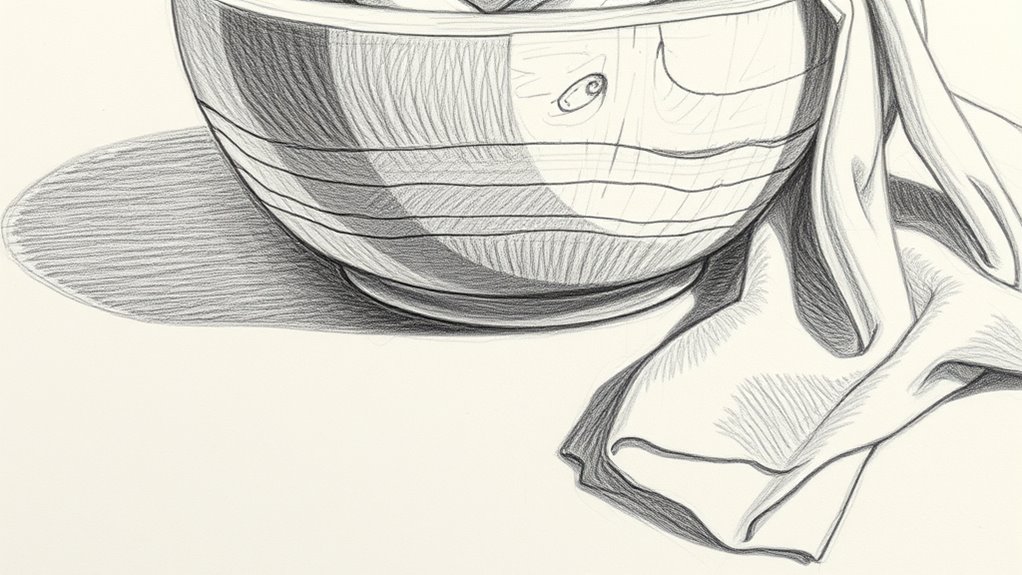
Value contrast is your best friend when it comes to creating depth. Think of it as the difference between light and dark areas in your drawing. The more pronounced the contrast, the more your image pops off the page. To achieve this, you should identify your light source clearly and use darker values in shadowed areas, while leaving highlighted sections lighter. For example, if you’re drawing a sphere, shade the side away from the light with darker tones, and keep the area facing the light brighter. This contrast between light and dark mimics how the eye perceives depth in real life. Remember, subtle transitions can also add softness, while sharp differences emphasize form and separation. Additionally, understanding the contrast ratio in your shading can help you better control the depth and realism of your artwork.
Mastering value contrast enhances depth by emphasizing light and dark areas, making your drawings more three-dimensional and realistic.
Layering techniques are equally crucial. Instead of trying to get everything perfect in one stroke, build up your drawing gradually. Start with lighter, broad tones to establish the general shapes and values. Then, add darker layers in areas where shadows need to deepen. This process allows you to control the intensity of your shadows and highlights, creating a more nuanced sense of form and space. By layering, you can also create smooth gradations, which are essential for realistic shading. For instance, when shading a cylindrical object, apply multiple layers of gradually darkening tones to simulate the gradual curve of the surface. It’s about stacking these layers carefully to build richness and depth.
Combining value contrast with layering techniques transforms a flat sketch into a convincing three-dimensional form. Use light touches at first, gradually intensifying the shadows where needed. This approach not only enhances realism but also gives your drawings a dynamic quality. As you practice, you’ll learn how subtle shifts in value contrast can dramatically change the perception of depth, and layering will become second nature for creating smooth transitions and complex shadows.
Ultimately, creating depth in your drawings hinges on your ability to manipulate light through value contrast and layering. When you pay attention to these techniques, you’ll notice your art becoming more lifelike and compelling. Keep experimenting with different contrasts and layering methods, and over time, you’ll develop a keen eye for rendering depth that brings your drawings to vivid life.

HIFORNY 126 PCS Drawing Kit Sketching Pencil Set,Sketch Pencils Art Supplies with 3-Color Sketchbook,Graphite,Charcoal,Blending Tools,Drawing Pencils for Adults Artists in Zipper Case
【Complete Drawing Pencils for Sketching】HIFORNY 126 pcs sketching & drawing set includes 24 premium sharpened graphite pencils(14B,12B,10B,9B,8B,7B,6B×2 ,5B,4B×2,3B,2B×3,B,HB×2,F,H,2H,3H,4H,5H),24…
As an affiliate, we earn on qualifying purchases.
As an affiliate, we earn on qualifying purchases.
Frequently Asked Questions
How Does Color Influence Perceived Depth in Drawings?
Color influences perceived depth in your drawings by using color temperature and saturation effects. Warmer colors like reds and yellows tend to advance, making objects appear closer, while cooler colors like blues and greens recede, creating a sense of distance. Higher saturation makes elements pop forward, whereas muted tones push them back. You can manipulate these effects to add depth and dimension, guiding viewers’ eye through your artwork seamlessly.
Can Shadow Placement Affect the Viewer’s Focus?
Ever wondered how shadow placement influences your focus? By maintaining shadow consistency, you guide the viewer’s eye naturally across your drawing, emphasizing key elements. Strategic shadow placement can direct attention and create a sense of depth, enhancing viewer engagement. When shadows are thoughtfully placed, they become visual cues that lead your audience through the artwork, making the scene more immersive and compelling without overwhelming the composition.
What Tools Are Best for Creating Realistic Shading?
You should use a range of pencil grades from H to 8B to create realistic shading. Harder pencils (H, 2H) are great for light, precise lines, while softer pencils (4B, 6B, 8B) produce deep, rich shadows. Combine these with blending techniques like smudging with a blending stump or tissue to smooth progressions and add depth, making your shading look more realistic and three-dimensional.
How Do Artists Decide Where to Add Highlights?
Think of highlights as the stars guiding your drawing’s night sky. You determine highlight placement by observing where light naturally hits the surface—think about the strongest light source and how it interacts with the form. Trust your artist intuition, noticing areas that catch the most light and contrast. Placement isn’t random; it’s about capturing the essence of three-dimensionality, making your artwork leap off the page with vibrancy and realism.
Does Background Contrast Impact Depth Perception?
Yes, background contrast substantially impacts depth perception. When you use background layering and contrast manipulation, you create a sense of spatial separation. Making the background darker or less detailed pushes it back, while lighter, more detailed areas bring objects forward. By adjusting contrast strategically, you guide the viewer’s eye and enhance the illusion of depth, making your drawing feel more three-dimensional and realistic.

N NOROCME 12 PCS Blending Stumps and Tortillions Paper Art Blenders with Sandpaper Pencil Sharpener Pointer for Student Artist Charcoal Sketch Drawing Tools
13 Pcs in Total: 6 pcs blending stumps(#1, #2, #3, #4, #5, #6); 6 pcs tortillions(#1, #2, #3),two…
As an affiliate, we earn on qualifying purchases.
As an affiliate, we earn on qualifying purchases.
Conclusion
Mastering light and shadow transforms your drawings from flat to realistic. Did you know that studies show artists who effectively use shading techniques see a 40% increase in perceived depth? By practicing these skills, you’ll bring your creations to life with convincing depth and dimension. Keep experimenting with light sources and shadows, and watch your artwork become more dynamic and engaging. Remember, every stroke gets you closer to mastering the art of creating depth!

Soucolor 9" x 12" Sketch Book, 100 Sheets Top Spiral Bound Sketchbook with Acid-Free 68lb/100gsm Drawing Paper, Art Sketch Pad for Kids, Adults & Artist, Professional Art Supplies for Beginners
Premium Artist Drawing Paper: Premium drawing pads and sketchbooks with a 9 x 12-inch size are ideal for…
As an affiliate, we earn on qualifying purchases.
As an affiliate, we earn on qualifying purchases.
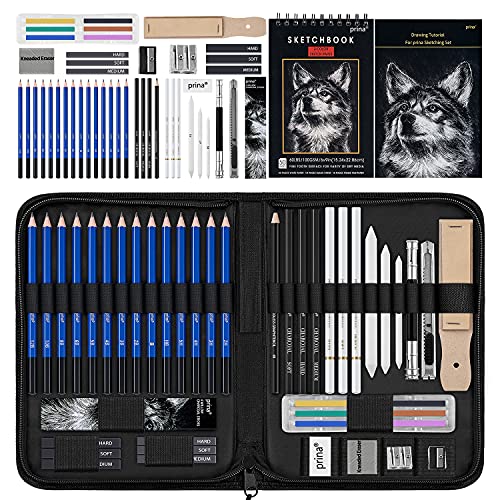
Prina 50 Pack Drawing Set Sketch Kit, Sketching Supplies with 3-Color Sketchbook, Graphite, and Charcoal Pencils, Pro Art Drawing Kit for Artists Adults Teens Beginner Kid, Ideal for Shading, Blending
【Complete and Professional Art Drawing Supplies Pencils Set with Sketch Pad】, 15 graphite sketch pencils for drawing (5H,…
As an affiliate, we earn on qualifying purchases.
As an affiliate, we earn on qualifying purchases.