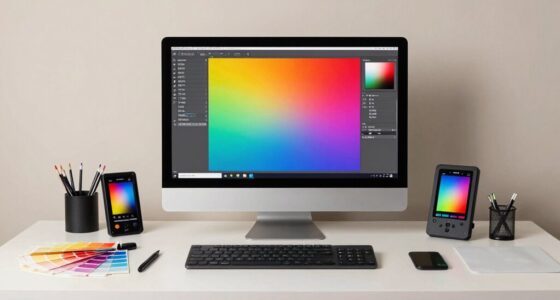
Synesthetic art blends light and sound to create immersive multisensory experiences where you can see colors when hearing music or feel textures through visuals. It taps into your brain’s natural ability to fuse different senses, making art more vivid and engaging. By exploring these artworks, you’ll discover how sensory boundaries dissolve, offering a deeper connection with the piece. If you continue, you’ll uncover how this mesmerizing fusion transforms perception itself.
Key Takeaways
- Synesthetic art uses visual and auditory stimuli to create immersive multisensory experiences that blend light and sound seamlessly.
- Artists incorporate vibrant visuals with harmonious sounds to evoke sensations like colors vibrating or shapes singing.
- By leveraging cross modal perception, synesthetic art transforms how viewers perceive and interpret sensory information.
- Techniques include swirling visuals paired with rhythmic beats, enhancing the fusion of sight and sound.
- This art form deepens the connection between senses, challenging traditional boundaries and enriching sensory perception.
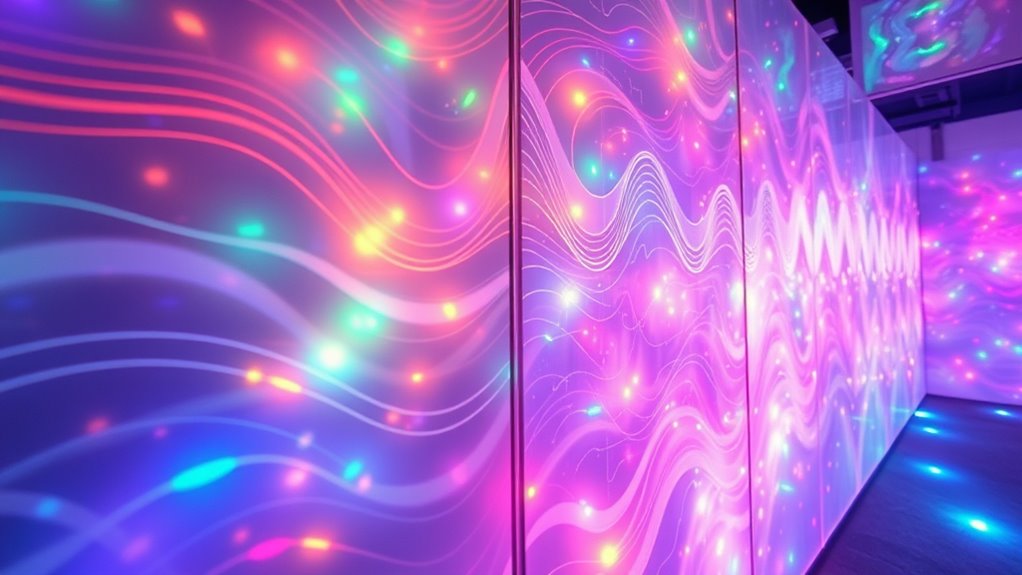
Have you ever experienced a sensation where colors evoke specific sounds or music sparks vivid images? If so, you’re already familiar with a fascinating aspect of human perception known as cross modal perception. This phenomenon occurs when your brain creates multisensory experiences, blending sensory inputs from different modalities into a unified perception. Synesthetic art harnesses this natural tendency, transforming visual and auditory stimuli into immersive experiences. Instead of perceiving colors and sounds as separate, synesthetic artists aim to evoke a seamless fusion, allowing viewers to see music and hear colors as if they’re interconnected. This approach taps into our innate capacity for multisensory experiences, making art more visceral and engaging. When you observe synesthetic artwork, you’re invited to step into a world where sight and sound aren’t isolated but intertwined, creating a richer, more dynamic perception of reality.
In synesthetic art, cross modal perception is not just a curiosity but a central tool for expression. Artists intentionally design their pieces to stimulate multiple senses simultaneously, encouraging viewers to experience a convergence of stimuli. For example, vibrant, swirling visuals might be paired with harmonious sounds or rhythmic beats, making it feel as though the colors are vibrating or the shapes are singing. This deliberate blending challenges your usual way of perceiving the world, inviting you to interpret art through a multisensory lens. The goal is to evoke feelings and sensations that aren’t confined to one sense but span across them, creating a layered, immersive experience. When you engage with synesthetic art, you’re actively participating in this cross modal perception, where your brain synthesizes what it sees and hears into a cohesive, emotionally resonant whole. It’s a form of artistic expression that goes beyond traditional boundaries, encouraging you to experience art on a more primal, intuitive level.
Furthermore, synesthetic art often feels deeply personal because it taps into universal neurological pathways in the brain. Your individual experiences of colors, sounds, and textures are brought into a new dimension, opening up fresh ways to interpret familiar sensations. As you immerse yourself in these multisensory environments, you might notice how certain colors evoke specific melodies or how particular sounds evoke visual patterns. This interplay deepens your connection to the artwork, making it a unique dialogue between artist and viewer. Ultimately, synesthetic art isn’t just about creating visually or sonically striking pieces; it’s about exploring the interconnectedness of your senses. It invites you to experience a world where perception is fluid, where the boundaries between seeing and hearing dissolve, revealing the full spectrum of human sensation and imagination. Recognizing the importance of contrast ratio in visual clarity can further enhance the vividness of these multisensory experiences.
As an affiliate, we earn on qualifying purchases.
Frequently Asked Questions
How Does Synesthetic Art Influence Emotional Responses?
Synesthetic art influences your emotional responses by activating emotional triggers through sensory integration. When you experience the blending of light and sound, it creates a powerful, immersive environment that taps into your feelings. This multisensory stimulation can evoke joy, nostalgia, or even calmness, as your brain links different senses and amplifies emotional reactions. You’re more likely to feel deeply connected and moved by the artwork because of this unique sensory interplay.
Can Synesthetic Art Be Created Digitally or Only Physically?
You can definitely create synesthetic art digitally, using virtual reality and digital mediums. For example, an artist might develop an immersive VR experience where sounds trigger visual patterns, mimicking synesthesia. Digital tools allow for precise control over light and sound, making it accessible and customizable. So, whether it’s a physical installation or a virtual environment, you can explore synesthetic art in both domains, expanding the boundaries of sensory blending.
Are There Famous Synesthetic Artists Throughout History?
Famous synesthetic artists include Wassily Kandinsky and David Hockney, who creatively explore the connection between senses. Historical examples of synesthetic creativity show how these artists translate sounds into colors and shapes, enriching their work. You’ll see their influence in modern digital art as well, demonstrating that synesthetic concepts transcend mediums. Their work inspires you to experience art through multiple senses, blending light, sound, and emotion seamlessly.
How Do Viewers With No Synesthesia Perceive These Artworks?
You perceive synesthetic artworks through your senses, experiencing vivid visuals and sounds even if you’re not synesthetic. Your perception differences mean you might focus more on the visual elements or emotional impact, while sensory adaptation helps your brain process these multisensory stimuli over time. These artworks can evoke unique reactions, allowing you to appreciate the artist’s intent and the blending of light and sound, enriching your sensory experience.
What Techniques Are Used to Evoke Multisensory Experiences?
You experience multisensory art through techniques like color mapping and auditory stimulation. Color mapping aligns colors with sounds, creating visual cues that evoke specific auditory feelings, while auditory stimulation uses sounds to influence visual elements. These techniques encourage your brain to connect sight and sound, making the artwork feel immersive. By blending these methods, artists craft a rich, layered experience that stimulates multiple senses, engaging you on a deeper level.
immersive sound and light installations
As an affiliate, we earn on qualifying purchases.
As an affiliate, we earn on qualifying purchases.
Conclusion
Imagine stepping into a universe where colors dance to melodies and sounds shimmer with vibrant hues. Synesthetic art invites you to experience this beautiful fusion, like a symphony painted across your senses. It’s a magical bridge between sight and sound, turning everyday moments into extraordinary tapestries of sensation. Embrace this enchanting domain, where art becomes a kaleidoscope of feelings, and your imagination can soar freely, blending light and sound into a symphony of pure wonder.
As an affiliate, we earn on qualifying purchases.
As an affiliate, we earn on qualifying purchases.