
White balance and color temperature are key to capturing true-to-life photos that reflect what you see. White balance adjusts your camera to compensate for different lighting conditions, preventing color casts and ensuring whites look white. Color temperature, measured in kelvins, helps you control the warmth or coolness of your images, enhancing mood or atmosphere. Understanding how these settings work together allows you to improve your photo quality substantially—exploring these concepts further will enable more creative control.
Key Takeaways
- White balance adjusts for different lighting conditions to maintain true whites and accurate colors in photos.
- Color temperature, measured in kelvins, influences whether an image appears warm or cool.
- Proper settings prevent color casts and enhance scene mood, reducing the need for extensive post-processing.
- Lighting conditions, natural or artificial, significantly affect the appearance of colors and tones in images.
- Mastering white balance and color temperature improves overall image realism, visual appeal, and mood control.
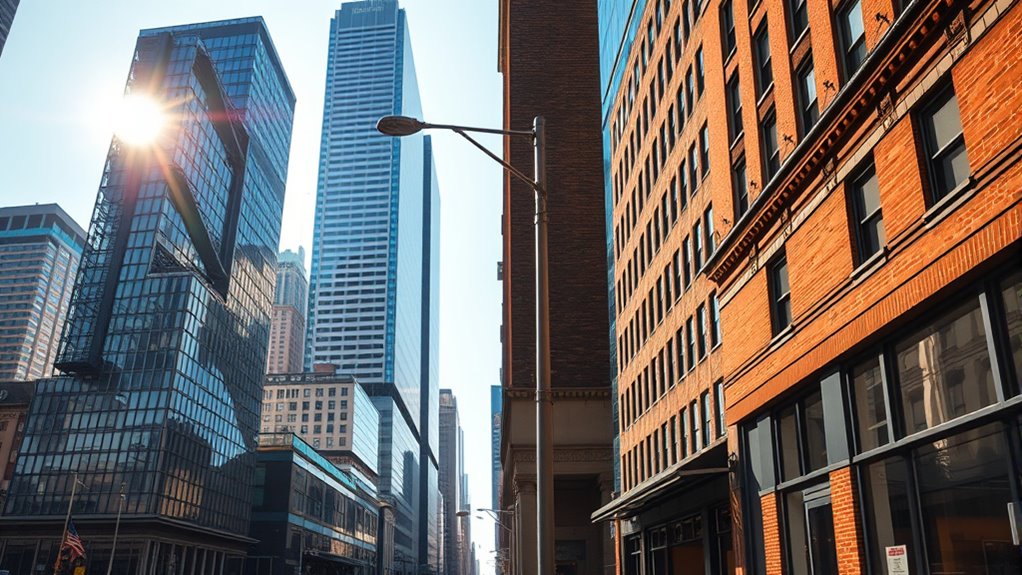
Understanding white balance and color temperature is essential for achieving accurate and natural-looking photos. When you’re taking pictures, the lighting conditions can drastically influence how colors appear. If you don’t adjust your camera’s settings properly, your images might look washed out, overly warm, or strangely cool. That’s where understanding lighting adjustment and color accuracy comes into play. Properly managing these elements helps your photos reflect what you see in real life, making them more appealing and true to the scene.
White balance is your camera’s way of compensating for different types of lighting so that whites appear truly white and other colors stay true. When you’re shooting indoors under incandescent bulbs, for instance, the light has a warm, yellowish hue. Without adjusting white balance, your photos might turn out too yellow or orange. Conversely, shooting under fluorescent lights can introduce a greenish tint. By adjusting the white balance setting, you tell your camera how to interpret the color temperature of the light, ensuring that colors remain accurate. Many cameras have presets like daylight, cloudy, tungsten, and fluorescent, which are useful shortcuts. You can also set a custom white balance for more precise control, especially in complex lighting situations.
Adjust white balance to keep colors true under different lighting conditions.
Color temperature, measured in kelvins (K), directly affects how warm or cool your photos look. A lower kelvin value, like 2500K to 3500K, produces warmer tones, giving your images a cozy, amber feel. Higher kelvin values, such as 6000K to 7500K, create cooler tones with a bluish cast. When you’re aware of the color temperature of your environment, you can adjust your camera accordingly to maintain color accuracy. For example, if you’re shooting sunset photos, you might want to lower the temperature to enhance the warm hues. On the other hand, if you’re photographing a cloudy sky, setting a higher kelvin value can help bring out the cooler tones and make the scene more vibrant. Understanding AI in Education and how technology influences visual content can further enhance your photography knowledge.
Lighting adjustment also involves understanding how different light sources influence your shot. Natural light varies throughout the day, while artificial lighting can be quite different from one source to another. By paying attention to these changes and adjusting your white balance and color temperature settings, you ensure your camera captures the scene as accurately as possible. This not only improves the overall color fidelity but also reduces the need for extensive post-processing. When you get these settings right, your images will have better color accuracy, making them more true to life and visually compelling. Mastering these concepts enables you to control the mood and tone of your photos, ensuring they look natural and professionally crafted.
As an affiliate, we earn on qualifying purchases.
Frequently Asked Questions
Can White Balance Be Adjusted After Taking the Photo?
Yes, you can adjust white balance after taking the photo through post-processing adjustments. Many editing software options allow you to fine-tune the white balance, giving you control over the color accuracy. While you can also change the camera settings before shooting to get it right initially, adjusting during post-processing is a great way to correct or enhance your image if needed.
How Does White Balance Affect Skin Tones?
You’ll notice that white balance plays a key role in how skin tones appear in your photos. When set correctly, it guarantees skin tone accuracy, making your subjects look natural and vibrant. If it’s off, a subtle color cast can make skin look too cool or warm, affecting the overall mood. Adjusting white balance curates the perfect tone, seamlessly correcting color cast issues and enhancing your image’s realism.
What’s the Best White Balance Setting for Sunset Photos?
For sunset photos during golden hour, set your white balance to cloudy or shade mode. This enhances the warm tones and maintains color accuracy, giving your images those rich, golden hues. Adjusting it this way prevents the scene from looking too cool or washed out, ensuring your sunset shots capture the vibrant atmosphere. Play around with these settings to find the perfect balance that highlights the beauty of the sunset.
How Do Different Light Sources Influence Color Temperature?
Ever notice how your camera’s color perception shifts with different light source variations? Incandescent bulbs cast a warm glow, making everything cozy, while fluorescent lights add an unflattering green tint. Sunlight at noon is neutral, but cloudy days turn things cooler and bluish. These changes directly influence how colors appear in your photos, so understanding how each light source affects color temperature helps you capture accurate, vibrant images without a color catastrophe.
Is Automatic White Balance Reliable in All Lighting Conditions?
Automatic white balance can be helpful, but it isn’t always reliable in all lighting conditions. You might need to adjust camera calibration or perform color correction later to get accurate results. In tricky lighting, manual settings often give better control, ensuring your photos look natural. Trust your eyes, and don’t hesitate to tweak your camera’s white balance manually for the best color accuracy.
color temperature meter for photography
As an affiliate, we earn on qualifying purchases.
As an affiliate, we earn on qualifying purchases.
Conclusion
Now that you understand how white balance and color temperature shape your images, imagine the possibilities when you master these settings. Will you capture the perfect shot in challenging lighting? The secret lies in your hands—adjust wisely, and you’ll unleash stunning visuals that leave everyone guessing what’s next. The true magic begins when you experiment, push boundaries, and discover how subtle tweaks can transform your photography forever. Are you ready to take that leap?
adjustable LED photography lights
As an affiliate, we earn on qualifying purchases.
As an affiliate, we earn on qualifying purchases.
camera lens with color correction
As an affiliate, we earn on qualifying purchases.
As an affiliate, we earn on qualifying purchases.