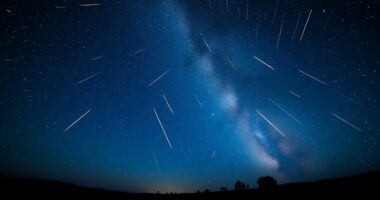
Understanding the Bortle Scale helps you gauge sky quality before packing your gear. It ranks sky darkness from 1 (dark skies with Milky Way visible) to 9 (bright urban skies). By checking local light pollution levels and using tools like apps or maps, you can find the best spots for stargazing. Avoid common mistakes and know what features indicate a dark sky. Keep exploring to discover how this scale can improve your next adventure.
Key Takeaways
- The Bortle Scale measures sky darkness, indicating light pollution levels from 1 (darkest) to 9 (brightest).
- Lower Bortle numbers help identify optimal locations for viewing faint celestial objects.
- Use online maps and apps to assess local sky quality before heading out.
- Recognize features of dark skies, such as visible Milky Way and minimal skyglow.
- Proper assessment prevents wasted trips and ensures a better stargazing experience.
What Is the Bortle Scale and Why Is It Important for Stargazing?
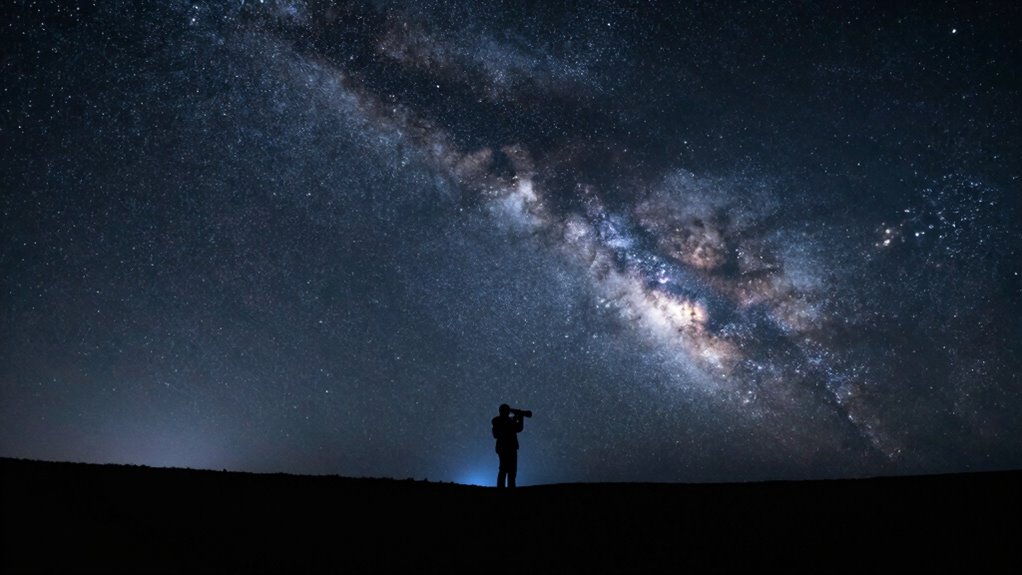
Have you ever wondered why some nights are perfect for stargazing while others are clouded with light pollution? The Bortle Scale helps you understand sky conditions by measuring skyglow effects caused by urban light intrusion. Light pollution from city lights diminishes your ability to see stars clearly, making the night sky appear washed out. The scale ranges from dark skies with minimal interference to heavily light-polluted areas. Knowing your Bortle level helps you choose better locations for observing celestial objects, avoiding nights where skyglow masks the stars. It’s an essential tool for amateur astronomers, guiding you to spots with clearer, darker skies. Additionally, high contrast ratios can greatly enhance your ability to see celestial details in low-light conditions. By understanding the Bortle Scale, you can maximize your stargazing experience and truly appreciate the night sky’s beauty. Furthermore, utilizing natural environments can also improve your overall observatory experience, as they often provide less light interference.
How Can You Check Your Local Light Pollution Level?
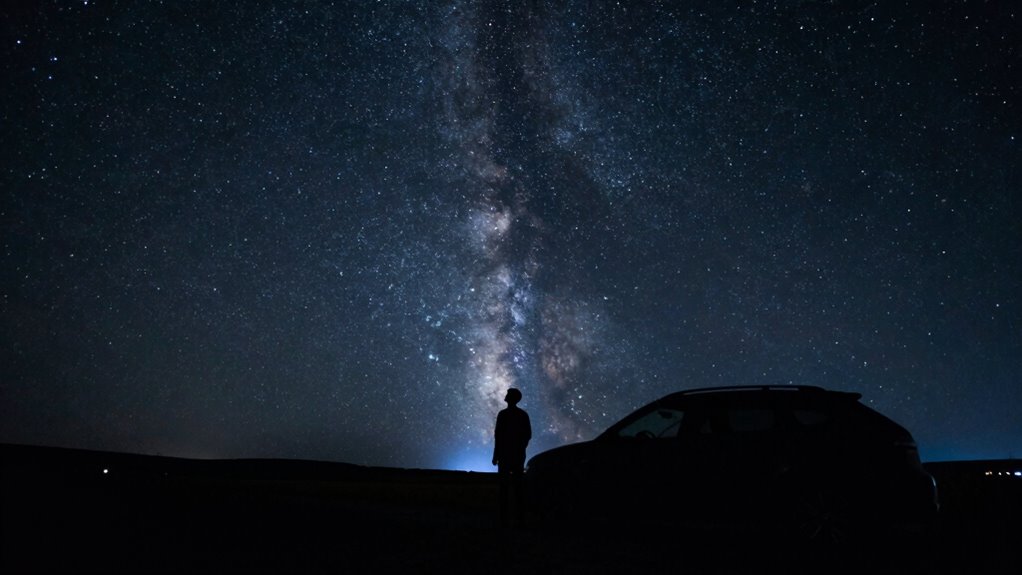
Wondering how to determine your local light pollution level? You can start by checking light pollution maps online, which highlight areas with strong urban glow. These maps overlay satellite data to show regions affected by artificial light, helping you identify dark sky spots nearby. Many websites and apps provide interactive maps, allowing you to compare your location’s light pollution level with other areas. Additionally, some tools offer real-time data, so you can see how urban glow varies throughout the night. This information helps you decide whether your area offers suitable conditions for stargazing or if you need to travel farther away from city lights. Using light pollution maps is a quick, effective way to assess your local sky quality before heading out.
What Are the Different Bortle Scale Classes (1-9)?
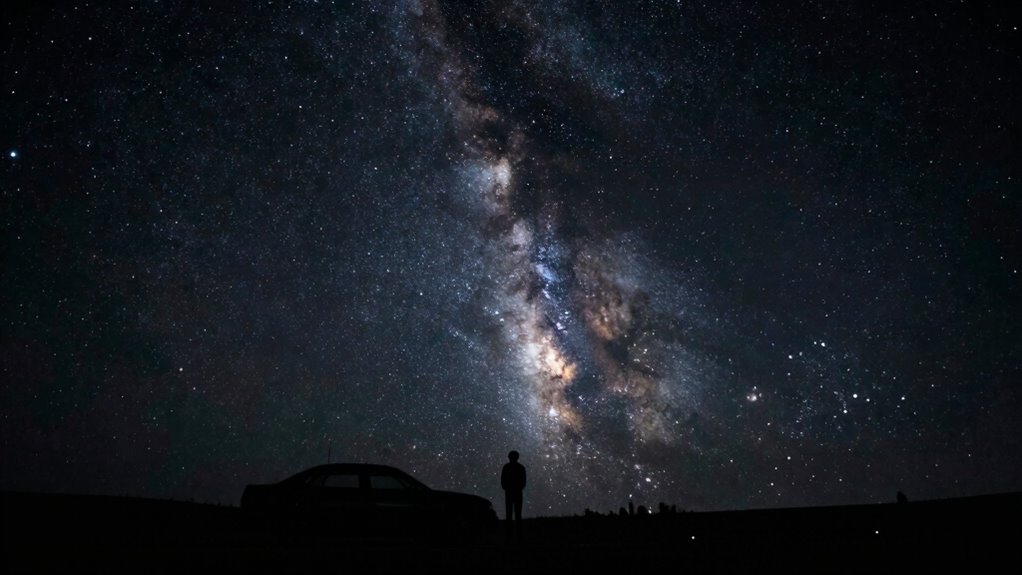
The Bortle Scale categorizes night sky brightness into nine classes, each representing a different level of light pollution. Class 1 offers a truly dark sky, ideal for stargazing, with minimal light pollution and a clear view of the Milky Way. Class 2 provides a dark sky with slight light pollution, still excellent for observing faint celestial objects. Class 3 indicates a rural sky with modest light pollution, where the Milky Way remains visible but less detailed. Class 4 signifies suburban areas with moderate light pollution, making it harder to see dim stars. Class 5 is typical of brighter suburban locations, where only brighter objects are visible. Class 6 shows heavily light-polluted areas, while Class 7 and above indicate urban environments with significant light pollution, obscuring most celestial features and dark sky views.
How to Find the Darkest Spots Near You Using the Bortle Scale
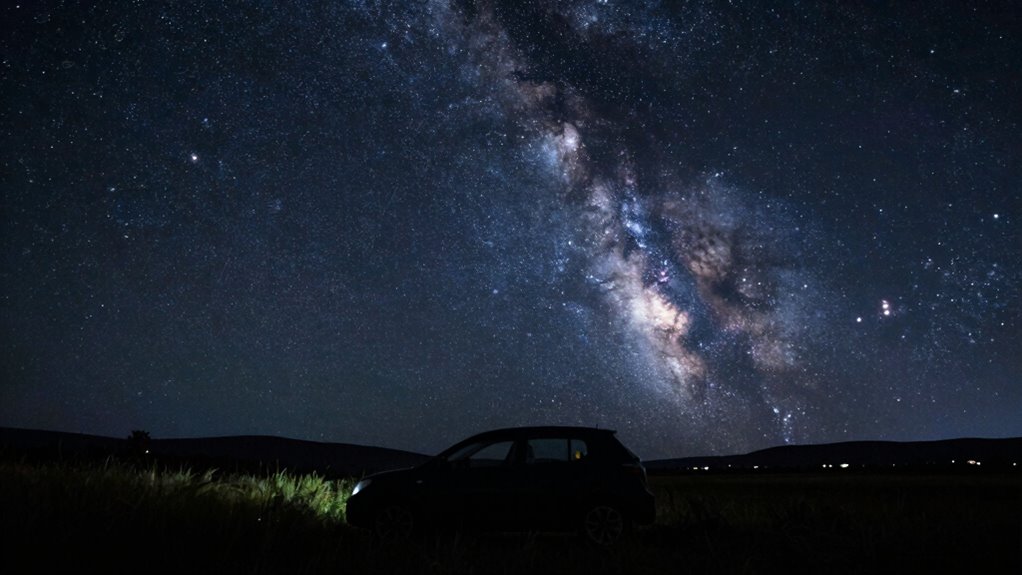
To find the darkest spots near you, start by researching local dark sky parks, nature reserves, or remote rural areas that are less affected by artificial light. These locations often have minimal light pollution, making them ideal for stargazing. Use online dark sky maps or apps that highlight areas with low Bortle scale ratings, which indicate darker skies. When scouting, look for spots away from city lights, tall buildings, and highways, as these contribute to light pollution. Visit forums or local astronomy groups for recommendations. Once you identify potential sites, visit them at night to assess the sky quality firsthand. The darker the sky, the better your chances of experiencing a true dark sky environment, perfect for observing stars and celestial events.
Features That Indicate a Dark Sky (Low Bortle Class)
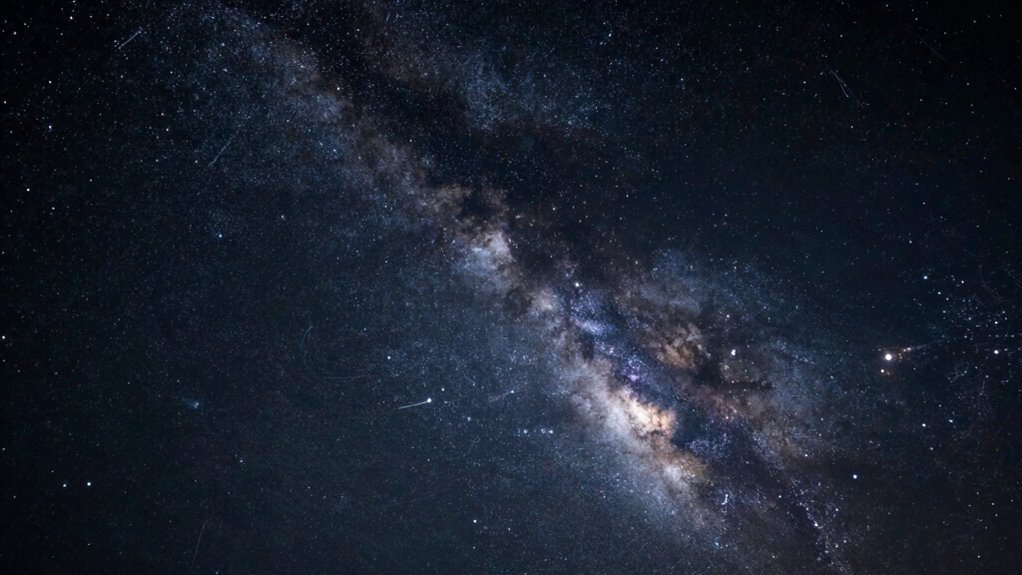
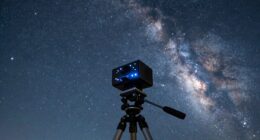
A dark sky with a low Bortle class is characterized by several clear, observable features that signal minimal light pollution. During such nights, lunar phases play a significant role; a new moon offers the darkest skies, while a bright, full moon can diminish your view of faint stars. Atmospheric conditions also matter—crisp, stable air with little haze or moisture creates clearer skies. You’ll notice a rich, dense star field with many visible constellations and the Milky Way stretching across the sky. There’s minimal skyglow, making celestial objects stand out vividly. In these conditions, darkness feels almost complete, and light pollution hardly interferes. Recognizing these features helps you identify a truly dark sky and optimize your stargazing experience. Additionally, optimal gear choices can enhance your astrophotography experience under these ideal conditions.
How to Measure Sky Brightness Before Stargazing
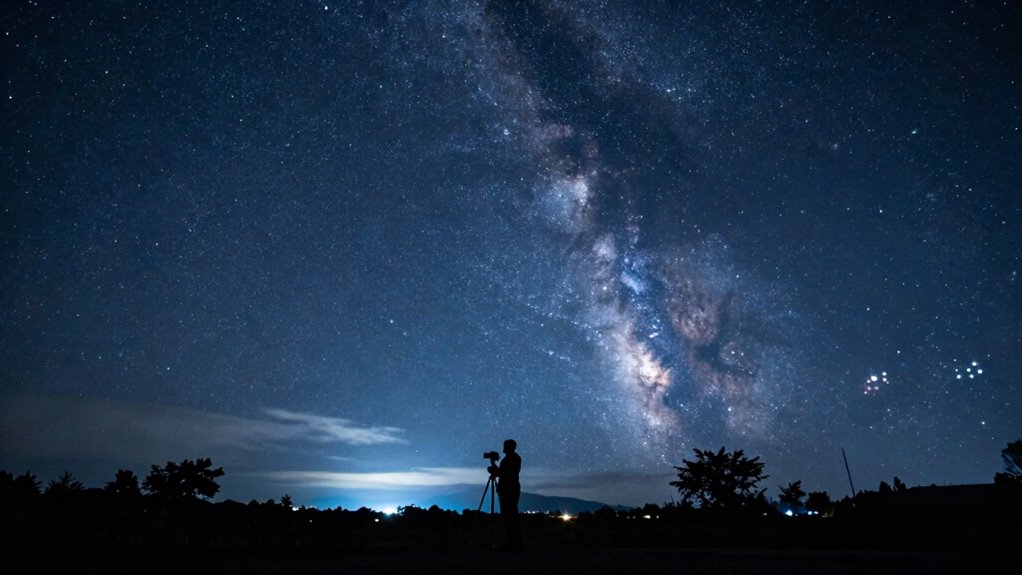
To gauge sky brightness before stargazing, you can use light pollution meters for precise readings. Alternatively, smartphone apps offer quick estimates by analyzing your device’s sensors. Both methods help you choose the best night for clear, dark skies. Additionally, understanding effective home soundproofing can further enhance your stargazing experience by minimizing external noise distractions.
Using Light Pollution Meters
Using light pollution meters is an effective way to quantify sky brightness before heading out for stargazing. These devices provide precise measurements that help you determine the quality of your viewing site, influencing your celestial navigation and astronomy photography plans. By measuring sky brightness directly, you can identify locations with minimal light interference, maximizing your chances of spotting faint objects. Light pollution meters are portable, easy to use, and give you immediate feedback, making them ideal for pre-trip assessments. Knowing the sky’s brightness helps you choose the best spot for observing or photographing the night sky, ensuring you’re not caught off guard by unexpected light pollution. This step enhances your overall stargazing experience, making your efforts more productive and enjoyable.
Estimating With Smartphone Apps
Smartphone apps offer a convenient way to estimate sky brightness quickly and without special equipment. They can help you assess sky quality for celestial navigation and determine if atmospheric interference is affecting visibility. These apps use your phone’s camera or light sensors to analyze the ambient sky glow, providing a rough Bortle scale estimate. Keep in mind that weather conditions, light pollution, and atmospheric interference can influence readings, so use apps as a guide rather than an absolute measure. Confirm your device’s settings are optimized for low-light conditions, and avoid pointing the camera at bright lights. By using these apps, you can make informed decisions about when and where to stargaze, maximizing your chances of observing the night sky’s true beauty.
Tips to Improve Your Sky Visibility at Any Site
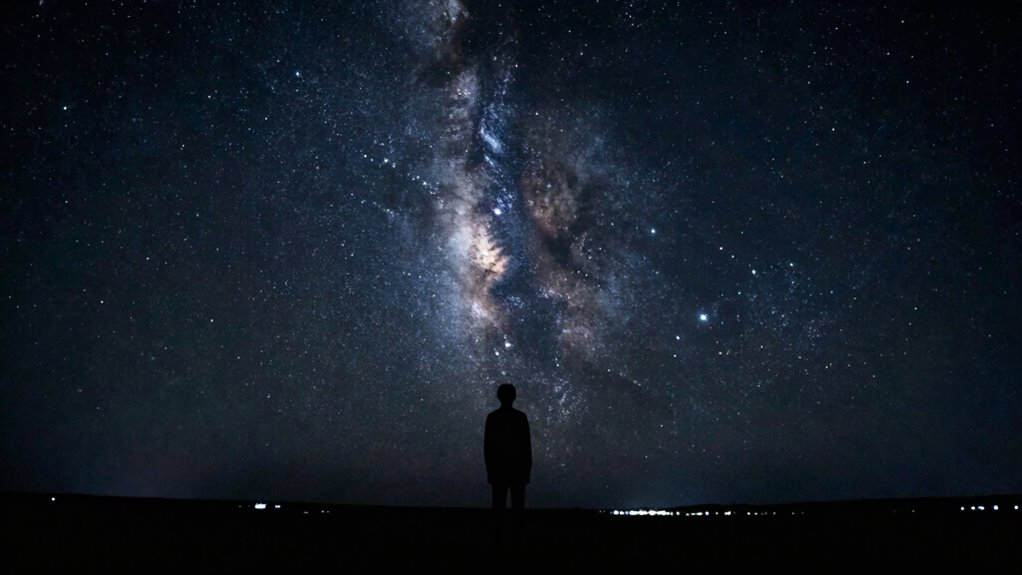
Improving your sky visibility at any site starts with minimizing light pollution and ensuring your eyes are properly adapted to the darkness. Avoid bright lights by turning off or shielding nearby sources. Check moon phases; a new moon provides the darkest skies, while a full moon can wash out faint stars. Use star charts to identify key constellations and navigate the night sky more efficiently. Allow your eyes at least 20 minutes to fully adjust to the dark, avoiding white light during this time. Keep a red flashlight handy—its light is less disruptive. Find a location away from city lights, preferably on higher ground or open areas. Additionally, consider using stain removal tips to clean any surfaces that might reflect unwanted light. These steps help you maximize your viewing experience regardless of your site’s inherent sky darkness.
Common Mistakes When Judging Sky Darkness and How to Avoid Them
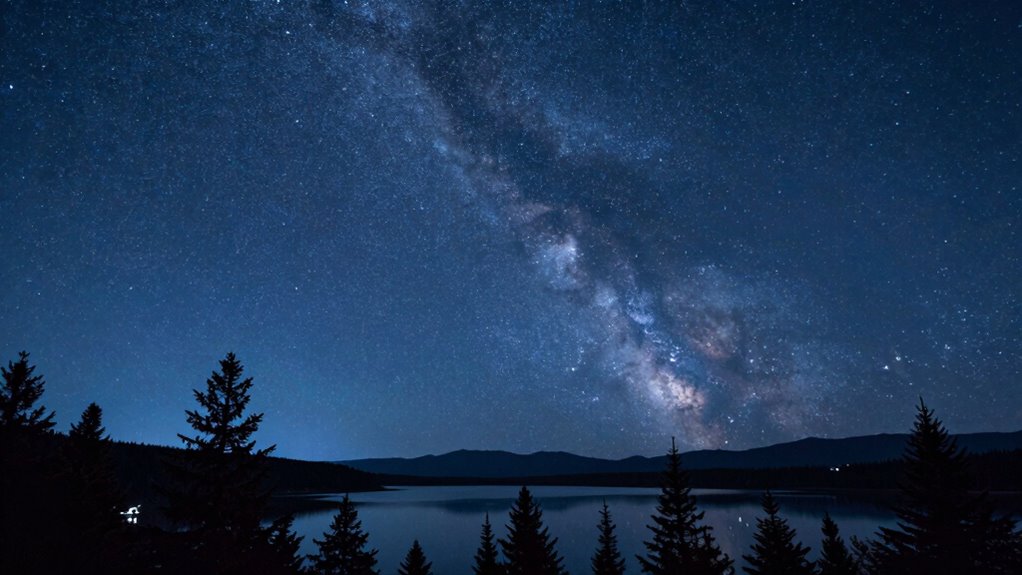
Many beginners assume they can accurately judge sky darkness just by looking up, but this often leads to misjudgments that hinder your stargazing experience. One common mistake is falling for light pollution myths, like believing that a slight glow means the sky is too bright for good viewing. In reality, subtle light pollution can considerably impact your visibility, especially of faint objects. Another mistake is ignoring stargazing etiquette, such as using bright flashlights or failing to minimize local light sources, which can distort your perception of darkness. To avoid these errors, use a reliable Bortle scale chart, and remember that actual sky conditions can differ from your initial impression. Being mindful of light pollution myths and practicing proper stargazing etiquette helps you accurately assess sky darkness.
How the Bortle Scale Helps You Plan Better Stargazing Trips
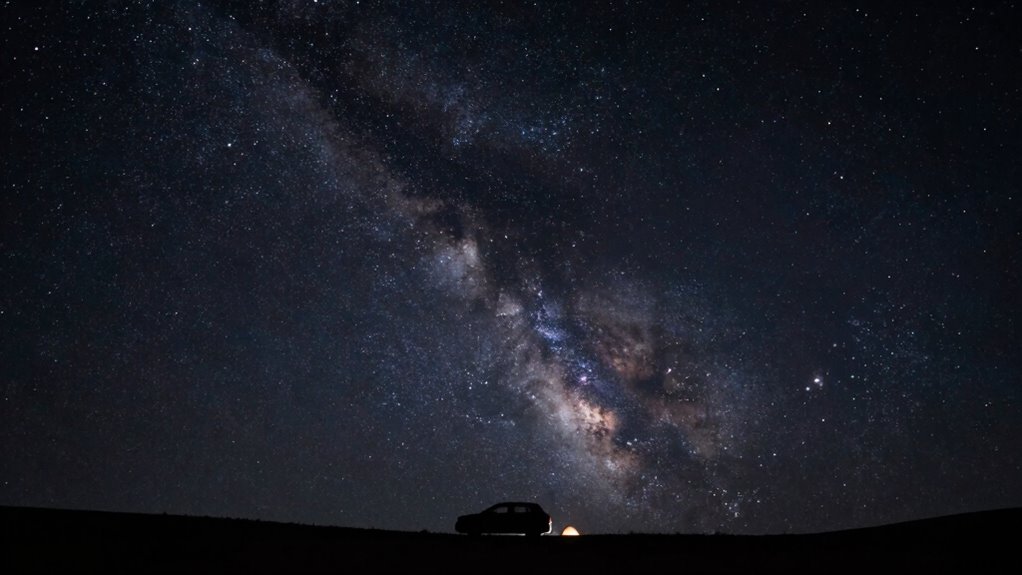
The Bortle Scale is an invaluable tool for planning your stargazing trips because it provides a clear, standardized way to assess sky darkness at different locations. By understanding a site’s Bortle class, you can predict the sky’s clarity and how much light pollution might interfere with your view. Lower Bortle numbers indicate darker skies with better sky clarity, ideal for observing faint objects. Higher numbers reveal more light pollution, making it harder to see stars and celestial details. Using the scale helps you choose the best spots away from city glow, ensuring your trip offers the most suitable viewing experience. Planning with the Bortle Scale means fewer surprises and more time enjoying the night sky’s true beauty.
Best Apps and Tools to Check Your Sky Quality Before You Go
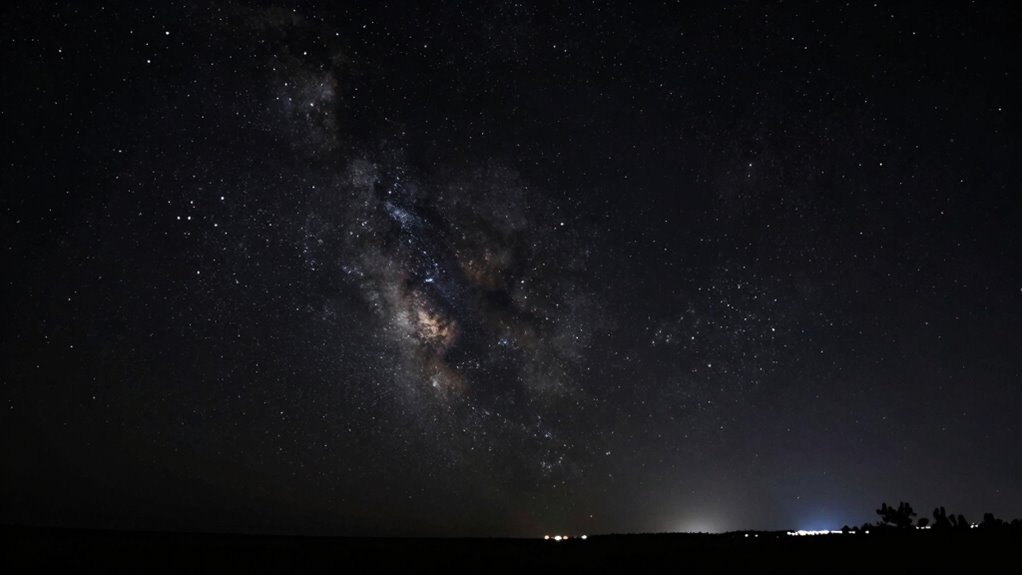
Before heading out for a stargazing night, it’s essential to check the sky quality to guarantee ideal viewing conditions. Several apps and tools help you evaluate light pollution and sky clarity beforehand. Sky Guide and Stellarium are popular for real-time sky maps, showing light pollution levels at your location. Dark Sky Finder and Light Pollution Map provide detailed data to identify optimal spots. These tools measure sky quality, helping you avoid areas with high light pollution that hinder stargazing. Use the table below to compare features:
| App/Tool | Key Feature | Best For |
|---|---|---|
| Sky Guide | Real-time sky maps | Night sky identification |
| Stellarium | Detailed star charts | Planning observations |
| Dark Sky Finder | Light pollution data | Finding dark sky locations |
| Light Pollution Map | Interactive maps | Evaluating sky quality remotely |
| Sky Quality App | Sky quality measurements | Quantitative light pollution info |
Frequently Asked Questions
How Often Does the Bortle Scale Get Updated or Revised?
The Bortle Scale gets updated infrequently, usually when new data on sky brightness or light pollution sources emerge. Researchers and astronomers may revise it to reflect changes in light pollution levels, but there’s no set schedule. You should stay informed about local light pollution sources and sky brightness conditions, as these updates help you better understand your observing environment and plan stargazing trips accordingly.
Can Weather Conditions Affect Bortle Scale Readings?
Think of the Bortle Scale as a mirror reflecting your sky’s true face. Weather conditions, like clouds or humidity, can distort that mirror, making light pollution seem worse or atmospheric interference more intense. Clear, dry nights give you the clearest readings, while storms or fog obscure the view. So, yes, weather impacts Bortle Scale readings, reminding you to pick your stargazing nights wisely for the most accurate assessment.
Is There a Global Standard for Measuring Bortle Scale Levels?
There isn’t a strict global standard for measuring Bortle scale levels, but astronomers often use consistent methods to assess sky glow and light pollution. You should compare your observations with established guidelines, considering local light pollution sources and atmospheric conditions. While measurements may vary slightly worldwide, understanding the impact of light pollution helps you gauge sky quality accurately and plan your stargazing adventures effectively.
How Does Urban Development Impact Bortle Scale Classifications Over Time?
Like Pandora’s box, urban development releases chaos on the night sky, increasing light pollution and pushing Bortle scale classifications toward brighter levels. As urban sprawl expands, more areas become less suitable for stargazing, reducing darkness and obscuring celestial views. Over time, cities and suburbs lose their dark sky status, making it harder to find pristine environments for astronomy. You’ll notice a decline in night sky quality, a direct impact of relentless urban growth.
Are There Any Safety Concerns When Traveling to Dark Sky Locations?
When traveling to dark sky locations, safety concerns include wildlife disturbances and road safety considerations. You should drive cautiously, especially at night, to avoid accidents and protect local wildlife. Be aware of potential hazards like uneven roads or limited lighting, and respect wildlife habitats by keeping noise levels down. Carry a flashlight, check local guidelines, and inform someone of your plans to guarantee a safe and enjoyable stargazing experience.
Conclusion
Knowing your Bortle Scale rating helps you find the best stargazing spots and avoid light pollution. Did you know that over 80% of the world’s population lives under light-polluted skies? By understanding and checking local light levels, you can plan trips to truly dark skies and enjoy breathtaking views. So, before you pack your gear, use the Bortle Scale to make every stargazing adventure unforgettable and sky-worthy.