

In pigment chemistry, your understanding of how molecules absorb and reflect light explains why colors appear the way they do. When light hits a pigment, molecules selectively absorb certain wavelengths, while reflecting others, which your eyes perceive as specific colors. The molecular structure affects how vibrant and durable those colors stay over time. If you stay curious, you’ll uncover more about how these processes influence the lasting beauty and stability of pigments in various applications.
Key Takeaways
- Pigments absorb specific wavelengths of light based on their molecular structure, influencing the color they reflect.
- Reflected light wavelengths determine the visible color perceived by the human eye.
- The molecular interactions within pigments control which light wavelengths are absorbed or reflected.
- Combining different pigments merges their absorption and reflection properties, creating new colors.
- The stability of pigment molecules affects their ability to maintain consistent absorption and reflection over time.
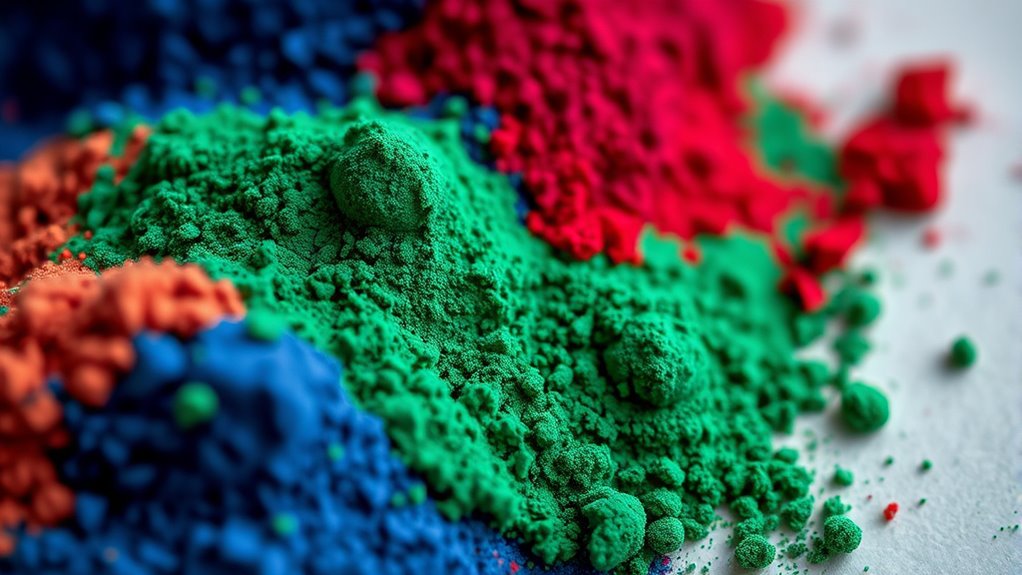
Have you ever wondered what gives colors their vibrancy and durability? The secret lies in how pigments absorb and reflect light, which directly relates to their chemical makeup. When you look at a colored object, it’s because certain wavelengths of light are reflected to your eyes while others are absorbed. This process is fundamental to understanding pigment chemistry, especially when it comes to color mixing and chemical stability.
Color mixing is a delicate dance of light absorption and reflection. Different pigments contain molecules that absorb specific wavelengths of light, and the combination of these molecules determines the final color you see. For example, mixing a blue pigment with a yellow one results in a green hue because the pigments absorb different parts of the spectrum and reflect the overlapping wavelengths. The key here is that each pigment’s ability to absorb certain wavelengths depends on its molecular structure. When you mix colors, you’re effectively combining their absorption properties, which can produce a wide range of shades or even new colors altogether. This process relies heavily on understanding how pigments interact with light and how their molecular structures influence this interaction.
Chemical stability plays an essential role in maintaining a pigment’s color over time. If a pigment isn’t chemically stable, exposure to light, heat, or environmental factors can cause its molecules to break down or change. This degradation leads to fading, discoloration, or even complete loss of the original hue. That’s why manufacturers put so much effort into developing pigments with high chemical stability. These stable pigments resist chemical reactions that could alter their structure, ensuring that their colors remain vibrant and true for years. The stability of a pigment depends on its molecular bonds and how resistant they are to oxidation, UV radiation, and other environmental stresses. When choosing pigments for an application, you want to think about their chemical stability to guarantee long-lasting, durable colors.
In essence, understanding how pigments absorb and reflect light, combined with their chemical stability, helps explain why colors appear the way they do and how they can endure over time. It’s a fascinating interplay of molecular science and visual perception. Whether you’re mixing paints or selecting dyes for textiles, knowing these principles allows you to predict how a pigment will behave and how it will look in the finished product. Additionally, recent advances in AI-driven material analysis are helping scientists develop more durable and vibrant pigments by predicting their chemical stability. So next time you admire a vibrant painting or a colorful fabric, remember that it’s not just about aesthetics but also a complex chemistry that keeps those colors alive and striking.

Astromania Flexible Dew Shield for Telescope Front Outer Diameter from 148-167mm Diameter - Keep Dew Away and Gives You Clear observing for The Entire Night
Astromania flexible dew shield are constructed of black ABS plastic and are all felt lined for maximum absorption...
As an affiliate, we earn on qualifying purchases.
Frequently Asked Questions
How Do Environmental Factors Affect Pigment Stability Over Time?
Environmental factors like UV degradation and humidity effects markedly impact pigment stability over time. UV rays break down pigment molecules, causing fading or color changes, while high humidity promotes chemical reactions that can lead to deterioration or mold growth. To protect your pigments, avoid prolonged exposure to sunlight and moisture, store them in a cool, dry place, and consider using protective coatings or barriers. This helps preserve their vibrant colors longer.
Can Synthetic Pigments Completely Replace Natural Pigments in Art?
Synthetic pigments can often replace natural pigments, offering brighter colors and better color longevity. You’ll find they’re more consistent and durable, like a trusty shield against fading. While some artists prefer natural pigments for their unique qualities, synthetic ones provide a practical, long-lasting alternative. However, they might lack the subtlety and depth natural pigments offer, so your choice depends on your art’s goals and your appreciation for tradition versus innovation.
What Are the Health Risks Associated With Pigment Manufacturing?
During pigment manufacturing, you face health risks mainly from occupational exposure and chemical toxicity. Breathing in airborne dust or fumes can cause respiratory issues, skin contact may lead to irritation, and long-term exposure might increase cancer risks. To stay safe, you should use proper protective gear, guarantee good ventilation, and follow safety protocols. Ignoring these precautions can seriously harm your health over time.
How Do Pigments Influence the Thermal Properties of Materials?
You’ll find that pigments influence the thermal properties of materials by affecting infrared reflectance and heat absorption. Darker pigments tend to absorb more heat, increasing the material’s temperature, while lighter pigments reflect more infrared radiation, helping keep it cooler. By choosing specific pigments, you can control how much heat a surface absorbs or reflects, which is essential for energy efficiency and temperature regulation in various applications.
Are There Eco-Friendly Methods for Recycling or Disposing of Pigments?
Think of eco-friendly disposal methods as gentle hands guiding pigments back to nature. You can use biodegradable pigments, which break down safely without harming the environment. Recycling techniques like pigment recovery and repurposing reduce waste, while composting biodegradable pigments offers an eco-friendly disposal option. These methods turn old pigments into new resources, helping you reduce your ecological footprint and keep our planet healthy and vibrant.

USB Fast-Warm 2in1 XL Spliceable Telescopes DSLR Camera Dew Heater Dew Prevention Shield, Active Lens Warmer Strap Anti-Condensation Bands for Canon Nikon Sony Gskyer Celestron (Max Ø 6" /180mm)
【Spliceable & Fixed by velcro】: Double 330mm dew heater lens strips for easy splicing into longer strap, compatible...
As an affiliate, we earn on qualifying purchases.
Conclusion
In the world of pigments, understanding absorption and reflection is like revealing a secret language that colors our world. When you grasp how pigments absorb certain wavelengths and reflect others, you gain the power to predict and manipulate hues with ease. Think of it as tuning a musical instrument—each pigment a note, crafting a vibrant symphony that paints your perception. Master these principles, and you’ll turn every surface into a canvas of endless possibilities.

Telescope Accessory Set Flexible Heater Dew Shield for Telescope S8043 Telescope Camera
Name: Flexible Heater Dew Shield
As an affiliate, we earn on qualifying purchases.

S50 Telescope Dew Shield Combination, Bahtinov mask, Cap Cover and Diffraction Spike Set Compatible with ZWO SeeStar S50 Telescope
Note: S50 Telescope Dew Shield combination can be directly installed on the telescope lens except Cap Cover, and...
As an affiliate, we earn on qualifying purchases.