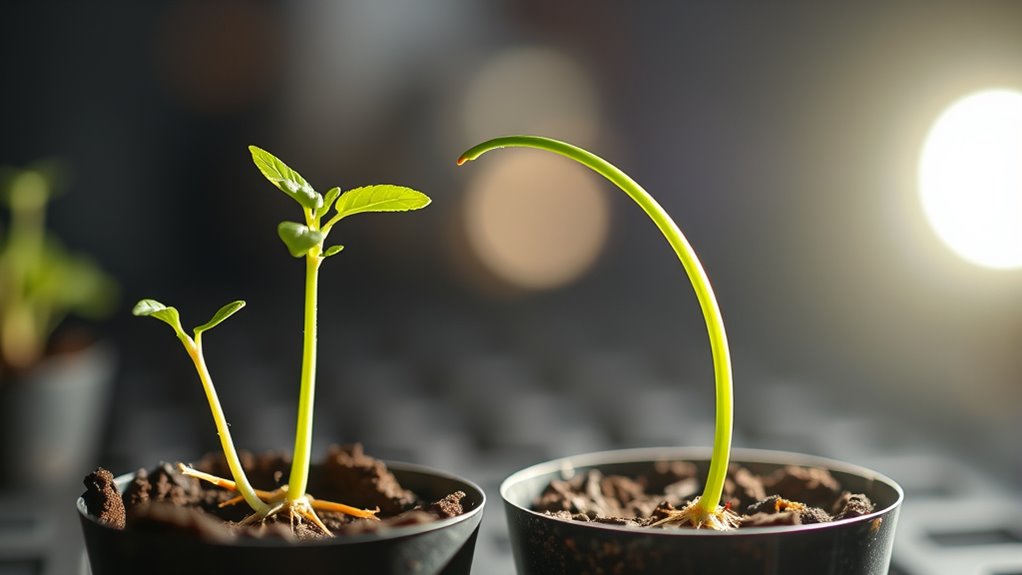

To perform a phototropism experiment, set up a potted plant in a controlled environment and shine a light from one side. Observe how the plant’s stem bends toward the light over time. This happens because specialized cells detect light, and hormones called auxins cause the shaded side to grow faster. Moving the light source alters the bending response, showing how plants adapt. Keep exploring further to understand these fascinating growth mechanisms in detail.
Key Takeaways
- Set up a controlled environment with a directional light source to observe plant growth responses.
- Shine light from one side of the plant to induce phototropic bending toward the light.
- Use photoreceptors and auxin hormones to explain how the plant detects and responds to light direction.
- Observe differential growth, with cells on the shaded side elongating more, causing the plant to bend toward the light.
- Vary light position or intensity to study effects on the speed and angle of plant bending.

Have you ever wondered how plants grow toward light? It’s a fascinating process called phototropism, and understanding it reveals how plants respond to their environment. When you place a plant in a certain location, it doesn’t just grow randomly; instead, it actively reacts to the light source around it. This plant response ensures they maximize their exposure to sunlight, which is essential for photosynthesis. By studying this behavior, you can see firsthand how plants sense and adapt to their surroundings.
In a typical phototropism experiment, you set up a controlled environment where a light source is directed at a plant from one side. As the light hits the plant, cells on the side away from the light start to elongate more than those on the illuminated side. This differential growth causes the plant to bend toward the light source. You’ll notice that the stem curves as the plant responds to the directional stimulus. This bending isn’t random; it’s a precise response driven by the plant’s ability to perceive light and react accordingly, showcasing an incredible example of biological adaptation.
The mechanism behind this plant response involves specialized cells that detect light. These cells contain photoreceptors, primarily called auxins, which are hormones that regulate growth. When light hits one side of the plant, auxins move toward the shaded side, promoting cell elongation there. As a result, the shaded side grows faster, pushing the plant to bend toward the light source. This process is quick and efficient, helping the plant optimize its position for maximum sunlight absorption. When you observe a plant leaning or bending in response to a light source, you’re witnessing this finely tuned process in action.
You can experiment further by changing the position or intensity of the light source to see how different conditions influence the plant’s response. For example, if you move the light closer or further away, the speed and degree of bending will vary. Similarly, using multiple light sources from different angles can cause the plant to grow in multiple directions, illustrating how adaptable and sensitive plants are to their environment. This experiment not only demonstrates plant response but also teaches you about the importance of light for plant growth and survival. Additionally, incorporating affordable and accessible materials makes it easier to conduct this experiment at home or in a classroom setting, emphasizing that learning about plant adaptation can be both fun and budget-friendly.
potted plants for phototropism experiment
As an affiliate, we earn on qualifying purchases.
As an affiliate, we earn on qualifying purchases.
Frequently Asked Questions
How Does Phototropism Differ in Roots Versus Stems?
You’ll notice that phototropism causes roots to grow away from light, showing negative phototropism, while stems grow toward light, demonstrating positive phototropism. Roots exhibit different behavior, often growing underground or away from light, whereas stems orient themselves toward light sources. This difference in root behavior and stem orientation helps plants optimize resource acquisition, with roots seeking moisture and nutrients, and stems maximizing light capture for photosynthesis.
What Other Environmental Factors Influence Plant Growth?
You might be surprised to learn that soil nutrients and water availability substantially influence plant growth. These factors can trigger changes in root and shoot development, affecting overall health. For example, inadequate water limits growth, while rich soil nutrients promote lush foliage. You should guarantee plants receive enough water and nutrients, as these environmental factors work together to optimize growth and development, beyond just light direction.
Can Phototropism Be Induced Artificially?
Yes, you can induce phototropism artificially by using artificial light sources and specific phototropic triggers. When you shine light from one direction, it mimics natural sunlight, causing plants to bend toward the light. By controlling the intensity and angle of artificial light, you influence the plant’s growth direction. This method allows you to study and manipulate plant behavior, making phototropism a useful tool in scientific experiments and horticulture.
How Quickly Do Plants Respond to Light Direction Changes?
Like a sudden spark igniting a flame, your plant reacts swiftly to light direction changes, often within minutes. When light intensity shifts, plant signaling pathways activate, prompting the plant to bend toward the new light source. This rapid response showcases their incredible adaptability, allowing them to maximize photosynthesis. So, you can expect noticeable movement in as little as 15 to 30 minutes as your plant adjusts to the new light environment.
Are There Plants That Do Not Exhibit Phototropism?
Some plants are non-responsive, meaning they lack phototropism and don’t bend toward light. You’ll find that certain ferns, mosses, and some aquatic plants show an absence of phototropism because they don’t have the necessary growth hormones or structures. These plants often rely on other mechanisms for survival, such as water or nutrient cues, rather than light direction. So, yes, non-responsive plants do exist, and they don’t exhibit typical phototropism behaviors.
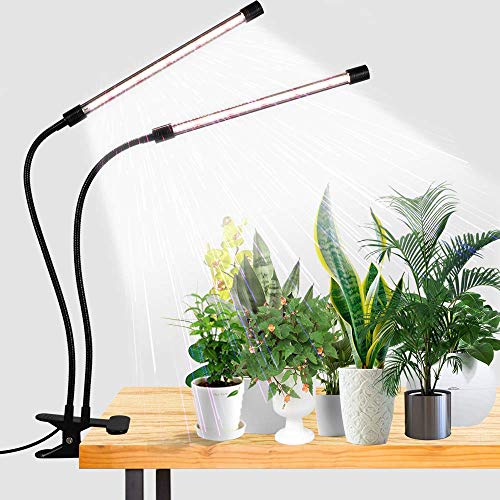
GooingTop LED Grow Light,6000K Full Spectrum Clip Plant Growing Lamp with White Red LEDs for Indoor Plants,5-Level Dimmable,Auto On Off Timing 4 8 12Hrs
6000K White Light – equipped with 10 Red + 74 White LEDs, this growing Lamp is similar to…
As an affiliate, we earn on qualifying purchases.
As an affiliate, we earn on qualifying purchases.
Conclusion
As you observe the plant bending toward the light, you see nature’s quiet response to its environment. The still, dark soil contrasts sharply with the vibrant, reaching leaves, illustrating growth driven by unseen forces. This experiment shows how life constantly seeks illumination, just as shadows remind us of darkness. In this dance between light and dark, plants teach you that even in stillness, there’s a drive toward energy and warmth.

Garden Safe Brand TakeRoot Rooting Hormone, 2 Count, Powder Helps Grow New Plants from Cuttings Including Most Home, Garden and Greenhouse Varieties, 2 Pack
PROMOTES ROOTING: Rooting hormone grows new plants from cuttings
As an affiliate, we earn on qualifying purchases.
As an affiliate, we earn on qualifying purchases.
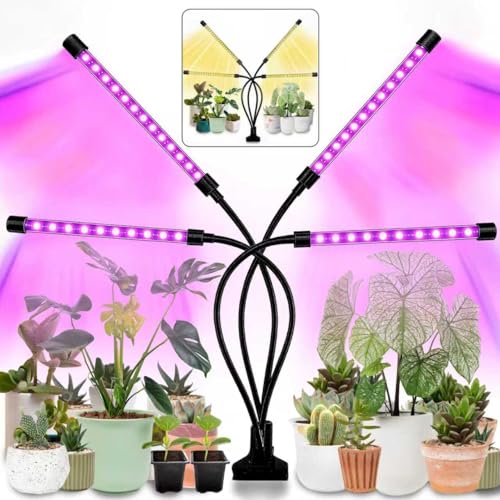
LEOTER Grow Light for Indoor Plants – Upgraded Version 80 LED Lamps with Full Spectrum & Red Blue Spectrum, 3/9/12H Timer, 10 Dimmable Level, Adjustable Gooseneck,3 Switch Modes
grow lights
As an affiliate, we earn on qualifying purchases.
As an affiliate, we earn on qualifying purchases.