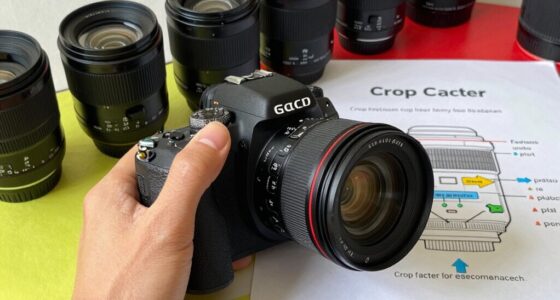

To enhance macro depth, you should use focus stacking by capturing multiple images with slightly different focus points along your subject’s depth. Keep the camera steady and guarantee there’s enough overlap between shots for smooth blending later. Use a smaller aperture like f/8 or f/11 to increase depth of field while avoiding diffraction. Proper focus adjustments and overlap make your final image sharp and detailed from front to back. Continue exploring to master this powerful technique.
Key Takeaways
- Focus stacking combines multiple images at different focus points to extend depth of field in macro photography.
- Capture a series of shots with incremental focus adjustments, ensuring slight overlap for seamless blending.
- Use optimal aperture settings (like f/8 or f/11) to maximize depth of field while minimizing diffraction.
- Precise focus adjustments and sufficient coverage of the subject’s depth improve stacking efficiency and results.
- The technique reveals intricate textures and details, creating sharp, visually compelling macro images with enhanced depth.
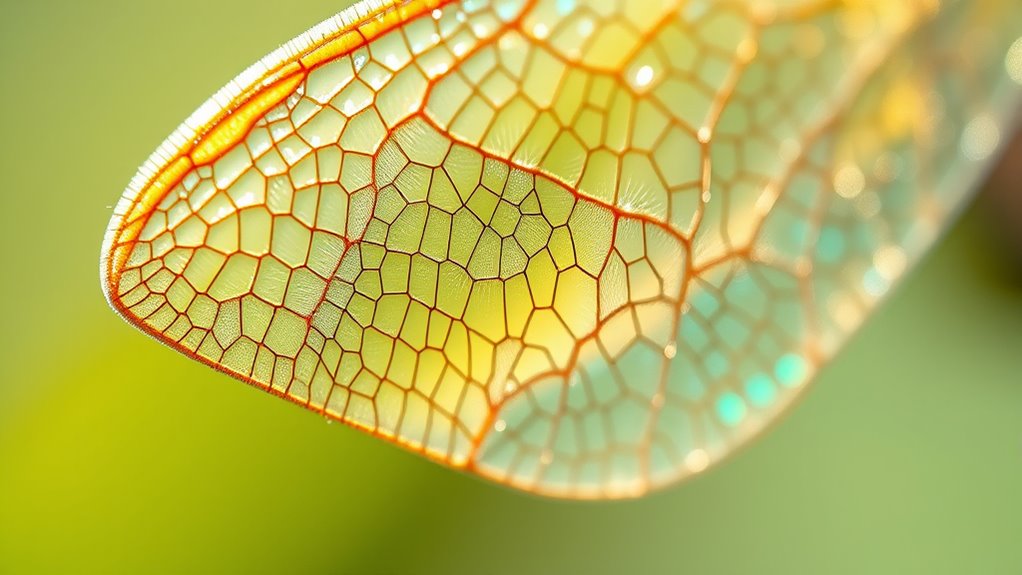
When capturing macro images, achieving sharp focus throughout the entire subject can be challenging due to the shallow depth of field. This is a common obstacle because, at high magnifications, only a thin slice of the subject appears in focus at any one time. To overcome this, focus stacking becomes an essential technique. It involves capturing multiple images at different focus points and combining them later to create a final image with greater depth and sharpness. This process considerably enhances depth, allowing you to showcase fine details from front to back, which would otherwise be lost in a single shot. Additionally, utilizing top mattress toppers can help improve comfort during extended macro shooting sessions, ensuring steadiness and focus stability. Depth enhancement through focus stacking relies heavily on precise aperture tuning. When you set your camera aperture too wide, the depth of field shrinks, making it difficult to get everything in focus in a macro scene. Conversely, stopping down the aperture increases the depth of field by reducing the diameter of the lens opening, but it can introduce diffraction, softening the overall image. Achieving the most suitable aperture is about finding a balance: typically, stopping down to around f/8 or f/11 offers the best compromise between depth and image sharpness. This ideal aperture minimizes diffraction while maximizing depth, making it easier to gather multiple focus points for stacking. As you prepare your shot, consider how aperture impacts your ability to capture multiple focus layers. A smaller aperture means less of the scene is in focus at any given time, but it also reduces the need for extremely fine focus adjustments when capturing multiple images. When taking the shots, move your focus point incrementally, ensuring that each image overlaps slightly with the previous one. This overlap is essential for seamless blending during post-processing. By doing so, you create a series of images that, when combined, reveal intricate details across the entire subject, from the foreground to the background. Focus stacking doesn’t just improve depth; it also enhances the overall clarity of your macro images. When combined with aperture tuning, it helps you maximize sharpness without sacrificing image quality. Proper depth enhancement through stacking allows you to reveal textures, patterns, and minute features with exceptional detail, making your macro photography more compelling. Remember, the key is to control your aperture carefully and take enough focus-bracketed shots to cover the entire depth of your subject. When you master these techniques, your macro images will stand out with stunning clarity and depth that truly captures the viewer’s attention.

NEEWER 4-Way Macro Focusing Rail Slider with Quick Release Plate, 1/4”-20 Thread for Macro Photography and Close-Up Shooting, Compatible with Canon Nikon Fujifilm Sony DSLR Mirrorless Camera
- Macro Shooting Design: Engineered for fast, accurate focusing
- 4-Way Movement: Left, right, forward, and backward adjustments
- Precise Adjustments: Large knobs with numeric scales
As an affiliate, we earn on qualifying purchases.
As an affiliate, we earn on qualifying purchases.
Frequently Asked Questions
What Equipment Is Essential for Focus Stacking in Macro Photography?
You’ll need a stable tripod to guarantee your camera stays steady between shots, critical for seamless focus stacking. Choose a macro lens compatible with your camera to achieve sharp detail at close distances. An autofocus switch can help you maintain control, and a focus rail or extension tube allows precise adjustments. These essentials help you capture sharp, aligned images for effective focus stacking, enhancing your macro photography.
How Do Lighting Conditions Affect Focus Stacking Results?
Think of lighting as the sun guiding your macro garden. When lighting is consistent, your focus stacking yields crisp, seamless images. However, shadows and glare act like mischievous clouds, disrupting clarity and creating uneven highlights. Poor lighting conditions make it tricky to align focus layers, resulting in blurred or inconsistent results. To succeed, guarantee steady, even lighting, minimizing shadows and glare, so your macro masterpiece shines with clarity and depth.
Can Focus Stacking Be Used With Handheld Macro Photography?
Yes, you can use focus stacking with handheld macro photography, but it’s challenging. To get good results, you need to maximize depth of field and maintain camera stability. Use image stabilization if available, and take multiple shots from different focus points, keeping your movements minimal. Software will then combine these images to create a sharp, detailed macro shot with enhanced depth of field.
What Software Options Are Best for Focus Stacking Processing?
You should consider software options like Helicon Focus, Zerene Stacker, or Adobe Photoshop for focus stacking processing. These programs excel at combining multiple images with different focus points to create sharp macro shots. Use their processing techniques to align and blend images seamlessly, ensuring crisp depth in your macro photos. Experiment with their settings to find the best results for your handheld macro photography, making your images stand out with incredible detail.
How Do You Handle Moving Subjects During Focus Stacking?
Like a tightrope walker balancing on a wire, you must carefully manage subject movement during focus stacking. To do this, employ alignment techniques such as software with motion correction or manually adjust images to minimize blur caused by movement. Keep your camera steady, use faster shutter speeds, and shoot in burst mode to reduce subject shift. These steps help you achieve sharp, seamless macro images even when subjects try to move.
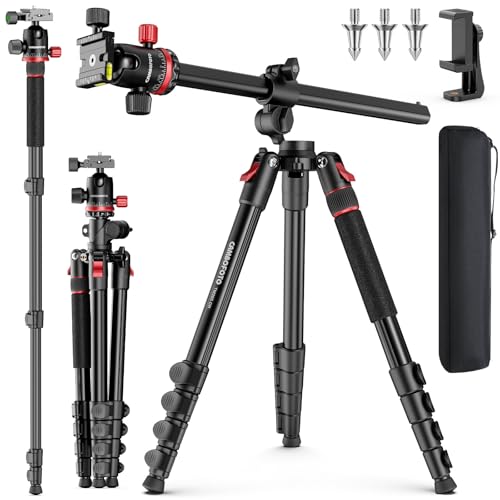
CAMBOFOTO 68" Camera Tripod, Overhead Tripod Horizontal, Detachable Monopod
- Sturdy & Durable: Constructed from robust aluminum alloy
- Maximum Height: Extends to 68 inches
- Compact Design: Folds down to 22 inches
As an affiliate, we earn on qualifying purchases.
As an affiliate, we earn on qualifying purchases.
Conclusion
By mastering focus stacking, you unveil a secret garden of macro photography, revealing details hidden in the shadows. It’s like wielding a magic lens that pulls the depths of tiny worlds into sharp focus. With patience and practice, you’ll transform your images from fleeting glimpses to vivid realities. So, embrace this technique and let your camera become a brush, painting stunning, layered stories in every close-up shot. Your macro adventures are just a focus stack away from greatness.

Canon RF35mm F1.8 is Macro STM Lens, Black, Compatible with EOS R Series Mirrorless Cameras
- Compact Macro Lens: 0.5x magnification ratio
- Minimum Focusing Distance: 0.56 ft. (0.17M)
- Control Ring: Direct setting changes
As an affiliate, we earn on qualifying purchases.
As an affiliate, we earn on qualifying purchases.

JJC 46mm ND Filter ND2-2000 VND Variable Neutral Density Adjustable Fader
- Wide aperture photography: Darkens image for creative effects
- Adjustable density range: ND2 to ND2000 with rotating ring
- Avoids multiple filters: Replaces many fixed ND filters
As an affiliate, we earn on qualifying purchases.
As an affiliate, we earn on qualifying purchases.