
TL;DR

Get the latest gadgets delivered free — and shop member deals
- Fast, free delivery on millions of items
- Access to Prime Big Deal Days deals on October 6–7
- Prime Video, Amazon Music and more included
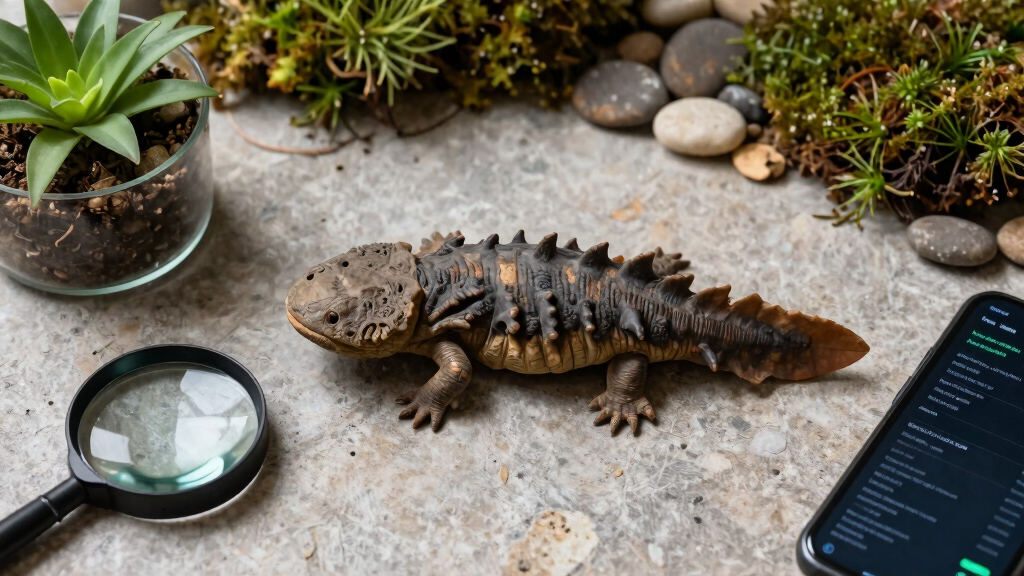
Researchers in Mexico have described a new fossil species of axolotl, named Ambystoma quetzalcoatli, dating back to the Pliocene. This discovery extends the known evolutionary history of axolotls by millions of years and highlights Mexico’s ancient biodiversity.
Scientists at the Zaragoza School of Advanced Studies (FES Zaragoza) at the National Autonomous University of Mexico (UNAM) have formally described a new fossil species of axolotl, named Ambystoma quetzalcoatli. The discovery, based on well-preserved fossils from Hidalgo, marks the first fossil salamander species to be described in Mexico and extends the known evolutionary history of the genus Ambystoma by several million years.
The fossils were found in the municipality of Atotonilco el Grande, in an area that was once part of an extensive freshwater lake system during the Pliocene epoch. The fossils include complete, articulated skeletons that allowed researchers to perform detailed anatomical analyses using CT scans and modern imaging techniques. The fossils display distinctive features, such as an elongated skull opening, a different palate structure, and 17 trunk vertebrae—one more than modern axolotls, which typically have 16 or fewer.
Researchers compared these fossils with 13 living Ambystoma species, including the Mexican axolotl (Ambystoma mexicanum) and other endemic salamanders. The analysis revealed significant anatomical differences, confirming that these remains represent a previously unknown species. The fossils also show evidence of neoteny, a trait where juvenile features are retained into adulthood, indicating that this life-history strategy was present in Mexican axolotls during the Pliocene.
According to the study published in Palaeontologia Electronica, the discovery suggests that the evolutionary lineage of axolotls in Mexico is much older than previously believed, dating back to at least the Pliocene epoch, roughly 3 million years ago.
Implications for Understanding Mexican Amphibian Evolution
The discovery of Ambystoma quetzalcoatli significantly expands the known timeline of axolotl evolution, indicating that these amphibians have inhabited Mexico for millions of years. It underscores the deep roots of Mexico’s biodiversity and suggests that ancient lake systems played a crucial role in the development of neotenic amphibian species. This finding enhances understanding of how stable freshwater environments fostered unique evolutionary adaptations, such as neoteny, in Mexican salamanders.
Additionally, the discovery provides valuable insights into the evolutionary processes that shaped modern Mexican amphibians and highlights the importance of fossil records in reconstructing biodiversity history. Recognizing the ancient origins of axolotls may influence conservation strategies for their extant relatives, especially as many are critically endangered today.
As an affiliate, we earn on qualifying purchases.
Fossil Evidence of Ancient Mexican Lake Ecosystems
The fossils were uncovered in Hidalgo, an area that was once part of a large freshwater lake system during the Pliocene, covering about 85 square kilometers. This environment supported diverse aquatic life, including plants, diatoms, gastropods, and fish, but amphibian fossils had not been previously studied or described from this site. The fossils’ exceptional preservation, including articulated skeletons, allowed for detailed anatomical comparisons with modern salamanders.
Prior to this discovery, the oldest known records of Mexican salamanders were limited to more recent periods, with little direct fossil evidence of their ancient ancestors. The identification of Ambystoma quetzalcoatli fills a significant gap in the fossil record, demonstrating that axolotl-like species existed during the Pliocene and that their lineage has persisted through significant geological and climatic changes.
“The fossils show clear anatomical differences from modern axolotls, confirming this as a new species that lived millions of years ago.”
— an anonymous researcher
As an affiliate, we earn on qualifying purchases.
Remaining Questions About the Species’ Ecology and Extinction
It is still unclear how Ambystoma quetzalcoatli interacted with its environment or its exact ecological role during the Pliocene. Additionally, the reasons for its extinction and how it relates to the modern axolotl populations are not yet known. Researchers are also investigating whether similar species existed in other regions and how widespread this lineage was during the Pliocene.
As an affiliate, we earn on qualifying purchases.
Future Research on Ancient Mexican Amphibians
Scientists plan to continue examining fossil sites in Mexico to find more specimens that could provide further insights into the evolution of Mexican salamanders. Genetic studies on modern species may also help clarify the evolutionary relationships and divergence times. Additionally, researchers aim to explore how environmental changes over millions of years influenced the survival and extinction of ancient amphibian lineages, including Ambystoma quetzalcoatli.
As an affiliate, we earn on qualifying purchases.
Key Questions
What is the significance of discovering a new fossil axolotl species?
The discovery extends the known evolutionary history of axolotls by millions of years, providing new insights into the biodiversity and ecological history of Mexico’s ancient lakes.
How does this fossil differ from modern axolotls?
The fossils show anatomical differences such as an elongated skull opening, a different palate structure, and an extra vertebra, indicating it is a distinct species from those alive today.
What does this mean for current conservation efforts?
Understanding the ancient origins of axolotls underscores their long-standing ecological importance and may influence strategies to preserve their modern relatives, many of which are critically endangered.
When were these fossils discovered?
The fossils were collected in the early 2000s and recently studied using advanced imaging techniques, leading to their formal description in 2024.
Will more fossils be found in the future?
Scientists plan to explore additional sites in Mexico to uncover more fossils that could shed light on the evolution and distribution of ancient salamanders.
Source: WIRED
Halloween Picks
halloween
As an affiliate, we earn on qualifying purchases.