
TL;DR
Bitcoin War, a free visualization from isbitcoindead.com, depicts live cryptocurrency trades as a cinematic battle between buyers and sellers. The project runs in a browser and uses public exchange data, but the available description does not establish that artificial intelligence powers the experience.
Isbitcoindead.com has made Bitcoin War available as a free browser experience that turns live Bitcoin trades into an animated conflict between buyers and sellers. The project presents market activity as entertainment and data visualization, not as a trading service, while leaving open whether any artificial intelligence is involved.
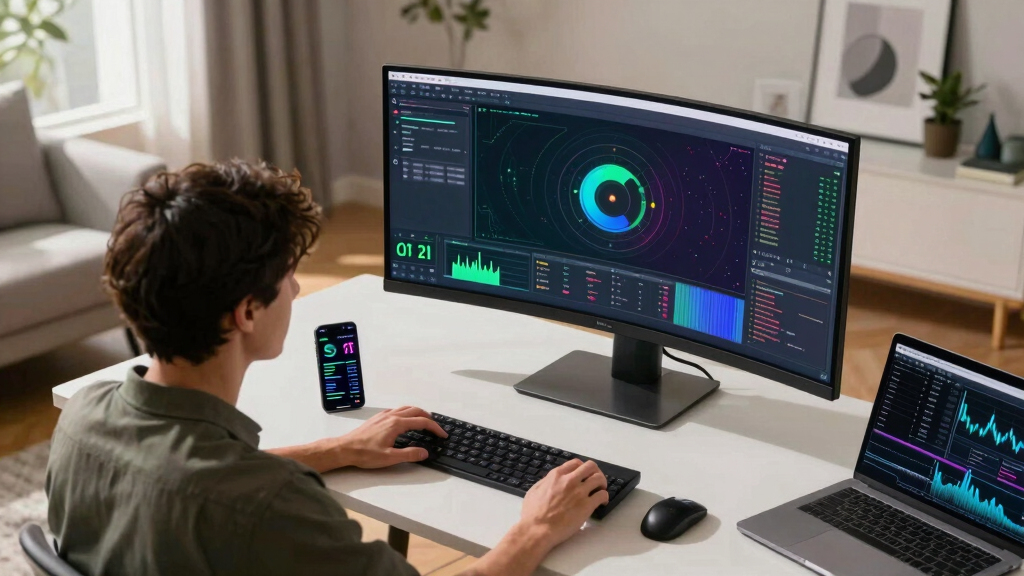
Bitcoin War connects to the public Binance trade stream through a WebSocket connection and uses Coinbase as a fallback, according to Thorsten Meyer AI. Incoming trades become battlefield actions: purchases advance the blue Cobalt Host from the left, while sales send the Ember Legion from the right. The display moves a front line as market pressure changes.
The creators describe large liquidation events as airstrikes and use a DEFCON-style meter to represent volatility. A scrolling war log narrates activity, while a scoreboard tracks fictional casualties, time held and territorial gains denominated in dollars. An automatic camera system moves between wide battlefield views and close shots of individual units.
The roughly 180KB application is described as running entirely on the user’s device with Canvas 2D graphics, synthesized WebAudio and real-time stream processing. No backend infrastructure, wallet connection or account is required. The available project description does not document an AI model, machine-learning component or external inference service.
Market Data Becomes Entertainment
Bitcoin War shows how public exchange feeds can be repackaged into an accessible visual narrative using a small client-side application. The format may help viewers perceive rapid shifts in buying and selling pressure without reading a conventional list of trades, although its battlefield metaphors simplify how markets work.
The distinction between visualization and trading analysis matters for viewers who might otherwise interpret dramatic effects as actionable information. The project supplies no signals, forecasts or advice, and the fictional scoreboard is not a substitute for price charts, order-book data or risk controls. Its main relevance lies in creative web engineering and market-data storytelling.
cryptocurrency trading visualization software
As an affiliate, we earn on qualifying purchases.
As an affiliate, we earn on qualifying purchases.
Trade Feeds Power the Battlefield
Cryptocurrency exchanges publish streams of completed trades that include details such as price, quantity and execution time. Bitcoin War maps those rapid updates onto shots, troop movement and territorial changes, turning an abstract transaction feed into a continuous visual contest.
The project joins a wider class of browser visualizations that use live financial data to create maps, soundscapes or animations. Its presentation goes further by combining a synthetic soundtrack, automated camera cuts and a narrated log. Those features can appear intelligent, but automation alone does not establish AI use.
“a live reading of the BTC/USDT tape · no advice, only war.”
— Bitcoin War footer
AI-driven financial data visualization tools
As an affiliate, we earn on qualifying purchases.
As an affiliate, we earn on qualifying purchases.
AI Role Is Not Documented
It is not clear what supports the description of Bitcoin War as AI-driven. No model name, machine-learning method, training process or AI-generated output is identified. Based on the disclosed engineering details, the confirmed system uses rules-based browser processing and an automatic camera director.
Other technical details also remain unverified, including how the application identifies liquidations from its selected feeds, how the Coinbase fallback maps onto a BTC/USDT visualization and how the scoreboard calculates casualties or territory. No independent performance review, code audit or accuracy assessment was provided.
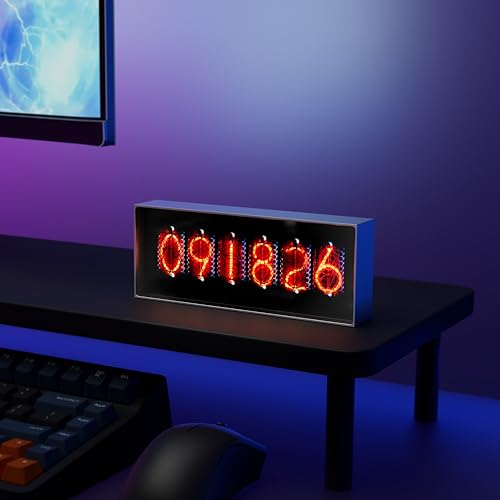
Electronic Display for Real-Time Cryptocurrency/Bitcoin/Stock Market Data, Time, Weather & Temperature, 164*28*65mm, Supports Image Upload and 30s Video Playback, App-Controlled, 960*360 Resolution
Real-Time Data Display – Shows live cryptocurrency (Bitcoin), stock market trends, time, weather, and temperature updates at a…
As an affiliate, we earn on qualifying purchases.
As an affiliate, we earn on qualifying purchases.
Documentation Will Define AI Claims
Bitcoin War is available at war.isbitcoindead.com, where viewers can observe the visualization as trades arrive. The next measurable development would be publication of technical documentation or source code explaining its data classifications, camera logic and fallback behavior.
If future versions add artificial intelligence, the creators would need to identify the model and its assigned task before the AI label could be evaluated. Until then, Bitcoin War is best described as a live, automated market visualization built with browser technology.

Web Application Security, A Beginner's Guide
As an affiliate, we earn on qualifying purchases.
As an affiliate, we earn on qualifying purchases.
Key Questions
What is Bitcoin War?
Bitcoin War is a free browser visualization that converts live Bitcoin trades into a fictional battle between buying and selling forces.
Does Bitcoin War use artificial intelligence?
No documented AI system has been identified. The disclosed components include Canvas 2D, WebAudio, stream processing and automated camera rules.
Can Bitcoin War be used for trading decisions?
The project says it is not a trading tool and provides no wallet functions, signals or financial advice. Its battlefield graphics should not be treated as market forecasts.
Where does the live data come from?
The project is described as using the public Binance trade stream, with Coinbase as an automatic fallback. Details about feed normalization and liquidation detection have not been published.
Source: Thorsten Meyer AI
Source: Thorsten Meyer AI