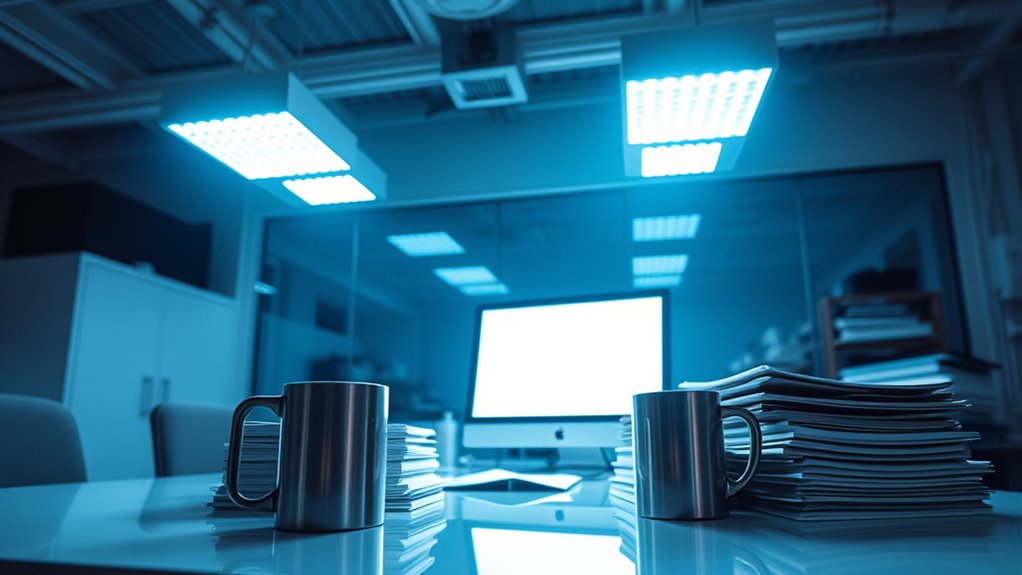

High-intensity lighting can boost your productivity by helping you stay focused, reducing eye strain, and keeping you alert throughout the day. Proper brightness guarantees clear visibility, improves concentration, and activates your brain’s alertness centers. It creates a comfortable environment, minimizing shadows and glare, which supports sustained attention. Finding the right balance is key—too much can cause discomfort, while too little hampers focus. If you’re interested, there’s more to discover about how lighting impacts your work performance.
Listen free for 30 days with Audible
Thousands of audiobooks and originals — cancel anytime.
As an affiliate, we earn on qualifying purchases.
Key Takeaways
- Adequate high-intensity lighting enhances focus and reduces eye strain, leading to improved productivity.
- Proper brightness activates alertness centers in the brain, supporting sustained attention during work tasks.
- Well-lit environments improve visual clarity, enabling more efficient data analysis, writing, and creative work.
- Balance in lighting prevents discomfort or headaches, ensuring consistent concentration and mental performance.
- Adjustable high-intensity lighting mimics natural daylight, regulating circadian rhythms and maintaining alertness throughout the day.
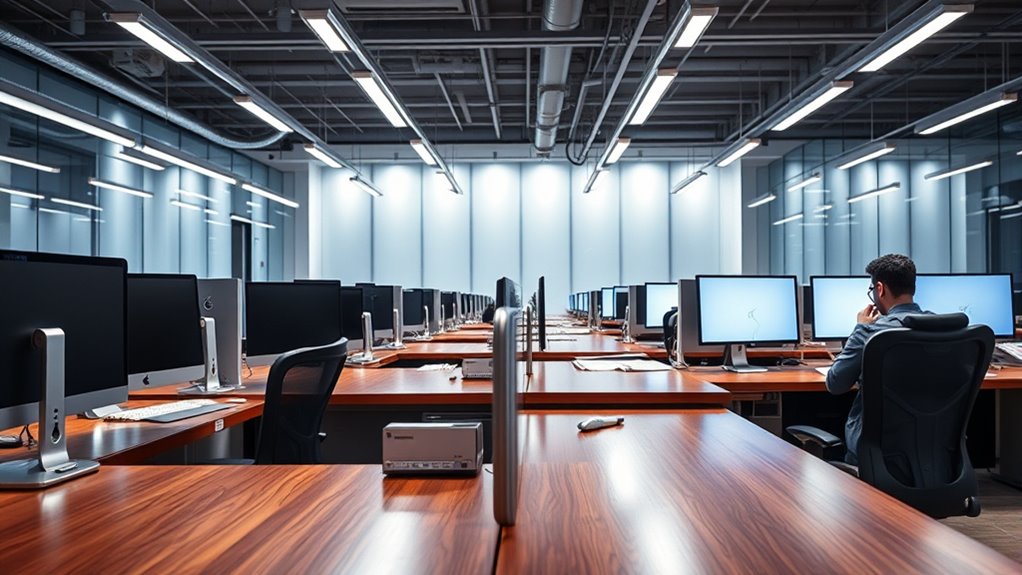
Have you ever wondered how lighting affects your work performance? It’s a question worth considering, especially since the environment around you plays a vital role in your productivity. One of the key factors in this environment is light intensity. When the lighting is just right, it can greatly boost your worker focus, helping you stay alert and engaged throughout the day. High-intensity lighting isn’t about blinding brightness; instead, it’s about providing enough illumination to reduce eye strain and improve visual clarity. If the light is too dim, you might find yourself feeling sluggish or distracted, but when it’s bright enough, your concentration sharpens, and your ability to process information improves. This is because ideal light intensity activates your brain’s alertness centers, making it easier to stay attentive to tasks.
The connection between light intensity and worker focus isn’t just theoretical. Studies have shown that environments with adequate brightness help maintain higher levels of concentration over extended periods. When you’re in a well-lit space, your eyes don’t have to strain to see details, which means less fatigue and fewer distractions. This clarity allows you to work more efficiently, whether you’re analyzing data, writing reports, or engaging in creative tasks. It’s also worth noting that consistent high-intensity lighting can help regulate your circadian rhythms, especially if you work during irregular hours. Proper lighting conditions can make you feel more awake and alert, reducing the likelihood of afternoon slumps.
However, it’s essential to strike a balance. Excessively bright lighting can cause discomfort or headaches, while insufficient light hampers focus. Ideally, the lighting should mimic natural daylight as closely as possible, providing a bright, even distribution that minimizes shadows and glare. Modern workplaces often use adjustable lighting fixtures so you can customize the light intensity to suit your needs. This flexibility allows you to create an environment that enhances your concentration without causing strain. When you’re in a space with suitable light intensity, you’ll notice a marked improvement in your ability to stay focused on tasks. Your productivity increases because your brain isn’t working overtime to compensate for poor lighting conditions. Instead, it can channel its energy into completing work efficiently and accurately.
As an affiliate, we earn on qualifying purchases.
Frequently Asked Questions
How Does High-Intensity Lighting Impact Circadian Rhythms?
High-intensity lighting can markedly impact your circadian rhythms by causing melatonin suppression, making it harder for you to fall asleep. When exposed to bright light, especially in the evening, your body perceives it as daytime, disrupting your natural sleep cycle. This sleep disruption can lead to fatigue and decreased alertness. To maintain healthy rhythms, it’s best to limit exposure to intense lighting before bedtime and keep a consistent sleep schedule.
What Are the Long-Term Health Effects of Exposure to Bright Lighting?
Sure, basking in bright lighting might make you feel like a superstar, but long-term, it can cause eye strain and skin sensitivity. You might develop headaches or feel constantly fatigued, all while your skin reacts like you’re sunbathing on a tropical island—minus the fun. Over time, these effects could lead to more serious health issues, so remember to give your eyes and skin a break before you turn into a luminous zombie.
Can High-Intensity Lighting Reduce Workplace Fatigue Effectively?
Yes, high-intensity lighting can reduce workplace fatigue effectively. By choosing lighting with an appropriate color temperature, you can boost alertness and focus. Additionally, implementing glare reduction measures minimizes eye strain, helping you stay alert longer. Properly designed high-intensity lighting creates a stimulating environment that combats fatigue, improves productivity, and keeps you more engaged throughout your workday.
What Are the Energy Consumption Concerns Associated With High-Intensity Lighting?
You should be aware that high-intensity lighting consumes more energy, raising concerns about energy efficiency and cost implications. Increased power use leads to higher electricity bills and a larger carbon footprint. To manage these issues, consider using energy-efficient bulbs or adjustable lighting systems, which can help reduce overall energy consumption. Balancing lighting needs with sustainability goals guarantees your workspace stays well-lit without excessive energy costs.
How Do Individual Preferences Influence Lighting Effectiveness on Productivity?
Your personal preference, your comfort, and your needs all influence how lighting impacts your productivity. When you have lighting customization options, you can tailor brightness and color to suit your tasks, reduce eye strain, and boost focus. By prioritizing your individual preferences, you create an environment that energizes you, enhances your efficiency, and makes work more enjoyable. Recognizing these factors helps optimize lighting for your unique productivity style.
adjustable brightness office lighting
As an affiliate, we earn on qualifying purchases.
As an affiliate, we earn on qualifying purchases.
Conclusion
By now, you see how high-intensity lighting can boost your productivity like a well-tuned engine. It’s not just about brightness; it’s about energizing your environment and sharpening your focus. When you harness this powerful tool, you turn your workspace into a lighthouse guiding you through the fog of fatigue. So, light up your space wisely, and watch your efficiency rise like a phoenix soaring to new heights.
As an affiliate, we earn on qualifying purchases.
ergonomic desk lamp for reducing eye strain
As an affiliate, we earn on qualifying purchases.
As an affiliate, we earn on qualifying purchases.
Flea & tick season Picks
flea and tick prevention
As an affiliate, we earn on qualifying purchases.