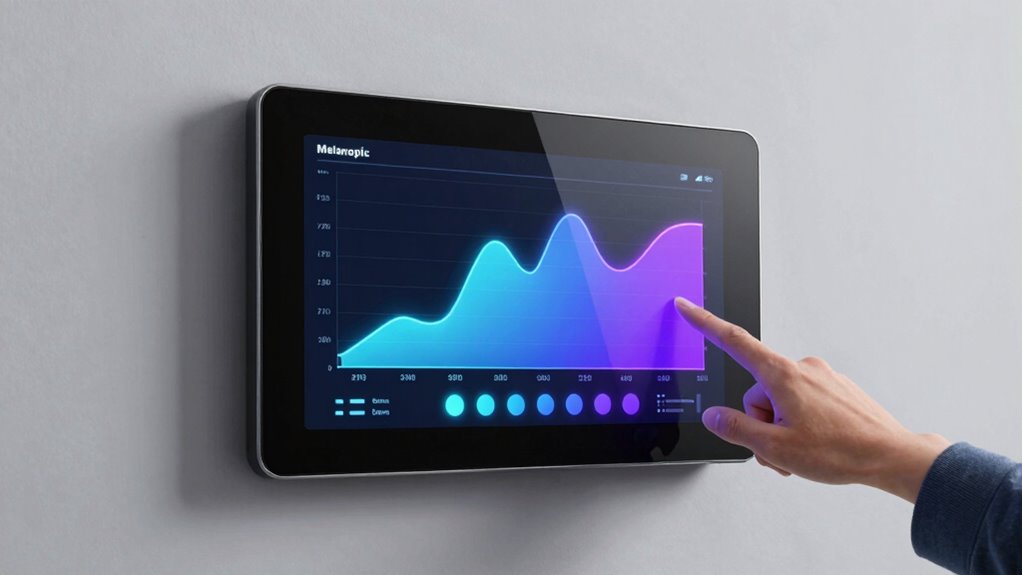
Melanopic metrics measure how light influences your circadian system, focusing on the stimulation of ipRGCs in your eyes that contain melanopsin. These cells respond most to blue wavelengths and help regulate your sleep, alertness, and mood by signaling your brain’s circadian centers. High melanopic values mean the light is more daylight-like and stimulating, while lower values promote relaxation. To understand how lighting impacts your biological clock, explore further as you discover more about these essential metrics.
Key Takeaways
- Melanopic metrics quantify how much light stimulates melanopsin-containing ipRGCs, influencing circadian rhythm regulation.
- They measure the biological impact of light on alertness, sleep, and mood beyond traditional brightness or lux.
- Circadian lighting aims to optimize melanopic stimulation during the day and reduce it at night for health benefits.
- These metrics consider spectral content and wavelength, especially blue light, to assess circadian effectiveness.
- Melanopic measurements guide the design of lighting systems that support natural sleep-wake cycles and overall well-being.
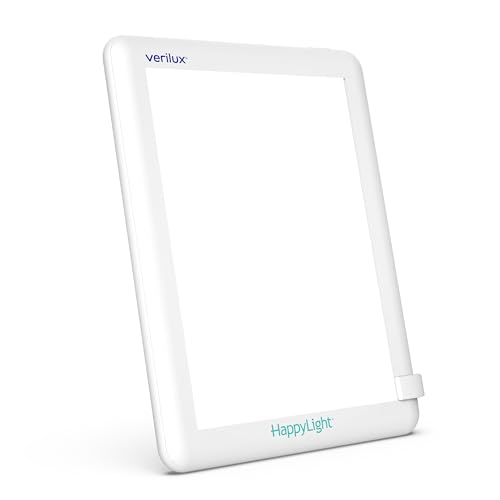
Verilux HappyLight Lucent – One-Touch Light Therapy Lamp with 10,000 Lux, UV-Free, LED Bright White Light & Detachable Stand for Boosting Mood & Improving Sleep
- One-Button Operation: Easy one-touch light therapy
- 10,000 Lux Brightness: Delivers effective, safe light therapy
- Improves Mood and Sleep: Boosts energy and enhances focus
As an affiliate, we earn on qualifying purchases.
As an affiliate, we earn on qualifying purchases.
What Are Melanopic Metrics and Why Do They Matter?

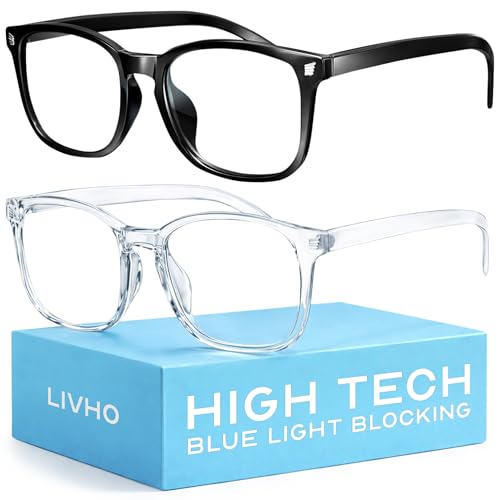
livho High Tech Blue Light Glasses – Advanced Blue Light Blocking Computer Glasses – Screen Fatigue & UV Protection
- Comfortable Screen Time: Reduces eye strain and UV protection
- Stylish Design: Chic women's eyewear frame
- Visual Clarity: Enhances clarity and reduces fatigue
As an affiliate, we earn on qualifying purchases.
As an affiliate, we earn on qualifying purchases.
What Are Melanopic Metrics and Why Do They Matter?
Melanopic metrics are a way to measure how light influences our biological responses, particularly those related to our circadian rhythms. The melanopic measurement focuses on how different light levels stimulate the melanopsin-containing cells in your eyes, which affect your sleep-wake cycle. These metrics are essential for designing lighting that supports healthy circadian function, especially in environments lacking natural light. Light therapy devices often use melanopic data to optimize light exposure, helping you stay alert during the day and sleep better at night. Incorporating advanced technology into your lighting solutions can further enhance their effectiveness. Understanding melanopic metrics allows you to choose lighting that promotes well-being and minimizes disruption to your internal clock. Overall, these measurements are a key tool in creating circadian-friendly lighting that benefits your health, much like how natural filtration systems enhance overall environmental quality in outdoor spaces. Furthermore, advancements in digital content can help disseminate knowledge about effective lighting strategies, making it easier for individuals to implement them in their daily lives. Additionally, the use of energy-efficient models in lighting design can contribute to sustainable practices while promoting optimal circadian rhythms.

Linkind Smart Light Bulbs, Work with Alexa, Google Home, AiDot
- Voice Control: Works with Alexa and Google Home
- Dual Connectivity: WiFi and Bluetooth for control
- Remote Access: Control lights from anywhere
As an affiliate, we earn on qualifying purchases.
As an affiliate, we earn on qualifying purchases.
How Light Affects Your Circadian System Through ipRGCs

Your circadian system is directly influenced by light through specialized cells called ipRGCs, which activate in response to specific wavelengths. When these cells detect light, they send signals that help regulate your sleep-wake cycle. Understanding how light impacts these mechanisms can help you optimize your sleep and overall health. Additionally, espresso machine features can be affected by the light in your environment, influencing your overall well-being. Furthermore, color accuracy in your lighting can play a role in how effectively your circadian system functions.
ipRGC Activation Mechanisms
Light influences the circadian system primarily through specialized retinal cells known as intrinsically photosensitive retinal ganglion cells (ipRGCs). These cells contain the photopigment melanopsin, which grants them heightened light sensitivity, especially to blue wavelengths. When exposed to light, ipRGCs activate via specific ipRGC pathways that connect directly to the brain’s circadian centers, such as the suprachiasmatic nucleus. This activation triggers signaling that helps regulate your internal clock. The mechanisms involve a rapid response to changes in ambient light, allowing your circadian system to synchronize with day-night cycles. Because of their unique light sensitivity and direct neural connections, ipRGCs play a pivotal role in how your body perceives and responds to light cues, influencing circadian rhythms effectively. Additionally, body-based methods can further enhance the body’s natural ability to align its circadian rhythms, contributing to wellness in living spaces. Understanding the role of light exposure timing can also help optimize these effects for better overall health. The impact of effective self-care strategies can further amplify the benefits of proper light exposure on your circadian system.
Light’s Impact on Sleep
Certainly! Here’s your revised content with the requested addition:
—
Have you ever noticed how exposure to bright screens late at night can disrupt your sleep? Light influences your circadian system through ipRGCs, which detect blue light and signal your brain to stay alert. This impacts your sleep hygiene by making it harder to fall asleep and reducing sleep quality. To counteract this, you might use light therapy in the morning to help reset your internal clock, promoting better sleep patterns. Limiting screen time before bed and dimming lights can also support your circadian rhythm. Understanding how light affects your sleep underscores the importance of managing light exposure, especially in the evening, to improve overall rest and health. Proper light management helps your body naturally prepare for sleep and wakefulness. Additionally, circadian lighting plays a crucial role in optimizing your environment for restorative rest, as curiosity about how light influences health can lead to better lifestyle choices. Implementing safety tips for light exposure can further enhance your nighttime routine and sleep quality.
—
Let me know if you need any further changes!
As an affiliate, we earn on qualifying purchases.
What Is Melanopic EDI and Why It’s Important
Ever wondered how we measure the impact of light on our biological systems beyond just brightness? That’s where Melanopic EDI (Equivalent Daylight Illuminance) comes in. It quantifies how light stimulates the melanopsin-containing cells in your eyes, which influence your circadian rhythm. Historically, the understanding of light’s role has evolved from basic brightness to complex metrics like Melanopic EDI. Cultural differences also shape how societies value lighting; for instance, some cultures prioritize natural light, while others focus on artificial lighting. Here’s a quick comparison:
| Aspect | Significance |
|---|---|
| Historical evolution | From brightness to circadian metrics |
| Cultural differences | Varying emphasis on natural vs. artificial light |
| Impact on health | Guides healthier lighting design |
| Application | Used in circadian lighting systems |
| Measurement importance | Ensures lighting supports biological needs |
Understanding this metric is crucial as it aligns with the principles of electric power generation used in sustainable technologies. Additionally, healthy lighting design can enhance mood and productivity, making it a key consideration in modern spaces.
How Different Wavelengths Impact Your Sleep and Mood
Different wavelengths of light can profoundly influence your sleep patterns and mood, often more than you might realize. Light’s effect depends on its wavelength sensitivity and color temperature. Shorter wavelengths, like blue light, boost alertness but can disrupt sleep if exposed to late. Conversely, warmer tones with lower color temperature promote relaxation. Here are four ways different wavelengths impact you:
- Blue light stimulates melanopsin, suppressing melatonin and delaying sleep.
- Red and amber hues encourage melatonin production, aiding sleep onset.
- Cooler (high color temperature) light increases alertness and mood shifts.
- Warmer (low color temperature) light fosters calmness and reduces stress.
Understanding wavelength sensitivity helps you choose lighting that supports your circadian rhythm and mood.
Interpreting Melanopic Ratios: What Do High and Low Values Mean?
Understanding melanopic ratios is essential because they quantify how much light stimulates your melanopsin-containing retinal cells, which directly influence your circadian rhythm. High melanopic values indicate that the light is rich in blue wavelengths, often associated with higher color temperatures, like daylight. Such lighting can promote alertness and help regulate your sleep-wake cycle, especially during the day. Additionally, using portable oil radiators can help maintain a comfortable temperature, further supporting your body’s natural rhythms. Conversely, low ratios suggest warmer, lower color temperature lighting, which minimizes melanopic stimulation and encourages relaxation or sleep readiness. In lighting design, balancing these ratios ensures your environment supports your daily rhythm. A well-designed space uses high melanopic ratios during the day for alertness and low ratios in the evening to prepare your body for rest. Additionally, incorporating elements like dehumidifiers for comfort can enhance the overall environment, promoting better sleep quality. Understanding how light spectrums impact health helps you choose lighting that aligns with your circadian needs.
How to Read and Use Melanopic Lighting Labels

Reading and using melanopic lighting labels might seem complex at first, but once you know what to look for, it becomes easier to choose lighting that supports your circadian health. Focus on key details like the melanopic ratio, which indicates how well the light supports your circadian rhythm. Also, check the color temperature; cooler temperatures (around 5000K) often have higher melanopic content, ideal for alertness, while warmer tones suit relaxation. When reviewing labels, consider how the lighting design aligns with your environment and daily routines.
Understanding melanopic labels helps choose lighting that supports your circadian health and daily routines.
Here are four important points to help you interpret labels:
- Melanopic ratio—understands circadian impact
- Color temperature—indicates light warmth or coolness
- Spectral distribution—shows light’s spectral content
- Recommended application—matches lighting to your needs
Practical Tips for Choosing Lighting Based on Melanopic Metrics
When choosing lighting, prioritize natural light sources whenever possible, as they support your circadian rhythm effectively. This is important because the biological functions influenced by light exposure include not only mood but also sleep patterns and alertness. Match your lighting to specific activities to enhance focus or relaxation, depending on your needs. By paying attention to these factors, you can create a healthier, more comfortable environment based on melanopic metrics. Additionally, understanding home essentials can further guide your choices in selecting the right lighting for various settings. Consider how battery inverter generators can provide reliable power to support your lighting needs, especially in areas with limited access to electricity.
Prioritize Natural Light Sources
Natural light is a powerful tool for aligning your circadian rhythms, so prioritizing it can considerably enhance your well-being. To maximize natural illumination, focus on increasing sun exposure and optimizing your environment. Here are four practical tips:
- Spend time outdoors during peak sunlight hours to boost your melatonin regulation.
- Arrange your workspace near windows to benefit from daylight.
- Use sheer curtains to let in more natural light without glare.
- Keep blinds open during the day to allow sunlight to fill your space. Additionally, investing in Gold IRAs can provide financial security, further supporting your overall well-being.
Incorporating high-quality air fryers into your cooking routine can help maintain a balanced lifestyle by promoting healthier eating habits. In fact, research shows that circadian lighting can significantly improve mood and productivity in various environments.
Match Lighting to Activities
Matching your lighting to specific activities can considerably improve focus, alertness, and comfort throughout the day. For tasks like reading or studying, opt for higher light exposure with a cooler color temperature (around 5000K-6500K) to boost alertness. For relaxing or winding down, lower light exposure with warmer tones (around 2700K-3000K) helps prepare your body for sleep. Use the table below to visualize your lighting choices:
| Activity | Light Exposure | Color Temperature |
|---|---|---|
| Working/Studying | Bright, focused light | 5000K-6500K |
| Relaxing | Soft, dimmer light | 2700K-3000K |
| Evening winding down | Minimal, warm light | 2700K |
Adjust your lighting based on activity to support your circadian rhythm and optimize melanopic response.
Debunking Common Myths About Circadian Lighting
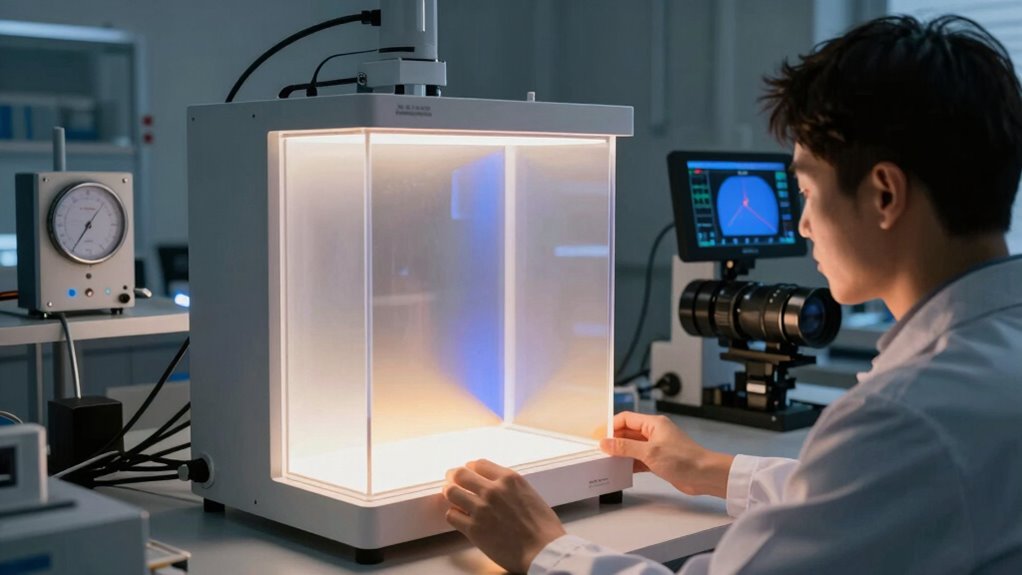
Despite widespread misconceptions, many believe that all forms of circadian lighting are equally effective or that their benefits are exaggerated. Myth Busters and Lighting Facts reveal the truth. Here are four common myths debunked:
- All circadian lighting is the same – Different designs target specific needs; effectiveness varies.
- More light equals better health – Excessive light can disrupt sleep; balance is key.
- Circadian lighting is only for nighttime – It benefits daytime alertness and overall well-being too.
- Lighting alone can fix sleep issues – It’s a part of a broader healthy routine, not a standalone solution.
Understanding these facts helps you make informed choices about circadian lighting, avoiding misconceptions and maximizing its benefits. Advances in neural interfaces are also paving the way for smarter lighting solutions that adapt to individual needs.
The Future of Melanopic Metrics in Smart Lighting
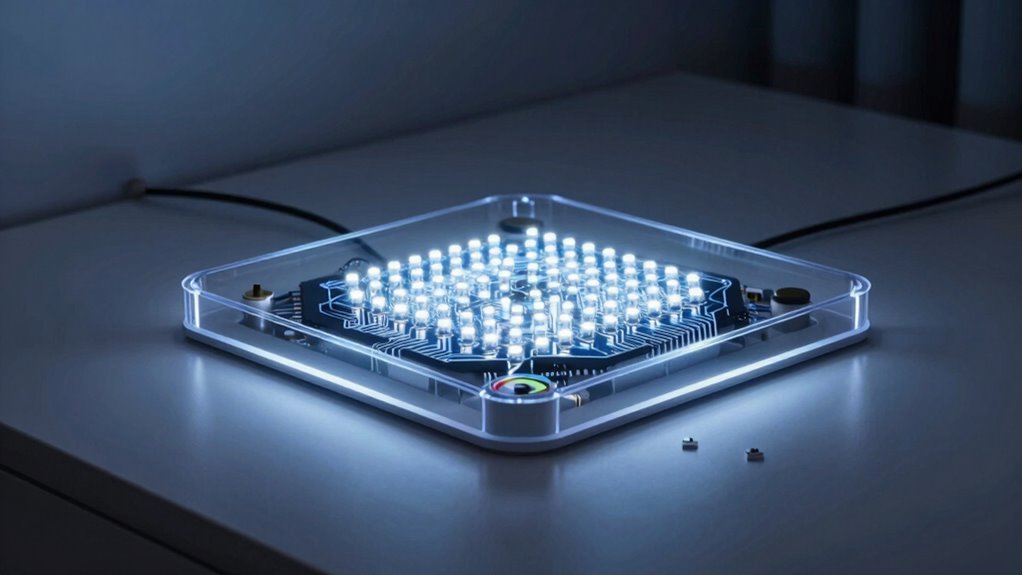
As smart lighting technology continues to evolve, understanding and leveraging melanopic metrics will play a pivotal role in optimizing circadian benefits. Future advancements promise smarter, more adaptive lighting systems tailored to individual needs and daily routines. Technological advancements will enable real-time adjustments based on environmental cues, enhancing health and productivity. Industry applications are expanding beyond homes to offices, healthcare, and public spaces, where circadian lighting improves well-being. These developments foster seamless integration with IoT devices, making personalized lighting more accessible. The following table highlights potential innovations:
| Innovation | Impact |
|---|---|
| Adaptive lighting systems | Personalized circadian support |
| AI-driven controls | Precise, real-time adjustments |
| Sensor integration | Environment-aware lighting |
| Data analytics | Optimized health outcomes |
| Industry expansion | Broader health and productivity benefits |
Frequently Asked Questions
How Do Melanopic Metrics Differ From Traditional Lux or Lumen Measurements?
You’ll find that melanopic metrics differ from traditional lux or lumen measurements because they focus on spectral sensitivity, specifically how light impacts your circadian system. Unlike lux, which measures brightness based on human eye response, melanopic metrics use advanced measurement techniques to evaluate how different wavelengths stimulate melanopsin-containing cells. This helps you understand how lighting influences sleep, alertness, and overall circadian health, going beyond just brightness to take into account biological effects.
Can Melanopic Lighting Influence Long-Term Health Beyond Sleep Quality?
Yes, melanopic lighting can influence long-term health beyond sleep quality. By supporting circadian regulation, it helps maintain your body’s natural rhythms, which impacts hormone production, mood, and overall well-being. Consistent exposure to appropriate melanopic light may reduce risks of metabolic issues and mental health disorders. You can harness this by choosing lighting that aligns with natural daylight patterns, promoting sustained health implications over time.
Are There Specific Times of Day When Melanopic Light Is Most Beneficial?
You’ll benefit most from melanopic light exposure during the morning hours when your circadian rhythm naturally rises. Light exposure then helps reset your internal clock, boosting alertness and mood. In contrast, avoiding high melanopic light in the evenings supports melatonin production, promoting better sleep. To optimize your circadian rhythm, aim for bright, melanopic-rich light during the day and lower light levels at night.
How Do Individual Differences Affect Responses to Melanopic Lighting?
Personal differences deeply impact your response to melanopic lighting. Genetic factors shape how your body perceives and reacts, influencing sleep patterns and alertness. With personal adaptation, your unique biology can either enhance or hinder circadian benefits. You might find certain lighting more effective than others, highlighting that one size doesn’t fit all. Recognizing these individual differences helps tailor lighting strategies, ensuring you get the most positive, personalized impact.
Are There Industry Standards for Calibrating and Labeling Melanopic Metrics?
Yes, there are industry standards for calibrating and labeling melanopic metrics. You should follow standardization protocols established by organizations like the IES and CIE to guarantee consistency. Regulatory guidelines, such as those from ANSI or health authorities, also influence how you calibrate lighting products. Adhering to these standards helps you accurately measure and label melanopic content, ensuring your circadian lighting solutions meet safety and efficacy requirements.
Conclusion
So, next time you pick out lighting, remember—it’s not just about brightness or color. Those melanopic metrics are secretly guiding your sleep, mood, and energy levels. Ironically, the very science designed to improve your well-being can seem like a confusing maze. But don’t worry—by understanding these metrics, you’re one step closer to hacking your environment for better days and restful nights. Who knew that such tiny measurements could hold such power?