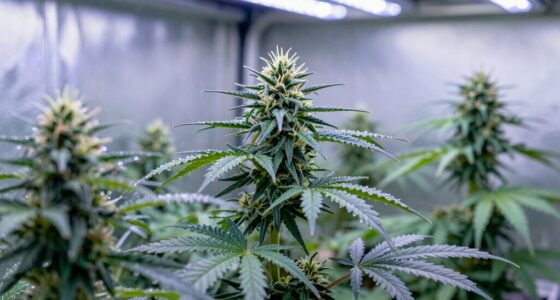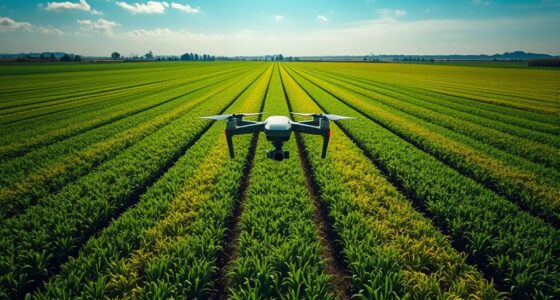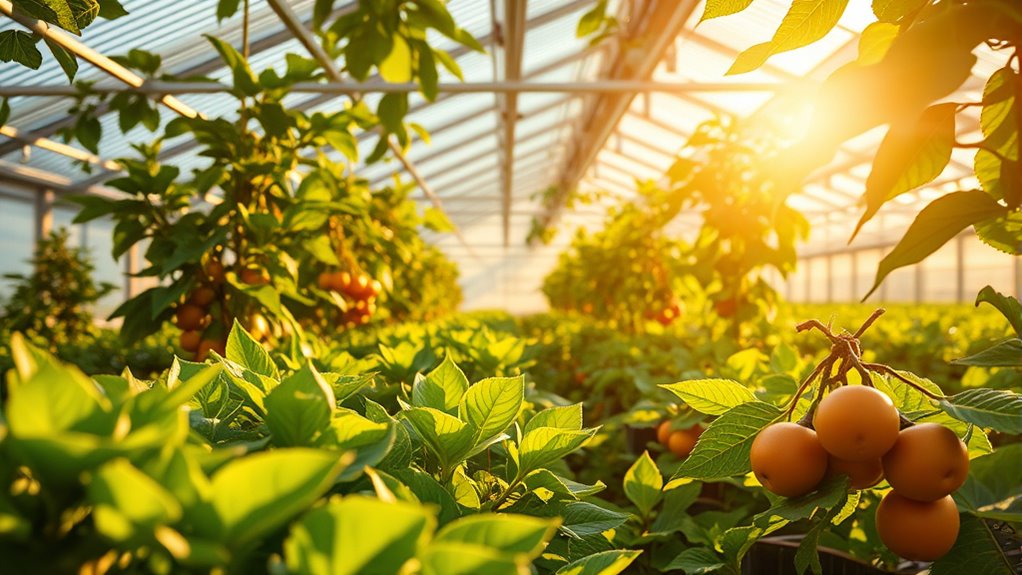

Implementing dynamic lighting schedules tailored to your leafy greens and fruit crops can substantially boost growth and yield. By adjusting light intensity, duration, and spectrum at different growth stages, you optimize photosynthesis, promote healthy development, and reduce energy costs. Properly timed lighting helps prevent stress and guarantees uniform plants. If you want to open the full potential of your crops with smart light management, exploring more will give you valuable insights.
Key Takeaways
- Implement tailored light cycles to optimize photosynthesis during key growth stages of leafy greens and fruit.
- Adjust light intensity and duration dynamically to promote healthy leaf development and fruit ripening.
- Use automation to modify lighting based on plant growth phase, reducing energy waste and enhancing yield quality.
- Synchronize lighting schedules with nutrient delivery for better nutrient absorption and plant resilience.
- Continuously monitor plant response to refine lighting patterns, ensuring uniform growth and minimizing stress.

Implementing dynamic lighting schedules can substantially boost the growth and quality of leafy greens and fruit crops. When you tailor the light exposure to match the plants’ specific needs throughout their development, you enhance their photosynthesis efficiency. This means your plants convert light into energy more effectively, leading to faster growth and more vibrant foliage or fruit. By adjusting lighting intensity, duration, and spectrum at different growth stages, you maximize the photosynthetic process. For instance, providing intense, full-spectrum light during the vegetative phase encourages lush, healthy leaves, while reducing light during the flowering or fruiting stage can promote better fruit development and flavor.
Tailoring light exposure boosts plant growth and enhances fruit and foliage quality through optimized photosynthesis.
A well-designed dynamic lighting schedule also improves nutrient absorption. When plants receive the right light conditions, their root systems become more efficient at uptaking essential nutrients from the soil or hydroponic solutions. Increased photosynthesis efficiency results in a higher demand for nutrients, which in turn encourages the roots to become more active and extensive. This synergy between light management and nutrient uptake ensures your plants are not only growing faster but are also healthier and more resilient. Proper lighting cues can stimulate the production of plant hormones that regulate nutrient transport and uptake, making your plants more responsive to the nutrients you provide.
Moreover, by implementing a dynamic lighting schedule, you can reduce energy consumption and lower operational costs. Instead of using constant lighting, you can automate light adjustments based on the time of day or the specific needs of your crops. During periods when plants are less active or need less energy, you can dim or turn off lights, conserving power. Conversely, increasing light intensity during peak growth phases maximizes photosynthesis efficiency without wasting energy. This targeted approach ensures you’re providing ideal conditions without excess, which benefits both crop yield and your budget.
In addition to efficiency gains, dynamic lighting helps mitigate stress in plants caused by overly intense or inconsistent light exposure. When plants experience stable, well-timed light cycles, they maintain better physiological health, which translates to higher-quality produce. Consistent light schedules also reduce the risk of issues like etiolation or leaf burn, ensuring your leafy greens and fruit crops develop uniformly and reach their full potential. By fine-tuning your lighting approach, you empower your crops to thrive, producing more nutritious, flavorful, and visually appealing yields.
Furthermore, understanding the signs of spoilage in stored lemon juice can help ensure you use only fresh, safe juice in your recipes. Ultimately, adopting a dynamic lighting schedule allows you to precisely control the growing environment, enhancing photosynthesis efficiency and nutrient absorption. This strategic management leads to healthier plants, higher yields, and better-quality produce—all while optimizing energy use and reducing costs.
LED grow lights for indoor plants
As an affiliate, we earn on qualifying purchases.
As an affiliate, we earn on qualifying purchases.
Frequently Asked Questions
How Do Lighting Schedules Affect Nutrient Content?
Lighting schedules directly impact nutrient content by influencing photoperiod optimization and nutrient synthesis. When you adjust light duration and intensity, you enhance the plant’s ability to produce essential nutrients. Longer or optimized photoperiods encourage better nutrient synthesis, leading to more nutrient-dense leafy greens and fruits. By fine-tuning your lighting schedule, you support healthier growth and improve the overall nutritional quality of your plants.
Can Dynamic Lighting Reduce Energy Costs?
Yes, dynamic lighting can reduce energy costs by optimizing light usage based on plant needs and environmental conditions. You can achieve significant energy savings and cost reduction by adjusting lighting schedules in real-time, ensuring lights are on only when necessary. This targeted approach minimizes unnecessary electricity consumption, lowering your overall energy expenses and enhancing the sustainability of your growing operation.
What Are the Best Light Wavelengths for Different Crops?
Think of the light spectrum as a painter’s palette, with each wavelength adding a unique hue to your crops’ growth. For leafy greens, blue light boosts photosynthesis efficiency, making leaves lush and vibrant. Fruits thrive under red light, which energizes flowering and fruiting. To optimize growth, tailor your lighting to match each crop’s needs, blending wavelengths like a master artist to maximize photosynthesis efficiency and harvest bountiful, healthy produce.
How Does Light Intensity Influence Plant Growth Stages?
You’ll notice that light intensity considerably affects plant growth stages by influencing the light peak needed during each growth phase. During early stages, lower intensity encourages root development, while higher intensity promotes vigorous leaf and fruit growth. Adjusting light intensity according to the growth phases guarantees your plants receive ideal energy, leading to healthy development. Properly managing light peak and intensity helps you maximize crop yields and quality throughout the entire growth cycle.
Are There Environmental Impacts of Implementing Dynamic Lighting?
Implementing dynamic lighting can reduce light pollution by adjusting brightness and timing, minimizing unnecessary light spill. However, if not carefully managed, it might cause ecosystem disruption, affecting nocturnal wildlife or nearby plants sensitive to light changes. You need to contemplate local environments and design your schedule thoughtfully to balance plant growth benefits with minimizing negative environmental impacts, ensuring your practices support sustainable and eco-friendly cultivation.
As an affiliate, we earn on qualifying purchases.
Conclusion
By adopting dynamic lighting schedules, you can optimize the growth of leafy greens and fruit, ensuring healthier plants and better yields. Adjusting light exposure based on plant needs isn’t just smart—it’s essential for maximizing productivity. Are you ready to harness the power of tailored lighting to transform your garden or farm? Embracing this approach could be the difference between average and exceptional results, making your growing experience more efficient and rewarding.
full spectrum grow light for leafy greens
As an affiliate, we earn on qualifying purchases.
As an affiliate, we earn on qualifying purchases.
hydroponic nutrient delivery system
As an affiliate, we earn on qualifying purchases.
As an affiliate, we earn on qualifying purchases.