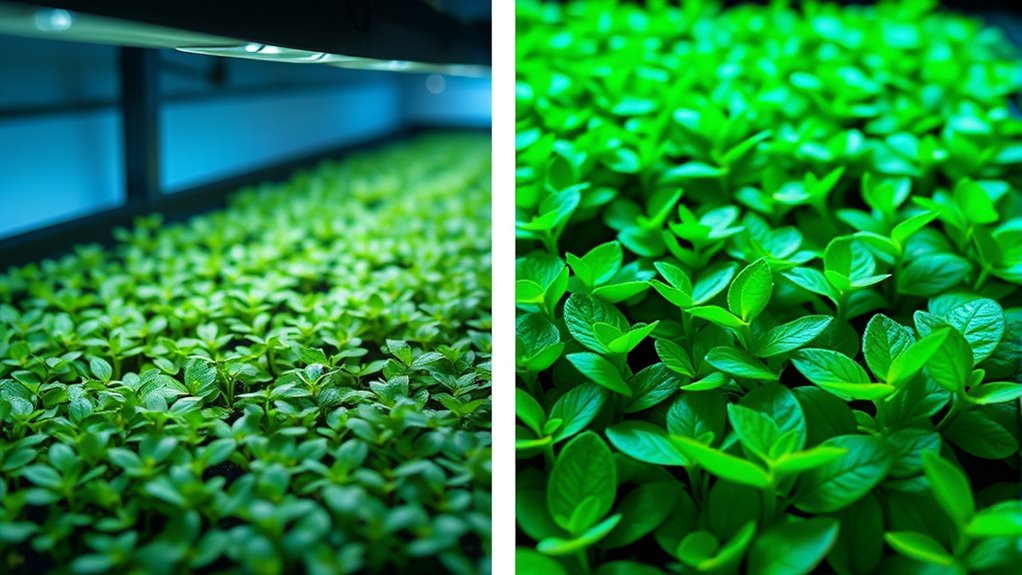
If you’re choosing between fluorescent and LED lights for seedlings, LEDs are usually the better option. They deliver higher light intensity, use energy more efficiently, and produce less heat, which helps seedlings grow faster and healthier. LEDs also last longer and can be customized for different stages of growth. Fluorescent lights are cheaper upfront but need more frequent replacements and are less efficient. Keep exploring to find out which lighting option best fits your setup.

Get the latest gadgets delivered free with Prime
- Fast, free delivery on millions of items
- Prime Video, Amazon Music and more included
- Member-only deals all year
Key Takeaways
- LEDs offer higher light intensity and better spectrum customization for optimal seedling growth.
- They are more energy-efficient, producing more usable light per watt and reducing electricity costs.
- LEDs have a longer lifespan (over 50,000 hours), leading to lower maintenance and replacement expenses.
- They generate less heat, minimizing cooling needs and preventing heat stress on seedlings.
- Fluorescent lights are less efficient, with lower light output and shorter lifespans, requiring more units and maintenance.
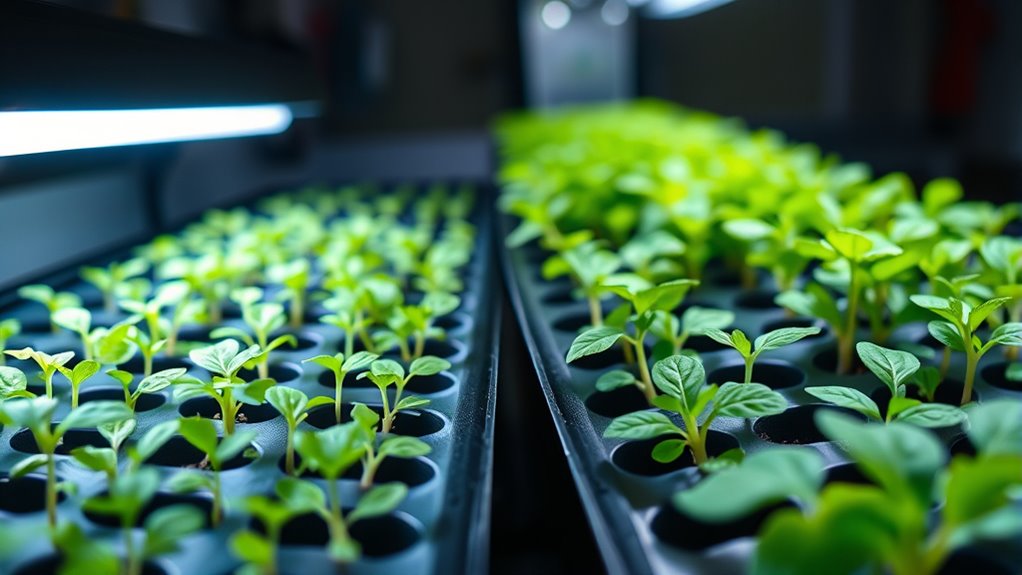
Are fluorescent and LED lights equally effective for cultivating healthy seedlings? This question is common among gardeners and growers trying to maximize their indoor setups. When comparing these two lighting options, understanding the concepts of light intensity and energy efficiency is essential. Light intensity determines how much usable light your seedlings receive, directly affecting their growth rate and overall health. LED lights tend to offer higher light intensity with less energy input, making them more efficient for seedling development. Fluorescent lights, while initially affordable and widely available, often produce lower light intensity for the same energy consumption, which can lead to slower growth or legginess in seedlings.
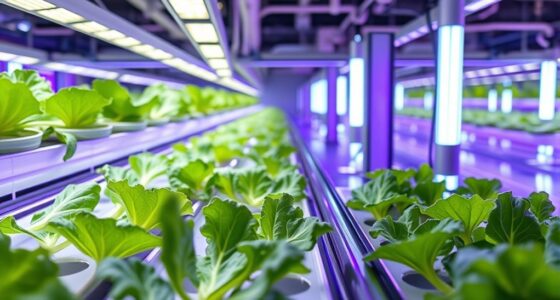
LED technology has advanced rapidly, allowing growers to customize light spectra and intensities to suit different plant stages. This adaptability means that you can provide the ideal light conditions for seedlings without wasting electricity. LEDs are designed to deliver higher light output per watt, translating to better light intensity at a lower energy cost. As a result, you can keep your seedlings under bright, healthy light while consuming less power overall. Fluorescent lights, on the other hand, produce a broad spectrum but tend to have lower efficiency, especially as they age or if they’re not of high quality. They often require multiple fixtures or higher wattages to achieve the same light intensity that a single LED fixture can provide.
LEDs offer higher light output per watt for efficient, customizable seedling growth.
Energy efficiency plays a significant role in your decision-making process. LEDs convert a larger portion of electricity into usable light, meaning less energy is wasted as heat. This not only reduces your electricity bills but also minimizes heat buildup, which can be detrimental to delicate seedlings. Fluorescent lights generate more heat relative to their light output, often requiring additional cooling measures to prevent overheating and ensure a stable environment. Over time, the higher energy efficiency of LEDs can lead to substantial savings, especially if you’re running lights continuously or for extended periods.
Another factor to evaluate is the longevity of each lighting type. LEDs typically last much longer—often over 50,000 hours—meaning fewer replacements and lower maintenance costs. Fluorescent tubes have a shorter lifespan and may flicker or lose brightness over time, which can impact seedling growth consistency. Additionally, light pollution from inefficient lighting can contribute to unwanted environmental effects, emphasizing the importance of choosing energy-efficient options. In conclusion, while fluorescent lights can support seedling growth, LEDs generally provide better light intensity with greater energy efficiency. They allow you to grow healthier seedlings more cost-effectively, with less heat and maintenance. If you’re serious about optimizing your indoor gardening setup, investing in LED lighting is likely the smarter choice in the long run.
As an affiliate, we earn on qualifying purchases.
Frequently Asked Questions
How Do Fluorescent and LED Lights Impact Seedling Growth Speed?
You’ll notice that LED lights generally boost seedling growth rate more effectively than fluorescent lights because they provide higher light intensity and customizable spectra. LEDs deliver consistent, bright light that promotes faster development, while fluorescents may result in slower growth due to lower intensity and less tailored spectrum. By choosing LEDs, you can optimize your seedlings’ growth speed, ensuring healthier, stronger plants in less time.
Are There Environmental Benefits to Choosing LED Over Fluorescent Lighting?
Choosing LED lighting is like planting a seed for a greener future. LEDs offer better energy efficiency, reducing your electricity use and carbon footprint. Plus, they have a longer lifespan, which means less waste and higher recycling potential. By switching to LEDs, you’re not only nurturing your seedlings but also supporting eco-friendly practices that help conserve resources and protect the environment for generations to come.
What Are the Long-Term Cost Differences Between Fluorescent and LED Grow Lights?
You’ll find that LEDs are more cost-effective long-term because they offer better energy efficiency, reducing your electricity bills. Plus, LEDs have lower maintenance costs since they last longer and don’t need frequent replacements like fluorescent lights. While LEDs might cost more upfront, their durability and efficiency save you money over time, making them a smarter investment for your grow setup.
Can Fluorescent or LED Lights Cause Any Damage to Delicate Seedlings?
A stitch in time saves nine, and proper lighting prevents damage. Both fluorescent and LED lights can harm delicate seedlings if their light intensity is too high or if they emit excessive heat. LEDs typically produce less heat, reducing the risk of heat stress, while fluorescents can cause light burn if placed too close. Always monitor your seedlings and adjust the distance to prevent damage from light intensity or heat emission.
How Do Light Spectrum Variations Affect Seedling Development in Each Type?
Light spectrum variations substantially impact seedling development by influencing growth patterns and health. You’ll find that refined spectrum, with proper light quality, encourages strong, healthy seedlings. LEDs often provide customizable spectrum options, allowing you to tailor light for ideal growth stages. Fluorescent lights have a broader spectrum but less control, which can affect development if not properly balanced. Spectrum optimization ensures your seedlings grow robustly and develop strong root systems.
fluorescent grow lights for plants
As an affiliate, we earn on qualifying purchases.
As an affiliate, we earn on qualifying purchases.
Conclusion
So, whether you choose fluorescent or LED lights for your seedlings, it’s funny how both promise perfect growth. You might think one’s clearly better, but in the end, it’s all about what fits your space and budget. Ironically, the “best” doesn’t always mean the most expensive or high-tech. Sometimes, a simple, affordable light can do just as well—proving that even in gardening, the best option isn’t always the most obvious.
energy efficient LED lights for indoor gardening
As an affiliate, we earn on qualifying purchases.
As an affiliate, we earn on qualifying purchases.
customizable spectrum LED grow lights
As an affiliate, we earn on qualifying purchases.
As an affiliate, we earn on qualifying purchases.
Fall Picks
fall essentials
As an affiliate, we earn on qualifying purchases.