
Red and far-red light influence your plant’s flowering and fruiting by signaling environmental conditions through specialized pigments called phytochromes. Red light activates these pigments and encourages flowering, while far-red light deactivates them, often delaying reproductive growth. Adjusting the ratio of these lights can help you control flowering times and fruit production. If you explore this topic further, you’ll discover how manipulating light spectra can optimize your plants’ development for better results.

Get the latest gadgets delivered free with Prime
- Fast, free delivery on millions of items
- Prime Video, Amazon Music and more included
- Member-only deals all year
Key Takeaways
- Red light promotes flowering by activating phytochromes that signal favorable reproductive conditions.
- Far-red light converts phytochromes to an inactive state, delaying flowering and fruiting.
- The red/far-red light ratio influences the timing and success of flowering and fruit development.
- Manipulating light spectrum can optimize fruit production and improve plant reproductive health.
- Phytochrome responses to red and far-red light enable plants to adapt their flowering and fruiting based on environmental cues.
Red and far-red light are vital wavelengths within the visible spectrum that influence plant growth and development. When you’re observing your plants, you might notice how these wavelengths play a critical role in processes like flowering and fruiting. These signals inform the plant about its environment, helping it decide when to switch from vegetative growth to flowering or fruiting stages. As your plant absorbs light, specialized pigments called phytochromes come into play. Phytochromes are sensitive to red (around 660 nm) and far-red (around 730 nm) wavelengths. When red light hits the plant, it converts phytochromes into an active form, signaling the plant that conditions are favorable for flowering. Conversely, exposure to far-red light converts phytochromes into an inactive state, often delaying flowering. This dynamic acts as a natural cue, enabling your plant to maximize its reproductive cycle based on the light environment. The balance between red and far-red light affects plant signaling pathways, directly influencing whether your plant will focus energy on flowering or remain in a vegetative state.
Red and far-red light guide plant growth by signaling flowering and fruiting stages through light absorption and plant responses.
You might notice that plants grown in environments with higher red light tend to flower sooner, as the red light triggers signals for flowering. Conversely, when plants are exposed to more far-red light, they often delay flowering, interpreting the signal as shading from competitors or an unfavorable environment. This is why the light spectrum in your grow space matters. By adjusting the ratio of red to far-red light, you can manipulate your plant’s flowering time and improve fruit production.
The process is quite sophisticated. Light absorption by phytochromes doesn’t just trigger flowering; it also influences fruiting and overall plant health. Proper plant signaling ensures that energy is allocated to reproductive structures at the ideal time, resulting in better fruit set and quality. Additionally, understanding light spectrum manipulation can help optimize plant growth conditions for specific developmental outcomes. This signaling process is a finely tuned response that helps your plants adapt to their surroundings and maximize reproductive success.
Understanding how red and far-red light influence plant signaling and light absorption gives you powerful tools to enhance flowering and fruiting. Whether you’re a home gardener or managing a commercial operation, controlling the light spectrum can lead to healthier, more productive plants. By manipulating these wavelengths, you fundamentally guide your plants through their developmental stages, ensuring they flower and fruit at their best potential.
As an affiliate, we earn on qualifying purchases.
Frequently Asked Questions
How Do Red and Far-Red Light Affect Plant Flowering Timing?
Red and far-red light influence your plant’s flowering timing through photoperiod sensitivity and phytochrome response. When exposed to red light, the phytochrome system promotes flowering in long-day plants, while far-red light can delay it. By adjusting these light conditions, you control when your plant flowers, manipulating its photoperiod sensitivity to achieve desired flowering times. This understanding helps you optimize growth and flowering schedules effectively.
Can Red and Far-Red Light Influence Fruit Quality?
Red and far-red light can influence fruit quality by enhancing fruit pigmentation and nutrient accumulation. When exposed to these lights, you’ll notice more vibrant colors and richer nutrient content, making your fruits more appealing and nutritious. These wavelengths promote better pigment development, like carotenoids and anthocyanins, and improve how nutrients are stored within the fruit. By controlling light exposure, you can boost both the visual and nutritional quality of your harvest.
Are There Specific Plant Species More Responsive to Red and Far-Red Light?
Certain plant species are more sensitive to specific light spectrum wavelengths, especially red and far-red light. You’ll notice that flowering and fruiting plants like lettuce, tomatoes, and orchids respond strongly to these wavelengths due to their species sensitivity. By tailoring light spectrum exposure, you can optimize growth and flowering. Understanding which species are most responsive helps you manipulate light conditions effectively, boosting your plant’s development and yield.
How Does Light Wavelength Interact With Other Environmental Factors?
You might be surprised to learn that light wavelength considerably interacts with environmental factors, influencing photosynthesis efficiency and pest resistance. For example, red light enhances photosynthesis, but its effectiveness can be reduced by low temperatures or high humidity. Similarly, far-red light affects plant growth patterns, which can alter pest susceptibility. Understanding these interactions helps optimize growing conditions, ensuring healthier plants that grow faster and resist pests more effectively.
What Are the Best Lighting Setups for Optimizing Flowering and Fruiting?
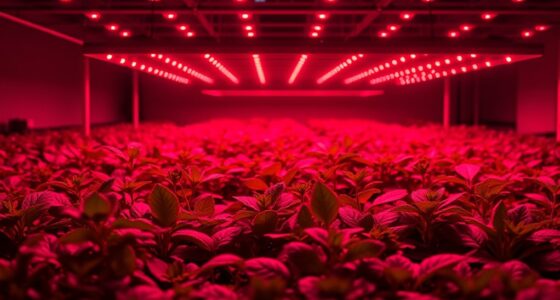
You should use an LED spectrum tailored for flowering and fruiting, with a focus on red and far-red wavelengths to promote bloom development. Make certain your light intensity is sufficient—generally, higher light levels boost flowering. Position your lights properly to maximize coverage and avoid shadows. Adjust the spectrum and intensity based on plant response, and consider supplemental lighting if needed, to create ideal conditions for healthy, abundant flowering and fruiting.
phytochrome plant light spectrum
As an affiliate, we earn on qualifying purchases.
As an affiliate, we earn on qualifying purchases.
Conclusion
Think of red and far-red light as a gentle conductor guiding your plant’s symphony of growth. When you understand their signals, you become the maestro, directing flowering and fruiting with purpose. Like a lighthouse guiding ships safely to harbor, these lights illuminate your plant’s path to vigor. Harness their power wisely, and watch your garden flourish as if it’s dancing to a tune only you can hear, thriving in harmony with nature’s secret language.
LED grow lights for flowering plants
As an affiliate, we earn on qualifying purchases.
As an affiliate, we earn on qualifying purchases.
full spectrum grow light for indoor plants
As an affiliate, we earn on qualifying purchases.
As an affiliate, we earn on qualifying purchases.
Halloween Picks
halloween
As an affiliate, we earn on qualifying purchases.