

Your understanding of colors is shaped by how language has evolved over time. As societies developed, so did words for specific hues, reflecting cultural values and technological advances like dyes and art. Different cultures have unique color histories, influencing their perception of hues. This language shift reveals what’s important historically and socially. If you explore further, you’ll uncover even more about how language influences the way you see and describe colors.
Key Takeaways
- The development of color words reflects cultural priorities, technological advances, and trade influences over history.
- Early languages likely had few basic color terms, with new words emerging as societies became more complex.
- The introduction of specific color terms, like “blue,” often coincided with access to new dyes and artistic practices.
- Cultural meanings assigned to colors influence language, shaping how hues are described and perceived across societies.
- Studying the evolution of color vocabulary reveals insights into historical values, cultural identity, and perceptual shifts.
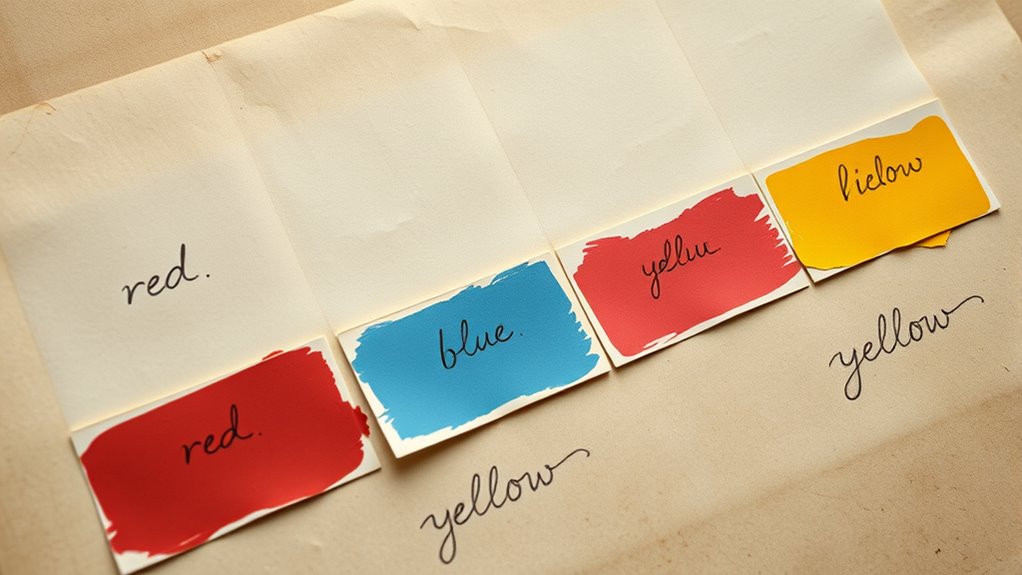
Have you ever wondered how the words we use for colors have evolved over time? The way different cultures assign meaning to hues reveals a lot about their history, beliefs, and values. When you explore the cultural color symbolism behind words for colors, you quickly realize that colors aren’t just visual sensations—they carry layers of significance that influence language and perception. For example, in many Western societies, white often symbolizes purity and innocence, whereas in some Eastern cultures, it’s associated with mourning. These associations shape the words we use and how we interpret them, illustrating the deep connection between language and cultural context.
The linguistic evolution of hues shows how language adapts to the needs and worldview of its speakers. Early humans might have had only a few words for colors—perhaps just black and white—since these were the easiest to distinguish and most important for survival. Over time, as societies developed and became more complex, their languages expanded to include a richer vocabulary for colors. This expansion wasn’t random but often linked to cultural significance and technological advances. For example, once dyes and pigments became accessible, new words for specific shades emerged, reflecting their importance in art, clothing, and rituals. These linguistic shifts demonstrate how the vocabulary of color evolves alongside human civilization, capturing changes in aesthetics, trade, and cultural priorities.
You can see this evolution clearly when comparing ancient texts and modern language. In English, the word “blue” didn’t appear until the Middle Ages, even though the color itself was known long before. Prior to that, people described similar hues with words like “green” or “gray.” The introduction of “blue” into the lexicon illustrates how language adapts to new concepts and technologies, such as the importation of indigo dye. Similarly, other languages reveal different timelines for their color words, illustrating their unique cultural journeys. Some cultures had specific words for shades that others only described with general terms, highlighting how language reflects what’s most meaningful to a particular society.
In essence, linguistic evolution of hues and cultural color symbolism go hand in hand, shaping how we see and describe the world. Your understanding of color isn’t just about perception but also about the historical and cultural layers embedded in the words you use. As language continues to evolve, so too will the way you think about and communicate colors, revealing new insights into human culture and its relationship with the vibrant spectrum of hues around us. Understanding the history of color words can deepen your appreciation for how language and culture are intertwined.
Frequently Asked Questions
How Do Different Cultures Perceive and Categorize Colors?
You notice that different cultures perceive and categorize colors uniquely through cultural color symbolism and linguistic color distinctions. Some cultures have specific words for shades others don’t, influencing how you interpret hues. For instance, certain languages might distinguish blue from green clearly, while others lump them together. Your perception of color is shaped by these linguistic and cultural frameworks, making color experience deeply influenced by your cultural background and language.
Can Language Influence Our Emotional Response to Colors?
Yes, language influence affects your emotional response to colors through color psychology. The words you use to describe colors can evoke specific feelings, shaping how you perceive them emotionally. For instance, calling a shade “calming blue” might make you feel more relaxed, while “urgent red” can induce excitement or stress. Your language shapes your emotional reactions, highlighting how deeply language influences your personal experience of color.
Are There Universal Color Words Across All Languages?
Think of language as a vast tapestry, with some threads woven across all cultures. While a few basic color words like black, white, and red appear universally, most are shaped by linguistic relativity, reflecting cultural differences. You won’t find completely universal color words; instead, color cognition varies, influenced by how each language categorizes and names hues, making some colors more prominent or distinct depending on where you are.
How Do Children Learn Color Words in Various Languages?
You learn color words through cognitive development and color categorization, which varies across languages. As a child, you first recognize broad color groups, then refine your understanding to specific hues. Different languages emphasize certain colors early, shaping how you categorize and label them. Through exposure and experience, your brain forms connections between colors and words, helping you master the unique color vocabulary in your language.
What Role Does Technology Play in Color Naming and Differentiation?
Think of technology as a painter’s palette, transforming color naming conventions with digital precision. It shapes how you differentiate hues through technological color systems like RGB or HEX, making colors more consistent across devices. For example, apps now help you match shades perfectly, reducing ambiguity. You rely on these tools to explore, name, and understand colors better, showing how technology actively influences your perception and classification of hues in everyday life.
Conclusion
As you’ve seen, color words are like threads woven through history’s tapestry, each hue telling its own story. Language shapes how we see and experience the world, turning whispers of color into vibrant expressions of culture. Just as a painter’s palette evolves, so does our vocabulary, painting a richer, deeper picture of human perception. So next time you name a shade, remember—you’re adding a brushstroke to the grand canvas of language and time.