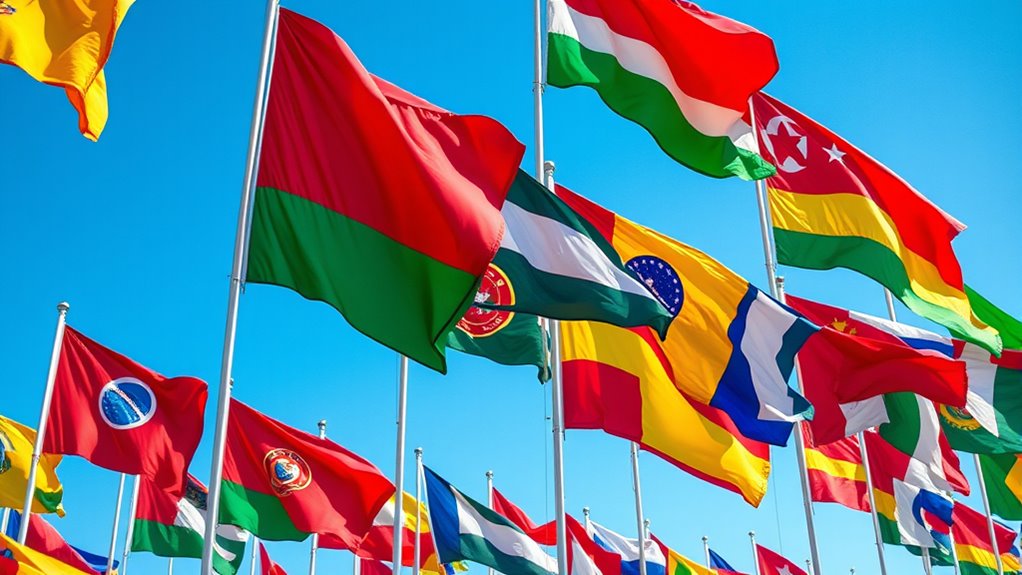

National flags use colors and symbols to reflect a country’s history, values, and cultural identity. Bright colors like red, white, blue, and green often symbolize qualities such as courage, peace, unity, or hope. Symbols like stars, stripes, or emblems tell stories of independence or shared ideals. When you explore more, you’ll see how these elements evolve over time, revealing the deep connection between a nation’s flag and its identity.
Key Takeaways
- Colors in national flags symbolize core values like freedom, unity, hope, and courage, reflecting cultural identity.
- Flag designs incorporate symbols and colors that tell stories of a nation’s history and societal values.
- Changes in flags often mark political shifts or independence, representing evolving national identity.
- The deliberate choice of colors and symbols in flag design conveys cultural pride and shared national narratives.
- Flags serve as powerful symbols of national pride, encapsulating a country’s history, values, and collective identity.
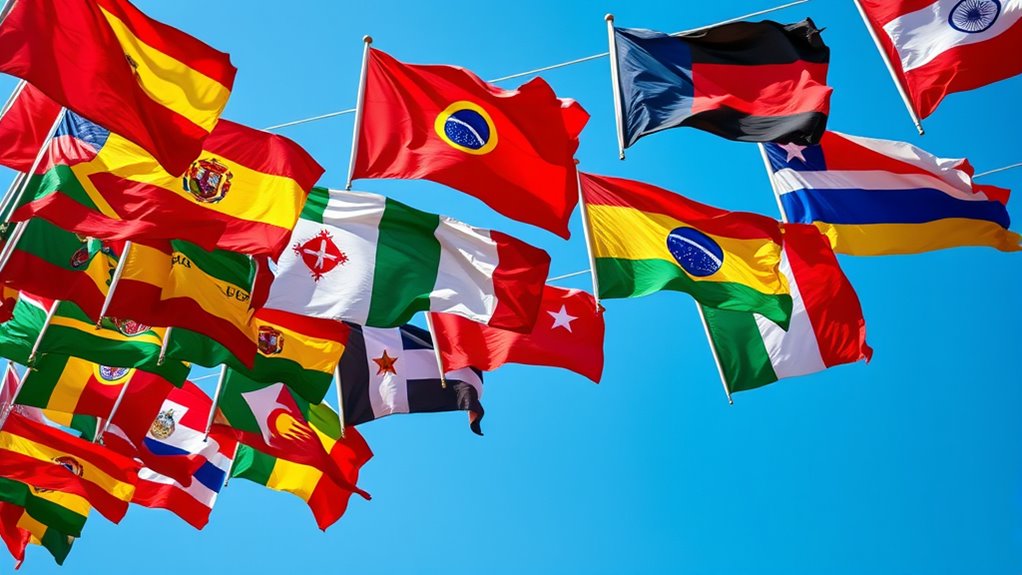
Have you ever wondered what makes each country’s flag unique? It’s not just about colors or shapes; it’s about the stories and values woven into every design. Flag symbolism plays a crucial role in conveying a nation’s identity, history, and ideals. For example, a simple color might represent freedom, unity, or courage, while specific symbols like stars, stripes, or emblems tell deeper stories. When you look at a flag, you’re seeing a visual narrative that reflects the country’s soul. Over time, many nations have experienced historical flag changes, often driven by political shifts, independence movements, or efforts to modernize their symbols. These changes mark pivotal moments in a country’s journey and are reflected in their evolving flags. For instance, when a nation gains independence, it might replace colonial symbols with designs that better represent its new identity. You can trace these transformations by comparing old and new flags, revealing how nations have redefined themselves through their symbols. Additionally, understanding the design process behind flags sheds light on how cultural and political considerations influence these symbols.
Flags tell stories of identity and change through colors and symbols.
Flags are more than just colorful banners fluttering in the wind; they are powerful symbols that evoke pride and unity among citizens. The choice of colors isn’t accidental—red might symbolize bravery or revolution, green could stand for agriculture or hope, and blue often signifies peace or the sky. Every hue carries meaning, and understanding flag symbolism deepens your appreciation of a country’s history and culture. For example, the American flag’s stars and stripes embody the states and the original colonies’ unity, while Italy’s green, white, and red reflect its national identity and independence. These colors and symbols are carefully chosen to resonate with people and communicate shared values.
The evolution of flags also highlights historical flag changes, which often mirror political upheavals or societal shifts. Countries might adopt new designs to distance themselves from colonial pasts or to celebrate cultural heritage. When a nation undergoes a revolution or a significant political change, its flag often changes to symbolize this new era. Some flags have undergone multiple modifications, each change marking a new chapter. For instance, the former Soviet Union’s flag transitioned from the hammer and sickle emblem to the current Russian tricolor, reflecting profound political shifts. These transformations show how flags are living symbols, constantly adapting to the evolving identity of the nation.
In essence, every flag is a visual capsule of history and meaning. By understanding flag symbolism and historical flag changes, you gain insight into a nation’s identity and the stories it chooses to tell through its colors and symbols. It’s a reminder that flags are not static; they evolve alongside the countries they represent, capturing moments of pride, struggle, and hope.
national flag display kit
As an affiliate, we earn on qualifying purchases.
As an affiliate, we earn on qualifying purchases.
Frequently Asked Questions
How Do Colors Influence National Unity and Patriotism?
Colors on a flag markedly influence your sense of patriotism and national unity through flag color psychology, which evokes emotions and shared values. Bright colors like red symbolize courage and sacrifice, fostering pride, while blue promotes trust and harmony. When you see these colors, they symbolize your country’s history and ideals, strengthening your connection to the nation. These colors serve as powerful symbols that unify people under a common identity.
Are There Universal Meanings Behind Specific Flag Colors?
You might think certain flag colors have universal meanings, but they often don’t. While red can symbolize courage or revolution, and white peace or purity, cultural color meanings vary widely. Flag color symbolism reflects each nation’s unique history, beliefs, and values. So, rather than universal truths, there’s a rich diversity of interpretations behind each hue, making every flag a vibrant story of its people’s identity.
How Often Do Countries Redesign Their National Flags?
You might wonder how often countries redesign their flags. Generally, flag redesign frequency varies, with some nations changing their flags after significant political shifts or independence movements, while others keep their designs for decades. Historically, flag changes tend to be infrequent but impactful, reflecting major cultural or governmental changes. Countries like Canada and South Africa have undergone notable historical flag changes, but most nations prefer stability to maintain national identity and unity.
What Symbolism Is Behind Common Flag Shapes and Patterns?
Think of flag shapes and patterns like a language of geometric symbolism that tells a story. For example, stars often represent unity or hope, while stripes can symbolize historical flag evolution or cultural diversity. These designs aren’t random; they embody national values and history. You can see this in the evolution of the U.S. flag, where each change reflects a chapter in its story, making every pattern a meaningful symbol.
Do Minority Groups Influence a Country’s Flag Design?
Yes, minority groups often influence a country’s flag design through ethnic representation and minority symbolism. When communities seek recognition or equality, they may advocate for symbols that reflect their heritage, history, or struggles. You can see this in flags that incorporate specific colors, patterns, or emblems representing these groups. Such influences help foster inclusivity and acknowledge the diverse identities within a nation.
flag history book
As an affiliate, we earn on qualifying purchases.
As an affiliate, we earn on qualifying purchases.
Conclusion
Your journey through flags reveals more than colors and shapes; it uncovers stories of identity, pride, and history. Like a tapestry woven with countless threads, each flag symbolizes a nation’s soul. So next time you see one waving in the wind, remember—it’s not just fabric, but a powerful symbol that unites a nation, calling out to you like a silent chorus. After all, isn’t every flag a story waiting to be told?
flag design poster
As an affiliate, we earn on qualifying purchases.
As an affiliate, we earn on qualifying purchases.
world flags map
As an affiliate, we earn on qualifying purchases.
As an affiliate, we earn on qualifying purchases.