
TL;DR

Get the latest gadgets delivered free — and shop member deals
- Fast, free delivery on millions of items
- Access to Prime Big Deal Days deals on October 6–7
- Prime Video, Amazon Music and more included
A virtual power plant built from more than 5,500 leased home batteries run by Green Mountain Power has become Vermont’s largest power source, according to a BBC report. Participants report no outages since joining, and the utility aims to eliminate all outages by 2030.
A network of batteries installed in more than 5,500 Vermont homes has become the state’s largest power source, according to a BBC report published September 28, 2026, as the utility behind the programme tests how far a “virtual power plant” — a grid resource made of ordinary household devices rather than a single facility — can replace conventional generation.
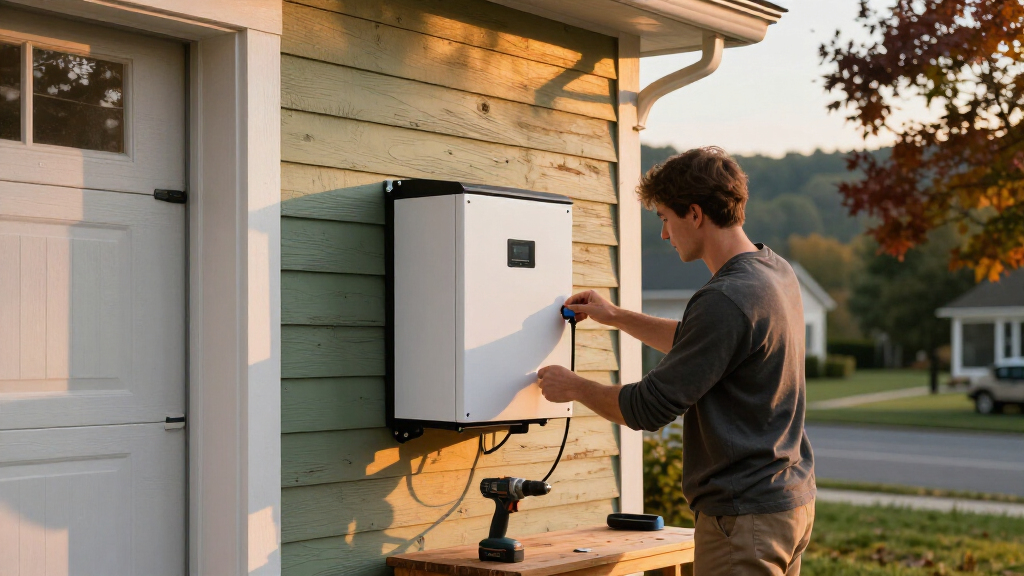
The programme is run by Green Mountain Power (GMP), Vermont’s largest utility, which serves over 75% of the state. Customers receive two home batteries for $55 (£41) a month under a 10-year lease, similar to the options covered in our roundup of the best plug-in home batteries. GMP can draw on those batteries when the grid needs support, while customers keep a reserve — especially during outages — for their own use.
The batteries are coordinated with other resources including EV batteries, commercial demand response and utility-scale batteries. According to GMP, around 50% of homes in the battery programme also have rooftop solar panels. The programme began as a pilot in 2017 and saw a surge of enrolments in 2023 after state regulators lifted a cap on participation; over 2,500 people have enrolled since then.
Participants interviewed by the BBC reported strong results. Pollyanna Bladyka of Springfield, who leased batteries in 2024 instead of buying a $12,000 (£9,000) gas generator — a choice many homeowners weigh when considering plug-in home battery systems — said she and her husband have not lost power once since installation. Megan Browning of northern Vermont said that during a recent severe windstorm that knocked out neighbours, she “didn’t even notice a flicker.”
Why a Battery-in-Every-Home Grid Matters
The Vermont experiment offers a working model of how utilities can add grid capacity without building new fossil fuel plants. Virtual power plants do not generate electricity themselves — they use software to shift and reduce demand, stretching existing supply furthest when the grid is under the most strain. Kate Peters, a virtual power plant expert at the consultancy The Brattle Group, told the BBC that while several such plants have emerged in the US, GMP’s may be one of the largest battery programmes in the country.
The resilience benefit is acute in a rural, cold state where prolonged outages can be dangerous. GMP has set a goal of eliminating all power outages by 2030, with the battery programme playing a central role alongside measures such as burying power lines underground. The model is also being watched internationally, with virtual power plants under development from Germany to China.
From 2017 Pilot to State’s Top Resource
The concept of virtual power plants — aggregating thousands of consumer devices such as home batteries, rooftop solar, smart thermostats and EV batteries into one orchestrated system — has existed for decades, but has gained traction as energy demand has risen and more distributed resources have joined the grid.
GMP’s programme started as a pilot in 2017. Enrolment was initially limited by a state cap, which regulators lifted in 2023, triggering a surge in sign-ups. Growth has continued steadily since, the utility says. For customers like Bladyka, the motivation was practical rather than environmental: frequent storm-driven outages had pushed her to the point of pricing out a gas generator before her electrician suggested the GMP alternative.
“I didn’t even notice a flicker.”
— Megan Browning, programme participant in northern Vermont
What the Vermont Test Hasn’t Proven Yet
Several claims remain hedged. Peters’ assessment that GMP runs one of the largest US battery programmes is qualified with “may be,” and no independent ranking is cited. The description of the virtual power plant as the state’s “biggest source of power” comes from GMP and the BBC’s reporting; the precise accounting — for instance, whether that refers to capacity at peak contribution or total energy delivered versus other resources — is not spelled out.
It is also unclear how the programme’s economics compare with conventional grid investment over the long term, how the batteries perform under prolonged multi-day winter outages beyond Bladyka’s roughly two-day estimate under reduced usage, and whether GMP can meet its 2030 zero-outage goal, which depends on additional measures such as undergrounding power lines.
GMP says enrolment continues to grow steadily and that the state is testing how far the virtual power plant model can go. The utility’s stated milestones are continued expansion of the battery lease programme and progress toward its 2030 goal of eliminating all power outages. More broadly, the programme’s trajectory will inform utilities elsewhere in the US and abroad — from Germany to China — that are building their own virtual power plants as electricity demand rises.
Key Questions
How much does the Vermont home battery programme cost participants?
Green Mountain Power installs two batteries in a participant’s home for $55 (£41) per month under a 10-year lease. Participants told the BBC this was far cheaper than alternatives such as a $12,000 (£9,000) gas generator.
What is a virtual power plant?
It is a network of many consumer devices — home batteries, rooftop solar, smart thermostats, EV batteries — coordinated by software to act like a single traditional power plant. It does not generate power itself; it manages and conserves energy so existing supply goes further, reducing the need to build additional fossil fuel plants.
Can GMP drain participants’ batteries during an outage?
According to the BBC report, GMP can tap into the batteries whenever needed, but customers always retain a reserve for themselves, especially during outages.
How long can the batteries power a home during an outage?
One participant, Pollyanna Bladyka, said her batteries can power her house for about two days, provided usage such as dishwashing and laundry is kept to a minimum.
Is Vermont’s programme the largest of its kind in the US?
That is not confirmed. Kate Peters of The Brattle Group said GMP’s programme may be one of the largest battery programmes in the US, but no independent ranking was cited in the report.
Source: hn
Fall Picks
fall essentials
As an affiliate, we earn on qualifying purchases.