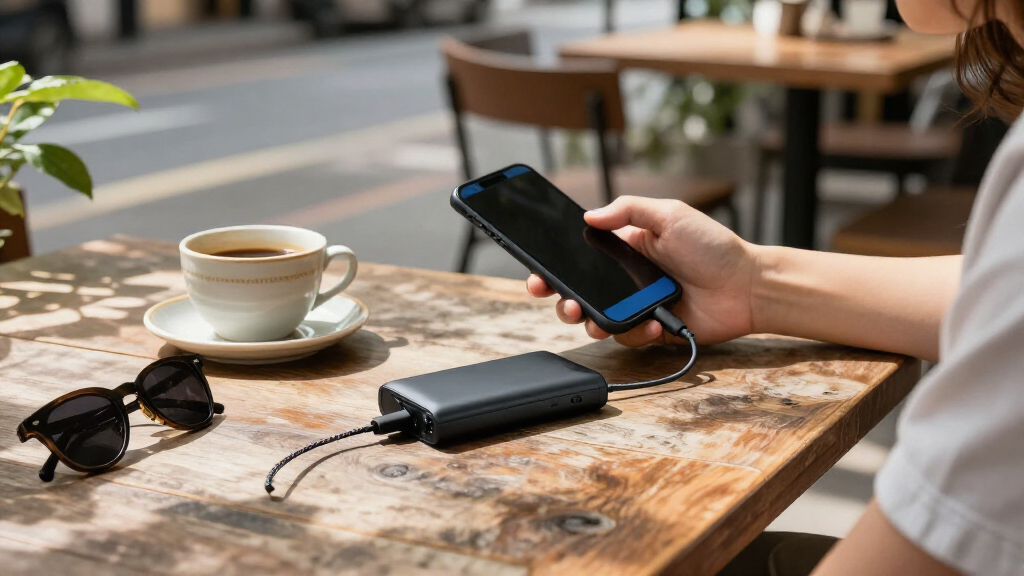

The best portable power bank for most people is the INIU 10,000mAh 45W Fast-Charging Portable Charger, which pairs everyday carry size with higher charging output. For long trips, the Anker 20,000mAh Power Bank with Built-In USB-C Cable offers more capacity and a cable ready to use, while the Anker Prime 26,250mAh 300W is the standout for demanding multi-device charging. Choosing among portable power banks means balancing capacity and speed against weight, cable convenience, and the number of devices you need to charge. Large-capacity and solar models suit different situations from slim daily chargers, but their size and charging tradeoffs matter. Read on for the full breakdown and guidance on matching a power bank to your routine.

Get the latest gadgets delivered free with Prime
- Fast, free delivery on millions of items
- Prime Video, Amazon Music and more included
- Member-only deals all year
Complete the kit


Key Takeaways
- The INIU 10,000mAh 45W leads the everyday picks by combining a manageable capacity with more charging output than the 10,000mAh options focused on basic phone top-ups.
- Anker Prime’s 300W output sets it apart for demanding multi-device use, but its high capacity and power are more than most phone-only buyers need to carry.
- Built-in cables appear across several capacities, from compact 10,000mAh models to 20,000mAh and larger chargers; convenience improves, but a damaged or incompatible cable is harder to replace than a separate one.
- Large-capacity models prioritize fewer recharge stops over pocketability, so the 48,000mAh and 60,000mAh picks make more sense for extended outings than everyday carry.
- Solar and wireless features are specialized advantages: the BLAVOR and SOARAISE offer extra charging methods, while slim Anker and Miady options prioritize a simpler, lighter everyday setup.
| 60,000mAh 22.5W Fast-Charging Power Bank with 3-in-1 Cable |  | Best for High-Capacity Multi-Device Charging | Battery capacity: 60,000mAh | Maximum charging power: 22.5W | Ports: 2 USB-A, 1 USB-C | VIEW LATEST PRICE | See Our Full Breakdown |
| BLAVOR Solar Power Bank 20000mAh, Wireless Charger for Phones & Apple Watch |  | Best for Outdoor Trips | Battery capacity: 20,000mAh | Maximum output power: 18W | Fast charging: 20W USB-C | VIEW LATEST PRICE | See Our Full Breakdown |
| Anker PowerCore Slim 10,000mAh USB-C Portable Charger |  | Best for Simple Everyday Carry | Battery capacity: 10,000mAh | Ports: 1 USB-C, 1 USB-A | Output: 5V / 3A | VIEW LATEST PRICE | See Our Full Breakdown |
| Portable Charger 10000mAh with 4 Built-in Cables – 40% Smaller |  | Best for Cable-Free Convenience | Battery capacity: 10,000mAh | Built-in cables: Lightning, USB-C, and Micro-USB | Number of ports: 3 | VIEW LATEST PRICE | See Our Full Breakdown |
| INIU 10,000mAh 45W Fast-Charging Portable Charger |  | Best for Fast Charging in a Compact Bank | Battery capacity: 10,000mAh | Maximum output: 45W | Ports: 2 USB-C, 1 USB-A | VIEW LATEST PRICE | See Our Full Breakdown |
| Anker Prime Power Bank 26,250mAh 300W Fast Charging |  | Best for High-Power Laptops | Battery capacity: 26,250mAh (99.75Wh) | Maximum output: 300W total | Ports: 2 USB-C, 1 USB-A | VIEW LATEST PRICE | See Our Full Breakdown |
| OHOVIV 50,000mAh Portable Charger with 4 Built-In Cables |  | Best for Group Trips | Battery capacity: 50,000mAh | Maximum charging output: 22.5W | Built-in cables: 4: iPhone, USB-C, Micro USB, and USB-A | VIEW LATEST PRICE | See Our Full Breakdown |
| SOARAISE 48000mAh Solar Power Bank with Wireless Charging and 4 Built-In Cables |  | Best for Outdoor Convenience | Battery capacity: 48,000mAh | Solar panels: 4 | Ports: 2 USB-A outputs, 1 USB-C input/output | VIEW LATEST PRICE | See Our Full Breakdown |
| Anker 20,000mAh Power Bank with Built-In USB-C Cable, 87W, Black |  | Best for Laptop-and-Phone Travel | Battery capacity: 20,000mAh | Maximum output: 87W total; up to 65W to one device | Ports: 3: built-in USB-C cable, 1 USB-C, and 1 USB-A | VIEW LATEST PRICE | See Our Full Breakdown |
| INIU Portable Charger – Smallest 20000mAh 22.5W Fast Charging Power Bank |  | Best Compact Everyday Carry | Battery capacity: 20,000mAh | Maximum output: 22.5W | Ports: 2 USB-C, 1 USB-A | VIEW LATEST PRICE | See Our Full Breakdown |
| Miady 2-Pack Slim 10,000mAh Portable Charger |  | Best Two-Pack | Capacity: 10,000mAh per power bank | Quantity: 2 power banks | Ports: Dual USB-A and USB-C on each bank | VIEW LATEST PRICE | See Our Full Breakdown |
| Anker Zolo Power Bank 20,000 mAh 30W Portable Charger with Built-In USB‑C |  | Best for Fast, High-Capacity Charging | Capacity: 20,000mAh | Output power: 30W | Input power: 20W | VIEW LATEST PRICE | See Our Full Breakdown |
| portable power bank | Ports | Dimensions | Battery capacity | Weight |
|---|---|---|---|---|
| 60,000mAh 22.5W Fast-Charging | 2 USB-A, 1 USB-C | 15 × 7.5 × 2.8 cm | 60,000mAh | 15.5 oz |
| BLAVOR Solar Power Bank 20000m | USB-C, USB-A, and iOS | 1.5 × 3.85 × 7.28 inches | 20,000mAh | — |
| Anker PowerCore Slim 10,000mAh | 1 USB-C, 1 USB-A | 6.01 × 2.82 × 0.61 inches | 10,000mAh | 8.48 oz (172g) |
| Portable Charger 10000mAh with | — | 4.3 × 2.8 × 0.75 inches | 10,000mAh | 188g |
| INIU 10,000mAh 45W Fast-Chargi | 2 USB-C, 1 USB-A | — | 10,000mAh | — |
| Anker Prime Power Bank 26,250m | 2 USB-C, 1 USB-A | 6.3 × 2.5 × 1.5 inches | 26,250mAh (99.75Wh) | 600g |
| OHOVIV 50,000mAh Portable Char | 2 USB-A, 1 USB-C | 5.82 × 2.83 × 1.18 inches | 50,000mAh | 390g (1.07lb) |
| SOARAISE 48000mAh Solar Power | 2 USB-A outputs, 1 USB-C input/output | 6.38 × 3.43 × 1.57 inches | 48,000mAh | — |
| Anker 20,000mAh Power Bank wit | 3: built-in USB-C cable, 1 USB-C, and 1 USB-A | 6.22 × 2.91 × 1.02 inches | 20,000mAh | 15.2oz |
| INIU Portable Charger | 2 USB-C, 1 USB-A | 4.1 × 2.8 × 1.2 inches | 20,000mAh | 320g |
| Miady 2-Pack Slim 10,000mAh Po | Dual USB-A and USB-C on each bank | 5.5 × 2.6 × 0.6 inches each | — | 7.68 ounces each |
| Anker Zolo Power Bank 20,000 m | 2 | 4.72 × 2.89 × 1.24 inches | — | 365g (12.45 ounces) |
More Details on Our Top Picks
60,000mAh 22.5W Fast-Charging Power Bank with 3-in-1 Cable
For trips where several devices need backup, the 60,000mAh capacity and included 3-in-1 cable make this a more self-contained choice than the Anker PowerCore Slim 10,000mAh. It can charge up to five devices at once, while its digital display makes remaining charge easier to track than a simple indicator light. 22.5W charging also gives compatible phones a quicker top-up than this bank’s sheer capacity alone might suggest.
The tradeoff is portability: at 15.5 ounces, it is much heavier than the Anker slim model and may feel like excess weight for daily pocket carry. The product data also omits its own recharge time, so I can’t tell how long it takes to refill this large battery. It makes the most sense for group travel or long stretches away from outlets, not light everyday carry.
Pros:- 60,000mAh capacity supports multiple device charges between outlet visits.
- Can charge up to five devices simultaneously.
- 22.5W output and a digital battery display make charging speed and remaining charge easier to manage.
- Built-in 3-in-1 cable supports USB-C, iOS, and Micro-USB devices.
Cons:- At 15.5 ounces, it is heavier than compact 10,000mAh options such as the Anker PowerCore Slim.
- The product data does not specify how long the power bank takes to recharge.
Best for: Travelers or families who need to charge several phones and small devices away from outlets and value a bundled cable.
Not ideal for: Commuters seeking a light daily-carry bank, or buyers who need a clearly stated recharge time before choosing a high-capacity model.
- Battery capacity:60,000mAh
- Maximum charging power:22.5W
- Ports:2 USB-A, 1 USB-C
- Built-in cable:3-in-1 USB-C, iOS, and Micro-USB
- Simultaneous charging:Up to 5 devices
- Dimensions:15 × 7.5 × 2.8 cm
- Weight:15.5 oz
- Safety features:Overcharge protection, short-circuit protection, and temperature regulation
Our verdict“Choose this for group trips and extended time away from outlets; skip it if carrying weight matters more than capacity.”
BLAVOR Solar Power Bank 20000mAh, Wireless Charger for Phones & Apple Watch
The BLAVOR combines 20,000mAh capacity with a Qi wireless pad, built-in cables, and outdoor-focused extras such as a flashlight, compass, and thermometer. That makes it a different kind of travel companion from the INIU 10,000mAh 45W charger: BLAVOR prioritizes flexible charging and outdoor utility, while INIU offers more specified wired output power in a smaller-capacity format. Its IPX5 protection adds reassurance around splashes during camping or day hikes.
Those extras come with a bulky footprint, so this is less appealing for a pocket or a tightly packed everyday bag. Solar charging is included as a feature, but its speed is not specified; I would treat it as a possible supplement rather than a dependable way to refill the bank. Choose BLAVOR for outdoor versatility, not for the fastest or lightest wired charging setup.
Pros:- 20,000mAh capacity provides more reserve than the 10,000mAh options in this lineup.
- Qi wireless charging and built-in cables offer several ways to connect devices.
- IPX5 protection suits trips where splashes are possible.
- Flashlight, compass, and thermometer add practical outdoor functions.
Cons:- Its 7.28-inch length and 3.85-inch width make it bulky for pocket carry.
- Solar charging speed is not specified, so it may not provide a dependable way to replenish the battery.
- Listed maximum output is 18W, below the INIU charger’s stated 45W maximum.
Best for: Campers and outdoor travelers who want wireless phone charging, built-in cable options, and utility features in one rugged unit.
Not ideal for: Pocket-carry users or buyers who need predictable solar recharging or a clearly specified high-wattage wired output.
- Battery capacity:20,000mAh
- Maximum output power:18W
- Fast charging:20W USB-C
- Ports:USB-C, USB-A, and iOS
- Wireless charging:Qi
- Dimensions:1.5 × 3.85 × 7.28 inches
- Protection:IPX5
- Additional features:Flashlight, camping light, compass, thermometer, and carabiner
Our verdict“Pick BLAVOR for outdoor trips where rugged features and charging flexibility matter more than compact size or high wired output.”
Anker PowerCore Slim 10,000mAh USB-C Portable Charger
The Anker PowerCore Slim is the straightforward pick for someone who wants a familiar, rechargeable backup without built-in cable clutter or outdoor accessories. Its 10,000mAh capacity, slim 0.61-inch profile, and USB-C input and output suit a daily bag better than the much larger 60,000mAh power bank in this roundup. It also includes a USB-C cable, so you can charge compatible devices without needing to buy a separate lead.
Compared with the INIU 10,000mAh 45W charger, this model has fewer ports and a lower specified output of 5V/3A, making it a simpler rather than faster multi-device option. The single USB-C port may limit flexibility when charging several devices, and the stated recharge time of about five hours is not especially quick. This is a sensible fit for one user’s routine phone backup, but not for high-speed charging or a group.
Pros:- Slim 0.61-inch profile is easier to pack than the 20,000mAh BLAVOR.
- USB-C supports both input and output.
- Includes a USB-C-to-USB-C cable.
- Product data lists scratch resistance and 3.2-foot drop durability.
Cons:- Only one USB-C port, limiting connection options compared with the three-port INIU charger.
- The stated recharge time is about 5 hours and 10 minutes.
- Its 5V/3A output is less powerful than the INIU model’s stated 45W maximum.
Best for: Daily commuters and travelers who want a slim 10,000mAh bank for one or two personal devices and already carry their own cables.
Not ideal for: Buyers who need high-output fast charging, multiple USB-C connections, or enough capacity to support several people on a long trip.
- Battery capacity:10,000mAh
- Ports:1 USB-C, 1 USB-A
- Output:5V / 3A
- Recharge time:About 5 hours 10 minutes
- Dimensions:6.01 × 2.82 × 0.61 inches
- Weight:8.48 oz (172g)
- Battery type:Lithium polymer
- Included:USB-C-to-USB-C cable
Our verdict“Choose this for uncomplicated everyday phone backup in a slim package, but look to the INIU if charging speed and port choice matter more.”
Portable Charger 10000mAh with 4 Built-in Cables – 40% Smaller
The Zmmyuluo stands out among the 10,000mAh banks for its built-in charging cables: the product description lists Lightning, USB-C, and Micro-USB connections, reducing the need to pack separate leads. Its digital battery display is also more informative than the basic setup of the Anker PowerCore Slim, while its 188g weight remains manageable for a day bag. The maker says it can charge up to five devices at once, a useful feature for travelers carrying different device types.
That convenience does not make it a strong choice for every multi-device setup. It has just three output ports, and the supplied data does not clarify how power is shared among simultaneous connections. Its 10,000mAh capacity is also modest beside the 20,000mAh BLAVOR, and there is no wireless charging. I’d choose it to reduce cable clutter, not for maximum runtime or especially demanding charging needs.
Pros:- Built-in cable options reduce the number of separate charging leads to pack.
- Digital display shows remaining battery capacity.
- At 188g, it is lighter than the 15.5-ounce 60,000mAh model.
- Product description states that it can charge up to five devices simultaneously.
Cons:- 10,000mAh capacity offers less reserve than the 20,000mAh BLAVOR or larger banks.
- Three output ports may limit simultaneous connections despite the stated five-device capability.
- No wireless charging.
Best for: Travelers with a mix of Lightning, USB-C, and Micro-USB devices who want an integrated cable setup and a visible charge level.
Not ideal for: Heavy users needing a large reserve, or buyers who want wireless charging or clearly specified high-power output across multiple devices.
- Battery capacity:10,000mAh
- Built-in cables:Lightning, USB-C, and Micro-USB
- Number of ports:3
- Output current:3A
- Battery charge time:4 hours
- Weight:188g
- Dimensions:4.3 × 2.8 × 0.75 inches
- Output wattage:18Wh (as listed)
Our verdict“Pick this if built-in cable convenience is your priority; choose a higher-capacity model for extended trips or heavier use.”
INIU 10,000mAh 45W Fast-Charging Portable Charger
The INIU is the strongest fit here for buyers who want a compact bank but care more about wired charging speed and port flexibility than built-in cables. Its 45W maximum output and two USB-C ports plus USB-A give it a clear advantage over the Anker PowerCore Slim, whose listed output is 5V/3A and whose USB-C count is one. The detachable braided cable is replaceable, and the stated airline-safe capacity makes it suited to travel where a modest backup is enough.
Capacity remains the limit: at 10,000mAh, this is not a long-haul power reserve like the 60,000mAh model, and frequent users may need to recharge it during an extended trip. Its included cable is only 0.4 feet long, which can be awkward if the outlet or device is not close by. Pick it for quick top-ups and multiple port options, not all-day charging for a group.
Pros:- 45W maximum output exceeds the Anker PowerCore Slim’s stated 5V/3A output.
- Two USB-C ports and one USB-A port allow more connection options than the Anker slim model.
- Detachable braided USB-C cable can be replaced if needed.
- Includes overcharge protection and a flashlight.
Cons:- 10,000mAh capacity may require recharging during extended trips.
- The included USB-C cable is only 0.4 feet long.
- Unlike the Zmmyuluo, it does not include built-in Lightning, USB-C, and Micro-USB cables.
Best for: Travelers with compatible phones or tablets who want a compact bank with higher specified output and multiple USB-C ports.
Not ideal for: People needing multi-day capacity, built-in cables, or a longer included cable for charging at a distance.
- Battery capacity:10,000mAh
- Maximum output:45W
- Ports:2 USB-C, 1 USB-A
- Included cable:0.4 ft detachable braided USB-C cable
- Voltage:12V
- Output current:3A
- Special features:Fast charging, flashlight, and overcharge protection
- Support:3-year care and lifetime technical support
Our verdict“Choose the INIU for a compact bank with higher specified output and flexible ports, but choose a larger-capacity model for longer trips.”
Anker Prime Power Bank 26,250mAh 300W Fast Charging
300W total output makes this the lineup’s pick for buyers who need a portable bank to serve demanding laptops, including two MacBook Pros at once. Its 26,250mAh capacity stays within the stated TSA-approved limit, while the 250W dual-port input can replenish the bank unusually quickly when paired with a suitable charger. A digital display and app provide more control over charging than the simpler readout on the OHOVIV 50,000mAh. The tradeoff is portability: at 600g, it is heavier than the Anker 20,000mAh Power Bank, and its high output is unnecessary for phone-only trips. It also needs a separate high-power charger for its fastest recharge and is not compatible with Starlink Mini. I’d choose it for laptop power, not as a light everyday carry.
Pros:- Up to 300W total output can support demanding laptops and multiple devices.
- 250W dual-port input can reach 50% charge in 13 minutes with suitable equipment.
- 26,250mAh capacity is stated as TSA-approved for travel.
- Digital display and app offer detailed charging information and control.
Cons:- At 600g, it is heavier than the 20,000mAh Anker option.
- Fastest recharge requires a separate high-power charger.
- Not compatible with Starlink Mini.
Best for: Laptop users, including people carrying high-power MacBook models or charging two laptops on the same trip.
Not ideal for: Phone-only travelers and light-packers who do not need 300W output and would rather carry a smaller, lighter bank.
- Battery capacity:26,250mAh (99.75Wh)
- Maximum output:300W total
- Ports:2 USB-C, 1 USB-A
- Maximum dual-port input:250W
- Recharge performance:50% in 13 minutes; 80% in 39 minutes
- Weight:600g
- Dimensions:6.3 × 2.5 × 1.5 inches
- Special features:Digital display and app control
- Warranty:24 months
Our verdict“Choose this Anker when laptop-grade output and rapid bank recharge matter more than keeping your carry light.”
OHOVIV 50,000mAh Portable Charger with 4 Built-In Cables
The 50,000mAh capacity and four attached cables make this the group-trip choice: several people can charge without packing a matching bundle of cords. It supports up to six devices at once, a broader sharing setup than the Anker 20,000mAh Power Bank, though its 22.5W output is far below that model’s laptop-friendly 87W total. The digital display helps track remaining charge when multiple devices are drawing power. The compromise is a hefty 390g body and a wall charger that is not included, so the large capacity adds carrying weight and requires planning before departure. I’d pick it for a family or group with many phones and mixed cable needs, not for someone seeking a compact everyday bank or fast laptop charging.
Pros:- 50,000mAh capacity suits extended trips and repeated phone top-ups.
- Four built-in cables reduce the number of separate cords to pack.
- Can charge up to six devices at once.
- Digital display and overcharge protection add useful monitoring and safeguards.
Cons:- At 390g, it is heavy for regular pocket carry.
- 22.5W output is modest next to laptop-capable options such as the Anker 20,000mAh model.
- Wall charger is not included.
Best for: Families and travel groups carrying several phones with a mix of USB-C, Lightning-style phone, Micro USB, and USB-A connections.
Not ideal for: Solo commuters and laptop users who want a lighter bank or higher output for computer charging.
- Battery capacity:50,000mAh
- Maximum charging output:22.5W
- Built-in cables:4: iPhone, USB-C, Micro USB, and USB-A
- Ports:2 USB-A, 1 USB-C
- Maximum simultaneous devices:6
- Weight:390g (1.07lb)
- Dimensions:5.82 × 2.83 × 1.18 inches
- Special features:Digital display and overcharge protection
- Warranty:365-day replacement guarantee
Our verdict“Pick the OHOVIV for shared phone charging and fewer loose cables, provided you can accept its weight and modest output.”
SOARAISE 48000mAh Solar Power Bank with Wireless Charging and 4 Built-In Cables
Four built-in cables, wireless charging, and LED camping lights give this bank a practical outdoor setup in one device. Its 48,000mAh capacity is close to the OHOVIV’s 50,000mAh, but the SOARAISE adds wireless charging and four solar panels while offering less clearly specified charging performance: USB-C output is listed at 5V/3A, and no solar recharge rate is provided. That makes the panels a possible supplemental option rather than a dependable substitute for charging from a wall outlet. Compared with the more power-focused Anker Prime 26,250mAh, this is built around convenience and campsite utility, not laptop output. The listing also describes it as waterproof, shockproof, and dustproof, but gives no protection rating. I’d choose it for outdoor phone charging, with realistic expectations about solar input.
Pros:- 48,000mAh capacity supports multiple phone charges.
- Four built-in cables, three ports, and wireless charging offer several ways to connect devices.
- Four solar panels provide an additional potential charging input outdoors.
- Integrated LED camping flashlights add utility away from outlets.
Cons:- Solar charging speed is not quantified, so recharge time outdoors is unclear.
- USB-C output is listed at 5V/3A, well below the laptop output of the Anker Prime.
- No weight or defined water- and impact-resistance rating is provided.
Best for: Campers and outdoor travelers who value built-in cables, wireless phone charging, and an integrated light in one power bank.
Not ideal for: Laptop users or anyone relying on solar panels as a predictable primary recharge method, since solar charging speed is not specified.
- Battery capacity:48,000mAh
- Solar panels:4
- Ports:2 USB-A outputs, 1 USB-C input/output
- Built-in cables:USB-C, phone, USB-A, and Micro USB
- Wireless charging:Yes
- USB-C output:5V/3A
- Dimensions:6.38 × 3.43 × 1.57 inches
- Special features:LED camping flashlights; listing describes the unit as waterproof, shockproof, and dustproof
Our verdict“Choose the SOARAISE for outdoor phone-charging convenience and lighting, not for fast laptop charging or predictable solar replenishment.”
Anker 20,000mAh Power Bank with Built-In USB-C Cable, 87W, Black
This Anker balances 20,000mAh capacity with up to 87W total output, including 65W to one device, making it a more versatile travel companion than the phone-focused INIU 20,000mAh 22.5W. The built-in USB-C cable helps reduce packing clutter, while two additional ports let you charge other devices without giving up the attached lead. Its stated airline approval also suits travelers who want more capacity than a small daily bank. The tradeoff is weight: at 15.2oz, it is no featherweight, and the 1.5-hour recharge claim depends on using a 65W charger. Compared with the much larger OHOVIV 50,000mAh, it carries less stored energy but provides substantially more output for compatible laptops. I’d choose it when one bank needs to cover both a computer and everyday devices.
Pros:- Up to 87W total output, including 65W for one device, supports compatible laptops.
- Built-in USB-C cable reduces the need to pack a separate charging lead.
- Three ports allow several devices to charge from the same bank.
- Airline-approved design fits travel use.
Cons:- 15.2oz weight is substantial for a 20,000mAh bank.
- The stated 1.5-hour recharge requires a 65W charger.
- Its capacity is much lower than the OHOVIV 50,000mAh option for group charging.
Best for: Frequent flyers and hybrid workers who want one bank for a USB-C laptop, phone, and accessories, with fewer cables to pack.
Not ideal for: People prioritizing minimum carry weight or the highest possible phone-only capacity for a group.
- Battery capacity:20,000mAh
- Maximum output:87W total; up to 65W to one device
- Ports:3: built-in USB-C cable, 1 USB-C, and 1 USB-A
- Recharge time:1.5 hours with a 65W charger
- Weight:15.2oz
- Dimensions:6.22 × 2.91 × 1.02 inches
- Battery type:Lithium polymer
- Warranty:18 months
Our verdict“Choose this Anker for a travel-ready balance of laptop output and phone capacity if you can accept its weight and bring a 65W charger.”
INIU Portable Charger – Smallest 20000mAh 22.5W Fast Charging Power Bank
For a 20,000mAh bank in a compact 4.1-inch body, the INIU puts capacity ahead of high-output charging. Its 22.5W output suits phones and tablets, while the integrated USB-C cable on a detachable lanyard can save a separate cord in a day bag. That makes it easier to carry than the Anker 20,000mAh Power Bank, although the Anker is the better choice for laptop charging at up to 65W to one device. The INIU also includes a flashlight and stated flight approval, useful extras for travel, but its 320g weight can still feel heavy in a pocket. The product information lists a digital display as a feature, while the supplied drawback notes that there is no visible LCD for an exact charge reading. I’d pick it for compact phone-first carry, not computer power.
Pros:- 20,000mAh capacity in a compact 4.1 × 2.8 × 1.2-inch body.
- 22.5W output is suited to fast charging compatible phones and tablets.
- Integrated USB-C cable and detachable lanyard reduce loose accessories.
- Includes a flashlight, stated flight approval, and a three-year warranty.
Cons:- 320g can feel heavy for extended pocket carry.
- 22.5W output is far below the laptop-focused Anker 20,000mAh model.
- An exact charge-level reading may not be visible.
Best for: Phone and tablet users who want substantial backup capacity in a short form, with an attached USB-C cable for everyday travel.
Not ideal for: Laptop owners and people who need high-wattage charging or the lightest possible pocket carry.
- Battery capacity:20,000mAh
- Maximum output:22.5W
- Ports:2 USB-C, 1 USB-A
- Dimensions:4.1 × 2.8 × 1.2 inches
- Weight:320g
- Charge time:5.4 hours
- Special features:Integrated USB-C cable on detachable nylon lanyard, flashlight, and overcharge protection
- Warranty:3-year hassle-free care
Our verdict“Choose the INIU for compact, phone-first backup with a built-in cable, but pick the Anker alternative if laptop output matters.”
Miady 2-Pack Slim 10,000mAh Portable Charger
The Miady set is the lineup’s practical choice for buyers who want two separate portable banks rather than one larger unit. Each 10,000mAh charger is slim and weighs 7.68 ounces, so one can stay in a day bag while the other is kept as a spare or shared with a travel companion. USB-C works for both input and output, and the USB-A ports add flexibility when charging several devices; the set can power up to three devices at once. Compared with the Anker Zolo 20,000mAh, each Miady bank holds less charge and offers no stated 30W output, but the pair gives you two independently usable chargers. The tradeoff is a basic charging setup: no fast-charging wattage is specified, and a Lightning cable is not included, so Apple-device owners may need to bring their own.
Pros:- Includes two independent 10,000mAh power banks
- Slim, 7.68-ounce design makes each unit easy to carry
- USB-C supports both charging the bank and powering devices
- Can charge up to three devices at once
Cons:- No fast-charging output wattage is specified
- Lightning cable is not included
- Each bank has less capacity than the 20,000mAh Anker Zolo
Best for: Travel companions, families, or commuters who want two lightweight 10,000mAh chargers to carry separately or share.
Not ideal for: People who need one high-capacity bank for multiple days away from an outlet or want specified fast charging; the Anker Zolo offers twice the capacity in a single unit and 30W output.
- Capacity:10,000mAh per power bank
- Quantity:2 power banks
- Ports:Dual USB-A and USB-C on each bank
- USB-C:Input and output
- Maximum simultaneous devices:Up to 3
- Dimensions:5.5 × 2.6 × 0.6 inches each
- Weight:7.68 ounces each
- Included:2 USB-C cables and user manual
Our verdict“Choose the Miady set if having two easy-to-share chargers matters more than getting higher capacity or specified fast charging from one bank.”
Anker Zolo Power Bank 20,000 mAh 30W Portable Charger with Built-In USB‑C
The Anker Zolo suits travelers who want 20,000mAh of capacity and a built-in USB-C cable in one compact package. Its 30W output is a clearer fit for faster phone charging than the Miady two-pack, which lists no output wattage; the 20W input also helps replenish the bank more quickly. The integrated cable means one fewer accessory to pack, while two ports let you charge more than one device. At 12.45 ounces, it remains portable, though it is heavier than either Miady unit and offers less flexibility than carrying two separate banks. The fixed cable is convenient but becomes a liability if it is damaged, since it cannot be replaced. Buyers who need to charge several devices at once may prefer the Miady set’s stated capacity for up to three devices; those wanting a single bank with more stored power and faster output have the stronger case for this Anker.
Pros:- 20,000mAh capacity supports multiple smartphone charges
- 30W output and 20W input support faster charging
- Built-in 5.98-inch USB-C cable reduces loose accessories
- Compact for its capacity at 12.45 ounces
Cons:- Two ports limit simultaneous charging compared with the Miady set
- Built-in cable cannot be replaced if damaged
- Does not support wireless charging
Best for: Frequent travelers and heavy smartphone users who want a single 20,000mAh bank, faster wired charging, and fewer loose cables.
Not ideal for: Buyers who need to charge three devices at once, want wireless charging, or prefer a cable they can replace if it wears out.
- Capacity:20,000mAh
- Output power:30W
- Input power:20W
- Ports:2
- Built-in cable:USB-C, 5.98 inches
- Weight:365g (12.45 ounces)
- Dimensions:4.72 × 2.89 × 1.24 inches
- Battery charge time:5 hours
Our verdict“Pick the Anker Zolo for one portable bank with substantial capacity, a built-in USB-C cable, and specified 30W output.”

How We Picked
I compared these portable power banks by the factors that change the day-to-day experience: stated capacity, charging output, carryability, cable setup, and versatility across devices. Capacity matters, but a larger number alone does not make a better everyday charger; the power bank’s size and charging speed need to fit how and where it will be used. Built-in cables and wireless charging can reduce what you need to pack, while extra features add little value if they do not suit your devices or routine.
The ranking favors options with a useful balance of capacity, output, and portability for their intended role. That puts a fast-charging 10,000mAh model ahead for everyday use, while higher-capacity and premium-output options rank better for travelers and multi-device users. I also considered compromises: bulky designs, limited output, reliance on built-in cables, and the specialized nature of solar charging. The list includes distinct choices rather than treating maximum capacity as the sole measure of quality.
Factors to Consider When Choosing Portable Power Banks
Capacity and advertised output are only part of the choice. I’d start with the devices you carry, how many charges you need between outlets, and whether you value a lighter pack or fewer charging stops. These broader tradeoffs can help narrow the field before comparing individual models.
Match Capacity to Your Outing
Think about how long you will be away from a wall outlet and how many devices need power, rather than buying the biggest capacity available. A 10,000mAh bank is often easier to carry for routine phone top-ups, while 20,000mAh or more can make sense for travel or sharing power. The capacity printed on a bank does not translate directly into the same amount delivered to a device, since energy is lost during charging. A common mistake is treating a larger rating as a guarantee of a specific number of full charges. Check the bank’s physical size and weight alongside its capacity, especially if it will live in a small bag or pocket. Choose extra capacity only when the reduced need to recharge the bank is worth carrying the added bulk.
Check Output Against Your Devices
Charging output affects how quickly a compatible device can recharge, but a high wattage rating does not make every phone charge faster. Your device and cable also need to support the relevant charging standard and power level. For a phone used mainly for occasional top-ups, moderate output may be enough; tablets and laptops can benefit from a bank designed for higher-wattage charging. Avoid paying for a headline output your devices cannot use. If you plan to charge several devices at once, check how the bank shares power across its ports, not only its maximum single-port figure. This helps prevent disappointment when combined charging is slower than expected.
Choose Between Built-In and Separate Cables
A built-in cable reduces loose accessories and can make a charger more convenient to grab on the way out. The tradeoff is flexibility: if the cable is unsuitable for a device or becomes damaged, a separate cable may be easier to replace. Before choosing, confirm that the connector matches the devices you actually carry and that the bank still offers useful ports for other connections. Separate cables take up room, but let you swap lengths or connectors and keep charging if one cable fails. Multi-cable designs can be especially useful when sharing a bank, though they may make the unit less simple to pack. Treat cable convenience as a real benefit, not a substitute for checking compatibility.
Weigh Portability Against Fewer Recharges
Large power banks can reduce how often you need to recharge the bank itself, but they are less appealing when every ounce in a day bag matters. Slim 10,000mAh designs are usually easier to bring along routinely, while 20,000mAh and higher-capacity choices suit longer days or multiple devices. Consider where you will carry the charger: a bag can accommodate a larger unit more comfortably than a pocket. A frequent buying mistake is choosing a high capacity for hypothetical trips and then leaving the heavy bank at home. If you travel often, also check the carrier’s current rules for carrying power banks, since limits can depend on the battery’s energy rating. Choose for your most common use, not the rarest one.
Treat Solar and Wireless Charging as Extra Methods
Wireless charging can simplify topping up compatible devices, but it does not replace checking charging speed or whether a phone supports the feature. Solar panels on portable banks may help in suitable outdoor conditions, yet they are not a reliable substitute for charging the bank from an outlet before a trip. Sun exposure, panel size, and weather all affect how useful solar input is. Buyers planning an outdoor emergency setup should think of solar as a supplementary option, not a promise of quick replenishment. If your main need is reliable daily phone charging, a slimmer conventional bank may be easier to carry and simpler to use. Pay for extra charging methods when they match a repeated need.
Prioritize the Features You Will Use
Displays, multiple built-in cables, wireless charging, and high output can all add convenience, but each feature can bring extra size or complexity. Decide which problem you are solving: checking remaining charge at a glance, charging several devices, or carrying fewer accessories. A simple bank may be the better buy if you only need occasional phone power, while a more capable model can earn its place in a shared travel kit. Check the number and type of outputs as well as whether the bank can charge itself while powering a device, if that matters to your setup. Do not let a long feature list distract from capacity, output, and carry comfort. The right option is the one whose extra functions you will use regularly.
Frequently Asked Questions
Is a 10,000mAh power bank enough for a full day away from an outlet?
It can be enough for a phone-focused day if you mainly need a top-up rather than repeated full recharges. The usable charge is lower than the capacity printed on the bank because power is lost during conversion and transfer. A phone with a larger battery, heavy navigation use, or multiple devices may call for more capacity. If you want a lighter daily carry, a 10,000mAh option is a reasonable starting point; if you need extra reserve, compare 20,000mAh models and their added size. Think about your actual use across a typical day instead of relying on the capacity number alone.
Should I choose a power bank with a built-in cable?
A built-in cable is useful if you often forget accessories or want a compact travel setup. It is less flexible than carrying a separate cable, and the built-in connector may not serve every device you own. Check for additional ports if you charge different device types or want to keep using the bank if its integrated cable fails. Built-in cables are available in both compact and higher-capacity options in this roundup, so the feature does not automatically mean a smaller bank. Pick one when cable convenience solves a recurring problem, not simply because it sounds easier.
Is a high-wattage power bank worth carrying if I mostly charge a phone?
It may be worthwhile if your phone supports faster charging or you also use a tablet or other higher-demand device. If your devices accept less power, they will not use the bank’s full output, so a high wattage rating alone may not improve your routine. Higher-output models can be a better fit for sharing power across several devices or charging compatible equipment. For phone-only use, portability and capacity may matter more than maximum wattage. Check the charging capabilities of your devices before choosing a premium-output model.
Can I rely on a solar power bank to recharge during a trip?
It is safer to treat its solar feature as supplementary charging rather than your primary way to replenish the bank. Sunlight, weather, and how the panel is positioned all affect the power it can collect, so charging may be slow or inconsistent. Charge the bank from a suitable power source before leaving if you need dependable backup. Solar can still be a useful extra for outdoor use when access to outlets is limited. If you need predictable charging, compare its regular input options and capacity rather than counting on the panel alone.
How do I choose between a compact power bank and a 20,000mAh or larger model?
Start with how many devices you need to charge and how long you will be away from an outlet. A compact 10,000mAh option is easier to carry routinely, while a 20,000mAh or larger bank can provide more reserve for longer trips or shared use. The larger unit may be a poor everyday choice if its weight makes you leave it behind. Also check whether its output suits your devices and whether you need multiple ports or built-in cables. When uncertain, favor the size you will actually carry most days rather than buying capacity for an occasional scenario.
Conclusion
For most people, I’d start with the INIU 10,000mAh 45W as the best overall balance of everyday carry and charging capability. The Miady 2-Pack Slim 10,000mAh is my best value-style pick for buyers who want two simple chargers to split between bags or people, while the Anker Prime 26,250mAh 300W is the best premium choice for demanding multi-device charging. Beginners who want a straightforward phone backup can choose a slim 10,000mAh option such as the Anker PowerCore Slim; those who want fewer loose accessories may prefer a model with a built-in cable. For extended outings, compare the 50,000mAh and larger banks, and choose the BLAVOR or SOARAISE only if their wireless or solar features fit your needs. The right portable power bank is the one whose capacity, output, and carry size match the devices and routine you actually have.