The best 4K OLED TVs for sports balance motion clarity, brightness, screen size, reflection control, and easy live-TV access. My best overall pick is the LG 65-Inch OLED evo AI 4K C5 Series because it offers the strongest mix of size, processing, gaming-friendly ports, and sports-ready contrast without jumping into ultra-premium pricing. The Samsung 65-Inch OLED S95F stands out for bright-room sports, while the LG 55-Inch OLED AI 4K B5 Series makes the most sense for buyers who want OLED motion and contrast at a lower price. The main tradeoffs are brightness versus price, 48-inch convenience versus big-screen immersion, and premium image processing versus everyday value. Continue reading for the full breakdown of which model fits your room, your leagues, and your budget.
Key Takeaways
- The LG 65-Inch C5 ranks first because it hits the best balance of sports motion, screen size, HDMI flexibility, and price control.
- The Samsung S95F is the premium bright-room pick, while the LG G5 is better for buyers who want a gallery-style flagship with strong processing.
- The two 48-inch Samsung and LG options are not just smaller versions of the winners; they suit bedrooms, apartments, and desk-adjacent sports setups where a 65-inch screen would feel excessive.
- The LG B5 and LG C4 reveal the value pattern in this roundup: last-year or step-down OLEDs can still be excellent for sports if peak brightness is not the top priority.
- Bigger is not always better here; the Panasonic 77-inch Z8 and Samsung 77-inch S85F favor immersion, while the sharper buys for most homes sit in the 55- to 65-inch range.


More Details on Our Top Picks
LG 55-Inch OLED evo AI Super Upscaling 4K C5 Series Smart TV
I would rank the LG 55-Inch OLED evo C5 ahead of the LG B5 for most sports viewers because it pairs OLED evo contrast with stronger processing for lower-quality broadcasts. That matters when cable football, streaming basketball, or older 1080p feeds need cleaner edges on jerseys and score bugs. Compared with the Samsung 48-Inch OLED S90H, this LG gives up the higher 165Hz gaming ceiling, but its Dolby Vision support and balanced 55-inch size make it easier to recommend for mixed sports, movies, and weeknight TV. The tradeoff is value: it costs more than a B-series LG, uses more power, and the 35.3-pound stand weight makes setup less casual. For buyers who want one OLED that handles fast motion, dark-room contrast, and everyday streaming without going huge, this is my safest pick.
Pros:- OLED evo panel gives sports strong contrast and clean field or court definition
- AI Super Upscaling helps lower-resolution broadcasts look cleaner on a 4K screen
- 120Hz refresh rate is well suited to fast sports motion
- Dolby Vision, HDR10, and HLG support make it flexible for sports and movie nights
Cons:- Costs more than the LG B5 while staying at the same 55-inch size
- 35.3-pound weight with stand can make setup awkward
- 133.1-watt power draw is higher than some OLED alternatives
Best for: Sports fans who want a premium 55-inch OLED for football, basketball, hockey, and streaming without moving up to a 65- or 77-inch screen
Not ideal for: Budget-focused buyers or renters who move often, since it is heavier than the LG B5 and likely pricier than entry OLED options
- Screen Size:55 inches
- Display Technology:OLED evo
- Resolution:4K
- Refresh Rate:120Hz
- HDR Formats:Dolby Vision, HDR10, HLG
- Audio:2.2-channel Dolby Atmos with WOW Orchestra
- Dimensions With Stand:9.1 x 48.1 x 29.8 inches
- Weight With Stand:35.3 pounds
Bottom line: This is the 55-inch OLED I would point to first for sports viewers who want strong motion, rich contrast, and broad HDR support in one balanced package.
Samsung 48-Inch OLED S90H Smart TV
The Samsung 48-Inch OLED S90H earns its place because it solves a different sports problem than the LG 55-Inch OLED evo C5: glare and space. Its glare-free OLED HDR+ display is the feature I would prioritize for daytime football or afternoon tennis in a bright apartment, while the compact 48-inch size fits rooms where a 55-inch LG B5 may feel too wide. The 165Hz refresh rate, G-SYNC, and FreeSync support also make it the fastest option in this batch for buyers who split time between sports and gaming. The downside is format flexibility: Samsung does not list Dolby Vision here, so HDR movie fans may prefer either LG C5. It is also a premium small TV, which means buyers pay more per inch than with larger value-focused sets.
Pros:- Glare-free OLED HDR+ panel is useful for bright rooms and afternoon sports
- 165Hz refresh rate is the fastest in this group
- AI Motion Enhancer Pro targets blur in fast action
- G-SYNC and FreeSync Premium Pro make it strong for gaming between matches
Cons:- 48-inch size will feel small for large couches or watch parties
- Premium pricing limits its value per inch
- No Dolby Vision listed, unlike the LG C5 and Panasonic Z8
Best for: Apartment dwellers and daytime sports viewers who need a compact OLED that fights glare and doubles as a serious gaming display
Not ideal for: Home theater buyers who want Dolby Vision support or a big-screen stadium feel from 65 inches or larger
- Screen Size:48 inches
- Display Type:OLED HDR+ with Glare Free
- Resolution:4K
- Refresh Rate:165Hz
- Processor:NQ4 AI Gen3 with 128 neural networks
- Motion Feature:AI Motion Enhancer Pro
- Gaming Support:NVIDIA G-SYNC and AMD FreeSync Premium Pro
- Model Year:2026
Bottom line: I would choose this for a smaller bright room where glare control and speed matter more than screen size.
Panasonic Z8 Series 77-Inch OLED 4K Ultra HD Smart Fire TV
If the goal is making Sunday football or playoff basketball feel large and communal, I would put the Panasonic Z8 Series 77-inch OLED above every 55-inch option here. The extra screen area changes the viewing experience more than another small bump in processing power; compared with the LG 55-Inch OLED evo C5, this Panasonic gives viewers a more stadium-like scale for wide camera shots and fast breaks. It also beats the LG B5 on refresh headroom, with 144Hz motion support and serious gaming features. The 360 Soundscape Pro by Technics is another advantage if buyers do not want to add a soundbar right away. The catch is obvious: 77 inches needs distance, wall space, and budget. In smaller rooms, the same strengths can become too much screen and too much cost.
Pros:- 77-inch OLED panel gives sports a much larger, more communal feel
- 144Hz refresh rate supports fast motion and gaming
- HDR10, HDR10+, Dolby Vision, and HLG cover a wide range of HDR sources
- 360 Soundscape Pro by Technics adds stronger built-in audio than most TVs
Cons:- Large size can overwhelm small rooms or short viewing distances
- Premium feature set likely carries a high price
- Fire TV interface may not appeal to buyers who prefer Google TV or webOS
Best for: Families and watch-party hosts who want a large OLED centerpiece for football, basketball, racing, and cinematic streaming
Not ideal for: Small apartments, tight media consoles, or buyers who sit close enough that a 77-inch screen would dominate the room
- Screen Size:77 inches
- Display Type:OLED 4K Ultra HD
- Resolution:4K
- Refresh Rate:144Hz
- HDR Formats:HDR10, HDR10+, Dolby Vision, HLG
- Processor:HCX Pro AI Processor MKII
- Gaming Features:HDMI 2.1, VRR, AMD FreeSync Premium, NVIDIA G-SYNC
- Smart Platform:Fire TV built in
- Audio:360 Soundscape Pro by Technics with Dolby Atmos
Bottom line: This is my pick for buyers who care most about big-screen sports impact and have the room to let a 77-inch OLED breathe.
LG 55-Inch Class OLED AI 4K B5 Series Smart TV
The LG 55-Inch OLED B5 is the value play in this group because it keeps the sports essentials: perfect black OLED contrast, a native 120Hz refresh rate, 0.1ms response time, VRR, and four HDMI 2.1 inputs. Compared with the LG 55-Inch OLED evo C5, I would expect the C5 to be the stronger all-around picture performer, especially for upscaling and brightness refinement, but the B5 gives many viewers the motion benefits they actually notice during live games. It also feels more practical than the Panasonic Z8 if the room cannot handle 77 inches. The compromise is that its 2.0-channel audio is less convincing, its glossy screen can be less forgiving with reflections, and the Alpha 8 processor sits below LG’s higher C-series processing tier.
Pros:- 120Hz OLED motion suits live sports and console gaming
- 0.1ms response time, VRR, G-SYNC, and FreeSync Premium add gaming value
- Four HDMI 2.1 ports support multiple modern devices
- webOS with LG Channels gives easy access to streaming and free channels
Cons:- Alpha 8 processing is a step below the LG C5’s higher-end image engine
- 2.0-channel audio is less immersive than Panasonic’s 360 Soundscape Pro system
- Glossy screen finish can show reflections in bright spaces
Best for: Sports viewers who want a 55-inch OLED with 120Hz motion and gaming extras while keeping the budget below higher C- and G-series models
Not ideal for: Buyers who watch in very bright rooms or want the strongest LG processing and built-in audio without adding a soundbar
- Screen Size:55 inches
- Display Technology:OLED
- Resolution:4K
- Refresh Rate:120Hz
- Response Time:0.1 milliseconds
- HDR Formats:Dolby Vision, HDR10, HLG
- Processor:Alpha 8 AI Processor 4K Gen2
- HDMI Ports:4 HDMI ports
- Weight:32 pounds
Bottom line: I would buy this as the practical 55-inch OLED for sports when C-series polish is nice to have but price matters more.
LG 65-Inch Class OLED evo AI 4K C5 Series Smart TV
I would choose the LG 65-Inch OLED evo C5 when the 55-inch C5 feels a bit small but the Panasonic Z8’s 77-inch size is too much. For sports, that middle ground matters: 65 inches gives wide field views more presence while still fitting many living rooms. The Alpha 9 AI Processor Gen8 also makes this a stronger performance pick than the LG B5, especially for cleaning up streamed games and sharpening motion-heavy scenes. Compared with the Samsung 48-Inch OLED S90H, it gives up the 165Hz refresh rate but wins on screen size and Dolby Vision support. The drawbacks are classic OLED issues: the price sits in premium territory, static scoreboards can raise burn-in concerns over time, and buyers who mainly watch bright-room daytime sports may still want stronger anti-glare handling.
Pros:- 65-inch OLED evo screen gives sports more scale than 55-inch models
- Alpha 9 AI Processor Gen8 supports stronger 4K upscaling
- Up to 144Hz refresh rate and 0.1ms response time suit fast games and gaming
- Four HDMI 2.1 ports make it easy to connect consoles and streaming gear
Cons:- Premium price compared with non-OLED TVs and the LG B5
- OLED burn-in risk matters for static scoreboards or channel logos
- Less compact and less glare-focused than the Samsung 48-Inch OLED S90H
Best for: Living-room sports fans who want a bigger OLED than 55 inches without jumping to a 77-inch TV
Not ideal for: Heavy news or sports-bar-style users who leave static tickers and scoreboards on for long periods every day
- Model Number:OLED65C5PUA
- Screen Size:65 inches
- Display Technology:OLED evo
- Resolution:4K, 3840 x 2160
- Processor:Alpha 9 AI Processor Gen8
- Refresh Rate:Up to 144Hz
- Response Time:0.1ms gaming response time
- HDMI Ports:Four HDMI 2.1 ports
- Key Features:Dolby Vision, Dolby Atmos, Filmmaker Mode
Bottom line: This is my 65-inch sweet spot pick for buyers who want more screen than a 55-inch OLED without committing to a very large TV.
Sony 55″ OLED 4K Ultra HD TV (BRAVIA XR8B) with Google Smart TV and PS5 Optimization
I would place the Sony BRAVIA XR8B below the brighter LG G5 and larger Samsung S95F for pure sports-room impact, but it earns its spot through motion-focused processing, rich OLED contrast, and especially strong console integration. For football, basketball, and racing, the XR Processor should help clean up fast action and broadcast feeds without making the image feel overly processed. Compared with the Samsung 65-Inch S90F, the smaller 55-inch size is less cinematic for group viewing, yet it is easier to fit in an apartment or den. The tradeoff is price and setup complexity: Google TV, calibration modes, and PS5 features give buyers plenty to tune, but less technical viewers may prefer a simpler LG or Samsung interface.
Pros:- XR Processor is well suited to fast sports motion and lower-quality broadcasts
- OLED contrast gives night games and indoor arenas strong depth
- Google TV brings major streaming apps into one interface
- PS5-specific features add extra value for sports gamers
Cons:- 55-inch screen feels less immersive than the 65-inch Samsung sports picks
- Premium OLED pricing limits its value for casual viewers
- Feature-heavy setup can be more involved than simpler smart TV systems
Best for: PS5 owners who watch sports in a smaller living room and want strong OLED contrast with console-friendly picture controls.
Not ideal for: Buyers who want a big 65-inch screen for watch parties or anyone who wants the simplest possible setup out of the box.
- Screen Size:55 inches
- Display Type:OLED
- Resolution:4K Ultra HD
- Processor:XR Processor
- HDR Support:Dolby Vision, IMAX Enhanced
- Audio Support:DTS:X
- Smart Platform:Google TV with Google Assistant
- Gaming Features:Auto HDR Tone Mapping and Auto Genre Picture Mode for PS5
Bottom line: This is the sports OLED I would steer toward when PS5 gaming matters almost as much as live games.
LG 55-Inch Class OLED evo AI Super Upscaling 4K G5 Series Smart TV w/Dolby Atmos & Vision, HDR10, Filmmaker Mode, Wow Orchestra, Alexa Built-in (OLED55G5WUA, 2025)
The LG OLED evo G5 ranks highest here for buyers who want a 55-inch TV that can handle daytime sports without the usual OLED dimness concern. Its Brightness Booster Ultimate gives it a clear advantage over the Sony BRAVIA XR8B in brighter rooms, while the up to 165Hz refresh rate makes fast camera pans feel especially fluid. Compared with the 65-inch Samsung S95F, the LG gives up screen size and Samsung’s glare-free panel approach, but it counters with Dolby Vision support, webOS updates, and a wall-hugging design. The catch is cost: this is a premium TV for people who care about polish. If the room is large, I would lean toward a 65-inch model instead.
Pros:- Brighter OLED evo panel helps daytime sports look more lively
- Up to 165Hz refresh rate supports very smooth action
- Four HDMI 2.1 inputs suit multiple consoles and streaming boxes
- webOS Re:New promises up to 5 years of software updates
Cons:- Premium pricing is hard to justify for casual sports viewing
- 55-inch size can feel modest for large seating areas
- Wall-focused design may require extra planning if used on furniture
Best for: Sports viewers in bright apartments or media rooms who want a premium 55-inch OLED with high brightness and advanced gaming support.
Not ideal for: Large families hosting game-day groups, since a 65-inch or 77-inch screen will feel more communal.
- Screen Size:55 inches
- Display Type:OLED evo
- Resolution:4K
- Processor:Alpha 11 AI Processor Gen2
- Brightness Feature:Brightness Booster Ultimate
- Refresh Rate:Up to 165Hz
- HDR Support:Dolby Vision, HDR10, Filmmaker Mode
- Audio:Dolby Atmos and Wow Orchestra
- Smart Platform:webOS with Alexa Built-in and LG Channels
Bottom line: This is my premium 55-inch pick for sports fans who want brightness, speed, and a more polished room setup.
Samsung 65-Inch OLED S95F 4K Smart TV (2025 Model) with AI Gen3 Processor and Dolby Atmos
The Samsung 65-Inch OLED S95F gets my top slot for sports because it combines the size most living rooms need with glare-free display technology and a very fast 164Hz refresh rate. Compared with the LG OLED evo G5, it offers a larger 65-inch canvas and stronger reflection control, which matters when Sunday games run through sunny afternoons. The NQ4 AI Gen3 processor also helps upscale cable and streaming sports that are still not always true 4K. The tradeoff is format and cost: Samsung’s HDR approach may not please Dolby Vision loyalists, and power use can be higher than LED alternatives. Still, for sports-first buyers, the anti-reflection advantage gives it the clearest path to the top.
Pros:- Glare-free display helps reduce distracting reflections during daytime games
- 65-inch size fits group viewing better than the 55-inch Sony and LG models
- 164Hz refresh rate gives fast sports and gaming extra motion headroom
- AI upscaling can improve lower-resolution sports broadcasts
Cons:- Premium OLED pricing makes it a major purchase
- Higher power use than many LED TVs
- No listed Dolby Vision support may disappoint home theater buyers
Best for: Sports-heavy households with bright living rooms, wide seating, and frequent daytime viewing.
Not ideal for: Dolby Vision loyalists or buyers trying to keep purchase price and power use low.
- Screen Size:65 inches
- Display Type:OLED
- Resolution:4K
- Refresh Rate:164Hz
- Processor:NQ4 AI Gen3
- HDR Support:HDR Pro
- Audio Technology:Dolby Atmos
- Smart Features:Alexa Built-in and Samsung Vision AI
Bottom line: This is the sports OLED I would pick first for a bright main living room.
Samsung 65-Inch Class OLED S90F 4K Smart TV (2025 Model) with NQ4 AI Gen3 Processor
The Samsung 65-Inch S90F is the value play in this group because it keeps the sports-friendly size, NQ4 AI Gen3 processing, and 144Hz Motion Xcelerator without reaching for the S95F’s higher-end glare-free package. I would choose the S95F for a sunny room, but the S90F makes more sense if curtains or evening viewing reduce reflection problems. Against the 48-inch S90F, this 65-inch version is far better for shared sports watching, since scores, player movement, and sideline detail are easier to read from across the room. The compromises are clear: HDR+ support may not satisfy every format preference, and the large panel needs space. Still, it hits a strong middle ground for sports fans who want OLED without going all-in.
Pros:- 65-inch size gives sports broadcasts a more social, readable feel
- 144Hz refresh rate is strong for fast sports and console gaming
- NQ4 AI Gen3 processor supports 4K upscaling for mixed-quality feeds
- Alexa built-in keeps voice control simple
Cons:- Less reflection-focused than the Samsung S95F
- OLED HDR+ format support may not match every buyer’s preference
- Large size can overwhelm compact rooms
Best for: Buyers who want a 65-inch OLED for football, basketball, and gaming but do not need Samsung’s highest-end glare control.
Not ideal for: Small rooms, narrow TV stands, or bright spaces where reflections are a daily problem.
- Model:S90F (2025 Model)
- Screen Size:65 inches
- Display Type:OLED
- Resolution:4K (3840 x 2160)
- Processor:NQ4 AI Gen3
- Refresh Rate:144Hz
- HDR Type:OLED HDR+
- Smart Features:Alexa Built-in
Bottom line: This is the sensible 65-inch OLED for sports fans who want speed and scale without paying for every premium extra.
Samsung 48-Inch OLED S90F 4K Smart TV (2025 Model) with NQ4 AI Gen3 Processor
The Samsung 48-Inch S90F fills the compact role because it brings the same sports-friendly 144Hz refresh rate, OLED HDR+, and NQ4 AI Gen3 processing into a screen size that works in bedrooms, offices, and smaller dens. Compared with the Samsung 65-Inch S90F, it loses the big-game scale that makes a crowd lean in, but it is much easier to place close to a desk or bed. It also competes well with the Sony BRAVIA XR8B if space matters more than PS5-specific extras. The drawbacks are practical: at 37 pounds it is not featherlight, and limited VESA options reduce mounting freedom. I would buy it for solo sports viewing, not for hosting a playoff party.
Pros:- 48-inch size fits rooms where 55-inch and 65-inch TVs feel too large
- 144Hz refresh rate supports smooth sports and gaming motion
- NQ4 AI Gen3 processing helps sharpen non-4K sports feeds
- 40-watt 5.1-channel audio output is strong for a compact OLED
Cons:- Too small for most group sports viewing
- 37-pound weight can make setup awkward
- Limited VESA options reduce mounting flexibility
Best for: Solo viewers, apartment dwellers, and bedroom TV buyers who want fast OLED sports motion in a smaller footprint.
Not ideal for: Game-day hosts or wall-mount shoppers who need broad mounting flexibility and a larger shared screen.
- Screen Size:48 inches
- Display Technology:OLED
- Resolution:4K
- Refresh Rate:144Hz
- Processor:NQ4 AI Gen3
- HDR Format:OLED HDR+
- Audio Output:40 Watts, 5.1 channels
- Weight:37 pounds
- Smart Features:Alexa Built-in and Samsung Vision AI
Bottom line: This is my compact pick for sports fans who sit close and care more about speed than screen size.
LG 65-Inch OLED evo C4 Series Smart TV (OLED65C4PUA)
I rank the LG 65-Inch OLED evo C4 highest here because it hits the sports sweet spot: a large 65-inch OLED panel, 144Hz refresh rate, four HDMI 2.1 inputs, and very fast response. Compared with the smaller LG OLED48C5PUA bundle, this is better for living rooms where football, soccer, basketball, or hockey need scale and motion clarity. It also has Dolby Vision, which the Samsung 77-Inch OLED S85F lacks, though Samsung counters with a much larger screen. The tradeoff is cost and OLED care: static scoreboards, tickers, and channel logos can raise burn-in risk over years. Still, for buyers who want one TV for live sports, streaming, and next-gen gaming, this C4 feels like the most balanced pick.
Pros:- 144Hz refresh rate and 0.1ms response help fast action look cleaner
- 65-inch OLED evo panel is a strong size for shared sports viewing
- Four HDMI 2.1 inputs support consoles, soundbars, and streaming boxes
- Dolby Vision and Dolby Atmos add richer movie and game support beyond sports
Cons:- Costs more than many non-OLED sports TVs in the same size range
- OLED burn-in risk matters for heavy news, sports ticker, or scoreboard use
- Not as cinematic in sheer size as the 77-inch Samsung S85F
Best for: Sports fans with a main living room who want fast motion, strong HDR support, and enough screen size for group viewing.
Not ideal for: Bars or households that leave sports channels with static scoreboards on all day, since OLED burn-in risk is part of the deal.
- Display Type:OLED evo
- Screen Size:65 inches
- Resolution:4K
- Processor:A9 AI Processor Gen7
- Refresh Rate:144Hz
- HDMI Ports:Four HDMI 2.1 inputs
- Response Time:0.1ms
- Smart Features:Alexa Built-in, webOS Re:New Program
Bottom line: This is my pick for buyers who want the best all-around OLED sports TV without jumping to a giant premium screen.
LG OLED48C5PUA 48″ C5 OLED evo 4K UHD webOS TV 2025 Bundle
The LG OLED48C5PUA C5 bundle makes the list because it solves a different sports problem: getting an OLED setup into a bedroom, den, apartment, or secondary viewing space without hunting down every accessory separately. Against the LG 65-Inch OLED evo C4, the smaller screen gives up stadium-like impact, but it is easier to place and includes a wall mount, HDMI cables, surge adapter, guidebook, and 26 months of protection with burn-in coverage listed. For sports fans who also game, the HDMI 2.1 ports, VRR, NVIDIA G-SYNC, AMD FreeSync Premium, and Game Optimizer add real value. My main hesitation is bundle quality: the extras may not match what careful home theater buyers would pick individually, and the listed HDMI 2.0 cables feel mismatched beside a premium HDMI 2.1 TV.
Pros:- Compact OLED evo size fits rooms where 55- to 77-inch TVs may overpower the space
- Bundle includes wall mount, HDMI cables, surge adapter, guidebook, and extended protection
- Gaming features such as VRR, NVIDIA G-SYNC, AMD FreeSync Premium, and Game Optimizer suit sports-game fans
- Dolby Vision and Dolby Atmos give it broader entertainment appeal
Cons:- 48-inch screen lacks the event-night scale of the 65-inch LG C4 or 77-inch Samsung S85F
- Bundled HDMI 2.0 cables are less appealing with a TV built around HDMI 2.1 inputs
- Accessory bundles can add cost even if some items are not needed
Best for: Apartment dwellers, bedroom sports viewers, and first-time OLED buyers who want mounting and protection extras in one purchase.
Not ideal for: Buyers building a large living-room sports setup, since 48 inches can feel small from typical couch distance.
- Display Type:OLED evo
- Screen Size:48 inches
- Resolution:4K UHD
- Smart Platform:webOS 25
- Processor:Alpha 9 AI Processor Gen7
- HDMI Ports:Four HDMI 2.1 ports
- Gaming Support:NVIDIA G-SYNC, AMD FreeSync Premium, VRR, Game Optimizer
- Audio/Video Formats:Dolby Vision and Dolby Atmos
- Bundle Extras:26-month CPS protection, wall mount, two HDMI cables, surge adapter, guidebook
Bottom line: This is the one I would choose for a smaller sports room where easy setup and added protection matter more than huge screen size.
Samsung 77-Inch OLED S85F Series Vision AI Smart TV (2025 Model)
The Samsung 77-Inch OLED S85F earns its spot as my big-screen sports pick because size changes how live events feel. At 77 inches, it gives football formations, tennis court coverage, and basketball spacing more room than the LG 65-Inch OLED evo C4 or LG OLED48C5PUA C5 bundle. The 120Hz refresh rate is lower than the LG C4’s 144Hz, but it is still well matched to live sports broadcasts, while the NQ4 AI Gen2 processor helps sharpen lower-quality feeds. Samsung’s Pantone-validated color is a plus for natural jerseys and turf, yet the lack of Dolby Vision may matter for buyers who stream lots of HDR movies. The glossy finish can also show reflections in bright rooms, so this is best when size is the priority and room lighting is controlled.
Pros:- 77-inch OLED screen gives live sports a more immersive scale
- NQ4 AI Gen2 processor uses AI upscaling for cleaner 4K presentation
- 120Hz refresh rate suits fast broadcasts and action-heavy viewing
- Pantone-validated color helps uniforms, courts, and fields look more natural
Cons:- No Dolby Vision support, unlike the LG C4 and LG C5 options
- Glossy screen finish can reflect bright room light
- Some Vision AI features may vary by model, which makes the feature set less clear
Best for: Sports households with a large seating area who want OLED contrast on a bigger screen for football, basketball, soccer, and watch parties.
Not ideal for: Bright-room viewers facing windows or lamps, since the glossy screen can make reflections more distracting during daytime games.
- Display Technology:OLED
- Screen Size:77 inches
- Resolution:4K
- Refresh Rate:120Hz
- Processor:NQ4 AI Gen2
- HDR Support:HDR10+
- Aspect Ratio:16:9
- Screen Finish:Glossy
- Smart Features:Vision AI and Alexa Built-in
Bottom line: This is the best fit for buyers who want the biggest OLED sports experience in this batch and can live without Dolby Vision.
How We Picked
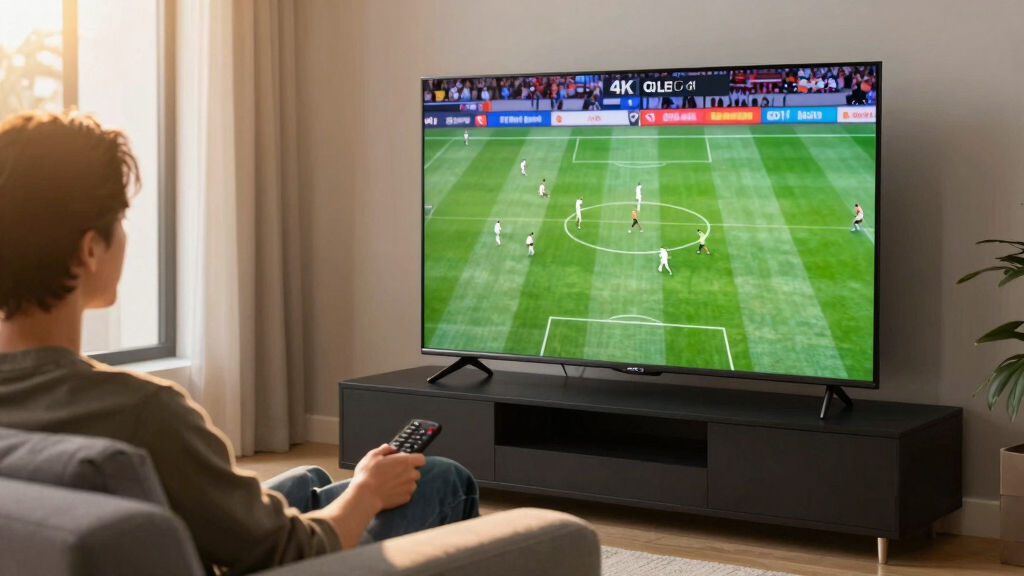
I ranked these 4K OLED TVs for sports around the things that change live viewing most: motion handling, upscaling, brightness, reflection control, screen size, input flexibility, smart-TV access, and value. Sports punish weak TVs because fast camera pans, score bugs, low-bitrate broadcasts, and bright living rooms expose processing flaws quickly. I gave more weight to models that can make cable, streaming, and 4K feeds look clean without asking the buyer to pay flagship money for gains they may barely notice.
The order favors TVs that make sense for real sports rooms, not spec sheets alone. A 65-inch OLED with strong processing beats a smaller premium model for many fans because game-day viewing is shared, fast, and often watched from across the room. I also separated similar models by role: LG C5 for balance, Samsung S95F for brightness, LG B5 for value, Sony BRAVIA XR8B for processing-led viewing, and 48-inch OLEDs for tighter spaces.
Factors to Consider When Choosing 4K OLED TVs For Sports
Choosing a sports OLED is less about chasing the most expensive panel and more about matching the TV to your room, feeds, and viewing habits. I would start with brightness, motion, size, and smart-TV workflow before paying extra for design or bundled accessories.
Motion Handling Matters More Than Raw Sharpness
Sports are full of lateral pans, fast cuts, small moving objects, and scrolling graphics, so motion processing matters more than a static 4K demo clip. OLED panels already have very fast pixel response, but the processor still has to clean up broadcast noise and avoid making players look artificial. This is where models like the LG C5, Sony BRAVIA XR8B, and Samsung S95F separate themselves from simpler value picks. Buyers should avoid choosing only by resolution, since every model here is 4K. The real question is how cleanly each TV handles fast movement from cable, antenna, and streaming apps. If you watch a lot of hockey, soccer, tennis, or basketball, I would pay more for better processing before paying more for decorative design.
Room Brightness Can Change The Ranking
OLED contrast looks excellent in dim rooms, but daytime sports can expose brightness limits and screen reflections. A living room with windows behind the sofa needs a different TV than a basement media space. The Samsung S95F earns its premium role because it is better suited to brighter sports rooms, while the LG B5 makes more sense where light is controlled. The mistake is assuming every OLED will look equally punchy at noon during football season. If glare is a regular problem, prioritize brightness and reflection handling over small savings. If most viewing happens at night, a value OLED can deliver most of the sports benefit for less money.
Screen Size Should Match Viewing Distance
For sports, 65 inches is the sweet spot for many living rooms because it gives games scale without making score tickers and compression flaws feel oversized. The LG 65-Inch C5, Samsung 65-Inch S90F, and Samsung 65-Inch S95F land in that practical middle. A 77-inch model like the Panasonic Z8 or Samsung S85F is better for group viewing and deeper seating distances, but it can be overkill in compact rooms. On the other side, 48-inch OLEDs work well for bedrooms, dens, and mixed monitor-TV spaces. I would not buy the largest screen by default; I would buy the largest screen that still lets scores, players, and camera motion feel comfortable from your seat.
Smart-TV Platform Affects Game-Day Friction
Sports fans often bounce between live TV apps, league subscriptions, cable logins, and highlights, so the smart-TV platform matters more than it might for movie-only viewing. LG webOS, Samsung’s smart platform, Google TV, and Fire TV all handle major apps, but their layouts and voice controls feel different in daily use. The Sony BRAVIA XR8B is appealing for buyers already comfortable with Google TV, while the Panasonic Z8 Fire TV fits households built around Amazon services. LG models have broad app support and strong HDMI flexibility, which helps if a streaming box, game console, and soundbar are all connected. A cheaper TV can feel less appealing if switching between games becomes annoying. I would match the platform to the apps and devices already used in the home.
Premium Models Should Solve A Real Problem
Spending more makes sense when the upgrade targets a pain point: glare, weak processing, wall-mounted design, or a very large room. The LG G5 and Samsung S95F justify higher prices for buyers who need flagship brightness, design, or image handling. They are less persuasive if the TV sits in a dark room and streams one or two games a week. Compared with the LG C5 and Samsung S90F, premium models can be better, but the gain is not always equal to the price gap. I would put extra money toward size or sound before chasing a flagship badge with no clear use case. The best premium buy is the one that fixes the weakness of your current setup.
Bundles Are Useful Only If The Extras Fit
The LG OLED48C5PUA bundle is the most beginner-friendly package here because it includes accessories that can reduce setup shopping. That said, bundles are not automatic value. Wall mounts, HDMI cables, surge adapters, and guidebooks only matter if they are things you would have bought anyway. Compared with the standalone Samsung 48-Inch S90F, the LG bundle makes more sense for a first OLED buyer building a small-room setup from scratch. A buyer who already owns a mount and cables may be better served by choosing the cleaner TV-only deal. I would price the extras separately before treating the bundle as a discount.
Frequently Asked Questions
Is The LG C5 Really Better For Sports Than The LG B5?
For most sports fans, the LG C5 is the stronger pick because it offers better processing headroom and a more complete feature set. The LG B5 still makes sense when price matters more than peak performance, especially in a room with controlled lighting. The difference is less about OLED contrast and more about how cleanly each TV handles fast broadcasts, upscaling, and mixed-quality streams. If you watch sports several nights a week, the C5 is easier to justify. If you mainly watch weekend games and want OLED without stretching the budget, the B5 is the smarter value play.
Should I Buy A 48-Inch OLED For Sports?
A 48-inch OLED works well for bedrooms, apartments, desks, and closer seating, but it is not my first choice for a main sports room. The Samsung 48-Inch S90F and LG 48-Inch C5 bundle are strong compact picks because they bring OLED contrast and fast response into smaller spaces. The tradeoff is immersion: football, soccer, and racing usually feel better on a 55- or 65-inch screen from a sofa. If you sit close, 48 inches can feel sharp and controlled. If multiple people watch together, I would move up in size before paying for a smaller premium set.
Is Samsung Or LG Better For Watching Sports?
In this lineup, LG is better for broad balance, while Samsung is better for bright-room punch at the higher end. The LG C5 models are easier to recommend for most buyers because they combine motion, size options, Dolby Vision support, and gaming-friendly connectivity. Samsung’s S95F is the stronger premium pick for rooms where glare and daytime brightness are regular issues. The Samsung S90F models sit closer to LG’s middle ground but may appeal to buyers who prefer Samsung’s platform and image style. I would choose LG for versatility and Samsung when brightness is the deciding factor.
Are 77-Inch OLED TVs Too Large For Sports?
A 77-inch OLED can be excellent for sports if the seating distance and room size support it. The Panasonic Z8 77-inch and Samsung S85F 77-inch make games feel more communal, which helps for watch parties and open living rooms. The drawback is that low-bitrate streams and cable compression can become more visible on a large screen. A huge OLED also costs more, takes more planning to mount, and can dominate a smaller room. I would choose 77 inches when the sofa is far enough back and sports are often watched with other people.
When Is It Better To Buy A Last-Year OLED Like The LG C4?
The LG C4 is a smart buy when the discount is large enough to offset the newer processing and brightness gains of the C5. For sports, last-year OLEDs can still look excellent because fast response, strong contrast, and 4K support are already in place. The risk is paying too close to current-model pricing, which weakens the deal. I would compare the C4 directly against the LG B5 and LG C5 before buying. If the C4 saves enough money to move up to 65 inches, that may matter more than owning the newer model year.
Conclusion
My best overall choice is the LG 65-Inch OLED evo AI 4K C5 Series because it gives sports fans the best blend of size, motion handling, processing, and price restraint. For best value, I would choose the LG 55-Inch OLED AI 4K B5 Series, while the Samsung 65-Inch OLED S95F is my best premium pick for bright rooms and buyers willing to pay for stronger visual punch. The LG OLED48C5PUA bundle is the easiest recommendation for beginners setting up a smaller space, and the Sony BRAVIA XR8B is the better fit for buyers who prioritize processing and Google TV. For large-room sports, I would look at the Panasonic Z8 77-inch or Samsung 77-Inch S85F, but most readers will be happiest starting with the C5, then moving up, down, or smaller based on room light, seating distance, and budget.