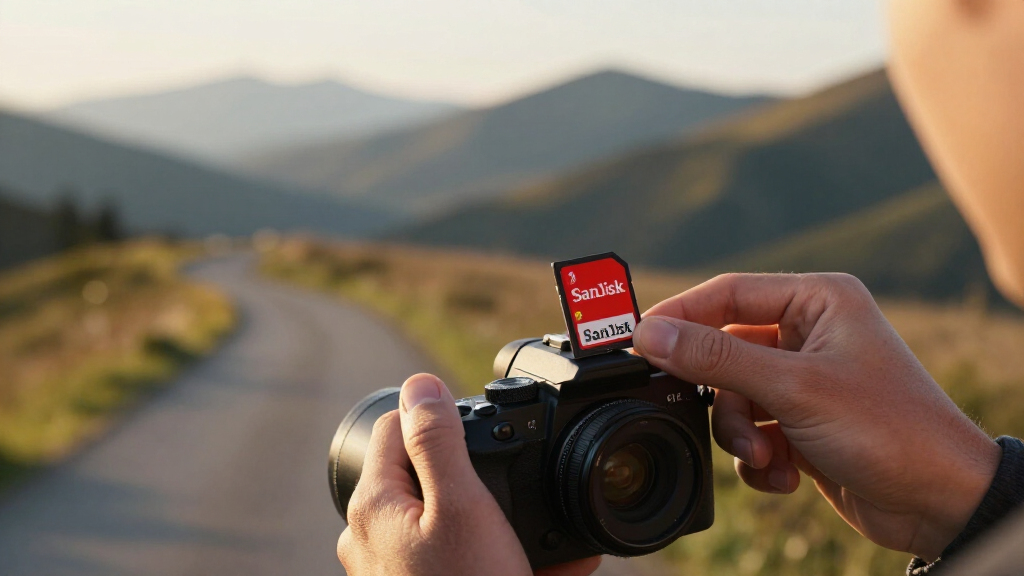

The best SanDisk memory card for most camera owners is the 128GB Extreme PRO SD UHS-I: its U3 and V30 ratings suit 4K recording, while its capacity works for regular photo and video use. For a newer console, the 512GB microSD Express Card for Nintendo Switch 2 is the lineup’s purpose-built pick; for lighter workloads, an Ultra SD card offers a simpler fit. The main tradeoffs are SD versus microSD compatibility, video-write requirements, capacity, and whether a device can use advanced card speeds. Read on for how the 14 options compare and which one best fits your device and workload.

Get the latest gadgets delivered free with Prime
- Fast, free delivery on millions of items
- Prime Video, Amazon Music and more included
- Member-only deals all year
Complete the kit



Key Takeaways
- The 128GB Extreme PRO SD UHS-I is the strongest all-around camera choice: its U3 and V30 ratings are more relevant to sustained 4K recording than a high read-speed number alone.
- The Switch 2 card has a narrow, clear role: its microSD Express format is meant for that console, not as a general replacement for SD cards or standard microSD cards.
- Extreme and Ultra serve different workloads: the Extreme lineup includes options with video-oriented speed classes, while Ultra cards suit lighter everyday storage and Full HD use.
- Capacity changes the choice as much as speed: 32GB and 64GB cards can limit how long you shoot before offloading, while 128GB and 256GB options better suit longer sessions.
- The 128GB Extreme PRO UHS-II is a specialist upgrade: its higher stated read speed matters most with compatible equipment and a fast workflow; it is not automatically the best choice for every camera.




| SanDisk memory card | Capacity | Format | Warranty | Maximum read speed |
|---|---|---|---|---|
| SanDisk 512GB microSD Express | 512 GB | Micro SDXC | Lifetime limited | 880 MB/s |
| SanDisk 128GB Extreme SD Memor | 128 GB | SDXC | Lifetime limited | 230 MB/s |
| SanDisk 128GB Extreme PRO SD U | 128 GB | SDXC | Limited | 250 MB/s |
| SanDisk Ultra 128GB SDXC UHS-I | 128 GB | SDXC | 10-year limited | Up to 195 MB/s with compatible SanDisk QuickFlow reader |
| SanDisk 256GB Extreme PRO SD U | 256 GB | SD UHS-I | — | 250 MB/s |
| SanDisk 32GB Ultra SDHC Memory | 32 GB | SDHC | — | — |
| SanDisk 64GB Extreme PRO SDXC | 64 GB | SDXC | Lifetime limited | — |
| SanDisk Extreme PRO 64GB SDXC | 64 GB | SDXC | Limited lifetime | — |
| SanDisk 256GB Extreme microSD | 256 GB | Micro SDXC | Lifetime limited | — |
| SanDisk 32GB Ultra SD Memory C | 32 GB | SDHC | — | — |
| SanDisk 128GB Ultra SDXC UHS-I | 128 GB | — | 10-year limited | 100 MB/s |
| SanDisk 64GB Ultra SD Memory C | 64 GB | — | 10-year limited | 140 MB/s |
| SanDisk 128GB Extreme microSD | 128 GB | — | Lifetime limited | 245 MB/s |
| SanDisk 128GB Extreme PRO SD M | 128 GB | — | — | 300 MB/s |
More Details on Our Top Picks
SanDisk 512GB microSD Express Card for Nintendo Switch 2
For Switch 2 owners, this is the most purpose-built pick in the group: its microSD Express format and read speeds up to 880 MB/s are designed for fast game access, while 512GB leaves room for a sizable digital library. It also offers much faster listed read performance than the SD UHS-I cards here, including the SanDisk 256GB Extreme PRO SD UHS-I Card. That comparison only helps if your device supports the format, though: this card is listed as compatible with Nintendo Switch 2, not as a general camera or laptop upgrade. Its strong device-specific fit is also its main limitation. Choose it for Switch 2 storage; skip it if you need a card to move between cameras, computers, and other devices.
Pros:- 512GB capacity accommodates a large collection of games and captures
- Up to 880 MB/s read and 650 MB/s write speeds
- Officially licensed for Nintendo Switch 2
- Lifetime limited warranty
Cons:- Its listed compatibility is limited to Nintendo Switch 2
- Optimal performance requires a device that supports microSD Express
Best for: Nintendo Switch 2 owners who download many games and want one high-capacity card made for that console
Not ideal for: Camera owners or buyers seeking one card for several device types, since the listed compatibility is specific to Nintendo Switch 2
- Format:Micro SDXC
- Capacity:512 GB
- Compatible device:Nintendo Switch 2
- Maximum read speed:880 MB/s
- Maximum write speed:650 MB/s
- Media speed:U3, C10
- Weight:0.27 g
- Warranty:Lifetime limited
Our verdict“Choose this for high-capacity, fast storage in a Nintendo Switch 2; choose a standard SD card for camera use.”
SanDisk 128GB Extreme SD Memory Card, Up to 230MB/s Read Speeds, UHS-I
This Extreme card balances fast capture with a rugged build, making it a stronger fit for 4K recording and high-resolution stills than the Full HD-oriented SanDisk Ultra 128GB SDXC UHS-I Memory Card. Its listed 160 MB/s write speed and V30 rating give it a clearer role for video work, while dust, water, temperature, and magnetic resistance add reassurance for shoots outside a studio. The tradeoff is capacity: this model holds 128GB, so long recording days may call for a second card or more frequent file transfers. Its maximum speeds also depend on the camera or reader supporting them. Compared with the 256GB Extreme PRO SD UHS-I, it offers less room and lower listed peak speeds, but remains a capable choice when ruggedness and 4K-ready specs matter more than extra capacity.
Pros:- V30 rating and up to 160 MB/s write speed suit 4K video workflows
- Up to 230 MB/s read speed for transfers with compatible equipment
- Resists water, dust, temperature extremes, and magnetic exposure
- Compatible with camcorders, DSLRs, laptops, and digital cameras
Cons:- 128GB may require frequent offloads during extended shoots
- Maximum speeds require compatible devices
- Offers lower listed capacity and peak speeds than the 256GB Extreme PRO SD UHS-I
Best for: Photographers and videographers using compatible DSLRs or camcorders who need a rugged 128GB card for 4K capture
Not ideal for: Creators recording long sessions who want more than 128GB on one card, or buyers whose device cannot use its higher speeds
- Format:SDXC
- Capacity:128 GB
- Interface:UHS-I
- Maximum read speed:230 MB/s
- Maximum write speed:160 MB/s
- Media speed:Class 10, V30
- Compatible devices:Camcorders, DSLRs, laptops, digital cameras
- Warranty:Lifetime limited
Our verdict“Pick this rugged, 4K-capable card for compatible cameras when 128GB is enough for your shoots.”
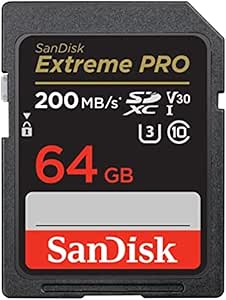
SanDisk 128GB Extreme PRO SD UHS-I Card, Up to 250MB/s Read and 120MB/s Write, 4K UHD, Full HD, U3, V30
The 128GB Extreme PRO is aimed at camera owners who want a durable card without stepping up to 256GB. Its V30 rating supports a 4K-oriented workflow, and the listed protection against water, dust, temperature extremes, wear, and X-rays suits travel and outdoor shooting. Against the SanDisk 128GB Extreme SD Memory Card, it lists higher read speed—250 MB/s versus 230 MB/s—while both offer 128GB and V30-class positioning. The product information is inconsistent about write speed: the title says 120 MB/s, while the specs and description state 170 MB/s. I would not choose it on the strength of the higher figure without confirming the exact listing. It also shares the capacity ceiling of the standard Extreme model, so creators who need longer recording stretches may prefer the 256GB Extreme PRO.
Pros:- Up to 250 MB/s read speed, higher than the listed 128GB Extreme SD card
- V30 rating for 4K-oriented recording
- Protection features include water, dust, temperature, wear, and X-ray resistance
- Compact 128GB option within the Extreme PRO SD lineup
Cons:- Write-speed information conflicts between the title and product details
- 128GB may be limiting for lengthy video sessions
- SDXC format requires a compatible device
Best for: Camera owners who want a rugged 128GB SDXC card for 4K and Full HD shooting and value the PRO designation
Not ideal for: Buyers who need unambiguous write-speed specifications or longer recording capacity than 128GB
- Format:SDXC
- Capacity:128 GB
- Compatible device:Camera
- Maximum read speed:250 MB/s
- Write speed:120 MB/s in title; 170 MB/s in description and specs
- Video speed class:V30
- Speed class:Class 10
- Warranty:Limited
Our verdict“Choose this if you want a rugged, 128GB PRO card and can verify the write-speed figure for your listing.”
SanDisk Ultra 128GB SDXC UHS-I Memory Card
The Ultra is the straightforward choice for everyday photos and Full HD video, especially in point-and-shoot cameras and other compatible UHS-I devices. Its 128GB capacity gives casual shooters space for regular use, and its listed protections cover common hazards such as water, drops, shock, and temperature extremes. Unlike the SanDisk 128GB Extreme SD Memory Card, this model is specified as U1 and V10, and the product description presents it for Full HD rather than 4K recording. That makes it a sensible match for simpler workloads, not the card I would pick for demanding video capture. The up-to-195 MB/s read figure also depends on a compatible SanDisk QuickFlow reader, sold separately; without one, that headline transfer speed is not assured. Its 10-year limited warranty is shorter than the lifetime limited warranties listed for some other cards here.
Pros:- 128GB capacity for everyday photos and Full HD footage
- V10 and U1 classifications suit the stated Full HD use
- Designed to resist water, drops, shock, temperature extremes, and other hazards
- 10-year limited warranty
Cons:- Product details state Full HD use, not 4K recording support
- Up to 195 MB/s read speed requires a compatible QuickFlow reader sold separately
- Lower video-speed classification than the 128GB Extreme SD card
Best for: Casual photographers and point-and-shoot camera owners who want 128GB for photos and Full HD video
Not ideal for: 4K video creators or buyers expecting the maximum listed read speed without a compatible QuickFlow reader
- Model:SDSDUVQ-128G-GN6IN
- Format:SDXC
- Capacity:128 GB
- Interface:UHS-I
- Maximum read speed:Up to 195 MB/s with compatible SanDisk QuickFlow reader
- Speed classes:Class 10, U1, V10
- Compatible devices:SD UHS-I devices, point-and-shoot cameras, select laptops
- Warranty:10-year limited
Our verdict“Choose the Ultra for everyday photos and Full HD recording, not for demanding 4K capture or reader-free maximum transfers.”
SanDisk 256GB Extreme PRO SD UHS-I Card, Up to 250MB/s Read and 170MB/s Write, 4K UHD, Full HD, U3, V30
This 256GB Extreme PRO is the strongest fit here for creators who want more recording room without moving beyond SD UHS-I. It pairs up to 250 MB/s read and 170 MB/s write speeds with a V30 rating, and its capacity doubles that of the 128GB Extreme PRO. That extra space can reduce card swaps during shoots; compared with the 128GB version, it also avoids the conflicting write-speed figures found in that product’s details. The tradeoff is that compatible equipment is needed to reach the listed maximum speeds, and the PRO-oriented feature set may be more than casual Full HD shooters need. Its durability claims make it suitable for demanding environments, but buyers seeking a compact microSD format or Nintendo Switch 2 compatibility should choose a different card.
Pros:- 256GB capacity provides more recording room than the 128GB Extreme PRO
- Up to 250 MB/s read and 170 MB/s write speeds
- V30 and Class 10 ratings for 4K and Full HD workflows
- Listed resistance to water, dust, temperature, wear, and X-rays
Cons:- Maximum speeds depend on compatible devices
- SD form factor is not a substitute for microSD cards in compact slots
- May exceed the needs of casual Full HD photographers
Best for: Serious photographers and video creators who need 256GB for 4K and Full HD work on compatible SD UHS-I equipment
Not ideal for: Casual Full HD shooters who do not need the extra capacity or speed, and buyers who need microSD or console compatibility
- Model:SDSDXXJ-256G-GSCIN
- Capacity:256 GB
- Maximum read speed:250 MB/s
- Maximum write speed:170 MB/s
- Speed class:Class 10
- Video speed class:V30
- Format:SD UHS-I
- Durability:Dust, temperature, water, wear, and X-ray resistant
Our verdict“Choose this PRO card when you need 256GB for demanding camera work and your equipment supports its UHS-I performance.”
SanDisk 32GB Ultra SDHC Memory Card
The SanDisk 32GB Ultra SDHC suits everyday photos and modest Full HD recording when simple compatibility matters more than large capacity. Its listed 100 MB/s read speed can help move files to a computer, while the water- and impact-resistant design adds reassurance for routine travel. Compared with the 32GB SanDisk Ultra SD UHS-I, this model has a lower stated read speed, so it is the less compelling pick if file transfers are a priority. Its 32GB capacity also fills faster than the 64GB Extreme PRO cards in this roundup, and the product data does not list a write speed or video speed class. I’d choose it for a basic camera or compatible tablet, but skip it for sustained 4K capture or large photo libraries.
Pros:- Up to 100 MB/s read speed for transferring files
- Water-resistant and impact-resistant design
- Works with listed cameras, computers, smartphones, and tablets
Cons:- 32GB capacity leaves less room than the 64GB and 256GB options in this batch
- No write speed or video speed class is provided
- No adapter is listed for devices that require a different card format
Best for: Casual photographers using an SDHC-compatible camera who mainly store everyday photos and short clips.
Not ideal for: 4K videographers or travelers keeping large media libraries on one card; 32GB is limited, and no video speed class is listed.
- Capacity:32 GB
- Format:SDHC
- Read speed:Up to 100 MB/s
- Media speed:50 MB/s
- Compatible devices:Camera, personal computer, smartphone, cell phone, tablet
- Protection:Water-resistant and impact-resistant
- Weight:9.07 g
Our verdict“Choose this card for everyday SDHC use and short recordings, not for high-capacity storage or demanding video capture.”
SanDisk 64GB Extreme PRO SDXC UHS-I Memory Card – C10, U3, V30, 4K UHD
The 64GB SanDisk Extreme PRO UHS-I is the stronger fit for photographers and video creators who need a clearly specified performance tier in a modest-capacity SD card. Its U3 and V30 ratings, paired with listed write speeds up to 90 MB/s, make it better suited to 4K recording and burst photography than the 32GB Ultra cards here. It also offers up to 200 MB/s read speed and a protection set covering water, temperature, shock, and X-rays. Compared with the similarly sized SanDisk Extreme PRO 64GB SDXC UHS-I, the listed capabilities are closely matched; choose between them by checking the exact model and compatibility details. The main compromise is capacity: 64GB may mean more frequent offloads than the 256GB Extreme microSD.
Pros:- U3 and V30 ratings support demanding video workflows
- Listed read speeds up to 200 MB/s and write speeds up to 90 MB/s
- Waterproof, temperature-proof, shockproof, and X-ray-proof design
- QuickFlow technology is listed as an additional feature
Cons:- 64GB can be restrictive for extended 4K recording
- Maximum transfer performance depends on a compatible host and reader
- A higher-capacity card may suit long trips better
Best for: Camera owners who record 4K clips or shoot bursts and want U3/V30 ratings in a standard SD card.
Not ideal for: Creators recording long sessions without regular file offloads, or users whose device cannot take advantage of the listed speeds.
- Capacity:64 GB
- Format:SDXC
- Read speed:Up to 200 MB/s
- Write speed:Up to 90 MB/s
- Speed classes:Class 10, U3, V30
- Video support:4K UHD
- Protection:Waterproof, temperature-proof, shockproof, X-ray-proof
- Warranty:Lifetime limited
Our verdict“Pick this for 4K and burst shooting when speed ratings matter more than keeping a large archive on the card.”
SanDisk Extreme PRO 64GB SDXC UHS-I Memory Card
This 64GB Extreme PRO SDXC gives camera users a well-defined mix of 4K support and physical protection, with U3 and V30 ratings plus listed read and write speeds of up to 200 MB/s and 90 MB/s. That makes it a more suitable capture card than the 32GB SanDisk Ultra SDHC, which has less capacity and no stated V30 rating. It is also closely comparable to the other 64GB Extreme PRO in this lineup, so the choice is less about a clear speed advantage and more about the precise listing and model details. Protection against dust, water, temperature extremes, wear, and X-rays is useful for frequent travel. The tradeoff remains the 64GB capacity: for longer shoots, the 256GB Extreme microSD offers more room, though it uses a different card format.
Pros:- U3 and V30 speed classes support 4K UHD and Full HD video
- Up to 200 MB/s read and 90 MB/s write speeds are listed
- Protection includes dust, water, temperature, wear, and X-rays
- Standard SDXC format suits compatible cameras
Cons:- 64GB capacity may require frequent transfers during extended shoots
- Listed write speed is lower than the read speed
- Full speed depends on the camera and reader
Best for: Camera owners who want a 4K-capable standard SD card with broad protection for travel and outdoor shooting.
Not ideal for: People filming long 4K sessions or storing extensive footage without offloading; 64GB may run short.
- Capacity:64 GB
- Format:SDXC
- Read speed:Up to 200 MB/s
- Write speed:Up to 90 MB/s
- Speed classes:Class 10, U3, V30
- Video support:4K UHD and Full HD
- Protection:Dust, temperature, water, wear, and X-ray resistant
- Warranty:Limited lifetime
Our verdict“Choose this for protected 4K capture in a standard SD format, but move to a higher-capacity option for lengthy recording days.”
SanDisk 256GB Extreme microSD Card + Adapter, Up to 245MB/s Read Speeds
For devices built around microSD, this 256GB SanDisk Extreme combines considerably more working space than the 64GB SD cards in this batch with listed speeds up to 245 MB/s read and 170 MB/s write. Its V30 and U3 ratings make it a better match for demanding video capture than the 32GB Ultra cards, while the included adapter adds flexibility for compatible standard SD slots. The card is aimed at action cameras, drones, handheld gaming systems, and mobile devices, rather than cameras that only accept full-size SD cards without an adapter. Its protection features suit outdoor use, but maximum performance depends on the host device, and the speed figures should not be treated as guaranteed across every reader. I’d favor it over the 64GB Extreme PRO SD cards when capacity is the deciding factor and the device supports microSD.
Pros:- 256GB capacity provides more room than the 32GB and 64GB cards here
- Listed read and write speeds reach 245 MB/s and 170 MB/s
- Class 10, U3, V30, and A2 ratings suit compatible devices and workloads
- Includes an adapter and has dust, water, temperature, and X-ray protection
Cons:- Performance depends on device and reader compatibility
- microSD format may not fit devices that require standard SD
- The listed capacity is 256GB, not the up-to-2TB figure mentioned in the description
Best for: Action-camera, drone, and handheld-gaming users who need substantial microSD capacity and record high-resolution video.
Not ideal for: Owners of cameras that require a full-size SD card and lack adapter compatibility, or devices that cannot use its speed class.
- Capacity:256 GB
- Format:Micro SDXC
- Read speed:Up to 245 MB/s
- Write speed:Up to 170 MB/s
- Speed classes:Class 10, U3, V30, A2
- Compatible devices:Action cams, handheld gaming console, laptop, smartphone, tablet
- Protection:Dust-proof, magnetic-proof, temperature-proof, waterproof, X-ray-proof
- Warranty:Lifetime limited
Our verdict“Choose this for compatible microSD devices that need both more recording space and higher listed speeds than the 64GB SD cards provide.”
SanDisk 32GB Ultra SD Memory Card, Up to 120MB/s Read Speeds, UHS-I
The 32GB SanDisk Ultra UHS-I is the more appealing of the two 32GB Ultra choices for buyers focused on routine transfers: its listed read speed reaches 120 MB/s, compared with 100 MB/s for the SanDisk 32GB Ultra SDHC. It is rated Class 10 and U1 and is described as suitable for Full HD video, making it a straightforward match for compact and mid-range point-and-shoot cameras. Its water-, temperature-, and X-ray-proof features add practical protection, but the 32GB capacity limits how much footage or how many images can stay on the card. The 64GB Extreme PRO cards are better specified for 4K and burst work, with U3/V30 ratings and listed write speeds; this Ultra is the simpler, lower-demand alternative. The model is also described as discontinued, so availability may be inconsistent.
Pros:- Up to 120 MB/s read speed for transferring files
- Class 10 and U1 ratings suit the stated Full HD use
- Water-, temperature-, and X-ray-proof design
- Compact SDHC format for compatible cameras
Cons:- 32GB capacity is restrictive for long trips or extended video recording
- No write speed is listed
- Described as discontinued, which may make availability inconsistent
Best for: Point-and-shoot camera owners who shoot Full HD clips and want a small, simple UHS-I SDHC card.
Not ideal for: 4K creators, frequent burst shooters, or buyers who need a dependable supply of a current model; capacity and availability are limiting factors.
- Capacity:32 GB
- Format:SDHC
- Read speed:Up to 120 MB/s
- Media speed:30 MB/s
- Speed classes:Class 10, U1
- Video support:Full HD
- Protection:Temperature-proof, waterproof, X-ray-proof
- Weight:4.54 g
Our verdict“Choose this for Full HD point-and-shoot use when a modest-capacity SDHC card is enough and the model is available.”
SanDisk 128GB Ultra SDXC UHS-I Memory Card – 100MB/s, C10, U1, Full HD, SD Card
The SanDisk 128GB Ultra suits compact and mid-range camera owners who want room for a long stretch of photos and Full HD video without stepping up to a faster, more specialized card. Its 128GB capacity is double the 64GB SanDisk Ultra SD Memory Card, while the listed read speed of up to 100MB/s supports file transfers after a shoot. The tradeoff is its U1 rating: the product data does not specify a write speed, so I would not choose it for demanding high-bitrate recording or rapid, sustained bursts. The SanDisk 64GB Ultra offers a higher listed read speed of 140MB/s, but half the capacity. This card makes more sense when storage space matters more than transfer speed, provided the camera supports SDXC.
Pros:- 128GB capacity provides more room than the 64GB SanDisk Ultra SD Memory Card.
- Read speeds up to 100MB/s support quicker file transfers.
- U1 rating is suited to the listed Full HD use.
- Water-, temperature-, X-ray- and shock-resistant features, plus a 10-year limited warranty.
Cons:- Write speed is not specified, making sustained recording performance harder to judge.
- U1 is a more modest video-speed rating than V30 cards in the roundup.
- Requires an SDXC-compatible device.
Best for: Compact and mid-range camera owners who shoot Full HD video and want 128GB of space between file transfers.
Not ideal for: Photographers recording demanding high-bitrate video or long bursts who need a specified high write speed or a stronger video-speed rating.
- Capacity:128 GB
- Card format:SDXC
- Interface:UHS-I
- Maximum read speed:100 MB/s
- Video speed class:U1
- Speed class:Class 10
- Compatible device:Camera
- Warranty:10-year limited
Our verdict“Choose this Ultra when 128GB of Full HD-ready storage matters more than advanced recording speed.”
SanDisk 64GB Ultra SD Memory Card, Up to 140MB/s Read Speeds, UHS-I
For routine photography and Full HD clips, this 64GB SanDisk Ultra is the straightforward, smaller-capacity choice. Its listed read speed of up to 140MB/s is higher than the 100MB/s listed for the SanDisk 128GB Ultra, which can help when moving files off the card; it does not, however, change the fact that both are U1 cards. The 64GB limit means more frequent offloading than with its 128GB sibling, so it fits short outings or a habit of transferring files after each shoot better than extended trips. Water, temperature, shock and magnetic resistance add reassurance for everyday carry, but this is not the pick I would make for demanding 4K work. For that, the V30-rated SanDisk Extreme microSD is better suited, though it uses a different card format.
Pros:- Listed read speed up to 140MB/s is higher than the 128GB Ultra’s 100MB/s.
- U1 and Class 10 ratings match the stated Full HD use.
- Resistant to water, temperature, shock, magnetic interference and X-rays.
- Includes a 10-year limited manufacturer warranty.
Cons:- 64GB capacity fills sooner than the 128GB Ultra options.
- U1 rating is not aimed at demanding high-bitrate video recording.
- Actual performance depends on device compatibility.
Best for: Casual camera and camcorder owners who shoot Full HD, transfer files regularly and prefer a 64GB card.
Not ideal for: Travelers who shoot for days without offloading, or creators whose camera requires a higher video-speed rating for demanding 4K recording.
- Capacity:64 GB
- Card format:SDXC
- Interface:UHS-I
- Maximum read speed:140 MB/s
- Video speed class:U1
- Speed class:Class 10
- Dimensions:1.26 x 0.94 x 0.09 in
- Warranty:10-year limited
Our verdict“Pick this card for everyday Full HD shooting and quicker listed read speeds, if 64GB is enough for your routine.”
SanDisk 128GB Extreme microSD Card + Adapter, Up to 245MB/s Read Speeds
The SanDisk 128GB Extreme microSD pairs a small card with an adapter, giving compatible action cameras, phones and other listed devices fast storage in a flexible format. Its V30 rating and specified write speed of up to 170MB/s distinguish it from the U1 SanDisk Ultra SD cards, making this a stronger fit for 4K or 5K recording when the device supports the card. Read speeds reach 245MB/s, though the card needs a compatible host to take full advantage of its performance. Unlike the full-size SD SanDisk Extreme PRO UHS-II, this option is aimed at microSD devices rather than professional camera workflows; the included adapter adds flexibility but does not change the card’s microSD format. Choose it for compact gear, not as a universal upgrade for every camera.
Pros:- V30 rating and listed write speeds up to 170MB/s suit more demanding recording than U1 Ultra cards.
- Read speeds up to 245MB/s can speed file transfers on compatible devices.
- MicroSD format and included adapter offer flexibility across supported devices.
- Dust-, water-, temperature-, magnetic- and X-ray-resistant features.
Cons:- Performance depends on host-device support.
- The adapter does not make it equivalent to a native full-size SD card for every camera workflow.
- The 128GB capacity is below the listed support for options up to 2TB.
Best for: Action-camera, drone, smartphone and handheld-console owners whose devices accept microSDXC and need V30-rated recording capability.
Not ideal for: Photographers whose cameras take full-size SD cards, or buyers whose device cannot use the card’s higher performance.
- Capacity:128 GB
- Card format:microSDXC
- Maximum read speed:245 MB/s
- Maximum write speed:170 MB/s
- Video speed class:V30
- Compatible devices:Action cams, handheld gaming consoles, laptops, smartphones and tablets
- Included accessory:SD adapter
- Warranty:Lifetime limited
Our verdict“Choose this Extreme microSD for compatible compact devices that need V30 recording and faster transfers.”
SanDisk 128GB Extreme PRO SD Memory Card, UHS-II, Up to 300MB/s Read Speed
For photographers and videographers with a camera that supports UHS-II, this 128GB SanDisk Extreme PRO is the performance-focused full-size SD choice in this group. Its listed read speed of up to 300MB/s can shorten offload time for large files, while the product description lists support for 6K recording. Compared with the SanDisk 128GB Ultra, it targets much more demanding work, but that capability depends on compatible equipment; a UHS-I host will not deliver the full listed speed. The product data does not state a write speed or a video speed class, so I would verify the camera’s recording requirements rather than assume the read-speed figure guarantees a particular sustained recording rate. Pick it for a UHS-II workflow, not merely for a higher number on the label.
Pros:- UHS-II interface and read speeds up to 300MB/s target fast offloading.
- Product description lists support for 6K video recording.
- Full-size SDXC format suits compatible camera slots.
- Resistance features include water, dust, temperature, drops, wear and X-rays.
Cons:- Requires a UHS-II-compatible device to reach its listed speed.
- Write speed and video speed class are not supplied in the product data.
- Its performance focus may be unnecessary for casual or Full HD use.
Best for: Photographers and video professionals with UHS-II-compatible cameras who value fast file offloads and need a card described for 6K recording.
Not ideal for: Owners of UHS-I-only cameras or casual Full HD shooters who will not benefit from the card’s higher interface and listed read speed.
- Capacity:128 GB
- Card format:SDXC
- Interface:UHS-II
- Maximum read speed:300 MB/s
- Listed video capability:6K recording
- Compatible device:Camera
- Resistance features:Drop, temperature, water, wear and X-ray resistant
- Capacity options:128 GB listed
Our verdict“Choose this Extreme PRO when your camera supports UHS-II and your workflow benefits from fast transfers, but verify recording requirements first.”
How We Picked
I ranked these cards by how well their format, capacity, speed class, and stated performance match common buyer needs. For camera use, I gave more weight to video ratings such as U3 and V30 and the stated write speed than to peak read speed, since recording depends on sustained writing. I also separated SD, microSD, and microSD Express options rather than treating them as interchangeable. Capacity and intended use helped distinguish everyday, beginner-friendly cards from options aimed at demanding recording or faster file transfers.
The order reflects how broadly useful each card is, not a claim that one card is fastest in every device. The 128GB Extreme PRO SD UHS-I leads as a balanced camera pick; the Switch 2 Express card ranks highly for its specific console use but has a narrower audience. UHS-II and larger-capacity cards earn consideration when their added capabilities match a reader’s equipment and workflow, while Ultra models remain sensible for simpler needs. I also weigh the tradeoff of buying speed or capacity that a device cannot use.
Factors to Consider When Choosing Best SanDisk Memory Cards
I’d choose a SanDisk card by matching it to the device and the way I use it, rather than starting with the biggest capacity or highest speed printed on the package. These broader checks can prevent compatibility surprises and help avoid paying for performance that a camera, console, or card reader cannot take advantage of.
Match the Card Format to the Device
Start with the device manual or manufacturer’s compatibility list, and check the exact card type it accepts. SD, microSD, and microSD Express are distinct formats, even when an adapter lets a microSD card fit an SD slot. An adapter changes the card’s physical fit, not its performance or the format the device supports. This matters especially for the Switch 2 Express card: its console-specific appeal does not make it a universal microSD upgrade. If a device has a strict capacity or format limit, exceeding that limit can leave a card unusable even if the card itself is capable. When several devices share cards, check each one rather than assuming the newest device’s requirements apply to all.
Prioritize Sustained Video Ratings Over Peak Read Speed
Read speed mainly affects how quickly files can move from a card to a compatible computer or reader; it does not tell the whole story about recording. For video, look for the camera’s required speed class and a matching card rating such as U3 or V30. A large advertised read figure cannot make up for a card that lacks the sustained-write rating your recording mode calls for. Check the camera manual for the exact requirements for resolution, frame rate, and recording format. If you shoot only stills or casual Full HD clips, a higher video tier may bring little practical benefit. I would spend extra on a faster class only when the device and workload can use it.
Choose Capacity Around Your Shooting Habits
Capacity is a planning choice: larger cards mean fewer card changes, but they can also leave more footage on one removable card before you back it up. A 32GB card can suit light use, a spare, or a device with modest storage needs, while 128GB or 256GB gives more room for longer photo and video sessions. The right amount depends on file size, shooting frequency, and how often you can transfer files. Estimate storage from your typical session, then leave room for unexpected extra footage rather than filling a card to its limit. For important work, spreading sessions across multiple cards can reduce the amount of material affected if one card is lost or damaged. Don’t buy capacity beyond what your device supports.
Treat UHS-I and UHS-II as a System Choice
A UHS-II card can offer faster transfers, but the benefit depends on the camera, card reader, and computer connection all supporting the faster interface. In a UHS-I device, a UHS-II card may still function, but its interface advantage may not be available. That makes the 128GB Extreme PRO UHS-II a better fit for a compatible workflow than a default upgrade for every camera owner. Check both the camera slot and the reader you use to offload files before paying for the higher interface. If transfers are already limited by your computer or connection, a faster card alone may not shorten the process much. For many buyers, a suitable UHS-I card with the needed video rating is the more balanced choice.
Use Adapters Carefully With microSD Cards
A microSD card bundled with an SD adapter can serve devices with different slot sizes, which is useful for a camera and a handheld device. But the adapter is only a physical bridge; it does not add speed, capacity, or a video rating. Check that the microSD card itself meets the recording requirements of the device where you plan to use it. If a camera is your main use, a full-size SD card may be simpler to handle and less dependent on a small adapter. Keep track of the card and adapter together, since losing the adapter can interrupt use in an SD slot. Choose a microSD bundle for cross-device flexibility, not as a way to bypass compatibility rules.
Balance Convenience Against Backup Risk
A single high-capacity card can reduce interruptions, but relying on one card means more files are together if it is misplaced or fails. Multiple smaller cards can divide a trip or project into manageable groups and make it easier to keep completed work separate. The tradeoff is more card handling and a greater chance of mixing up cards. Set a routine for copying files and confirming the backup before deleting or reusing a card. Avoid treating a memory card as the only copy of irreplaceable photos or footage. For frequent shooting, prioritize a repeatable backup process alongside capacity and speed.
Frequently Asked Questions
Which SanDisk card should I choose for 4K video in a camera?
Start with the camera manual, since 4K requirements vary by model, frame rate, and recording format. Among these options, the Extreme PRO SD UHS-I cards with U3 and V30 ratings are the clearest fits for workloads that call for those classes. The 128GB version is the balanced pick, while the 256GB version gives more room between transfers. Do not choose by peak read speed alone: recording depends on sustained write performance and the camera’s supported card type. If your camera asks for a higher class than V30, select a card that meets that requirement instead.
Can I use the SanDisk microSD Express card in devices that take standard microSD cards?
Do not assume that a microSD Express card will work in every device with a microSD slot. Compatibility depends on the device’s supported standards, and the Switch 2 card is positioned for that console rather than as a universal upgrade. Check the exact device documentation before buying or inserting it. A card’s physical size alone does not guarantee that the device can read it. If broad compatibility across older devices matters most, choose a card type specifically listed as supported by each device.
Is the 128GB UHS-II card a better choice than the 128GB Extreme PRO UHS-I card?
It is a better fit only when your camera, card reader, and transfer workflow can use UHS-II. The UHS-II option lists a higher read speed, which can help during file transfers with compatible equipment, but that figure does not by itself establish a better choice for every recording mode. The UHS-I Extreme PRO is the more straightforward pick when you need its U3 and V30 video ratings and your gear uses UHS-I. Check your device’s interface and recording requirements before choosing. If your setup cannot take advantage of UHS-II, the higher interface may not deliver a practical benefit.
Should I buy a 32GB, 64GB, 128GB, or 256GB card?
Base capacity on your device’s supported limits, typical file sizes, and how often you can offload files. The 32GB and 64GB options make sense for light use, a spare, or shorter sessions, while 128GB and 256GB provide more room for frequent shooting. Large capacities reduce card changes but can concentrate more files on one card before backup. For travel or important shoots, multiple cards may give you a useful way to separate sessions. If you are unsure, check the device manual and estimate storage from a normal day of use rather than choosing the largest card automatically.
Does the SD adapter make a microSD card faster or suitable for 4K recording?
No. An adapter changes the card’s physical fit in an SD slot; it does not raise its speed or add a video class. The microSD card itself must meet the camera’s sustained-write requirements, and the camera must support that card type and capacity. A bundle can be convenient if you move one card between compatible microSD and SD devices, but the adapter cannot overcome a device’s limits. For regular camera recording, a full-size SD card may be easier to manage. Check the card’s ratings and the camera manual before relying on a microSD card for demanding video.
Conclusion
For most camera owners, I’d choose the 128GB Extreme PRO SD UHS-I as the best overall option because it pairs practical capacity with U3 and V30 ratings. The best value for lighter everyday use is an Ultra SD card that matches the device’s requirements, especially if you do not need a 4K-oriented video class. Beginners should start with a compatible 128GB Ultra SDXC for straightforward Full HD and photo use, after checking their camera’s capacity limits. For a premium transfer workflow, the 128GB Extreme PRO UHS-II makes sense when your camera and reader support UHS-II; for Nintendo Switch 2, choose its dedicated 512GB microSD Express card. If you record longer sessions, the 256GB Extreme PRO SD UHS-I offers more headroom, while the Extreme microSD cards suit compatible compact devices. Match the card to your device first, then decide how much capacity and speed your actual work calls for.
Halloween Picks
halloween
As an affiliate, we earn on qualifying purchases.