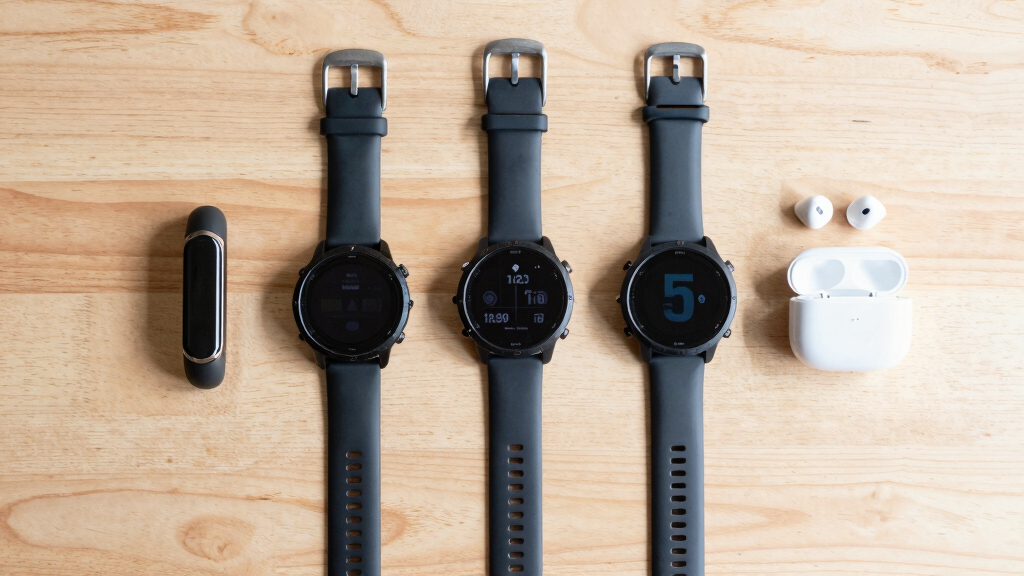

The Garmin fēnix 8 is my best overall Garmin smartwatch because it combines advanced multisport tracking, navigation, durable construction, and an AMOLED display without the added bulk and cost of the Pro model. The Garmin vívoactive 6 is the stronger value choice for everyday health and fitness, while the fēnix 8 Pro is the premium pick for buyers who can use its inReach technology. The main decision is whether to prioritize training tools, outdoor durability, smartwatch comfort, or battery life. Paying more can add maps, tougher materials, and specialized safety features, but many buyers will get better value from a focused Forerunner, vívoactive, or Instinct model. Continue reading for the full breakdown of the 15 best Garmin smartwatches and the buyer each one suits.

Get the latest gadgets delivered free with Prime
- Fast, free delivery on millions of items
- Prime Video, Amazon Music and more included
- Member-only deals all year
Complete the kit



Key Takeaways
- The fēnix 8 ranks first because it offers the broadest mix of sports, navigation, durability, and daily usability without requiring the jump to the larger fēnix 8 Pro.
- The vívoactive 6 offers the best value for general fitness because it covers everyday health and activity needs without charging for expedition-grade hardware.
- The Forerunner 265 is the strongest dedicated running pick, while the cheaper Forerunner 165 and Forerunner 55 make more sense for runners who do not need deeper recovery and training analysis.
- The Instinct models separate by screen and endurance priorities: Instinct 3 adds AMOLED clarity, while the Instinct 2X Solar models favor extended outdoor use and rugged practicality.
- Specialization matters more than price alone: the Approach S44 is the better golf purchase, the Venu X1 favors slim everyday wear, and the fēnix 8 Pro serves remote adventurers who can use inReach technology.
| Garmin Venu X1 |  | Best for Everyday Smart Features | Display: 2-inch AMOLED | Caseback: Titanium | Band: ComfortFit nylon | VIEW LATEST PRICE | See Our Full Breakdown |
| Garmin fēnix 8 – 47mm AMOLED |  | Best Overall | Case Size: 47 mm | Display: 1.4-inch AMOLED | Smartwatch Battery: Up to 16 days | VIEW LATEST PRICE | See Our Full Breakdown |
| Garmin epix Pro (Gen 2) Sapphire Edition, 47mm |  | Best for Scratch Resistance | Case Size: 47 mm | Display: 1.3-inch always-on AMOLED | Lens: Sapphire | VIEW LATEST PRICE | See Our Full Breakdown |
| Garmin Instinct 2X Solar Tactical Edition |  | Best for Tactical and Off-Grid Use | Case Size: 50 mm | Case Material: Polymer | Lens: Solar-charged Power Glass | VIEW LATEST PRICE | See Our Full Breakdown |
| Garmin Forerunner 165 |  | Best for New Runners | Case Size: 43 mm | Display: AMOLED touchscreen | Smartwatch Battery: Up to 11 days | VIEW LATEST PRICE | See Our Full Breakdown |
| Garmin vívoactive 5 |  | Best Value for Everyday Wellness | Display: AMOLED | Battery Life: Up to 11 days | Sports Apps: More than 30 indoor and GPS profiles | VIEW LATEST PRICE | See Our Full Breakdown |
| Garmin Instinct 3 45mm AMOLED |  | Best Rugged AMOLED Watch | Display: 1.2-inch AMOLED | Battery Life: Up to 18 days | Case Size: 45 mm | VIEW LATEST PRICE | See Our Full Breakdown |
| Garmin Venu 4 45mm |  | Best Premium Wellness Watch | Dimensions: 45 x 45 x 12.5 mm | Wrist Fit: 135–200 mm circumference | Display: Bright color display | VIEW LATEST PRICE | See Our Full Breakdown |
| Garmin fēnix 8 Pro 51mm Sapphire |  | Best for Off-Grid Expeditions | Case Size: 51 mm | Display: 1.4-inch AMOLED touchscreen | Lens: Scratch-resistant sapphire | VIEW LATEST PRICE | See Our Full Breakdown |
| Garmin vívoactive 6 |  | Best for Activity Variety | Display: AMOLED | Battery Life: Up to 11 days | Sports Apps: More than 80 built in | VIEW LATEST PRICE | See Our Full Breakdown |
| Garmin Instinct 2X Solar Rugged GPS Smartwatch |  | Best for Extended Outdoor Adventures | Case Size: 50 x 50 x 14.5 mm | Weight: 67 g | Supported Wrist Circumference: 145–228 mm | VIEW LATEST PRICE | See Our Full Breakdown |
| Garmin Forerunner 55 GPS Running Watch with Daily Suggested Workouts |  | Best Entry-Level Running Watch | Smartwatch Battery Life: Up to 2 weeks | GPS Battery Life: Up to 20 hours | GPS: Built in | VIEW LATEST PRICE | See Our Full Breakdown |
| Garmin Forerunner 265 Running Smartwatch |  | Best for Performance-Focused Runners | Display: AMOLED touchscreen | Case Size: 46 mm | Smartwatch Battery Life: Up to 13 days | VIEW LATEST PRICE | See Our Full Breakdown |
| Garmin Venu Sq 2 GPS Smartwatch |  | Best Square Everyday Fitness Watch | Display: AMOLED with always-on mode | Battery Life: Up to 11 days | Health Monitoring: Body Battery, sleep score, respiration, hydration, stress, women’s health, and heart rate | VIEW LATEST PRICE | See Our Full Breakdown |
| Garmin Approach S44 Golf GPS Smartwatch | 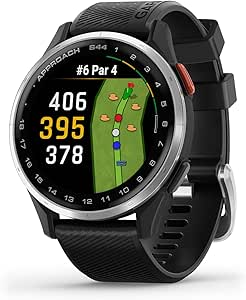 | Best for Golfers | Display: 1.2-inch AMOLED | Preloaded Courses: More than 43,000 | GPS Battery Life: Up to 15 hours | VIEW LATEST PRICE | See Our Full Breakdown |
| Garmin smartwatch | Display | Case Size |
|---|---|---|
| Garmin Venu X1 | 2-inch AMOLED | — |
| Garmin fēnix 8 | 1.4-inch AMOLED | 47 mm |
| Garmin epix Pro | 1.3-inch always-on AMOLED | 47 mm |
| Garmin Instinct 2X Solar Tacti | — | 50 mm |
| Garmin Forerunner 165 | AMOLED touchscreen | 43 mm |
| Garmin vívoactive 5 | AMOLED | — |
| Garmin Instinct 3 45mm AMOLED | 1.2-inch AMOLED | 45 mm |
| Garmin Venu 4 45mm | Bright color display | — |
| Garmin fēnix 8 Pro 51mm Sapphi | 1.4-inch AMOLED touchscreen | 51 mm |
| Garmin vívoactive 6 | AMOLED | — |
| Garmin Instinct 2X Solar Rugge | — | 50 x 50 x 14.5 mm |
| Garmin Forerunner 55 GPS Runni | — | — |
| Garmin Forerunner 265 Running | AMOLED touchscreen | 46 mm |
| Garmin Venu Sq 2 GPS Smartwatc | AMOLED with always-on mode | — |
| Garmin Approach S44 Golf GPS S | 1.2-inch AMOLED | — |
More Details on Our Top Picks
Garmin Venu X1
I rank the Garmin Venu X1 as the strongest everyday smartwatch here because its 2-inch AMOLED display, speaker, microphone, and lightweight nylon band favor daily convenience without abandoning serious fitness tools. The screen is much larger than the 1.4-inch panel on the Garmin fēnix 8, making maps, notifications, and health data easier to read at a glance. More than 100 sports apps and built-in mapping also give it broader athletic reach than the Garmin Forerunner 165. The compromise is endurance: up to eight days in smartwatch mode trails both alternatives, while GPS use cuts that figure to 16 hours. I would also factor in regional Pulse Ox restrictions and possible subscription costs. This is the polished choice for buyers who value communication and screen space over expedition-length battery life.
Pros:- Large 2-inch AMOLED display makes maps and health data easy to read
- Built-in speaker and microphone support calls from the wrist
- Lightweight titanium-backed design with a comfortable nylon band
- More than 100 sports apps plus built-in GPS maps
Cons:- Eight-day smartwatch battery is shorter than the fēnix 8 and Forerunner 165
- GPS battery is limited to 16 hours
- Pulse Ox availability varies by country, and some features require a subscription
Best for: Active professionals who want a large, readable screen, wrist calling, maps, and broad health tracking in a lightweight watch
Not ideal for: Backcountry athletes who need multiweek battery life or buyers who want every supported feature without possible subscription costs
- Display:2-inch AMOLED
- Caseback:Titanium
- Band:ComfortFit nylon
- Smartwatch Battery:Up to 8 days
- GPS Battery:Up to 16 hours
- Sports Apps:More than 100
- Navigation:Built-in GPS with maps
- Communication:Built-in speaker and microphone
Our verdict“Choose the Venu X1 when a roomy display and useful smartwatch functions matter more than maximum battery endurance.”
Garmin fēnix 8 – 47mm AMOLED
I place the Garmin fēnix 8 first overall because it combines an AMOLED screen and wrist calling with the navigation, durability, and battery life expected from Garmin’s high-end outdoor line. Its multi-band GPS with SatIQ, offline maps, flashlight, and dive support make it more versatile than the lifestyle-focused Garmin Venu X1. It also reaches up to 16 days in smartwatch mode, twice the Venu X1’s stated figure. Compared with the Garmin epix Pro (Gen 2), the fēnix 8 adds a speaker, microphone, and stated 40-meter dive rating, giving it a wider role beyond land-based training. That breadth brings two costs: a high price and a busier feature set that takes time to learn. I see it as the most complete Garmin, though casual exercisers can save money with the Forerunner 165.
Pros:- Multi-band GPS with SatIQ and offline maps support demanding navigation
- Up to 16 days of smartwatch battery suits long trips
- Speaker, microphone, music storage, and Garmin Pay broaden daily usefulness
- Built-in flashlight and 40-meter dive rating cover varied outdoor activities
Cons:- Premium pricing is difficult to justify for casual users
- Extensive menus and metrics bring a substantial learning curve
- Pulse Ox is unavailable in some regions
Best for: Multisport athletes and outdoor adventurers who want long battery life, accurate navigation, dive support, and calling in one watch
Not ideal for: Casual fitness users who would pay for mapping, dive, and training capabilities they are unlikely to use
- Case Size:47 mm
- Display:1.4-inch AMOLED
- Smartwatch Battery:Up to 16 days
- GPS:Multi-band GPS with SatIQ technology
- Dive Rating:40 meters
- Bezel:Stainless steel
- Navigation:Offline maps
- Built-In Hardware:LED flashlight, speaker, and microphone
- Payments:Garmin Pay
Our verdict“The fēnix 8 is my best overall pick for buyers who want Garmin’s broadest mix of athletic, outdoor, and smartwatch functions.”
Garmin epix Pro (Gen 2) Sapphire Edition, 47mm
The Garmin epix Pro (Gen 2) Sapphire Edition earns its place through materials that suit buyers who are hard on their gear. Its sapphire lens and titanium bezel offer a more wear-resistant combination than the stainless-steel-bezel Garmin fēnix 8 listed here, while the always-on AMOLED display keeps maps and training data vivid. Multi-GNSS support, preloaded maps, multisport profiles, and a variable-intensity flashlight make it a capable mountain and trail companion. Yet I rank it below the fēnix 8 because the newer watch adds wrist calling and stated dive support while delivering a similarly high-end outdoor experience. The epix Pro also lacks a supplied battery figure in this product data, which makes endurance comparisons less straightforward. Its 47mm case and likely high price further narrow the audience. I would choose it for durable screen protection, not maximum feature breadth.
Pros:- Sapphire lens provides strong resistance to scratches
- Titanium bezel balances durability with lower material weight
- Preloaded maps and multi-GNSS support outdoor navigation
- Variable-intensity flashlight adds practical visibility after dark
Cons:- Lacks the speaker, microphone, and stated dive support of the fēnix 8
- Battery duration is not specified in the supplied product data
- High-end materials may make it too expensive for casual users
Best for: Trail runners, climbers, and outdoor athletes who prioritize a scratch-resistant sapphire display and detailed onboard maps
Not ideal for: Buyers seeking wrist calling, documented dive support, or a clearly stated battery figure for trip planning
- Case Size:47 mm
- Display:1.3-inch always-on AMOLED
- Lens:Sapphire
- Bezel:Titanium
- Navigation:Multi-GNSS with preloaded maps
- Activity Support:Multiple sport profiles
- Lighting:Built-in variable-intensity flashlight
- Health Features:Health monitoring and advanced sleep tracking
Our verdict“Pick the epix Pro Sapphire when rugged screen materials and mapped outdoor training outweigh newer communication features.”
Garmin Instinct 2X Solar Tactical Edition
I reserve the Garmin Instinct 2X Solar Tactical Edition for buyers whose priorities start with resilience and off-grid operation. With enough daily sunlight, its solar charging can provide unlimited smartwatch-mode runtime, far beyond the 16-day Garmin fēnix 8 or 11-day Forerunner 165. Multi-band GPS, a compass, barometric altimeter, flashlight, SOS strobe, and ballistics calculator also give it a tactical focus no other watch in this group matches. That specialization reduces everyday appeal. The 50mm polymer case is much bulkier than the 43mm Forerunner 165, and the solar-charged display cannot match the rich AMOLED presentation of the Venu X1. Its dense outdoor toolset may also overwhelm recreational users. I rank it as the clear remote-environment specialist, but not the Garmin most people should wear for office life or casual workouts.
Pros:- Solar charging can provide unlimited smartwatch-mode runtime under stated sunlight conditions
- Multi-band GPS, compass, and barometric altimeter support remote navigation
- Ballistics calculator and SOS strobe serve specialized tactical users
- Military-standard construction is designed for demanding environments
Cons:- Large 50mm case can feel cumbersome on smaller wrists
- Solar display is less vivid than the AMOLED screens on the fēnix 8 and Venu X1
- Specialized controls and features have a learning curve
Best for: Military personnel, hunters, field workers, and remote adventurers who need solar endurance and tactical navigation tools
Not ideal for: Small-wrist users or buyers who prefer a slim case and colorful AMOLED display for everyday wear
- Case Size:50 mm
- Case Material:Polymer
- Lens:Solar-charged Power Glass
- Smartwatch Battery:Unlimited with 3 hours of daily sunlight
- Durability:Built to U.S. military standard 810
- GPS:Multi-band GPS
- Navigation Sensors:Compass and barometric altimeter
- Tactical Features:Ballistics calculator and SOS strobe mode
- Health Tracking:Heart rate, sleep, respiration, Pulse Ox, and HRV
Our verdict“The Instinct 2X Solar Tactical Edition is the right Garmin for remote, demanding work where endurance matters more than display richness.”
Garmin Forerunner 165
The Garmin Forerunner 165 is my pick for runners who want useful coaching without paying for an outdoor flagship. Its personalized workout suggestions and recovery insights turn tracking data into daily training guidance, while the 43mm lightweight design is less imposing than the 47mm fēnix 8 or 50mm Instinct 2X Solar Tactical Edition. The AMOLED touchscreen also feels more polished than the Instinct’s utility-led solar display. Battery life reaches 11 days in smartwatch mode and 19 hours with GPS, a sensible middle ground between the Venu X1 and fēnix 8. The tradeoff is specialization: 25-plus activity profiles cannot match the Venu X1’s 100-plus apps, and there are no supplied offline-map or tactical-navigation features. Smart notifications, incident detection, and Assistance also depend on a paired phone. I see this as the most approachable running watch, not a substitute for a full expedition tool.
Pros:- Personalized workout suggestions make training guidance easier to act on
- Lightweight 43mm case is more manageable than larger outdoor models
- AMOLED touchscreen provides clear workout and recovery data
- Incident detection, Assistance, and Garmin Pay add practical everyday value
Cons:- Smart notifications and safety functions require a compatible smartphone
- Fewer activity profiles than the Venu X1
- No offline maps or advanced tactical navigation listed in the supplied data
Best for: New and intermediate runners who want guided workouts, recovery insights, GPS tracking, and a bright screen without flagship complexity
Not ideal for: Ultradistance or backcountry athletes who need offline maps, tactical navigation, or longer GPS endurance
- Case Size:43 mm
- Display:AMOLED touchscreen
- Smartwatch Battery:Up to 11 days
- GPS Battery:Up to 19 hours
- GPS:Built in
- Heart Rate:Wrist based
- Activity Profiles:More than 25
- Safety Features:Incident detection and Assistance
- Payments:Garmin Pay
Our verdict“Choose the Forerunner 165 for focused running guidance in a lighter, simpler package than Garmin’s outdoor flagships.”
Garmin vívoactive 5
I rank the Garmin vívoactive 5 as the value-minded choice for buyers who want a polished screen, useful wellness data, and phone-free music without moving into Garmin’s higher tiers. Its up to 11-day battery makes sleep and HRV tracking easier to maintain than with watches needing frequent charging, while wheelchair tracking broadens its appeal. Compared with the vívoactive 6, however, its 30-plus sports profiles provide less activity variety, and the newer model adds more developed sleep guidance. The Venu 4 also has a more upscale stainless steel design. I would choose the vívoactive 5 for its balanced everyday feature set, but serious multisport athletes may outgrow it, and its health readings remain estimates rather than clinical measurements.
Pros:- Bright AMOLED display is easy to read during workouts
- Up to 11 days of battery supports continuous sleep and wellness tracking
- Offline music works with supported services and wireless headphones
- Wheelchair mode and automatic nap detection serve needs many rivals overlook
Cons:- Smaller sports-app selection than the vívoactive 6
- Health metrics are estimates and should not guide medical decisions
- A compatible smartphone is needed for the full feature set
Best for: Value-focused buyers who want wellness tracking, GPS workouts, and offline music in a bright everyday smartwatch
Not ideal for: Multisport athletes who need the vívoactive 6’s larger activity library or the fēnix 8 Pro’s mapping and navigation tools
- Display:AMOLED
- Battery Life:Up to 11 days
- Sports Apps:More than 30 indoor and GPS profiles
- Health Tracking:Sleep, stress, HRV, menstrual cycle, and pregnancy
- Music Storage:Yes
- Supported Music Services:Spotify, Amazon Music, and Deezer
- Accessibility Mode:Wheelchair mode
- Sleep Feature:Automatic nap detection
Our verdict“My value pick suits everyday exercisers who want strong health features and music without paying for specialized outdoor hardware.”
Garmin Instinct 3 45mm AMOLED
I place the Garmin Instinct 3 AMOLED above lifestyle models for hikers and field users because its reinforced case, metal bezel, compass, altimeter, and multi-band GPS with SatIQ address real outdoor needs. The built-in flashlight is also more practical after dark than another wellness graph. Compared with the vívoactive 6, this watch supplies tougher construction and stronger navigation hardware, while its 18-day rating exceeds that model’s 11 days. The fēnix 8 Pro remains the more capable expedition watch because it adds maps and satellite communication, but it also brings subscription-dependent features and a more luxurious build. I see the Instinct 3 as the rugged middle ground. Its 45mm case may feel bulky on small wrists, and buyers focused on style or clinical-grade readings should choose differently.
Pros:- Reinforced construction is suited to demanding outdoor use
- Up to 18 days of battery reduces charging during longer trips
- Multi-band GPS, compass, and barometric altimeter support trail navigation
- Built-in flashlight is useful for campsites and low-light work
Cons:- The 45mm rugged case may be cumbersome on smaller wrists
- Pulse Ox availability varies by country
- Health readings are approximate and are not medical measurements
Best for: Hikers, campers, and outdoor workers who need durable construction, long battery life, precise positioning, and a wrist flashlight
Not ideal for: Small-wrist buyers or expedition travelers who need the fēnix 8 Pro’s built-in maps and satellite communication
- Display:1.2-inch AMOLED
- Battery Life:Up to 18 days
- Case Size:45 mm
- Case Material:Fiber-reinforced polymer
- Bezel:Metal-reinforced
- Positioning:Multi-band GPS with SatIQ technology
- Navigation Sensors:3-axis compass and barometric altimeter
- Outdoor Utility:Built-in flashlight
- Health Sensors:Wrist heart rate and Pulse Ox
Our verdict“I recommend this model to outdoor buyers who value durability and battery life more than premium materials or satellite messaging.”
Garmin Venu 4 45mm
I give the Garmin Venu 4 the premium wellness role because it pairs a stainless steel design with personalized sleep coaching and more than 80 sports apps. That mix suits buyers who want one watch for the office, gym, and overnight health tracking. Compared with the vívoactive 5, its broader activity selection and more upscale materials justify moving higher in the lineup, while the 12-day rating adds a small battery advantage. It is less convincing for remote travel than the Instinct 3, which offers multi-band GPS, a compass, and reinforced construction. The 45mm body also narrows its appeal for smaller wrists despite supporting 135–200mm circumferences. I rank it for design-conscious health tracking, not wilderness navigation, and several connected functions still depend on a compatible phone.
Pros:- Stainless steel styling fits work and fitness settings
- More than 80 sports apps cover a wide range of activities
- Personalized sleep coaching turns nightly data into usable guidance
- Up to 12 days of battery supports round-the-clock tracking
Cons:- The 45mm case may look and feel large on narrow wrists
- Some features depend on a compatible smartphone
- Pulse Ox availability varies by country, and health data is not medical-grade
Best for: Design-conscious gym users who want detailed wellness guidance, a large activity library, and a stainless steel watch for daily wear
Not ideal for: Backcountry users who need rugged construction and advanced navigation, or small-wrist buyers who prefer a compact case
- Dimensions:45 x 45 x 12.5 mm
- Wrist Fit:135–200 mm circumference
- Display:Bright color display
- Battery Life:Up to 12 days
- Material:Stainless steel
- Band:Black silicone
- Sports Apps:More than 80
- Sleep Feature:Personalized sleep coaching
Our verdict“My premium wellness choice is best for buyers who prioritize polished design and broad fitness support over expedition hardware.”
Garmin fēnix 8 Pro 51mm Sapphire
I reserve the expedition slot for the Garmin fēnix 8 Pro because LTE, inReach satellite technology, built-in maps, and dive support go far beyond routine fitness tracking. Its sapphire lens and titanium bezel also suit buyers expecting abrasive terrain, while the 1.4-inch AMOLED screen keeps maps readable. Compared with the Instinct 3, the fēnix offers stronger off-grid communication and richer navigation, but its 51mm body is larger and its premium construction raises the cost. Satellite and LTE functions also require an active subscription, so much of the appeal disappears for buyers staying near phone coverage. Regional restrictions may limit some capabilities. I rank it as the most capable adventure option here, yet the Instinct 3 makes more sense when durability, GPS, and battery are enough.
Pros:- LTE and inReach satellite technology support communication beyond normal phone coverage
- Built-in maps provide richer navigation than the Instinct 3
- Sapphire lens and titanium bezel offer premium durability
- AMOLED touchscreen, LED flashlight, and dive support cover varied adventures
Cons:- Satellite and LTE services require an active subscription
- Premium pricing is excessive for everyday wellness tracking
- The 51mm case is bulky, and regional rules may restrict some features
Best for: Expedition travelers, divers, and remote-area athletes who need maps plus subscription-based LTE and satellite communication
Not ideal for: Casual fitness users, small-wrist buyers, or anyone unwilling to pay ongoing fees for its headline communication features
- Case Size:51 mm
- Display:1.4-inch AMOLED touchscreen
- Lens:Scratch-resistant sapphire
- Bezel:Carbon Gray DLC titanium
- Connectivity:LTE and inReach satellite technology
- Water Resistance:40 meters
- Navigation:Built-in maps
- Outdoor Utility:LED flashlight
- Activity Support:Multisport and diving
Our verdict“I would choose this watch for serious off-grid travel where maps and satellite communication justify the size, price, and subscription.”
Garmin vívoactive 6
I choose the Garmin vívoactive 6 for buyers who regularly switch activities, since its 80-plus sports apps offer far more variety than the vívoactive 5’s 30-plus selection. Personalized sleep coaching, Body Battery, HRV, stress, and cycle tracking also make it a stronger wellness companion, while music storage and Garmin Pay reduce phone dependence during errands or workouts. Its 11-day battery rating matches the vívoactive 5 rather than improving it, and smart notifications still require a paired phone. The Venu 4 adds stainless steel styling and one extra rated day, making that model better for buyers who want a dressier finish. I rank the vívoactive 6 around fitness breadth and everyday convenience; buyers needing trail sensors, reinforced construction, or off-grid tools should move to the Instinct 3 or fēnix 8 Pro.
Pros:- More than 80 sports apps accommodate varied workout routines
- AMOLED display presents workout and wellness data clearly
- Sleep coaching, HRV, stress, and Body Battery tracking support daily planning
- Music storage and Garmin Pay add phone-free convenience
Cons:- Battery life does not improve on the older vívoactive 5’s 11-day rating
- Notifications and some connected functions require a paired smartphone
- Garmin Pay works only with supported banks and payment networks
Best for: Active generalists who rotate among gym sessions, recreational sports, and outdoor workouts while also wanting music and contactless payments
Not ideal for: Backcountry athletes who need a compass, altimeter, reinforced case, built-in maps, or satellite communication
- Display:AMOLED
- Battery Life:Up to 11 days
- Sports Apps:More than 80 built in
- Health Tracking:Heart rate, HRV, stress, sleep, menstrual cycle, and pregnancy
- Energy Monitoring:Body Battery
- Connected Features:Smart notifications
- Music:On-watch storage
- Payments:Garmin Pay
- Colors:Slate case with black band
Our verdict“My activity-variety pick fits recreational athletes who want broad workout support without stepping up to a rugged adventure watch.”
Garmin Instinct 2X Solar Rugged GPS Smartwatch
I rank the Garmin Instinct 2X Solar as the outdoor endurance pick because its solar-charging lens, multi-band GNSS, altimeter, and compass serve buyers traveling far beyond routine workout routes. With sufficient sunlight, its potentially unlimited smartwatch battery reduces charging anxiety on long trips. The built-in flashlight and SOS strobe also have more practical value after dark than the brighter AMOLED screen on the Garmin Instinct 3. Compared with the Instinct 2X Solar Tactical Edition, this standard model makes more sense for hikers who do not need specialized tactical functions. The compromise is wearability: its 50 mm case and 67 g weight can overwhelm narrow wrists. Its monochrome-style outdoor display also lacks the rich color and everyday polish of the Forerunner 265, while wellness readings remain estimates rather than medical measurements.
Pros:- Solar charging can extend smartwatch runtime indefinitely under suitable exposure
- Multi-band GNSS, altimeter, and compass support demanding outdoor navigation
- Rugged construction is designed around U.S. military standard 810
- Built-in flashlight includes an emergency SOS strobe mode
Cons:- The 50 mm case is bulky on smaller wrists
- Utilitarian display is less colorful than Garmin AMOLED models
- Health readings are approximate and are not intended for medical use
Best for: Backpackers, trail runners, and expedition travelers who prioritize navigation, durability, and minimal charging
Not ideal for: People with narrow wrists or buyers wanting a slim watch with a vivid AMOLED display
- Case Size:50 x 50 x 14.5 mm
- Weight:67 g
- Supported Wrist Circumference:145–228 mm
- Battery:Potentially unlimited in smartwatch mode with sufficient solar exposure
- Lens:Solar-charging Power Glass
- Case Material:Polymer
- Durability Standard:U.S. military standard 810
- Navigation Sensors:Multi-band GNSS, barometric altimeter, and 3-axis compass
- Lighting:Built-in flashlight with SOS strobe mode
Our verdict“I recommend this model for outdoor buyers who value ruggedness and charging independence more than compact dimensions or display color.”
Garmin Forerunner 55 GPS Running Watch with Daily Suggested Workouts
For runners buying their first dedicated training watch, I place the Garmin Forerunner 55 ahead of more complicated models. GPS run tracking, wrist heart-rate monitoring, race predictions, and daily suggested workouts provide useful direction without requiring the buyer to interpret the deeper recovery metrics found on the Forerunner 265. Its two-week smartwatch battery also makes it easier to live with than a watch that needs frequent charging. The activity selection extends beyond running to cycling, pool swimming, Pilates, and HIIT, giving beginners room to vary their routines. Savings come with clear limits: there is no AMOLED display, GPS runtime stops at 20 hours, and PacePro does not work with on-device courses. Full customization also depends on a paired phone and Garmin’s app. I would choose it for simple coaching, not detailed multisport analysis.
Pros:- Daily suggested workouts give new runners an accessible training structure
- Up to two weeks of smartwatch battery reduces charging frequency
- Race predictions and GPS tracking support goal-based running
- Multiple activity profiles add value beyond running
Cons:- Display is less vivid than the AMOLED screens on newer Forerunner models
- PacePro does not support on-device courses
- A smartphone and app are needed for full customization
Best for: New and recreational runners who want guided workouts, reliable GPS tracking, and straightforward training feedback
Not ideal for: Triathletes and data-focused runners who want an AMOLED screen, multi-band positioning, or advanced recovery analysis
- Smartwatch Battery Life:Up to 2 weeks
- GPS Battery Life:Up to 20 hours
- GPS:Built in
- Heart-Rate Monitoring:Wrist based; not a medical device
- Running Tools:Daily suggested workouts, race predictions, and PacePro
- Activity Profiles:Running, cycling, track run, virtual run, pool swim, Pilates, HIIT, and breathwork
- Customization:Connect IQ watch faces, data fields, apps, and widgets
Our verdict“I see the Forerunner 55 as the sensible starting point for runners who want guidance without paying for advanced metrics they may not use.”
Garmin Forerunner 265 Running Smartwatch
I give the Garmin Forerunner 265 the performance-running role because it balances serious training analysis with a bright AMOLED touchscreen. Its recovery insights and personalized plans help runners decide when to push and when to ease back, while multi-band GNSS with SatIQ improves positioning in difficult surroundings without wasting battery when that precision is unnecessary. More than 30 activity profiles, including triathlon, make it far more capable than the Forerunner 55 for multisport athletes. It also adds Garmin Pay and incident assistance for stronger everyday utility. Buyers pay for that depth in both cost and complexity: beginners may find the metric set excessive, and the 13-day smartwatch estimate trails the simpler Forerunner 55 by a day. Several connected and safety functions require a paired phone, while 20 hours of GPS runtime may constrain very long races.
Pros:- AMOLED touchscreen presents training data clearly
- Advanced training and recovery insights support structured improvement
- Multi-band GNSS with SatIQ balances location accuracy and battery use
- Triathlon support and more than 30 profiles suit multisport athletes
Cons:- Training data can feel overly complex for new runners
- Some smart and safety functions depend on a paired smartphone
- Twenty-hour GPS runtime may be restrictive for longer endurance events
Best for: Committed runners and triathletes who want training-load guidance, recovery feedback, and accurate positioning
Not ideal for: Casual exercisers who prefer simple activity totals and do not want to learn advanced training metrics
- Display:AMOLED touchscreen
- Case Size:46 mm
- Smartwatch Battery Life:Up to 13 days
- GPS Battery Life:Up to 20 hours
- Activity Profiles:More than 30, including running, triathlon, cycling, and swimming
- Positioning:Multi-band GNSS with SatIQ
- Payments:Garmin Pay
- Safety Features:Incident detection and Assistance
Our verdict“I recommend the Forerunner 265 to runners ready to act on detailed training data rather than merely record workouts.”
Garmin Venu Sq 2 GPS Smartwatch
The Garmin Venu Sq 2 earns its place through an approachable square design and a health-first feature mix. I see it as a better everyday match than the Forerunner 265 for buyers who care more about sleep score, stress, hydration, and Body Battery than race preparation. Its bright AMOLED display can remain always on, while up to 11 days of battery life avoids the daily charging pattern associated with many general-purpose smartwatches. More than 25 sports apps cover varied exercise, and Garmin Pay adds convenience away from home. Yet runners lose the advanced recovery analysis and multi-band GNSS offered by the Forerunner 265. Smart notifications and safety tools rely on a paired phone, incident detection works only during selected activities, and setup through Garmin’s app may feel involved. The square styling may also be less appealing to traditional-watch buyers.
Pros:- Bright AMOLED screen offers an optional always-on mode
- Up to 11 days of battery life suits continuous wellness tracking
- Broad health tools cover sleep, stress, hydration, respiration, and Body Battery
- More than 25 sports apps and Garmin Pay strengthen everyday versatility
Cons:- Lacks the deeper running and recovery tools of the Forerunner 265
- Notifications and safety tools require a paired smartphone
- Incident detection is limited to selected activities
Best for: Health-focused iPhone or Android users who prefer a square AMOLED watch and broad wellness tracking
Not ideal for: Competitive runners seeking advanced training metrics or buyers who want safety features that work independently of a phone
- Display:AMOLED with always-on mode
- Battery Life:Up to 11 days
- Health Monitoring:Body Battery, sleep score, respiration, hydration, stress, women’s health, and heart rate
- Sports Apps:More than 25 indoor and GPS sports apps
- Notifications:Smart notifications through a paired smartphone
- Payments:Garmin Pay
- Safety and Tracking:Incident detection and Assistance for selected activities
- Phone Compatibility:Apple and Android smartphones
Our verdict“I favor the Venu Sq 2 for buyers who want accessible wellness tracking and a square AMOLED screen rather than specialist training tools.”
Garmin Approach S44 Golf GPS Smartwatch
I reserve the specialist spot for the Garmin Approach S44, whose value rests on golf rather than broad training depth. Its 1.2-inch AMOLED screen makes distances easier to read, while more than 43,000 preloaded courses provide green, hazard, and layup guidance without manual course mapping. Scorekeeping and compatible shot tracking can reduce phone use during a round. That focus gives it a clearer purpose than the Venu Sq 2 for regular golfers, but it is much less flexible for buyers who divide their time among running, swimming, and gym training. The 15-hour GPS battery should cover normal rounds, yet repeated or unusually long days may require charging. Smart notifications need a paired phone, and some shot-tracking capability depends on additional compatible accessories. I rank it behind general fitness models unless golf is the buyer’s main activity.
Pros:- More than 43,000 preloaded courses provide wide geographic coverage
- AMOLED display makes course information easy to read
- Distances to greens, hazards, and layups support club and shot decisions
- On-watch scorekeeping can reduce phone use during play
Cons:- Fifteen-hour GPS battery is less suited to multiple long rounds without charging
- Smart notifications require a paired smartphone
- Full shot-tracking capability may require compatible accessories
Best for: Frequent golfers who want wrist-based course distances, hazard guidance, and digital scorekeeping
Not ideal for: Multisport athletes who need broad training analysis or golfers planning several long GPS rounds between charges
- Display:1.2-inch AMOLED
- Preloaded Courses:More than 43,000
- GPS Battery Life:Up to 15 hours
- Course Distances:Front, middle, and back of green
- Course Tools:Hazard view and layup distances
- Scoring:On-watch scorekeeping
- Connectivity:Smart notifications through a paired smartphone
- Bezel:Silver aluminum
- Band:Black silicone
Our verdict“I would buy the Approach S44 when golf guidance is the priority, but choose a Forerunner or Venu for broader fitness use.”

How We Picked
I ranked these Garmin smartwatches by how well each one answers a distinct buyer need, rather than placing the most expensive models at the top automatically. My main criteria were activity and training depth, GPS and navigation capability, health features, battery behavior, display readability, comfort, durability, and ease of daily use. I also weighed whether specialized hardware creates a practical advantage or simply raises the price. That approach puts the fēnix 8 first for versatility, the vívoactive 6 ahead on value, and focused models such as the Forerunner 265 and Approach S44 higher for their intended sports.
Price was judged against useful outcomes, including better training guidance, longer time away from a charger, tougher materials, and access to purpose-built tools. I marked models down when their strengths overlap heavily with a cheaper option or when their size narrows the likely audience. Older products remained competitive when they still deliver a clear benefit, which is why the epix Pro Gen 2 and Instinct 2X Solar retain a place in the lineup. The final order reflects the combination of broad appeal, capability, and value, while each assigned role points buyers toward a more precise match.
Factors to Consider When Choosing Best Garmin Smartwatches
Choosing among Garmin watches is easier when I separate features that affect daily ownership from those intended for a specific sport or environment. A more expensive watch is not automatically a better match: size, interface, battery pattern, and training depth can matter more than the length of the feature list. The following factors help identify where an upgrade pays off and where a simpler model is the smarter purchase.
Match the Training Tools to Your Actual Routine
Garmin divides its watches partly by the depth of their sport and recovery tools. A casual gym user may benefit more from clear activity tracking and health trends than from dense performance data that goes unread. Runners following structured goals should place greater weight on training load, recovery guidance, workout support, and race-focused metrics. Multisport athletes gain more from the broader profiles and navigation tools found in the fēnix family. Golfers should choose a purpose-built Approach model when course functions matter more than general training analysis. I would pay for advanced metrics only when they will influence how often, how hard, or how far you train.
Choose Between AMOLED Clarity and Maximum Endurance
AMOLED screens provide richer color and easier indoor reading, which makes health data, maps, and notifications more pleasant to view. The tradeoff is that display settings and always-on use can shorten the interval between charges. Solar-focused Instinct models favor endurance and practical outdoor visibility over a polished smartwatch appearance. Battery claims also vary by GPS mode, screen behavior, sensors, and satellite settings, so the headline figure rarely matches every usage pattern. Buyers planning long hikes should examine GPS battery estimates, not just smartwatch-mode duration. For ordinary workouts and nightly charging access, screen quality may create more daily value than several extra days of standby time.
Treat Case Size as a Daily-Wear Decision
A large watch can house a bigger display and battery, but it may move around during runs or feel awkward during sleep tracking. The 51mm fēnix 8 Pro makes the most sense for buyers comfortable with substantial wrist presence and premium weight. A 45mm or 47mm model often offers a more balanced fit while retaining readable data fields. Slimmer Venu and vívoactive designs are easier to pair with office clothing and can be less intrusive overnight. Wrist circumference alone does not settle the choice; lug shape, band flexibility, and total mass also affect comfort. I would favor consistent wear over maximum size, since health and recovery trends become less useful when the watch spends hours off the wrist.
Pay for Durability and Safety Features When the Setting Demands Them
Premium materials, rugged buttons, flashlights, and remote communication features have the most value when a watch is used beyond paved routes and familiar gyms. The Instinct line emphasizes rugged outdoor practicality, while the fēnix family combines tougher construction with more advanced multisport and navigation features. The fēnix 8 Pro carries a steeper price because its inReach capability targets trips where normal phone service may be unavailable. That feature can justify the cost for remote travel, but it adds little to an urban fitness routine and may involve separate service requirements. Tactical styling and functions also serve a narrower audience than general hiking tools. I would spend more on environment-specific protection or communication only when the watch will regularly face those conditions.
Compare Price Overlap Before Buying an Older Model
Garmin often keeps earlier generations available beside newer releases, which can create excellent discounts and confusing price overlap. An older premium model such as the epix Pro Gen 2 may offer better materials and deeper mapping than a newer midrange watch at a similar sale price. The newer option may still provide a cleaner interface, longer software relevance, or features aimed at current buyers. Small discounts are rarely enough to offset a poor fit, aging battery stock, or missing functions you expect to use. Buyers should also check band compatibility, charging accessories, warranty coverage, and whether maps or music are included in the exact version. I favor the older model when the discount is meaningful and its core strengths remain useful, not simply because its original price was higher.
Frequently Asked Questions
Should I Buy the Garmin fēnix 8 or Pay More for the fēnix 8 Pro?
I would choose the fēnix 8 for most multisport buyers because it already covers the demanding mix of training, navigation, durability, and AMOLED visibility that defines Garmin’s premium range. The fēnix 8 Pro makes more sense when its inReach technology and larger 51mm format directly support remote trips. Buyers who stay near cellular coverage may receive little practical return from that price increase. The Pro model can also feel excessive on smaller wrists or during sleep. Pay more when communication away from phone service is part of the purchase goal, not merely because the Pro label sounds more capable.
Is the Garmin Venu 4 Worth More Than the vívoactive 6?
The Venu 4 is the better fit for a more refined health-and-smartwatch experience, while the vívoactive 6 focuses on strong everyday fitness value. I would start with the vívoactive 6 if activity tracking, an AMOLED screen, and long battery life cover the main needs. Moving to the Venu 4 makes sense when its added health features and more premium positioning will be used regularly. Neither is the natural choice for advanced race preparation or remote navigation; a Forerunner or fēnix handles those priorities better. The decision rests on whether daily wellness depth justifies the price gap.
Does an AMOLED Garmin Watch Have Enough Battery Life for Hiking?
An AMOLED Garmin can handle many day hikes and shorter trips, but the answer depends on GPS mode, display settings, navigation use, and trip length. Keeping the screen always on consumes more power than gesture-based activation, while high-accuracy satellite modes add another drain. For occasional outdoor use, the fēnix 8 or Instinct 3 AMOLED offers a useful balance of display clarity and endurance. Multi-day travelers with limited charging access may prefer the Instinct 2X Solar and its endurance-focused design. I would plan around the published GPS-mode figure that matches the intended settings and keep a safety margin rather than relying on the smartwatch-mode claim.
Which Garmin Is Best for a New Runner: Forerunner 55, 165, or 265?
The Forerunner 55 is my beginner pick because daily suggested workouts and straightforward GPS tracking support a new running habit without a high entry price. The Forerunner 165 is the better step up for buyers who want an AMOLED display and a more modern presentation. Serious runners who expect to use deeper training metrics and recovery insights should choose the Forerunner 265. Buying the 265 too early can mean paying for data that does not yet guide any decisions. I would match the model to the next year of training goals rather than an imagined future routine several years away.
Are the epix Pro Gen 2 and Instinct 2X Solar Still Worth Buying?
Both can remain smart purchases when their prices sit far enough below newer alternatives. The epix Pro Gen 2 Sapphire suits buyers who want premium materials, an AMOLED display, and advanced outdoor capability without paying current fēnix pricing. The Instinct 2X Solar remains attractive for rugged use and long stretches between charges, especially when AMOLED color is not a priority. A small discount is less persuasive because newer models may offer a longer support window and updated hardware. I would compare the actual sale price, warranty, condition, and missing features before choosing either older model.
Conclusion
The Garmin fēnix 8 is my best overall choice for buyers who want one watch to cover daily wear, serious training, navigation, and outdoor use. The vívoactive 6 is the best value for broad health and fitness tracking, while the Forerunner 55 is the easiest beginner recommendation for running. Premium buyers heading beyond normal phone coverage should choose the fēnix 8 Pro, and performance-focused runners will get a better sport-specific match from the Forerunner 265. The Instinct 3 suits rugged outdoor buyers who still want AMOLED color, whereas the Instinct 2X Solar is better for endurance and the Tactical Edition serves specialized field needs. For narrower priorities, I would pick the Approach S44 for golf, the Venu X1 for a slim premium design, or the Venu 4 for advanced everyday health features.
Fall Picks
fall essentials
As an affiliate, we earn on qualifying purchases.