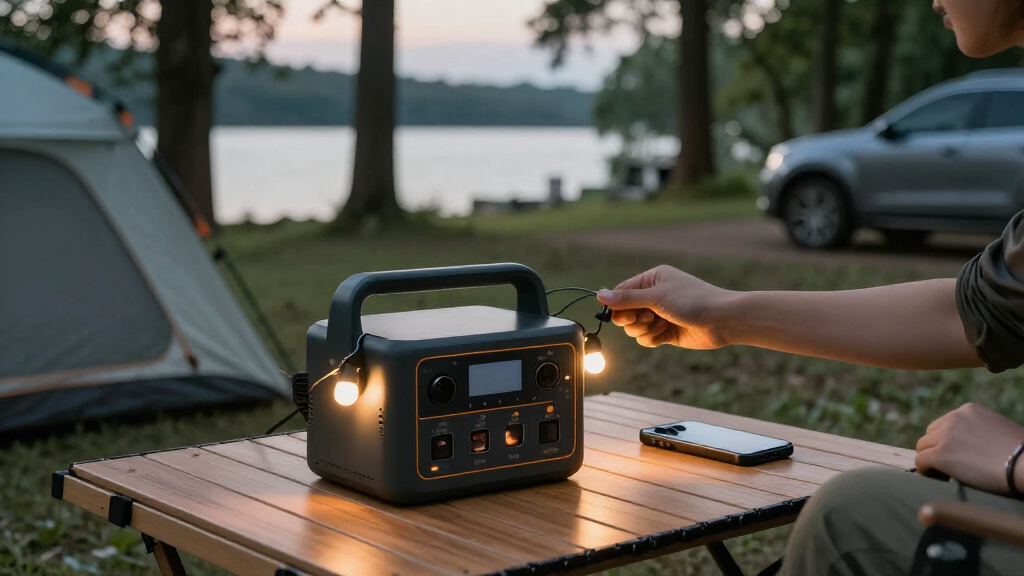
The best portable power station for most buyers in this roundup is the EcoFlow Delta 3 Classic, which pairs 1,024Wh of capacity with 1,800W of AC output in a useful middle ground for home backup and outdoor use. For longer outages and higher-demand appliances, the EF ECOFLOW Delta 3 Ultra offers a much larger 3,072Wh battery, while the Jackery Explorer 300 is a smaller, easier-to-carry option for phones and compact gear. The main tradeoff is between battery capacity and output on one side, and weight, size, and portability on the other. Charging speed, battery chemistry, and the devices you need to run also affect which station makes sense. Read on for the full breakdown, buying advice, and picks for different needs.

Get the latest gadgets delivered free with Prime
- Fast, free delivery on millions of items
- Prime Video, Amazon Music and more included
- Member-only deals all year
Complete the kit


Key Takeaways
- The 1,024Wh class is the lineup’s practical center. The EcoFlow Delta 3 Classic, EF ECOFLOW Delta 3, and BLUETTI Elite 100 V2 offer a balance of capacity and 1,800W-class output suited to a range of everyday backup and outdoor tasks.
- The largest battery is not automatically the best fit. The 3,072Wh EF ECOFLOW Delta 3 Ultra is built for longer runtimes and more demanding use, but its capacity is less useful if carrying and storage are the priority.
- Small stations serve a different job, not a smaller version of the same job. The 88Wh MARBERO, 120W HOWEASY, 288Wh BLUETTI Elite 30 V2, and 292Wh Jackery Explorer 300 are better matched to personal electronics and compact loads than household appliances.
- Similar capacity does not mean similar capability. The 2,010Wh Anker SOLIX S2000 and 2,042Wh Jackery Explorer 2000 v2 have comparable battery capacity but different stated AC output, so buyers should match inverter power as well as runtime to their equipment.
- Solar bundles and battery chemistry change the buying equation. The 300W solar generator listing includes a 60W panel, while several BLUETTI models specify LFP batteries; check included accessories and battery details rather than relying on category labels alone.


| portable power station | Weight | Battery capacity | Dimensions | Battery type |
|---|---|---|---|---|
| Jackery Explorer 2000 v2 Porta | 39.5 lb | 2042Wh | 13.2 × 10.4 × 11.5 in | LiFePO4 |
| Portable Power Station 500W | 18 lb | 519Wh | — | — |
| MARBERO Portable Power Station | 1.04 kg | 88Wh | 6.5 × 4.6 × 3.1 in | — |
| EF ECOFLOW Delta 3 Ultra 3072W | 72.1 lb | 3072Wh | 24.6 × 12.9 × 15.6 in | LiFePO4 |
| HOWEASY Portable Power Station | 2.3 lb | 88Wh | — | — |
| 1000W Portable Power Station 1 | 27.7 lb | — | 14 × 8.5 × 12 in | LiFePO4 |
| EcoFlow Portable Power Station | 26.7 lb | — | 7.9 × 11.1 × 15.7 in | LiFePO4 |
| BLUETTI Elite 100 V2 Portable | 25 lb | — | 12.6 × 8.5 × 9.8 in | LiFePO₄ |
| Portable Solar Generator 300W | — | — | — | — |
| BLUETTI Elite 30 V2 Portable P | 9.4 lb | — | 9.8 × 7 × 6.6 in | — |
| Anker SOLIX S2000 Portable Pow | 35.7 lbs | 2010Wh | 8.2 x 11.1 x 12.7 inches | LiFePO4 |
| EF ECOFLOW Delta 3 Portable Po | 12.5kg | 1024Wh | — | LiFePO4 |
| Jackery Explorer 300 Portable | 7.5 lbs | 292Wh | 9.1 x 5.2 x 7.8 inches | — |
| Jackery Explorer 1000 v2 Porta | 23.8 lbs | 1070Wh | 12.87 x 8.82 x 9.72 inches | — |
| BLUETTI Portable Power Station | 37.4 lbs | 1152Wh | — | LiFePO4 |
More Details on Our Top Picks
Jackery Explorer 2000 v2 Portable Power Station, 2042Wh, 2200W AC Output
The Jackery Explorer 2000 v2 pairs a 2042Wh battery with 2200W output, giving it much more headroom for outage essentials than the 519Wh Portable Power Station 500W. Its 39.5-pound weight is notable for this capacity, so it is easier to move between a car, campsite, or room than the 72.1-pound EcoFlow Delta 3 Ultra. That portability comes with a capacity tradeoff: the EcoFlow holds 3072Wh and supplies 3600W, making it the stronger fit for longer outages or higher-demand appliances. Jackery’s three AC outlets may also require a power strip when several household devices need plugs at once. I’d rank this for buyers seeking a useful balance of substantial stored energy and manageable carrying weight, not maximum home-backup runtime.
Pros:- 2042Wh capacity supports longer use than compact stations such as the Portable Power Station 500W.
- 2200W AC output accommodates more demanding devices than 500W-class models.
- At 39.5 pounds, it is lighter than the 72.1-pound EcoFlow Delta 3 Ultra.
- Fast charging can reduce time spent waiting between uses.
Cons:- Three AC outlets can limit how many plug-in devices run directly at once.
- At 39.5 pounds, it is still substantial to carry over long distances.
- Its capacity and output are below the EcoFlow Delta 3 Ultra for extended or higher-load backup.
Best for: Campers or homeowners who want around 2kWh of backup capacity in a station that is easier to move than the larger EcoFlow Delta 3 Ultra.
Not ideal for: Buyers running several AC appliances at once or seeking the longest outage runtime; its three AC outlets and 2042Wh capacity trail the Delta 3 Ultra.
- Battery capacity:2042Wh
- AC output:2200W
- Voltage:120V
- AC outlets:3
- Battery type:LiFePO4
- Weight:39.5 lb
- Dimensions:13.2 × 10.4 × 11.5 in
Our verdict“Choose the Jackery Explorer 2000 v2 if you want substantial backup capacity without hauling the heavier EcoFlow Delta 3 Ultra.”
Portable Power Station 500W, 519Wh Solar Generator Backup
This 519Wh, 500W station is a middle ground between pocketable emergency units and the much larger Jackery Explorer 2000 v2. Its mix of 10 output ports—including two AC outlets, USB-C PD, USB-A, DC, car, and wireless charging—makes it practical for a group charging phones and small electronics without constantly swapping cables. The Jackery offers far more battery capacity and AC output, but weighs more than twice as much; this model’s 18-pound body is easier to load for a weekend trip, though it is not especially light for hiking. The limit is firm: devices must stay under 500W, and the listed 6–9-hour recharge window can mean planning ahead. I’d pick it for varied low-power charging, not appliance backup.
Pros:- Ten output ports give multiple users several ways to charge devices.
- USB-C PD supports charging at up to 60W.
- Can recharge from a wall outlet, car, or solar source.
- 519Wh capacity exceeds the 88Wh MARBERO and HOWEASY models.
Cons:- 500W output rules out devices that draw more than the station can supply.
- At 18 pounds, it is better suited to vehicle trips than long walks.
- A 6–9-hour recharge can leave limited flexibility between outings.
Best for: Car campers and small groups who need to charge phones, tablets, cameras, and other low-wattage gear from several port types.
Not ideal for: Hikers prioritizing very low carry weight or households wanting to power appliances above 500W; its 18-pound weight and output ceiling limit those uses.
- Battery capacity:519Wh
- AC outlets:2
- USB-C PD:60W (20V/3A)
- Total output ports:10
- Weight:18 lb
- Recharge time:6–9 hours, depending on charging method
Our verdict“Choose this station for car camping and multi-device charging, but step up to the Jackery Explorer 2000 v2 for higher-wattage backup.”
MARBERO Portable Power Station 88Wh, 120W Surge, Solar Generator 24,000mAh
At just 1.04 kg, the MARBERO is the easiest station here to pack for a short outing, and its built-in LED with SOS mode gives it a useful emergency role beyond charging. Its 88Wh capacity and 80W output put it in a different class from the 519Wh Portable Power Station 500W: it can top up small electronics, but it is not a substitute for that model’s longer group-use runtime or higher-wattage output. The MARBERO lists eight outlets, yet the 120W surge ceiling still excludes many appliances, so port count should not be mistaken for broad power capability. It supports AC-adapter or solar charging, but frequent or extended use will mean recharging more often. I’d choose it for light carry and basic device support, not sustained off-grid power.
Pros:- At 1.04 kg, it is much easier to carry than the 18-pound Portable Power Station 500W.
- Multiple output types support a range of small electronics.
- Built-in LED offers adjustable brightness and an SOS mode.
- Can recharge through an AC adapter or solar panel.
Cons:- 88Wh capacity provides limited stored energy for extended use.
- 80W output and 120W surge restrict the appliances it can run.
- Its small battery may require frequent recharging during multi-day trips.
Best for: Travelers, day campers, and emergency kits that need a very light source for phones and other small electronics, plus a built-in light.
Not ideal for: Campers who need to run appliances or keep several devices powered for days; 88Wh capacity and 80W output are far below the Portable Power Station 500W.
- Battery capacity:88Wh
- Output wattage:80W
- Surge power:120W
- Battery capacity:24,000mAh
- Weight:1.04 kg
- Dimensions:6.5 × 4.6 × 3.1 in
- Charging time:0–80% in 2 hours
Our verdict“Pick the MARBERO for lightweight emergency charging and lighting, not for powering appliances or a group campsite.”
EF ECOFLOW Delta 3 Ultra 3072Wh Portable Power Station with 3600W AC Output
The EcoFlow Delta 3 Ultra leads this group in both stored energy and rated output: 3072Wh and 3600W give it more room for outage essentials than the Jackery Explorer 2000 v2. Its 7200W surge rating and built-in UPS backup also suit equipment that needs a rapid handoff when household power fails. Those capabilities come with a substantial portability cost. At 72.1 pounds and nearly two feet long, it is better treated as a movable backup unit than a station to carry far from a vehicle; the Jackery is considerably easier to relocate. Three outlets may also feel restrictive for a station of this size if several appliances need direct connections. I’d put it first for longer home outages and RV power where capacity matters more than frequent lifting.
Pros:- 3072Wh capacity exceeds the Jackery Explorer 2000 v2 for longer backup needs.
- 3600W continuous output and 7200W surge support higher-demand loads.
- Built-in UPS provides backup for equipment that needs power continuity.
- LiFePO4 battery and multiple recharge methods support repeat use.
Cons:- At 72.1 pounds, moving it regularly can be difficult.
- Three outlets may require planning or additional power distribution for multiple devices.
- Its size makes it less convenient for trips that involve frequent loading and unloading.
Best for: Homeowners or RV users who need high-output backup for essential appliances and can keep a 72.1-pound station close to where it will be used.
Not ideal for: Backpackers, frequent campsite movers, or buyers with limited storage space; the heavy, large unit is less convenient than the Jackery Explorer 2000 v2.
- Battery capacity:3072Wh
- Continuous output:3600W
- Surge power:7200W
- Battery type:LiFePO4
- UPS:Built in
- AC outlets:3
- Weight:72.1 lb
- Dimensions:24.6 × 12.9 × 15.6 in
Our verdict“Choose the Delta 3 Ultra when extended backup and high output outweigh the need for easy carrying.”
HOWEASY Portable Power Station, 120W (240W Peak) Solar Generator
The HOWEASY makes a case for buyers who want a small station that can ride in a day bag or car kit: it weighs 2.3 pounds and includes AC, USB, and DC outputs plus a built-in light. Unlike the MARBERO, it lists two AC sockets and a 240W peak rating, but its 88Wh battery and 120W rated output still confine it to small electronics and low-draw devices. That is a sharper limit than the 519Wh Portable Power Station 500W, which is heavier but better suited to charging a group or keeping devices going longer. The three recharge options add flexibility, though solar panels are not included. I’d choose this for occasional, short-duration power when compact size matters more than appliance capability or long runtime.
Pros:- At 2.3 pounds, it is light enough for easy car-kit or day-trip storage.
- Eight output ports include two AC sockets and several USB and DC options.
- AC, solar, and car charging give flexibility on the road.
- Built-in light includes steady, flash, and SOS modes.
Cons:- 88Wh capacity limits how long it can power devices between charges.
- 120W rated output is unsuitable for higher-draw appliances.
- Solar panel is not included, so solar charging requires compatible additional equipment.
Best for: Day trippers and drivers who want a light emergency station for phones, small electronics, and a built-in flashlight.
Not ideal for: Campers needing extended power or users running appliances above 120W; the 88Wh capacity is far smaller than the Portable Power Station 500W.
- Battery capacity:88Wh
- Peak output:240W
- Output ports:8
- AC sockets:2 (110V)
- USB-C output:18W
- Weight:2.3 lb
- Cycle life:More than 1,500 cycles
Our verdict“Choose the HOWEASY for lightweight, short-duration device charging, but pick the 519Wh station for longer trips or more simultaneous use.”
1000W Portable Power Station 1024Wh LiFePO4 for Outdoor & Home
This model pairs a 1024Wh LiFePO4 battery with 1000W continuous output, making it a practical fit for phones, laptops, lights, and select smaller appliances during a trip or short outage. Its 2000W starting rating may help with brief startup surges, but it does not change the 1000W limit for sustained use. Compared with the EcoFlow Delta 3 Classic, it gives up output headroom, app control, and a stated fast-charge time; its appeal is a more basic setup with AC and USB ports plus solar input up to 300W. At 27.7 pounds, it is portable in the sense that it can be carried, but it is heavier than the BLUETTI Elite 100 V2. The listed two-minute runtime at full load is a major caution: I would not rely on that figure for extended high-draw backup.
Pros:- 1024Wh LiFePO4 capacity supports several small devices or modest loads.
- Two AC outlets and USB ports allow multiple device types to connect.
- Accepts up to 300W solar input for recharging away from an outlet.
- 2000W starting rating provides more brief surge headroom than its continuous rating.
Cons:- Listed runtime at full load is only two minutes, limiting confidence for sustained high-output use.
- 1000W continuous output is well below the 1800W offered by the EcoFlow Delta 3 Classic and BLUETTI Elite 100 V2.
- At 27.7 pounds, it is relatively heavy for a station intended for frequent transport.
Best for: Campers and households seeking a 1kWh-class battery for small electronics and modest loads, with occasional solar recharging.
Not ideal for: Buyers who need dependable runtime for high-wattage appliances or frequent carrying; the stated full-load runtime is only two minutes and the unit weighs 27.7 pounds.
- Capacity:1024Wh
- Battery type:LiFePO4
- Continuous output:1000W
- Starting wattage:2000W
- AC outlets:2 × 110V AC
- USB-C:1 × 60W PD
- Solar input:Up to 300W
- Weight:27.7 lb
- Dimensions:14 × 8.5 × 12 in
Our verdict“Choose it for basic 1kWh-class backup and solar input, but skip it if you need sustained high loads or a clearly established full-load runtime.”
EcoFlow Portable Power Station Delta 3 Classic, 1024Wh, 1800W AC
The Delta 3 Classic stands out for buyers who want a 1kWh portable station back in service quickly: its listed AC charging time is one hour, and the product data says it reaches 80% in 45 minutes. Its 1800W output also gives it substantially more room for appliances than the 1000W station in this lineup, while 3600W surge capacity handles brief startup demands. At 26.7 pounds, it remains a carryable size, though the BLUETTI Elite 100 V2 is lighter and lists 11 ports plus a 10ms UPS function. EcoFlow counters with six outlets, 100W USB-C, solar charging, and app control. The main limitation is ecosystem flexibility: it is not compatible with the Delta 2 Smart Extra Battery, so buyers planning to expand that setup should check compatibility before choosing it.
Pros:- 1800W AC output and 3600W surge rating handle more demanding loads than the 1000W station in this group.
- Fast charging is listed at one hour, with 80% charge reported in 45 minutes.
- 100W USB-C output supports higher-power USB-C devices.
- Solar charging and app control add flexibility for off-grid use and monitoring.
Cons:- Not compatible with the Delta 2 Smart Extra Battery, limiting expansion options for some owners.
- At 26.7 pounds, it is heavier than the BLUETTI Elite 100 V2.
- Six outlets offer fewer connections than the Elite 100 V2’s listed 11 ports.
Best for: Campers and outage-prepared households who want a 1kWh station, high AC output, and quick recharging between uses.
Not ideal for: Owners planning to expand with a Delta 2 Smart Extra Battery, or buyers prioritizing lower carry weight and a stated UPS function.
- Capacity:1024Wh
- Battery type:LiFePO4
- AC output:1800W
- Surge power:3600W
- AC outlets:6
- USB-C output:100W
- AC charge time:1 hour listed
- Weight:26.7 lb
- Dimensions:7.9 × 11.1 × 15.7 in
Our verdict“Pick the Delta 3 Classic if quick recharging and 1800W output matter more than expansion compatibility or the lightest carry weight.”
BLUETTI Elite 100 V2 Portable Power Station for Camping 1024Wh 1800W
Among the 1kWh-class options here, the BLUETTI Elite 100 V2 combines 1800W AC output with a relatively compact 25-pound body, making it a strong match for campers who still want meaningful appliance support. Its 11 listed ports reduce the need to choose between powering AC equipment and charging smaller devices, while the stated ≤30dB noise level suits quieter campsites or indoor backup. Compared with the EcoFlow Delta 3 Classic, it is lighter and lists a 10ms UPS function, but EcoFlow provides app control and a specific one-hour AC charge time. The Elite’s 45-minute-to-80% claim is useful, though buyers should note that capacity remains 1024Wh and continuous output is capped at 1800W. It is not a substitute for the much larger 2042Wh Jackery Explorer 2000 v2 when longer runtimes are the priority.
Pros:- 1800W continuous output and 3600W surge power provide substantial capability for a 1kWh station.
- Eleven listed ports accommodate a mix of AC and smaller-device charging.
- Listed noise level of 30dB or less is suited to quieter settings.
- 10ms UPS backup and 45-minute charge to 80% support outage readiness.
Cons:- 1024Wh capacity cannot match the longer potential runtimes of larger stations such as the Jackery Explorer 2000 v2.
- Its 1800W continuous ceiling rules out loads that require more sustained power.
- At 25 pounds, it is still a substantial carry for hikes or frequent hand transport.
Best for: Campers and home-office users who want a quiet, transportable 1kWh station with multiple connections and UPS backup.
Not ideal for: Buyers powering several high-draw appliances for long periods or seeking a larger expandable-style backup capacity.
- Capacity:1024Wh
- Battery type:LiFePO₄
- AC output:1800W
- Surge power:3600W
- Ports:11
- Charging inputs:AC, solar, vehicle
- Weight:25 lb
- Dimensions:12.6 × 8.5 × 9.8 in
Our verdict“Choose the Elite 100 V2 for quiet, multi-port 1kWh backup with UPS support, not for extended high-load power.”
Portable Solar Generator 300W with 60W Solar Panel
This bundle is the most approachable option here for buyers whose needs are limited to phones, tablets, laptops, and small camping electronics. The included 60W foldable panel means solar recharging hardware comes in the box, unlike the larger 1kWh stations that list solar compatibility but do not include a panel in the supplied data. That convenience comes with a firm ceiling: 300W output rules out high-draw appliances, and the product data gives no battery capacity, so it is harder to estimate how long devices will run compared with the BLUETTI Elite 30 V2’s stated 288Wh. Solar replenishment also depends on available light, and the panel’s junction box is not waterproof. I’d treat this as a compact electronics charger for campsites or basic emergency use, not as a home-backup substitute for the 1024Wh models.
Pros:- Includes a 60W foldable solar panel and several charging accessories.
- AC, DC, and USB connections support a range of small electronics.
- Overload and short-circuit protection add safeguards during use.
- A lower 300W output target suits compact electronics-focused setups.
Cons:- 300W output is unsuitable for high-wattage appliances and other loads above its rating.
- Battery capacity is not provided, making runtime comparisons difficult.
- Solar performance can fall in low light, and the panel junction box is not waterproof.
Best for: Occasional campers and emergency-kit builders who mainly need to recharge phones, tablets, and other low-wattage electronics using an included solar panel.
Not ideal for: People who need appliance power, predictable multi-hour runtimes, or to leave the solar panel exposed to wet weather.
- Output wattage:300W
- Voltage:110V
- Power sources:Battery, solar, AC/DC
- Included solar panel:60W foldable
- Output types:AC, DC, USB
- Protection:Overload and short-circuit protection
- Included accessories:AC adapter, cigarette lighter adapter, car charging cable, user manual
Our verdict“Choose this bundle for small-device camping power with a panel included, but not for appliance backup or clearly predictable runtimes.”
BLUETTI Elite 30 V2 Portable Power Station 288Wh 600W LFP Solar Generator
At 9.4 pounds, the BLUETTI Elite 30 V2 is the easiest station in this batch to carry regularly, while its 600W continuous output offers more headroom than the 300W solar generator. The tradeoff is capacity: 288Wh is suited to topping up personal electronics and running modest loads, not extended household backup. Its 1500W surge rating, 140W USB-C charging, and 10ms UPS switching add useful versatility for a compact unit. Wall charging is listed at 380W, with an 80% charge in 45 minutes; solar and car charging are also supported. Compared with the 1024Wh BLUETTI Elite 100 V2, this model is far easier to transport but holds less than one-third the energy. It also lacks app connectivity, so buyers wanting remote monitoring should look at the EcoFlow Delta 3 Classic instead.
Pros:- At 9.4 pounds, it is much easier to carry than the 25-pound BLUETTI Elite 100 V2.
- 600W continuous output exceeds the 300W solar generator’s limit.
- 1500W surge rating and 10ms UPS switching add flexibility for brief startup demands and backup use.
- Supports solar, AC, and car charging, with 140W PD USB-C output.
Cons:- 288Wh capacity provides far less stored energy than the 1024Wh stations in this lineup.
- No built-in Wi-Fi or app connectivity for remote monitoring.
- A compact battery limits its usefulness for long outages or sustained appliance use.
Best for: Road trippers, day campers, and mobile workers who prioritize a light carry for device charging and short-duration backup.
Not ideal for: Households seeking long outage coverage or campers running higher-power appliances for extended periods; its 288Wh capacity is limited.
- Capacity:288Wh
- Battery technology:LFP
- Continuous output:600W
- Surge power:1500W
- Weight:9.4 lb
- Dimensions:9.8 × 7 × 6.6 in
- Wall charging:380W; 0–80% in 45 minutes
- USB-C output:140W PD
- UPS switching:10ms
Our verdict“Pick the Elite 30 V2 when easy carrying and versatile charging matter more than long runtimes or app control.”
Anker SOLIX S2000 Portable Power Station, 2010Wh, 1500W
The SOLIX S2000 pairs a 2010Wh LiFePO4 battery with a 1500W continuous output, giving it more stored energy than the Jackery Explorer 1000 v2 and a sturdier fit for extended backup or multi-day camping. Its stated 10,000-cycle lifespan is its clearest differentiator for buyers who expect frequent charging and use over many years. At 35.7 pounds, it is relatively manageable for its capacity, though the Jackery 1000 v2 is substantially lighter at 23.8 pounds for trips where carrying distance matters. The tradeoff is its 1500W output: the EcoFlow Delta 3 and BLUETTI AC180 offer higher continuous output for demanding appliances. It also lacks a 12V DC port, limiting direct connection options for some vehicle gear.
Pros:- 2010Wh capacity supports longer use between recharges than the Jackery Explorer 1000 v2.
- LiFePO4 battery is rated for up to 10,000 charge cycles.
- 35.7-pound weight is relatively portable for a 2010Wh unit.
- Supports AC and solar charging.
Cons:- 1500W continuous output is lower than the EcoFlow Delta 3 and BLUETTI AC180.
- No 12V DC port for directly powering compatible vehicle accessories.
- Eight outlets may constrain setups with many devices connected at once.
Best for: Campers and households seeking a high-capacity station for recurring backup use who value long cycle life over maximum output.
Not ideal for: Buyers who need a 12V DC port, more than 1500W of continuous output, or the lightest station for frequent long carries.
- Battery capacity:2010Wh
- Battery type:LiFePO4
- Continuous output:1500W
- Peak power:3000W
- Weight:35.7 lbs
- Dimensions:8.2 x 11.1 x 12.7 inches
- Listed runtime:35 hours
Our verdict“Choose the SOLIX S2000 for substantial capacity and a long cycle-life rating, but pick a higher-output model for power-hungry appliances.”
EF ECOFLOW Delta 3 Portable Power Station, 1024Wh, 1800W
The Delta 3 is a flexible mid-capacity choice: its 1024Wh battery keeps the unit more compact than the Anker SOLIX S2000, while 1800W continuous output gives it more headroom for appliances than the Jackery Explorer 1000 v2. Its standout feature is expansion to up to 5kWh with extra batteries, so a buyer can start with a portable setup and add stored energy for longer outages. EcoFlow also lists a 56-minute full charge, useful when there is a short window to recharge. The compromises are its 12.5kg weight and a 120V outlet specification that may not suit other regional power standards. Its 4000-cycle rating is solid, though below the SOLIX S2000’s stated 10,000 cycles.
Pros:- Expandable capacity reaches up to 5kWh with extra batteries.
- 1800W continuous and 3600W surge output offer more appliance headroom than the Jackery Explorer 1000 v2.
- Listed full recharge time is 56 minutes.
- LiFePO4 battery is rated for 4000 cycles to 80% capacity.
Cons:- At 12.5kg, it is heavier than the Jackery Explorer 1000 v2.
- 120V output may not match power requirements in other regions.
- The stated 4000-cycle rating is lower than the Anker SOLIX S2000’s 10,000-cycle rating.
Best for: Homeowners or RV users who want a portable 1kWh-class station now and the option to add capacity for longer backup needs.
Not ideal for: Buyers outside 120V regions, people prioritizing the longest stated cycle life, or anyone who wants a very light station to carry.
- Battery capacity:1024Wh
- Continuous output:1800W
- Surge power:3600W
- Battery type:LiFePO4
- Weight:12.5kg
- Number of outlets:13
- Expandable capacity:Up to 5kWh with extra batteries
- Listed full charge time:56 minutes
Our verdict“Pick the Delta 3 if expandable capacity and fast recharging matter more than low carry weight or a longer stated cycle rating.”
Jackery Explorer 300 Portable Power Station, 292Wh
At 7.5 pounds and 292Wh, the Explorer 300 is the carry-first option in this group. It is suited to keeping phones, small electronics, and other modest loads running at a campsite, rather than backing up household appliances. Its 300W rated output is far below the Jackery Explorer 1000 v2 or EcoFlow Delta 3, but that lower ceiling comes with a much smaller, easier-to-pack unit. The mix of AC, USB-C, USB-A, and car outputs makes it practical when several kinds of small devices need charging. LiFePO4 chemistry and a rating of over 4000 cycles are unusual strengths at this capacity. The main limit is straightforward: high-draw devices are out, and solar charging requires a compatible panel that is not included.
Pros:- At 7.5 pounds, it is much easier to carry than the 23.8-pound Jackery Explorer 1000 v2.
- AC, USB-C, USB-A, and car outputs cover common small-device charging needs.
- LiFePO4 battery is rated for over 4000 charge cycles.
- Compatible with solar charging.
Cons:- 292Wh capacity limits how long it can run devices between charges.
- 300W rated output rules out many appliances supported by the EcoFlow Delta 3.
- A solar panel is not included.
Best for: Backpackers, car campers, and day-trip users who need portable charging for small electronics rather than appliances.
Not ideal for: Households seeking outage backup, or campers who need to run devices drawing more than 300W or store energy for extended use.
- Battery capacity:292Wh
- Battery chemistry:LiFePO4
- Peak output:600W
- Weight:7.5 lbs
- Dimensions:9.1 x 5.2 x 7.8 inches
- AC outlets:2
- USB ports:1 USB-C PD and 2 USB-A
- Car port:1
Our verdict“Choose the Explorer 300 for lightweight charging of small devices outdoors, not for appliance power or household backup.”
Jackery Explorer 1000 v2 Portable Power Station, 1070Wh, 1500W
The Explorer 1000 v2 stands out among the roughly 1kWh options for its 23.8-pound weight, lighter than both the 35.7-pound Anker SOLIX S2000 and 37.4-pound BLUETTI AC180. Its 1070Wh capacity and 1500W continuous output suit camping and moderate backup loads, though the EcoFlow Delta 3 and AC180 provide more continuous power at 1800W. Jackery lists a one-hour full recharge, a useful feature for users who can access AC power between outings. Its seven outlets are fewer than the Delta 3’s 13, so it is less suited to a crowded multi-device setup. Solar charging is supported, but the panel is sold separately; the supplied data also describes fast-charge features through the app, which may add setup steps for buyers who prefer straightforward controls.
Pros:- 23.8-pound weight is lower than the Anker SOLIX S2000 and BLUETTI AC180.
- 1070Wh capacity supports more than small-device charging.
- 1500W continuous output and 3000W starting wattage provide useful appliance capability.
- Listed AC charging time from empty to full is one hour.
Cons:- Seven outlets are fewer than the EcoFlow Delta 3’s 13.
- Solar panel is not included.
- 1500W continuous output is below the EcoFlow Delta 3 and BLUETTI AC180.
Best for: Campers and mobile households who want around 1kWh of stored power but need to keep carry weight down.
Not ideal for: Buyers who need more than 1500W continuous output, many simultaneous connections, or a solar panel included with the station.
- Battery capacity:1070Wh
- Continuous output:1500W
- Starting wattage:3000W
- Weight:23.8 lbs
- Total outlets:7
- Voltage:120V
- Listed runtime:42 minutes
- Dimensions:12.87 x 8.82 x 9.72 inches
Our verdict“Choose the Explorer 1000 v2 for a lighter 1kWh-class station, but opt for the Delta 3 or AC180 when higher continuous output matters more.”
BLUETTI Portable Power Station AC180, 1152Wh LiFePO4 Battery Backup with 2 1800W (2700W peak) AC Outlets, Fast Charging, Solar Generator for Camping and Off-grid Use
The AC180 delivers 1800W continuous output from a 1152Wh LiFePO4 battery, making it a better match for higher-draw equipment than the Jackery Explorer 1000 v2, which tops out at 1500W. Its listed one-hour AC charge and solar and car charging options support users who need to replenish the station between periods of use. It also offers UPS backup functionality, a useful distinction for keeping selected equipment supplied during a power interruption. The tradeoff is mobility: at 37.4 pounds, it is heavier than the Jackery 1000 v2 and not the easiest choice for frequent carrying. Its two AC outlets can also feel restrictive when several household devices need direct connection, especially beside the EcoFlow Delta 3’s 13 outlets.
Pros:- 1800W continuous output exceeds the Jackery Explorer 1000 v2’s 1500W rating.
- 1152Wh LiFePO4 battery supports a range of camping and backup loads.
- Listed AC recharge time is one hour, with solar and car charging also supported.
- UPS backup functionality adds support for selected equipment during outages.
Cons:- At 37.4 pounds, it is substantially heavier than the Jackery Explorer 1000 v2.
- Two AC outlets limit direct connections for larger setups.
- 2700W peak power is lower than the listed 3600W surge rating of the EcoFlow Delta 3.
Best for: Off-grid users and campers who need 1800W output, multiple recharge methods, and UPS backup for selected equipment.
Not ideal for: Buyers who frequently carry their station over long distances or need several AC devices connected at once.
- Battery capacity:1152Wh
- Battery type:LiFePO4
- Continuous power:1800W
- Peak power:2700W
- AC outlets:2
- AC charge time:1 hour
- Solar charge time:2.8–3.3 hours
- Weight:37.4 lbs
- Warranty:5 years
Our verdict“Pick the AC180 when 1800W output and UPS capability outweigh its heavy carry weight and limited AC outlet count.”
How We Picked
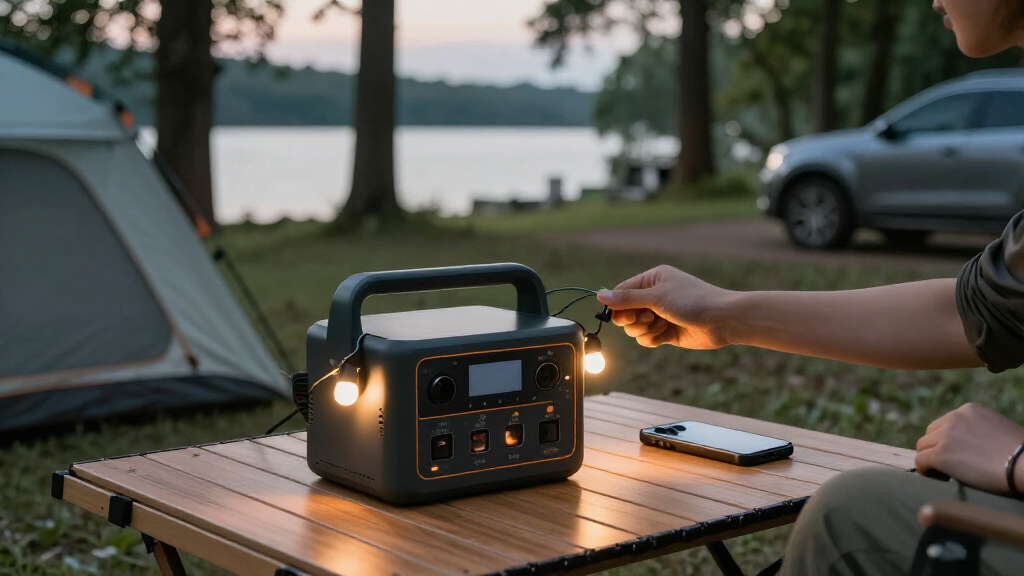
I compared these 15 portable power stations by the job each can realistically serve, rather than treating battery capacity as the only measure of quality. The main criteria were stated watt-hours for potential runtime, continuous AC output for appliance compatibility, portability for travel and campsite use, battery chemistry where specified, and practical versatility across charging and backup scenarios. I also looked at whether a product listing identifies a solar panel as included, since a bundled panel changes what a buyer receives but does not by itself establish how quickly the station will recharge.
The ranking gives priority to balanced capability and clear use cases. Mid-size models with substantial capacity and 1,800W-class output place ahead of small personal-power units for broad usefulness; the largest stations rank well for extended backup but lose some appeal for buyers who need easy transport. Compact models remain in the roundup for their distinct portability role, not because they can replace a household backup station. Listings with sparse or ambiguous specifications rank lower because a buyer needs confirmed capacity, output, and included accessories before matching a station to sensitive or high-demand equipment.
Factors to Consider When Choosing Portable Power Stations
Before choosing among these portable power stations, I would start with the devices you need to run and the setting where you will use the unit. Capacity, output, charging, and portability answer different questions, and one impressive number cannot stand in for the rest.
Match AC Output to the Appliance, Not Just Its Average Draw
A station’s continuous AC output determines which appliances it can run at once, while a device’s startup surge can briefly demand more power than its normal operating draw. Check the appliance label or manual for both figures before buying, especially for fridges, pumps, and tools with motors. Add together the running wattage of devices you expect to use at the same time; a station with ample battery capacity can still shut down or refuse a load if its inverter rating is too low. Avoid treating peak output as the amount available continuously. If you are unsure about a device’s startup demand, leave a margin rather than sizing right to the published running wattage.
Estimate Runtime From Usable Energy and Your Real Load
Watt-hours indicate stored energy, not a guaranteed runtime for every device. A rough estimate divides the station’s capacity by the total watts being drawn, but conversion losses and operating conditions reduce the energy delivered through AC outlets. Small electronics can run for many hours on a compact unit, while heaters and other high-draw appliances can drain even a large battery quickly. Make a list of the devices you need during an outage and estimate how many hours each will run. Prioritize essential loads; planning to power an entire home from a portable station can lead to a much larger, heavier purchase than the actual backup plan requires.
Treat Portability as a Use-Case Requirement
Capacity usually brings more size and weight, which matters if you carry a station from a car to a campsite or move it between rooms. A compact model can be the better choice for phones, cameras, and lights even when it cannot run larger appliances. For car camping or home backup, a mid-size or high-capacity unit may be worth the extra bulk because it can support more energy-intensive loads or longer use. Think about how often you will lift it, where it will be stored, and whether you need to move it while connected to cables. Do not choose solely by the word “portable” in a listing; compare the dimensions and weight if they are available.
Check Battery Chemistry and Expected Use Frequency
Battery chemistry affects ownership, but it is only one part of the decision. Some models in this roundup specify LFP batteries, while other listings do not identify chemistry in their product name; verify the manufacturer’s specifications rather than assuming. If you expect frequent cycling for regular outages, campsite use, or off-grid power, published cycle-life information and the battery warranty deserve close attention. For occasional emergency use, storage guidance and periodic charging may matter more to day-to-day ownership than a headline cycle count. Compare details at the same charge depth and test conditions when available, since battery-life claims are not always directly comparable across brands.
Plan How You Will Recharge Before an Outage
Charging access shapes real-world usefulness: a station may recharge from a wall outlet, a vehicle, solar panels, or a combination, but supported methods and input limits vary. A solar panel included in a bundle is not proof that it can replenish a battery quickly; panel wattage, sunlight, weather, and the station’s solar input limit all affect charging time. Check whether the panel is actually included and whether connectors or adapters are needed. For emergency use, recharge the unit before severe weather and keep a backup charging plan if sunlight is unreliable. Buyers who camp regularly should compare the station’s supported solar input with the panel setup they intend to use.
Pay for Capacity and Features You Can Put to Work
More capacity is useful only when your loads need it, and a larger inverter is useful only when your appliances demand it. Paying for a high-capacity unit can make sense for long outages, multiple users, or power-hungry equipment, while a compact station is easier to store and carry for basic electronics. Check the outlet types and number of ports against your charging routine; extra sockets do not increase the energy available. Read listings carefully for included accessories, expansion support, and clearly stated output ratings, since those details vary across products with similar names or capacities. When a specification is missing, treat that uncertainty as a reason to confirm it with the manufacturer before buying.
Frequently Asked Questions
How large a portable power station do I need to keep a refrigerator running?
Start with the refrigerator’s measured or published energy use, then account for the station’s AC output and startup demand. A refrigerator cycles on and off, so its average use is usually lower than its compressor’s running wattage, but startup can briefly exceed that figure. A station around the 1,000Wh class may suit shorter backup periods, while longer outages can call for more stored energy, such as the larger 2,000Wh-class or 3,072Wh options here. Runtime varies with the fridge, room temperature, door openings, and conversion losses. If refrigeration is essential, check the appliance’s surge requirement and plan for recharging rather than relying on capacity alone.
Can a portable power station run a space heater or other high-wattage appliance?
It depends on both the appliance’s continuous draw and the station’s AC output. Many space heaters draw close to or above 1,000W, so a small personal-power station is not suitable, and even a mid-size unit may drain quickly. A high output rating does not mean the battery can sustain that load for long; runtime depends on watt-hours as well. Compare the heater’s stated wattage with the station’s continuous output, not its peak figure. For prolonged heating, a portable power station is often a poor substitute for a dedicated heating plan because the energy demand is high.
Is a solar panel included with every portable power station in this roundup?
No. The 300W portable solar generator listing specifically identifies a 60W solar panel in its product name, while the other product names do not consistently identify a panel as included. Confirm the contents of the exact listing before purchase, since a station that supports solar charging may still be sold without panels. Also check the unit’s solar input limits and connector compatibility before selecting a panel separately. A small panel can extend use in suitable sunlight, but it may take a long time to refill a large battery. For outage planning, keep another charging option available.
Should I choose an LFP model if I only need emergency backup a few times a year?
An LFP battery can be appealing, particularly if you expect regular charge and discharge cycles, but it is not the only factor in an emergency-use purchase. For occasional backup, check storage instructions, recommended charge level during storage, warranty terms, and how often the manufacturer advises checking the unit. Several BLUETTI listings in this roundup identify LFP chemistry, while not every listing states its chemistry in the product name; verify the full specifications before comparing. A well-sized station that is kept charged and maintained may fit your needs better than buying a battery type without checking capacity or output. Prioritize dependable access to the power you need.
What should I prioritize for camping: a compact station or a 1,000Wh-class model?
Choose based on how you travel and what you plan to power. A compact model such as the Jackery Explorer 300 or BLUETTI Elite 30 V2 is easier to carry and can serve phones, lights, and other modest electronics. A 1,000Wh-class station makes more sense for longer trips, multiple users, or higher-draw gear, but its added capacity comes with more bulk. If you drive close to your campsite, size may matter less than it would on a hike. List your devices and daily energy needs first, then decide whether the added runtime justifies the extra weight.
Conclusion
For a broad mix of backup and outdoor needs, I’d choose the EcoFlow Delta 3 Classic as best overall: its 1,024Wh capacity and 1,800W output make it a balanced middle ground. The Portable Power Station 500W, 519Wh is my best value-style pick for buyers who need a mid-size unit and can confirm its full specifications; it offers less capacity and output than the 1,000Wh-class options. For extended backup and higher energy needs, the EF ECOFLOW Delta 3 Ultra is the best premium choice in this lineup, provided its larger size suits your setup. Beginners who mainly need to charge personal electronics can start with the Jackery Explorer 300 for a simpler, compact role. For specific needs, choose the MARBERO 88Wh or HOWEASY 120W for very small loads, the BLUETTI Elite 100 V2 for a 1,024Wh LFP option, or the Jackery Explorer 2000 v2 when its stated 2,200W output is a closer match for your appliances than the Anker SOLIX S2000’s 1,500W rating. Match the station to your device loads and transport needs before making the final choice.
Fall Picks
fall essentials
As an affiliate, we earn on qualifying purchases.