For anyone interested in exploring the night sky with modern convenience, the category of best smart telescopes offers a range of options that combine automation, connectivity, and ease of use. The Celestron NexStar Evolution 8″ WiFi Telescope stands out for its powerful optics and seamless app integration, making it ideal for serious astronomers. Meanwhile, the Vaonis Vespera 3 offers advanced auto-tracking and live stacking, perfect for astrophotography enthusiasts. Still, these devices often involve tradeoffs between price, complexity, and portability. Continue reading for a detailed breakdown that helps match your needs with the right model.
Listen free for 30 days with Audible
Thousands of audiobooks and originals — cancel anytime.
Start your free trialAs an affiliate, we earn on qualifying purchases.
Complete the kit



Key Takeaways
- Top picks balance powerful optics with smart features like auto-tracking and app control, but higher performance often comes with increased cost.
- Portability varies significantly, with smaller models like the Dwarf Mini suited for casual stargazing, while larger telescopes deliver better image quality at the expense of size.
- Ease of use is a common theme—models with integrated app controls and automated alignment tend to be better for beginners, but more advanced users may prefer manual options for customization.
- Astrophotography capabilities are increasingly integrated, but high-end models demand more setup and investment, making them less ideal for casual observers.
- Price ranges are broad, so buyers should clarify whether they prioritize value, features, or premium performance to avoid overpaying or missing key features.
| DWARFLAB Dwarf 3 Smart Telescope, App-Controlled Astrophotography Camera |  | Best Portable for Dual-Day/Night Imaging | Weight: 3 lbs (1.35 kg) | Dimensions: 2.56″D x 8.74″W x 5.59″H | Objective Lens Diameter: 35 mm | VIEW LATEST PRICE | See Our Full Breakdown |
| Celestron NexStar Evolution 8″ WiFi Telescope |  | Best for Deep-Sky Views with Wireless Control | Optical Tube: 8-inch Schmidt-Cassegrain | Coatings: StarBright XLT | Battery: Built-in 10-hour LiFePO4 | VIEW LATEST PRICE | See Our Full Breakdown |
| Celestron StarSense Explorer 8-inch Dobsonian Telescope with Smartphone App |  | Best for Beginners with Smartphone-Guided Navigation | Aperture: 8 inches (203mm) | Optical Design: Newtonian reflector | Mount: Manual Dobsonian | VIEW LATEST PRICE | See Our Full Breakdown |
| Smart Telescope, Refractor Auto-Focus Portable Digital Electronic Telescope with 80mm Aperture | 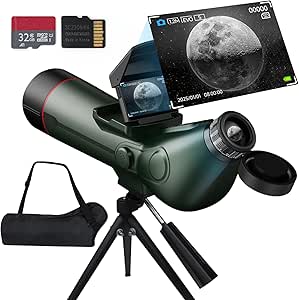 | Best Electronic Refractor with 4K Imaging | Aperture: 80mm | Focal Length: 300mm (f/8.89) | Max Magnification: 350X | VIEW LATEST PRICE | See Our Full Breakdown |
| Vaonis Vespera 3 Smart Telescope with Auto-Tracking, Live Stacking, and Aluminium Tripod |  | Best for Beginners and Families with Automatic Multi-Night Capture | Optics: Flat-field apochromatic quadruplet | Sensor: Sony IMX585, 8.3 MP | Field of View: Up to 4.33° x 2.43° | VIEW LATEST PRICE | See Our Full Breakdown |
| Unistellar Odyssey Pro Smart Telescope with Eyepiece |  | Best All-in-One Portable Smart Telescope for Advanced Users | Objective Lens Diameter: 85 mm | Focal Ratio: f/3.9 | Focal Length: 320 mm | VIEW LATEST PRICE | See Our Full Breakdown |
| Celestron NexStar 8SE 8-Inch Schmidt-Cassegrain Computerized Telescope with SkyAlign and Accessories |  | Best Beginner-Friendly Large Aperture with Comprehensive Setup | Aperture: 8 inches (203mm) | Focal Length: 2032mm | Focal Ratio: f/10 | VIEW LATEST PRICE | See Our Full Breakdown |
| Celestron NexStar 8SE Computerized Schmidt-Cassegrain Telescope |  | Best Compact Large-Aperture Telescope with Extensive Object Database | Optical Design: Schmidt-Cassegrain | Aperture: 8 inches | Mount Type: Computerized GoTo | VIEW LATEST PRICE | See Our Full Breakdown |
| Celestron NexStar 5SE Schmidt-Cassegrain Computerized Telescope |  | Best Mid-Size Versatile Telescope with Entry-Level Astrophotography | Aperture: 5 inches (125mm) | Optical Design: Schmidt-Cassegrain | Mount: Computerized GoTo with wedge | VIEW LATEST PRICE | See Our Full Breakdown |
| Celestron StarSense Explorer DX 130AZ Smartphone Guided Newtonian Telescope |  | Best Beginner-Friendly Guided Newtonian for Easy Sky Exploration | Aperture: 130mm (5 inch) | Optical Design: Newtonian Reflector | Mount: Manual Altazimuth | VIEW LATEST PRICE | See Our Full Breakdown |
| Smart Digital Telescope with 4K Astrophotography Camera, Dual Screens, 64GB Card |  | Best for Beginners and Family Sharing | Type: Smart digital telescope | Focal Length: 300 mm | Aperture: 78 mm | VIEW LATEST PRICE | See Our Full Breakdown |
| ZWO Seestar S30 Pro App-Controlled Smart Telescope |  | Best for Urban and Budget-Conscious Beginners | Brand: ZWO | Model: Seestar S30 Pro | Mount: Alt-Azimuth | VIEW LATEST PRICE | See Our Full Breakdown |
| Vaonis Vespera Pro 2 Smart Telescope with Tripod and Hard Case |  | Best for Advanced Deep-Sky Imaging Enthusiasts | Sensor: Sony IMX676 | Sensor Resolution: 12.5 MP | Mosaic Resolution: 50 MP | VIEW LATEST PRICE | See Our Full Breakdown |
| Celestron Origin Intelligent Home Observatory – 6-inch RASA Telescope with Automated Mount and Smartphone Compatibility |  | Best for Serious Home Stargazing & Astrophotography | Optical Design: 6-inch RASA | Focal Ratio: f/2.2 | Compatibility: iOS/Android | VIEW LATEST PRICE | See Our Full Breakdown |
| DWARFLAB Dwarf Mini Smart Telescope, 1.85 lb Portable Astronomy Telescope |  | Best for Ultra-Portable Beginners and Kids | Brand: DWARFLAB | Model: Dwarf Mini | Weight: 1.85 lbs | VIEW LATEST PRICE | See Our Full Breakdown |
More Details on Our Top Picks
DWARFLAB Dwarf 3 Smart Telescope, App-Controlled Astrophotography Camera
This ultra-lightweight telescope, weighing only 3 lbs, stands out for its remarkable portability, fitting easily into a backpack, making it ideal for spontaneous astrophotography or wildlife shots. Unlike larger, more traditional telescopes like the Celestron NexStar Evolution 8″, it sacrifices some light-gathering power due to its small 35mm lens, limiting its effectiveness for deep-sky objects. Its dual-lens system and 4K auto-tracking elevate its versatility, especially for users who want quick setup and multi-purpose use. However, reliance on the app for full functionality and internet connectivity can be limiting in remote locations, and the small aperture restricts detailed astrophotography of faint objects. This pick makes the most sense for beginners or outdoor enthusiasts seeking a lightweight, all-in-one device for daytime wildlife and night sky imaging without the bulk of traditional gear.
Pros:- Extremely portable at just 3 lbs, fits in standard backpacks
- Dual-lens system offers both wildlife and astrophotography capabilities
- One-touch cloud processing simplifies image editing and sharing
Cons:- Limited light-gathering due to small 35mm lens, less ideal for faint objects
- Dependent on smartphone app and internet, which can hinder remote use
Best for: Travelers and outdoor enthusiasts who need a lightweight, quick-setup telescope for both daytime and nighttime use
Not ideal for: Advanced astronomers seeking deep-sky imaging with large aperture telescopes like the Celestron NexStar Evolution 8″
- Weight:3 lbs (1.35 kg)
- Dimensions:2.56″D x 8.74″W x 5.59″H
- Objective Lens Diameter:35 mm
- Focus Type:Auto Focus
- Video Resolution:4K
- Modes:AZ/EQ, Auto GOTO, 4K Tracking
- Compatible Devices:Smartphone, Laptop, PC
- Battery:1 Lithium Ion (included)
- Included Accessories:Carrying bag, filters, USB-C cable
Our verdict“This is a perfect choice for beginners or travelers looking for an ultra-portable, all-in-one imaging device.”
Celestron NexStar Evolution 8″ WiFi Telescope
The Celestron NexStar Evolution 8″ offers a compelling balance of power and portability, with its large 8-inch Schmidt-Cassegrain lens delivering bright, detailed images of planets and nebulae. Compared to the more compact DWARFLAB Dwarf 3, it sacrifices portability for significantly improved light-gathering and image quality, making it suitable for serious amateur astronomers. Its built-in WiFi and SkyPortal app provide seamless wireless control, reducing setup time and enabling easy star alignment. Unlike the manual Dobsonian Celestron StarSense Explorer 8-inch, it offers motorized tracking and go-to capabilities, which are essential for precise astrophotography or extended observing sessions. The main tradeoff is its size and weight, which limits portability, and the price point may be high for casual users. This telescope makes the most sense for those ready to invest in serious celestial viewing with remote control convenience.
Pros:- Large 8-inch aperture provides bright, detailed images of deep-sky objects
- Wireless control via WiFi and SkyPortal app simplifies operation
- Long-lasting built-in battery supports extended sessions
Cons:- Heavy and less portable, not ideal for frequent travel
- Higher cost compared to smaller or manual telescopes
Best for: Amateur astronomers seeking large aperture, high-quality views, and wireless operation
Not ideal for: Travelers or casual stargazers who prioritize portability over imaging detail
- Optical Tube:8-inch Schmidt-Cassegrain
- Coatings:StarBright XLT
- Battery:Built-in 10-hour LiFePO4
- Connectivity:WiFi with SkyPortal app
- Features:Manual clutches, accessory tray
- Weight:Approximately 30 lbs (13.6 kg)
Our verdict“Ideal for serious hobbyists wanting high-quality views with wireless remote control in a portable package.”
Celestron StarSense Explorer 8-inch Dobsonian Telescope with Smartphone App
This 8-inch Newtonian reflector on a sturdy Dobsonian base combines traditional optics with modern sky recognition technology. It excels for beginners who want bright, detailed views of planets and deep-sky objects, thanks to its large 8-inch aperture. The StarSense app guides users with on-screen arrows and alignment, making star-hopping straightforward without prior knowledge. Unlike the Vaonis Vespera 3, which automates much of the process, this Dobsonian relies on manual movement but compensates with affordability and ease of use for newcomers. Its bulk and weight, however, make it less portable, and the lack of motorized tracking limits long-exposure astrophotography. It’s an excellent choice for those who want a large aperture, straightforward operation, and smartphone guidance.
Pros:- Large 8-inch aperture provides bright, detailed celestial views
- Smartphone app offers intuitive star-hopping guidance
- Solid Dobsonian base allows smooth manual movement
Cons:- No motorized tracking or goto, limiting long exposures
- Heavy and less portable, not suited for frequent transport
Best for: Beginner astronomy enthusiasts wanting a large aperture with smartphone-guided navigation
Not ideal for: Advanced users seeking motorized tracking or astrophotography capabilities
- Aperture:8 inches (203mm)
- Optical Design:Newtonian reflector
- Mount:Manual Dobsonian
- Included Eyepiece:25mm
- Accessories:Red dot finder, smartphone dock
- Weight:Approximately 30 lbs (13.6 kg)
Our verdict“Best for newcomers who want a large aperture and easy smartphone guidance without complex electronics.”
Smart Telescope, Refractor Auto-Focus Portable Digital Electronic Telescope with 80mm Aperture
This portable refractor combines manual operation with advanced electronic features, making it appealing for users who want flexible viewing with high-quality digital capture. Its 80mm aperture and 300mm focal length provide sharp images and up to 350X magnification, rivaling larger telescopes like the Celestron NexStar Evolution 8″ in detail, but in a much more compact form. The dual-screen design, adjustable eyepiece, and 4K photo/video modes simplify capturing moments. However, it lacks the advanced tracking or goto features found in motorized telescopes, and electronic complexity may pose a learning curve for novices. The inclusion of external storage and long battery life enhances usability for extended sessions. This makes sense for users who want a versatile, digital-ready refractor that balances portability and imaging power.
Pros:- High-quality optics with 80mm aperture and 350X magnification
- Dual-screen setup and adjustable eyepiece enhance viewing comfort
- Supports 4K image and video capture with large external storage
Cons:- No motorized tracking or goto mount, limiting long-term imaging
- Learning curve for electronic features may challenge beginners
Best for: Amateur astrophotographers and birdwatchers seeking a portable, electronic refractor with high-res imaging
Not ideal for: Traditional astronomers requiring precise tracking or large aperture telescopes for deep-sky objects
- Aperture:80mm
- Focal Length:300mm (f/8.89)
- Max Magnification:350X
- Image Resolution:4K
- Battery Capacity:4500mAh
- Auto Power-Off:1/3/5/10 min
- External Storage:Up to 512GB
Our verdict“Ideal for users seeking a portable, digital refractor with excellent imaging capabilities but without advanced tracking features.”
Vaonis Vespera 3 Smart Telescope with Auto-Tracking, Live Stacking, and Aluminium Tripod
The Vaonis Vespera 3 offers a highly user-friendly experience, perfect for beginners or families wanting to explore the night sky with minimal setup. Its advanced optics and Sony IMX585 sensor enable edge-to-edge sharpness even from city skies, and the zero-setup auto-alignment and auto-tracking make star observation effortless. Unlike the manual or semi-automatic options like the Celestron StarSense Explorer 8-inch, Vespera 3 automates focusing and stacking, with multi-night data preservation for seamless long-term astrophotography. The 11-hour battery, 115 GB storage, and auto anti-fog features add to its convenience, though the high price and limited manual control may deter advanced users. This model caters well to beginners seeking high-quality images combined with automation and long session capability.
Pros:- Zero-setup automatic alignment, tracking, and stacking via app
- Long 11-hour battery with 115 GB onboard storage supports extended sessions
- High-quality optics with Sony IMX585 sensor for sharp images even from city skies
Cons:- Premium price point may be prohibitive for casual users
- Limited manual control may frustrate advanced astronomers
Best for: Beginners and families wanting an easy, automated astrophotography experience with long session times
Not ideal for: Experienced astronomers seeking manual control or deep-sky astrophotography with large apertures
- Optics:Flat-field apochromatic quadruplet
- Sensor:Sony IMX585, 8.3 MP
- Field of View:Up to 4.33° x 2.43°
- Battery Life:11 hours
- Storage:115 GB
- Features:Auto-tracking, live stacking, auto anti-fog
- Tripod:Aluminium
- Export Formats:FITS/TIFF
- Limiting Magnitude:14
Our verdict“Best suited for beginners or families who want automated, high-quality astrophotography with multi-night stacking capabilities.”
Unistellar Odyssey Pro Smart Telescope with Eyepiece
The Unistellar Odyssey Pro stands out for its seamless integration of advanced digital imaging, automatic alignment, and a compact all-in-one design. Compared with the larger Celestron NexStar 8SE, it offers a more portable experience, though the 85 mm aperture limits its ability to resolve faint deep-sky objects. Its app-controlled system, autofocus, and one-click GoTo make setup quick, ideal for users who want quick access to quality images or citizen-science projects. The RAW/FITS export supports more serious astrophotographers, but the reliance on a smartphone or tablet for full functionality can be a limitation for those who prefer standalone operation. With up to five hours of battery and a highly portable form factor, it’s well-suited for field trips or quick observing sessions, though the smaller aperture means it’s less suited for demanding deep-sky pursuits.
Pros:- Automatic alignment and autofocus enable fast setup and accurate tracking
- Supports electronic-eyepiece viewing and mobile device observation for flexibility
- RAW/FITS export allows for high-quality image processing
- All-in-one portable system with integrated battery and storage
Cons:- Dependent on a smartphone or tablet for full app functionality
- Battery life limited to approximately five hours, which may restrict longer sessions
- 85 mm aperture may restrict detailed observations of faint deep-sky objects
Best for: Astronomy enthusiasts seeking a portable, app-controlled system with advanced imaging capabilities, including citizen scientists and intermediate hobbyists.
Not ideal for: Observers who prioritize maximum light-gathering for faint objects or long-exposure astrophotography, as the 85 mm aperture may fall short for detailed deep-sky imaging.
- Objective Lens Diameter:85 mm
- Focal Ratio:f/3.9
- Focal Length:320 mm
- Mount:Motorized Alt-Az
- Focus Type:Autofocus
- Battery Life:Up to 5 hours
Our verdict“This pick makes the most sense for users who want advanced digital imaging in a portable, easy-to-use system for quick observation or citizen science.”
Celestron NexStar 8SE 8-Inch Schmidt-Cassegrain Computerized Telescope with SkyAlign and Accessories
The Celestron NexStar 8SE offers a robust 8-inch aperture combined with intuitive SkyAlign setup, making it ideal for newcomers and seasoned astronomers alike. Its larger aperture compared to the Unistellar Odyssey Pro produces brighter, more detailed images of planets and deep-sky objects, though it sacrifices portability with its heavier, bulkier design. The included accessories, such as the 25mm eyepiece and finderscope, make initial observing straightforward, but the weight and size mean it’s less suited for frequent transport. The automated GoTo tracking and comprehensive object database simplify locating celestial targets, but some users report a learning curve and occasional need for software updates. This model excels for those who want an accessible yet powerful telescope for serious observing in a stable, well-supported package.
Pros:- Powerful 8-inch aperture delivers bright, detailed images
- SkyAlign setup simplifies initial alignment process
- Includes a useful accessory kit to enhance observing experience
- Automated GoTo tracking saves time and effort
Cons:- Heavy weight and bulkiness reduce portability
- Advanced features may require some learning for absolute beginners
- Software updates might be necessary for optimal operation
Best for: Beginners and intermediate astronomers who want a large aperture and a straightforward, all-in-one setup for planetary and deep-sky viewing.
Not ideal for: Those needing a lightweight, portable telescope for frequent field trips, as the 8-inch model is relatively heavy and cumbersome.
- Aperture:8 inches (203mm)
- Focal Length:2032mm
- Focal Ratio:f/10
- Mount Type:Alt-Az, computerized GoTo
- Included Accessories:Eyepiece, finderscope, diagonal, tripod
- Warranty:2 years
Our verdict“This telescope is best suited for users seeking high-quality images with an easy setup, balancing power and user-friendliness.”
Celestron NexStar 8SE Computerized Schmidt-Cassegrain Telescope
Compared with the 8SE model with SkyAlign, the Celestron NexStar 8SE here emphasizes its compact form factor and extensive celestial database, making it a versatile choice for dedicated astronomers. Its large 8-inch aperture provides impressive detail and brightness for planetary and deep-sky viewing, though the computerized GoTo system can require more setup effort than manual models. The NexStar+ hand controller’s access to over 40,000 objects, along with SkyAlign for quick setup, appeals to users who want both power and convenience. However, the slightly older design lacks some of the newer features of the latest 8SE model, and the setup process can be more involved for absolute beginners. This is a solid choice for those who value a compact yet powerful telescope with extensive object access.
Pros:- Large 8-inch aperture delivers detailed views
- Extensive database of 40,000+ celestial objects
- Compact design enhances portability
- Automated GoTo and SkyAlign for efficient object location
Cons:- Setup and operation may be more complex for beginners
- Older model design might lack recent feature updates
- Requires some familiarity with star alignment procedures
Best for: Intermediate to advanced amateur astronomers seeking a portable, powerful telescope with a large object database for serious sky exploration.
Not ideal for: Beginners or casual observers who prefer a more straightforward, less setup-intensive experience, as the system’s complexity can be daunting initially.
- Optical Design:Schmidt-Cassegrain
- Aperture:8 inches
- Mount Type:Computerized GoTo
- Object Database:40,000+
- Support:Unlimited US-based technical support
- Warranty:2 years
Our verdict“Best suited for experienced amateurs wanting a portable yet capable large-aperture telescope with broad object access.”
Celestron NexStar 5SE Schmidt-Cassegrain Computerized Telescope
The Celestron NexStar 5SE strikes a balance between size and power, offering a 5-inch aperture that still provides crisp lunar and planetary views, plus decent deep-sky performance. Its compact form and the ease of SkyAlign setup make it approachable for newcomers, while the built-in wedge opens a door to basic astrophotography, unlike the larger 8-inch models. The NexStar+ hand control’s database of over 40,000 objects simplifies target acquisition, but the smaller aperture compared to the 8-inch models means less light-gathering power for faint objects. It’s a flexible, portable choice that fits well for those wanting to dip into astrophotography without the bulk of larger telescopes.
Pros:- Automated GoTo and SkyAlign simplify setup and object location
- Portable size suitable for travel and field use
- Built-in wedge supports basic astrophotography
- High-quality StarBright XLT coatings improve image clarity
Cons:- Limited aperture reduces faint object detail
- Requires additional eyepieces for more detailed viewing
- Entry-level astrophotography capabilities are somewhat basic
Best for: Intermediate stargazers interested in planetary viewing and entry-level astrophotography, especially those needing a portable setup.
Not ideal for: Deep-sky observers aiming for detailed images of faint galaxies or nebulae, as the 5-inch aperture limits light collection.
- Aperture:5 inches (125mm)
- Optical Design:Schmidt-Cassegrain
- Mount:Computerized GoTo with wedge
- Object Database:40,000+
- Included Eyepiece:25mm Plössl
- Warranty:2 years
Our verdict“Ideal for hobbyists seeking a compact and versatile telescope that balances observing and beginner astrophotography potential.”
Celestron StarSense Explorer DX 130AZ Smartphone Guided Newtonian Telescope
The Celestron StarSense Explorer DX 130AZ offers a straightforward, guided sky-viewing experience through its smartphone app, making it an excellent choice for absolute beginners. Its 130mm Newtonian reflector provides sharp images of planets and brighter deep-sky objects, while the patented sky recognition technology ensures accurate positioning without prior star knowledge. The manual altazimuth mount with slow-motion controls encourages physical tracking, but this means longer observing sessions require manual effort, unlike motorized models. Compatibility with a smartphone means it’s easy to start, yet users must have a compatible device for the guided features. This telescope makes good sense for newcomers who want a guided, affordable entry into astronomy but aren’t looking for automation or long-exposure astrophotography.
Pros:- Smartphone app guides target selection and positioning
- Patented sky recognition ensures accurate alignment
- 130mm aperture offers bright, detailed views
- Affordable and easy to use for beginners
Cons:- Manual mount requires physical object tracking
- Dependent on a smartphone for guided experience
- Limited to manual tracking without motorized controls
Best for: Beginner sky watchers who prefer guided navigation and manual tracking, especially families and first-time stargazers with smartphones.
Not ideal for: Experienced astronomers or those seeking motorized tracking and astrophotography, as the manual mount and guided approach limit advanced use.
- Aperture:130mm (5 inch)
- Optical Design:Newtonian Reflector
- Mount:Manual Altazimuth
- Guidance:Smartphone app (StarSense Explorer)
- Warranty:2-Year US Warranty
- Brand:Celestron
Our verdict“Best suited for beginners wanting guided sky exploration with a straightforward setup and manual tracking capability.”
Smart Digital Telescope with 4K Astrophotography Camera, Dual Screens, 64GB Card
This smart digital telescope stands out for its dual-screen setup, making it especially accessible for families and beginners who want immediate sharing and viewing. Compared with the Vaonis Vespera Pro 2, it offers a more straightforward, real-time display, but the smaller 3-inch external screen can be limiting for group observation. Its 78mm aperture provides decent light gathering, but it falls short of larger aperture models like the Celestron Origin for low-light deep-sky images. The 4K photo and video capture with one-touch controls simplify astrophotography, making it ideal for users who want quick results without complex software. However, the relatively compact size limits long-exposure astrophotography and deep-sky imaging. This pick makes the most sense for casual astronomers, families, and kids eager to explore the sky with sharing features, but less so for serious astrophotographers seeking detailed images.
Pros:- Dual-screen design enables real-time viewing and sharing
- Captures 4K photos and videos with simple controls
- Includes a 64GB memory card and supports external storage
Cons:- Small external screen may be inadequate for group viewing
- 78mm aperture limits performance in low-light conditions
Best for: Beginners, kids, and families seeking easy, shareable stargazing experiences
Not ideal for: Advanced astrophotographers who need larger apertures and long-exposure capabilities
- Type:Smart digital telescope
- Focal Length:300 mm
- Aperture:78 mm
- Magnification:Up to 350X
- Camera Resolution:4K
- Display:3-inch foldable external screen
- Storage:64GB included, supports up to 512GB
- Optics:Fully coated glass lens
- Intended Users:Adults, kids, beginners
Our verdict“This telescope is perfect for beginners and families wanting quick, shareable celestial views without complex setup.”
ZWO Seestar S30 Pro App-Controlled Smart Telescope
The ZWO Seestar S30 Pro offers an approachable, app-controlled experience that simplifies astrophotography with automatic GOTO targeting and tracking. Its dual-camera 4K imaging and AI noise reduction make it a step up from basic models like the DWARFLAB Dwarf Mini, especially in urban environments where light pollution can hinder clear shots. The lightweight design at just 3.6 pounds enhances portability, but this small size also means the 30mm objective limits light intake, making deep-sky imaging more challenging compared to larger telescopes like the Celestron Origin. The app’s auto-tracking and plan modes are beginner-friendly, yet require familiarity with smartphone controls, and precise software settings may be intimidating for newcomers. This telescope suits those who prioritize portability and ease of use over deep-sky detail, ideal for urban stargazers and casual astrophotographers.
Pros:- Automatic GOTO and tracking simplify target acquisition
- Dual 4K cameras with AI noise reduction improve image clarity
- Light pollution filters and portability support urban astrophotography
Cons:- Requires a smartphone or tablet for operation
- Deep-sky imaging is limited by small objective size
Best for: Urban dwellers and beginners wanting portable, automated astrophotography
Not ideal for: Experienced deep-sky astrophotographers needing larger apertures and detailed manual controls
- Brand:ZWO
- Model:Seestar S30 Pro
- Mount:Alt-Azimuth
- Focal Length:160 mm
- Objective Lens Diameter:30 mm
- Weight:3.6 lb
- Features:App control, auto tracking, Milky Way mode
- Compatibility:Smartphone, tablet
Our verdict“This model is excellent for urban beginners seeking portable, automated astrophotography with minimal fuss.”
Vaonis Vespera Pro 2 Smart Telescope with Tripod and Hard Case
The Vaonis Vespera Pro 2 elevates astrophotography with its high-resolution 12.5 MP sensor and automatic 50 MP mosaic capture, offering detailed wide-field images of deep-sky objects. Its automatic multi-night stacking and BalENS signal enhancement streamline long-exposure astrophotography, making it ideal for dedicated amateurs. Compared with the Celestron Origin’s automated imaging, the Vespera Pro 2’s manual exposure and gain controls provide greater flexibility for experienced users. The included aluminum tripod, hard case, and 11-hour battery make it a portable yet professional setup. Nevertheless, its complex workflow and reliance on the Singularity app might be overwhelming for newcomers. This device is best suited for astrophotographers who want a portable, high-detail deep-sky imaging solution with advanced processing capabilities.
Pros:- High-res sensor and 50 MP mosaic for detailed images
- Automatic multi-night stacking simplifies long exposures
- Manual controls and FITS/TIFF export support advanced workflows
Cons:- Complex interface may challenge newcomers
- Limited to 30-second individual exposures
Best for: Experienced astrophotographers seeking portable deep-sky imaging with professional features
Not ideal for: Beginners or casual sky watchers who prefer simple, plug-and-play solutions
- Sensor:Sony IMX676
- Sensor Resolution:12.5 MP
- Mosaic Resolution:50 MP
- Optical Design:Quadruplet
- Battery Life:11 hours
- Storage:225 GB
- Exports:FITS, TIFF
- App Compatibility:iOS and Android
Our verdict“This telescope is a top choice for serious deep-sky astrophotographers needing portability and high-resolution imaging tools.”
Celestron Origin Intelligent Home Observatory – 6-inch RASA Telescope with Automated Mount and Smartphone Compatibility
The Celestron Origin combines a 6-inch RASA optical system with AI-powered image processing to deliver sharp, detailed images of celestial objects. Its automated setup with StarSense makes it appealing for users who want minimal manual alignment, while the AI features support real-time stacking and processing, rivaling larger, more complex observatories like the Celestron NexStar Evolution 8″. However, its price point and reliance on a smartphone app may pose challenges for casual users. The combination of a fast f/2.2 focal ratio and advanced software makes it suitable for serious hobbyists aiming for high-quality astrophotography at home, but beginners may find the setup and features somewhat daunting without prior experience.
Pros:- AI-powered real-time image stacking and processing
- Automated setup and alignment for quick use
- Bright, high-quality 6-inch aperture images
Cons:- Expensive relative to entry-level telescopes
- Requires smartphone for full functionality
- Setup complexity can be overwhelming for beginners
Best for: Dedicated amateur astronomers seeking an all-in-one high-performance astrophotography solution
Not ideal for: Casual stargazers or those on a tight budget who prefer manual operation
- Optical Design:6-inch RASA
- Focal Ratio:f/2.2
- Compatibility:iOS/Android
- Automation:Automated setup with StarSense
Our verdict“Ideal for serious hobbyists wanting a high-tech, automated observatory with professional imaging capabilities.”
DWARFLAB Dwarf Mini Smart Telescope, 1.85 lb Portable Astronomy Telescope
The DWARFLAB Dwarf Mini offers an impressively lightweight and compact design, making it perfect for quick, spontaneous stargazing sessions. Its app-controlled Auto GOTO, 360-degree pivot, and EQ mode make targeting and tracking straightforward, especially for users who want a simple yet capable device. Compared with larger models like the Vaonis Vespera Pro 2, it sacrifices some imaging detail due to its smaller 30mm objective and basic optics but makes up for it in mobility and ease of use. The built-in light pollution filter and cloud processing add value for casual use and young explorers. The main tradeoff involves its limited aperture and manual focus options, which restrict detailed deep-sky imaging. This is best for beginners, kids, and casual users who prioritize portability and quick setup.
Pros:- Incredibly lightweight and compact for portability
- Auto GOTO and cloud processing simplify setup
- Includes light pollution filter for clearer views
Cons:- Small 30mm objective limits brightness and detail
- Manual and auto focus may require some adjustment
Best for: Beginners, families, and kids needing a highly portable, easy-to-use telescope
Not ideal for: Experienced astronomers seeking detailed deep-sky astrophotography or larger apertures
- Brand:DWARFLAB
- Model:Dwarf Mini
- Weight:1.85 lbs
- Objective Lens Diameter:30 mm
- Focal Length:150 mm
- Features:Auto GOTO, 360° pivot, light pollution filter
- Battery:Included
- Included accessories:Filter, charging cable, cleaning cloth
Our verdict“This mini telescope excels for quick, portable stargazing and beginner use, but isn’t suited for detailed deep-sky imaging.”
How We Picked
The selection process focused on evaluating each smart telescope based on performance, usability, build quality, and value. We prioritized models with robust optical systems, intuitive app controls, and auto-tracking features that enhance the user experience. Portability and ease of setup also played a key role, especially for those new to stargazing or astrophotography. Our rankings favor devices that strike a balance between affordability and advanced features, while also considering long-term durability and support. Products were rated higher if they offered unique capabilities like live stacking or full automation, which significantly improve the user experience.Factors to Consider When Choosing Best Smart Telescopes
Choosing the best smart telescope involves several critical considerations. Beyond raw optical power, factors like ease of use, connectivity, portability, and upgrade options can make or break your experience. It’s important to match a telescope’s features with your skill level and specific interests, whether casual stargazing or astrophotography. Understanding these broader considerations helps prevent common pitfalls such as overpaying for features you won’t use or selecting a model too complex for your current expertise.Optical Power and Aperture
The size of the telescope’s aperture directly impacts image brightness and detail. Larger apertures gather more light, revealing fainter objects, which is essential for serious astrophotography or deep-sky observation. However, bigger telescopes tend to be heavier and less portable. For casual use or beginners, a smaller aperture may suffice and be easier to handle, but if your goal is detailed planetary or deep-sky viewing, investing in a larger aperture makes sense.
Ease of Use and Automation
Smart features like auto-alignment, auto-tracking, and app control simplify setup and improve observation quality. Devices with integrated apps or WiFi connectivity reduce the learning curve, making them more accessible for newcomers. However, more automation can sometimes mean higher costs and less manual control, which may be a downside for advanced users who prefer customization. Be sure to balance automation with your comfort level and technical interest.
Portability and Size
If you plan to carry your telescope to different locations or travel frequently, size and weight matter significantly. Smaller models like the Dwarf Mini are ideal for portability, but may sacrifice some optical performance. Conversely, larger telescopes offer better viewing capabilities but are less convenient for on-the-go use. Consider your typical use environment and whether portability or performance takes priority.
Connectivity and Compatibility
Wireless control via smartphones or tablets is a hallmark of smart telescopes, but compatibility varies. Some models work with specific apps or operating systems, while others offer more universal connectivity. Ensuring your device and the telescope’s app are compatible prevents frustration. Also, look at the quality of the app interface, as intuitive controls greatly enhance the overall experience.
Astrophotography Features
Many smart telescopes now include astrophotography capabilities like live stacking and high-resolution cameras. These features elevate the device from simple visual observation to image capturing, but they often add complexity and cost. If astrophotography is a priority, focus on models with dedicated cameras and stable mounts. For casual observers, simpler models with basic tracking might be sufficient.
Frequently Asked Questions
Can I use a smart telescope without an internet connection?
Many smart telescopes rely on WiFi or Bluetooth for control and auto-alignment, but some models offer offline modes or direct device connections. If internet access is limited, look for units that support local device pairing or have built-in controls. Keep in mind that some advanced features, like live stacking or firmware updates, might require connectivity, so consider your typical usage environment when selecting a model.
Are smart telescopes suitable for beginners?
Absolutely, many smart telescopes are designed with ease of use in mind, featuring automated alignment, smartphone controls, and guided observations. These features reduce the learning curve and make astronomy more accessible. However, beginners should pay attention to models with straightforward setup processes and good instructional support. Investing in a user-friendly device can foster a more enjoyable and less frustrating experience.
How important is astrophotography capability in a smart telescope?
Astrophotography features can significantly enhance a telescope’s versatility, especially if capturing images of celestial objects interests you. Devices with live stacking and high-quality cameras allow for impressive astrophotos without extensive additional equipment. However, these features typically come at a higher price and complexity. If your primary goal is visual observation, a simpler, more affordable model may make more sense, reserving astrophotography for future upgrades.
What should I consider regarding portability when choosing a smart telescope?
Portability depends on size, weight, and ease of transport. Smaller models like the DWARFLAB Dwarf Mini are ideal for quick trips and casual outings, but they often have smaller apertures and less advanced features. Larger telescopes deliver better viewing but are less convenient to carry and set up. Think about where you’ll use the device most often and balance performance with convenience to find the best fit.
Is it worth paying extra for a telescope with advanced automation?
Investing in automation can drastically improve your experience, especially for beginners or those with limited time. Features like automatic alignment, object tracking, and app control streamline observation sessions and minimize manual setup. However, these added features increase cost and may introduce more points of failure. If you value ease of use and quick setup, paying extra for automation is typically justified, but experienced users might prefer more manual control and lower-priced models.
Conclusion
For casual stargazers or newcomers, a model like the Smart Telescope with 4K Astrophotography Camera offers ease of use and solid imaging without overwhelming complexity. Serious enthusiasts and astrophotographers should consider the Celestron NexStar Evolution 8″ WiFi Telescope for its combination of power and automation. Buyers seeking a lightweight, portable option will find the DWARFLAB Dwarf Mini ideal, while those wanting a premium experience with extensive features might prefer the Vaonis Vespera Pro 2. Ultimately, your choice depends on your specific needs—whether it’s budget, portability, beginner-friendly features, or advanced astrophotography capabilities.
NFL season / tailgating Picks
team gear
As an affiliate, we earn on qualifying purchases.