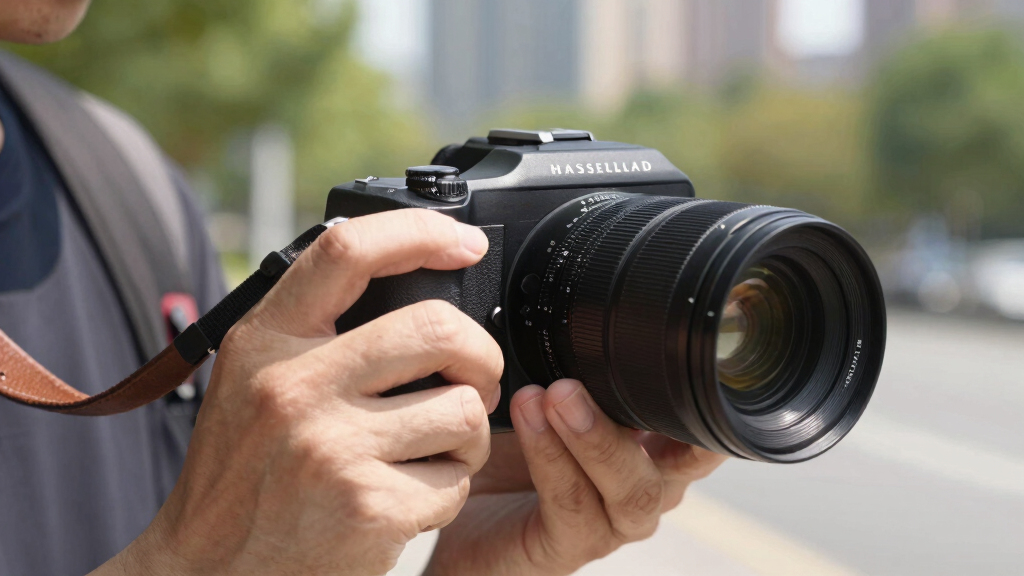

The Hasselblad X2D II 100C is my best overall pick because it pairs 100MP medium-format resolution with the lineup’s most capable autofocus and stabilization systems. The X2D 100C offers the strongest value for buyers who can live without the newer model’s LiDAR-assisted focusing and extra stabilization. For photographers drawn to Hasselblad’s history, the 907X & CFV 100C is the standout modular choice, linking a modern digital back with X-system and compatible V-system equipment.

Get the latest gadgets delivered free with Prime
- Fast, free delivery on millions of items
- Prime Video, Amazon Music and more included
- Member-only deals all year
All three cameras promise immense resolution, rich tonal information, and files suited to large prints or demanding commercial work. The differences emerge in handling, focusing speed, stabilization, and lens workflow. The X2D bodies behave like modern integrated mirrorless cameras, while the 907X combination favors a slower, configurable process. That distinction matters more than the shared 100MP headline.
I ranked these cameras for buyers choosing a primary photographic tool, not merely the most unusual Hasselblad. My order favors focus reliability and handheld usability, followed by price-position value and system flexibility. None is a casual purchase: each brings substantial cost, large files, and medium-format handling compromises. The right choice depends on whether the buyer values modern assistance, relative savings, or modular character.
Complete the kit



Key Takeaways
- I rank the X2D II 100C first because its 425 PDAF zones, LiDAR assistance, and 10-stop IBIS make 100MP capture more practical.
- I see the original X2D 100C as the value pick when its price sits meaningfully below the newer X2D II.
- I recommend the 907X & CFV 100C chiefly for modular workflows and compatibility with Hasselblad heritage equipment.
- The X2D II has the clearest advantage for handheld portraits and changing subjects; the 907X favors deliberate composition.
- Every option produces very large files, so I would budget for fast storage, capable editing hardware, and suitable lenses.
| Hasselblad X2D II 100C Medium Format Mirrorless Camera |  | Best Overall | Sensor: 100MP CMOS medium format | Dynamic Range: 15.3 stops | Autofocus Coverage: 425 PDAF zones | VIEW LATEST PRICE | See Our Full Breakdown |
| Hasselblad X2D 100C 100MP Medium Format Mirrorless Camera |  | Best Value | Sensor: 100MP medium format | Dynamic Range: 15 stops | Stabilization: 5-axis, 7-stop IBIS | VIEW LATEST PRICE | See Our Full Breakdown |
| Hasselblad 907X & CFV 100C Medium Format Mirrorless Camera |  | Best Modular Hasselblad | Sensor: 100MP BSI CMOS medium format | Camera Design: 907X camera with detachable CFV 100C digital back | Screen: 3.2 inches | VIEW LATEST PRICE | See Our Full Breakdown |
| Hasselblad camera | Sensor | Dynamic Range | Stabilization |
|---|---|---|---|
| Hasselblad X2D II 100C Medium | 100MP CMOS medium format | 15.3 stops | 5-axis, 10-stop IBIS |
| Hasselblad X2D 100C 100MP Medi | 100MP medium format | 15 stops | 5-axis, 7-stop IBIS |
| Hasselblad 907X & CFV 100C Med | 100MP BSI CMOS medium format | — | — |
More Details on Our Top Picks
Hasselblad X2D II 100C Medium Format Mirrorless Camera
I rank the Hasselblad X2D II 100C first because it addresses the practical problems that accompany a 100MP medium-format sensor. Its 425 phase-detection autofocus zones with LiDAR assistance are designed to make focus acquisition faster and more dependable than on the original X2D. That matters for portraits, weddings, fashion, and location work, where a slight focusing miss can waste all the detail the sensor records.
The other major separator is 5-axis stabilization rated at 10 stops. Compared with the X2D 100C’s stated 7-stop system, the newer body gives photographers a wider handheld safety margin when light falls or a tripod is inconvenient. Stabilization cannot freeze a moving subject, but it can reduce camera shake during interiors, environmental portraits, and static detail work. Paired with the claimed 15.3 stops of dynamic range, this makes the X2D II the most flexible camera here for photographers moving between studio and location assignments.
That capability does not make it universally sensible. The likely premium over the original X2D can be difficult to justify for controlled studio work, where manual placement, strobes, and a tripod reduce the benefit of stronger stabilization and LiDAR. It also remains a large, expensive medium-format system, not a discreet travel camera. Buyers must account for lenses, storage, backup capacity, and an editing computer comfortable with 100MP files.
Against the 907X & CFV 100C, the X2D II gives up modular appeal but offers a more integrated shooting experience. I would choose it when assignment speed and repeatable results matter more than adapting a digital back to heritage equipment. Its first-place position comes from being the lineup’s most convincing balance of image quality, focus assistance, stabilization, and everyday operation.
Pros:- 100MP sensor supports very large prints and extensive cropping
- 425 PDAF zones with LiDAR provide the strongest focusing specification in this group
- 10-stop 5-axis IBIS expands handheld shooting possibilities
- 15.3-stop dynamic-range claim suits high-contrast scenes and careful tonal editing
Cons:- Premium pricing may outweigh the upgrades for controlled studio work
- Large body, lenses, and files make it a demanding travel system
- High-resolution workflow requires substantial storage and processing power
Best for: Professional portrait, fashion, landscape, fine-art, and location photographers who want the most capable integrated Hasselblad body.
Not ideal for: Casual photographers, lightweight travelers, or tripod-based studio buyers who would gain little from the newer autofocus and stabilization systems.
- Sensor:100MP CMOS medium format
- Dynamic Range:15.3 stops
- Autofocus Coverage:425 PDAF zones
- Focus Assistance:LiDAR
- Focus Modes:Spot, Expand Spot, Custom Wide
- Stabilization:5-axis, 10-stop IBIS
Our verdict“I recommend the X2D II 100C as the best Hasselblad camera for buyers who want maximum 100MP capability with the fewest handling compromises.”
Hasselblad X2D 100C 100MP Medium Format Mirrorless Camera
The Hasselblad X2D 100C is my value choice, although value here remains firmly within professional-camera territory. It shares the defining attraction of the newer X2D II: a 100MP medium-format sensor capable of retaining fine texture, subtle color gradations, and broad editing latitude. For landscapes, architecture, products, and measured portrait sessions, that common foundation matters more than owning the newest body.
Its stated 15-stop dynamic range and 7-stop 5-axis IBIS remain serious tools. The stabilization supports handheld work with static subjects, while the touch interface uses familiar swipe, scroll, and pinch gestures. Compared with the 907X combination, the integrated body asks for less assembly and feels better suited to photographers who want to concentrate on composition rather than configure a modular system.
The reason it sits below the X2D II is straightforward: the successor claims stronger stabilization and more advanced autofocus, including LiDAR assistance and 425 PDAF zones. Buyers photographing movement, working under time pressure, or relying heavily on wide autofocus coverage have a sound reason to pay more. The original X2D makes its best case when the subjects are cooperative and its market price is far enough below the newer model to fund an XCD lens, lighting, or storage.
Lens selection also deserves attention. Native XCD lenses provide the cleanest workflow, while adapters broaden access to H- and V-system glass but may reduce automation or change handling. The body and medium-format lenses are not light, and 100MP files impose the same computing burden as the first-place model. I would not choose it simply because it is cheaper; I would choose it when the newer model’s speed-oriented upgrades are unnecessary.
Pros:- 100MP medium-format sensor offers exceptional detail and cropping latitude
- 15-stop dynamic range supports nuanced highlight and shadow work
- 7-stop 5-axis IBIS assists handheld capture of static subjects
- Touch interface keeps core operation approachable
Cons:- Autofocus and stabilization trail the X2D II specifications
- Native lens choices and system cost may restrict budget-conscious buyers
- Body, lenses, and files are burdensome for lightweight travel
Best for: Studio, landscape, architecture, product, and fine-art photographers seeking 100MP Hasselblad output at a potentially lower price than the X2D II.
Not ideal for: Buyers who regularly track moving subjects, demand the newest focus assistance, or need a small and inexpensive travel kit.
- Sensor:100MP medium format
- Dynamic Range:15 stops
- Stabilization:5-axis, 7-stop IBIS
- Display Controls:Swipe, scroll, and pinch-to-zoom touch operation
- Native Lens System:Hasselblad XCD
- Adapted Lens Support:H and V systems with suitable adapters
Our verdict“I would buy the X2D 100C over the X2D II when the discount is substantial and the work does not depend on the newer model’s focus and stabilization gains.”
Hasselblad 907X & CFV 100C Medium Format Mirrorless Camera
The Hasselblad 907X & CFV 100C occupies a different category from the two X2D bodies. I rank it third for general buyers, yet it is the clear specialist choice for anyone who values a detachable 100MP digital back and modular camera design. The pairing can serve as a compact X-system camera while connecting modern capture to compatible Hasselblad V-system equipment.
That flexibility changes the appeal of the camera. Compared with the X2D II, the 907X is less about fast subject response and more about deliberate composition, lens character, and system continuity. Portrait, still-life, architectural, and fine-art photographers may appreciate a process that echoes classic waist-level shooting. The 3.2-inch screen and compact camera section also support viewpoints that can feel less natural with a conventional eye-level body.
The tradeoffs are substantial. Legacy V-system lenses generally require manual focusing and a slower working rhythm, while the exact level of automation depends on the attached lens and configuration. The setup is less immediately approachable than either X2D, and it lacks the X2D II’s headline combination of 425-zone PDAF, LiDAR assistance, and 10-stop IBIS. Its stated lack of water resistance also makes exposed outdoor work a poor match without protection.
I would not buy this combination merely to obtain 100MP resolution; both X2D models deliver that in a more cohesive body. I would buy it for the modular back, heritage compatibility, and distinctive handling. Those qualities make it genuinely different rather than a weaker version of the X2D. Third place reflects its narrower audience, not a lack of image-making potential.
Pros:- 100MP BSI CMOS medium-format sensor provides extremely detailed files
- Modular CFV 100C back distinguishes it from the integrated X2D bodies
- Compatibility spans X-system use and supported Hasselblad V-system equipment
- Aluminum and leather construction suits its premium heritage positioning
Cons:- Legacy-lens configurations depend heavily on manual focus
- Modular setup has a steeper learning curve than either X2D body
- No stated water resistance limits confidence in poor weather
Best for: Fine-art, studio, architectural, and existing Hasselblad-system photographers who want a modern modular digital back.
Not ideal for: Action shooters, wet-weather photographers, beginners seeking simple operation, or buyers who want the fastest integrated autofocus workflow.
- Sensor:100MP BSI CMOS medium format
- Camera Design:907X camera with detachable CFV 100C digital back
- Screen:3.2 inches
- Maximum Shutter Speed:Up to 1/4000 second
- System Compatibility:Hasselblad X and compatible V-system equipment
- Construction:Aluminum and leather
- Battery:Lithium-ion
- Water Resistance:Not water resistant
Our verdict“I recommend the 907X & CFV 100C for photographers buying into its modular concept, not for those who simply want the easiest route to Hasselblad’s 100MP output.”

How We Picked
I started with the quality that defines this comparison: 100MP medium-format image potential. Since all three candidates meet that threshold, resolution alone could not decide the order. I gave more weight to how readily each camera can turn that resolution into sharp photographs. Autofocus coverage, subject acquisition, stabilization, body integration, and access to controls all influence whether a high-resolution sensor helps or merely exposes small shooting errors.
I then separated technical capability from buyer value. The X2D II earns first place through its newer focusing and stabilization hardware, but the original X2D can be the smarter purchase if the real-world price gap is wide. I do not treat value as the lowest sticker price; I treat it as the most useful capability per dollar for the intended photographer.
Finally, I examined system fit and working style. The 907X & CFV 100C receives credit for a modular design that the integrated X2D bodies cannot copy, particularly for photographers invested in compatible Hasselblad equipment. That flexibility also introduces setup and handling costs. My ranking reflects those tradeoffs: the easiest all-around tool comes first, the older integrated body follows as the value alternative, and the specialist modular camera takes third place.
Factors to Consider When Choosing Best Hasselblad Cameras
I would choose among these cameras by working backward from subject movement, shooting support, lens ownership, and total system cost. The shared 100MP resolution makes those practical differences more useful than a simple sensor comparison.Autofocus Versus a Deliberate Workflow
For portraits with changing poses, location assignments, or any session where focus must be acquired quickly, I favor the X2D II and its LiDAR-assisted 425-zone PDAF system. The original X2D belongs closer to controlled subjects, while the 907X becomes most persuasive when the photographer enjoys manual input and slower composition. I would not treat 100MP as an action credential by itself; focus behavior and subject movement decide the usable hit rate.
How Much Stabilization Matters
High resolution reveals small movements, so stabilization has direct value beyond marketing numbers. The X2D II’s stated 10-stop IBIS leads this group, followed by the X2D’s 7-stop rating. I would favor either integrated body for handheld static subjects. A tripod still makes sense for repeatable framing, long exposures, focus stacking, and maximum consistency. IBIS reduces camera shake, not subject blur, so it cannot replace faster shutter speeds when people or objects move.
Native Lenses, Adapters, and Heritage Equipment
I see XCD lenses as the direct route for X2D buyers who want native operation and balanced handling. Adapters can extend the original X2D or X2D II into other Hasselblad lens families, though automation may vary. The 907X & CFV 100C has the strongest heritage argument because modularity is central to its identity. Existing V-system ownership can make it compelling; starting from nothing makes the system harder to justify on flexibility alone.
The Cost Beyond the Camera Body
I would budget for lenses, high-capacity storage, backups, batteries, and editing hardware, not just the camera. A 100MP workflow produces files that accumulate quickly and can slow older computers. The original X2D may offer the best financial balance if its discount pays for a suitable lens or workstation upgrade. The X2D II deserves its premium when better focus assistance and stronger stabilization improve paid work; otherwise, those funds may create more value elsewhere in the kit.
Frequently Asked Questions
Which Hasselblad camera is best overall?
I rank the Hasselblad X2D II 100C as the best overall model. It combines the shared 100MP attraction with 425 PDAF zones, LiDAR focus assistance, 15.3 stops of claimed dynamic range, and 10-stop 5-axis IBIS. Compared with the original X2D, it is better suited to handheld work and changing subjects. Compared with the 907X, it offers a more integrated and quicker operating style.
Is the X2D II 100C worth buying over the X2D 100C?
I think the X2D II is worth the premium for photographers who rely on autofocus coverage, focus speed, and handheld stability. The original X2D remains attractive for landscapes, products, architecture, and tripod-based portraits, where the newer assistance systems provide less benefit. My decision would depend on the current price gap: if the older body leaves enough money for a strong XCD lens, it may deliver better total-system value.
Who should buy the 907X & CFV 100C?
I would point the 907X & CFV 100C toward photographers who value modularity, classic Hasselblad workflows, or compatibility with supported V-system equipment. Its appeal comes from the detachable back and adaptable configuration rather than speed. Buyers wanting straightforward autofocus, strong handheld assistance, and conventional eye-level operation should favor an X2D body. The 907X is the creative specialist in this ranking, not the default choice.
Are 100MP Hasselblad cameras suitable for beginners?
I would rarely recommend one as a beginner’s first serious camera. The purchase price and supporting costs are high, while 100MP files demand disciplined focusing, ample storage, and capable editing hardware. The touch-driven X2D models are approachable at the control level, but medium format still rewards careful technique. A beginner with a clear interest in studio or fine-art photography could grow into an X2D, though the 907X has the steepest learning curve here.
Can these Hasselblad cameras photograph action?
I would choose the X2D II for the most movement-oriented work in this group because its LiDAR-assisted phase-detection system provides the strongest focus specification. Even so, these cameras are centered on high-resolution image quality rather than sports-specialist speed. The original X2D suits slower movement, while the 907X favors planned scenes and manual control. For frequent fast action, I would prioritize tracking performance, burst depth, and lens speed over the 100MP medium-format sensor.
Conclusion
For the broadest professional use, I would buy the Hasselblad X2D II 100C. It earns first place through its combination of 100MP resolution, LiDAR-assisted autofocus, broad PDAF coverage, and class-leading stated stabilization. Portrait, fashion, landscape, and location photographers receive the most adaptable package of the three.
I would choose the X2D 100C for controlled work and relative value, especially when a meaningful discount leaves room for better glass or workflow upgrades. For photographers with compatible heritage equipment—or anyone specifically drawn to a detachable digital back—the 907X & CFV 100C is the purposeful specialist. My final choice comes down to working style: X2D II for assistance and flexibility, X2D for savings without surrendering 100MP quality, and 907X for modular character.
Halloween Picks

JOYIN 5-Foot Halloween Animatronic Drinking Skeleton

Jenaai 5.3-Foot Motion-Activated Halloween Animatronic Skeleton

MGparty 14.5 ft Halloween Inflatable Walk-In Pumpkin House with LED Lights
As an affiliate, we earn on qualifying purchases.