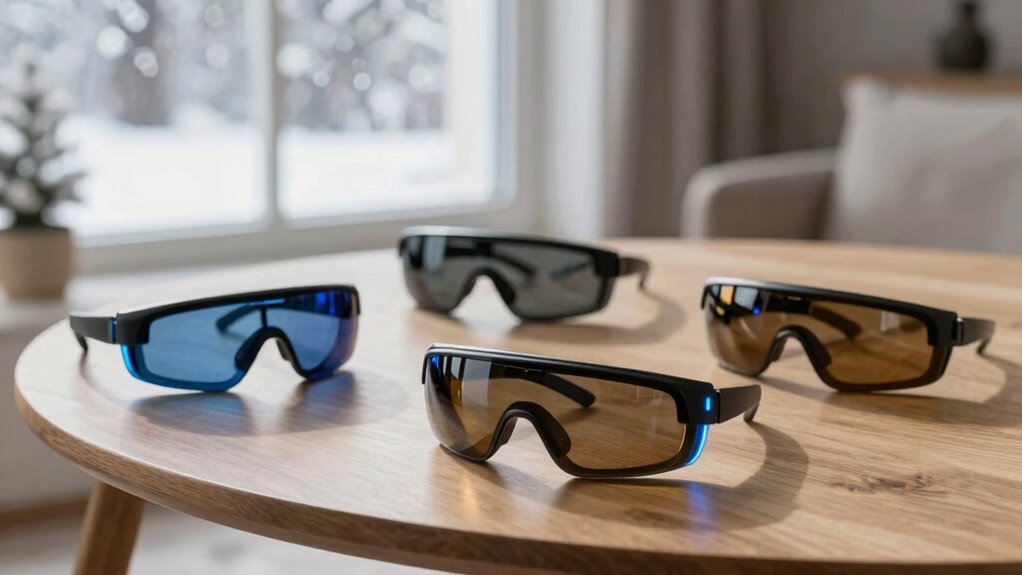
For winter light therapy glasses, Luminette 3 is my best overall pick for its established wearable design, while reTimer 3 stands out for people who want a distinct approach to daytime light exposure and AYO for buyers drawn to blue-light-focused sessions. The main tradeoffs are comfort, light color and intensity, how easily the glasses fit into daily routines, and how much product information is available for comparing similar models. Color variants such as the green and pink Luminette 3 appear to share the same core product identity, so color alone is not a reason to expect a different therapy experience. I’d compare the core features and manufacturer guidance before choosing among the less-documented portable options. Read on for the full breakdown and guidance by buyer type.

Get the latest gadgets delivered free with Prime
- Fast, free delivery on millions of items
- Prime Video, Amazon Music and more included
- Member-only deals all year
Complete the kit



Key Takeaways
- Luminette 3 is the clearest all-around choice in this lineup for shoppers seeking a recognizable wearable light therapy design.
- reTimer 3 offers a distinct alternative for buyers who want to compare another established glasses format rather than defaulting to Luminette.
- AYO is the blue-light-focused option, so its light approach and session guidance deserve closer attention if you have a particular routine in mind.
- Several entries are duplicates or color variants: the two portable blue-and-white listings repeat the same name, and the green and pink Luminette 3 listings do not establish different core functions.
- Product documentation and fit matter as much as light claims; less-documented portable glasses are harder to compare confidently on controls, wear comfort, and session planning.
| reTimer 3 Wearable Light Therapy Glasses |  | Best for Guided Scheduling | Weight: 36 grams | Light wavelength: 500 nm | Light type: UV-free, flicker-free blue-green light | VIEW ON AMAZON | See Our Full Breakdown |
| Luminette 3 Wearable Light Therapy Glasses |  | Best for Adjustable Intensity | Light intensities: 500, 1000, and 1500 lux | Weight: 1.86 ounces | Profile: 1.2 inches | VIEW ON AMAZON | See Our Full Breakdown |
| AYO Blue Light Therapy Glasses |  | Best for Full Visibility | Light type: Blue-turquoise light; red light for wind-down routine | Weight: 1.1 oz | Design: Wearable, portable frame with adjustable nosepiece | VIEW ON AMAZON | See Our Full Breakdown |
| Luminette 3 Wearable Light Therapy Glasses, Green |  | Best Colorway for Everyday Wear | Light intensities: 500, 1000, and 1500 lux | Weight: 0.42 oz | Profile thickness: 0.39 in | VIEW ON AMAZON | See Our Full Breakdown |
| GentleGlow MEINNO Wearable Light Therapy Glasses |  | Best for Timed Sessions | Weight: 2.29 oz | Light modes: Blue (480 nm) and white | Timer settings: 15, 30, and 45 minutes | VIEW ON AMAZON | See Our Full Breakdown |
| AYO Wearable Blue Light Therapy Glasses |  | Best for Glasses Wearers | Product type: Wearable light therapy glasses | Weight: 1.1 oz | Fit: Compatible with spectacles | VIEW ON AMAZON | See Our Full Breakdown |
| Portable UV-Free Light Therapy Glasses with Blue and White Light |  | Best for Timed Sessions | Weight: 1.9 oz | Light modes: Blue and white | Blue light wavelength: 480 nm | VIEW ON AMAZON | See Our Full Breakdown |
| Portable UV-Free Light Therapy Glasses with Blue and White Light |  | Best for Safety-Spec Shoppers | Weight: 1.92 oz | Light modes: Blue (480 nm) and white | Light source: LED | VIEW ON AMAZON | See Our Full Breakdown |
| MEINNO Portable Light Therapy Glasses |  | Best for Gradual Brightness | Weight: 2.29 oz | Light modes: Blue and white | Blue light wavelength: 480 nm | VIEW ON AMAZON | See Our Full Breakdown |
| Luminette 3 Wearable Light Therapy Glasses, Pink |  | Best for Intensity Control | Light type: Blue-enriched white LED | Intensity settings: 500, 1,000, and 1,500 lux | Weight: 1.86 oz | VIEW ON AMAZON | See Our Full Breakdown |
| light therapy glasses for winter | Weight | Safety certification |
|---|---|---|
| reTimer 3 Wearable Light Thera | 36 grams | — |
| Luminette 3 Wearable Light The | 1.86 ounces | IEC 62471 photobiological safety |
| AYO Blue Light Therapy Glasses | 1.1 oz | — |
| Luminette 3 Wearable Light The | 0.42 oz | — |
| GentleGlow MEINNO Wearable Lig | 2.29 oz | IEC 62471 |
| AYO Wearable Blue Light Therap | 1.1 oz | — |
| Portable UV-Free Light Therapy | 1.9 oz | IEC 62471 |
| Portable UV-Free Light Therapy | 1.92 oz | IEC 62471 |
| MEINNO Portable Light Therapy | 2.29 oz | — |
| Luminette 3 Wearable Light The | 1.86 oz | IEC 62471 photobiological safety |
More Details on Our Top Picks
reTimer 3 Wearable Light Therapy Glasses
The reTimer 3 makes the most sense for winter routines that need a schedule: its companion app offers personalized timing suggestions and connects with Apple Health and Google Health Connect. Its 500 nm blue-green light is UV-free and flicker-free, while two brightness settings give you a gentler option alongside regular intensity. Compared with the Luminette 3, which offers three stated lux levels, reTimer provides less detail about intensity but adds app guidance and health integrations. At 36 grams, it is light enough for a session at home or during a morning routine, and it fits over prescription glasses. The tradeoffs are a need for regular use and reliance on a compatible smartphone for its app features; six sessions per charge also means charging more often than some buyers may prefer.
Pros:- Personalized schedules and AI recommendations in the companion app
- Syncs with Apple Health and Google Health Connect
- Two brightness settings, including a gentler option
- Lightweight frame fits over prescription glasses
Cons:- App features require a compatible smartphone
- Up to six sessions per charge may mean frequent recharging with daily use
- Consistent use is needed for the stated benefits
Best for: Winter users who want app-guided session timing and already use an iPhone or Android phone with health tracking
Not ideal for: Buyers who want to use therapy without a smartphone or prefer a device with three clearly listed intensity levels
- Weight:36 grams
- Light wavelength:500 nm
- Light type:UV-free, flicker-free blue-green light
- Brightness levels:2: Low and Regular
- Sessions per charge:Up to 6
- Charging time:1 hour
- App compatibility:iOS and Android
- Health integrations:Apple Health and Google Health Connect
- Fit:Can be worn with prescription glasses
Our verdict“Choose the reTimer 3 if app-based scheduling and health integrations matter more to your winter routine than a wider range of stated light intensities.”
Luminette 3 Wearable Light Therapy Glasses
For winter buyers who want more control over session intensity, the Luminette 3 lists three settings: 500, 1000, and 1500 lux. That makes its adjustment range easier to compare than the two brightness levels listed for the reTimer 3, though the reTimer adds app scheduling and health integrations that Luminette does not list here. The flexible, portable frame works with regular glasses or contact lenses, so a session can fit around a workday or trip rather than requiring a dedicated lamp setup. It charges by USB-C and provides 5–10 sessions per charge. The compromise is that it still needs periodic recharging, and its stated weight of 1.86 ounces is heavier than the reTimer 3’s 36 grams. It suits buyers who value intensity choice over the extra app guidance found on reTimer.
Pros:- Three stated intensity levels from 500 to 1500 lux
- Portable frame is suited to home, work, or travel
- Works with eyeglasses or contact lenses
- USB-C charging provides 5–10 sessions per charge
Cons:- Requires recharging after 5–10 sessions
- Heavier than the reTimer 3 based on the listed weights
- No companion app guidance is specified in the provided product details
Best for: People who want three stated light intensity settings and plan to use wearable therapy at home, work, or while traveling
Not ideal for: Buyers prioritizing the lightest listed frame or app-based scheduling and health integrations
- Light intensities:500, 1000, and 1500 lux
- Weight:1.86 ounces
- Profile:1.2 inches
- Charging:USB-C
- Sessions per charge:5–10
- Compatibility:Eyeglasses and contact lenses
- Safety certification:IEC 62471 photobiological safety
Our verdict“Pick the Luminette 3 if adjustable, stated lux levels are your priority and you are comfortable recharging it every several sessions.”
AYO Blue Light Therapy Glasses
The AYO Blue Light Therapy Glasses are the pick in this group for people who want to keep their surroundings visible during a session. The product description highlights full visibility, a useful distinction from a lamp-based setup that can tie light exposure to one spot. Its 1.1-ounce frame is portable, has an adjustable nosepiece, and is designed to fit spectacle wearers. AYO also offers app guidance and describes both blue-turquoise light and red light for a wind-down routine. By comparison, the reTimer 3 provides specific health integrations and two brightness levels, while AYO’s supplied details do not state intensity settings or battery life. That leaves less concrete information for planning a winter schedule. Its app is needed for personalized guidance, so it is a weaker fit for anyone who wants a self-contained device.
Pros:- Full visibility during use
- Lightweight 1.1-ounce frame with adjustable nosepiece
- Designed to fit spectacle wearers
- App offers circadian health guidance
Cons:- Personalized guidance requires the companion app
- Provided details do not state intensity levels or sessions per charge
- Sleep and mood benefits are claims in the product description rather than independently established here
Best for: People who want a portable wearable that preserves visibility during a winter morning routine and are comfortable following app guidance
Not ideal for: Buyers who need stated intensity levels, battery-session figures, or personalized guidance without using an app
- Light type:Blue-turquoise light; red light for wind-down routine
- Weight:1.1 oz
- Design:Wearable, portable frame with adjustable nosepiece
- Visibility:Full visibility during use
- App support:AYO Circadian Health app
- Fit:Designed to fit spectacle wearers
Our verdict“Choose AYO if maintaining visibility in a wearable frame matters most and you are willing to rely on its app for guidance.”
Luminette 3 Wearable Light Therapy Glasses, Green
This green version of the Luminette 3 offers the same practical draw as the standard model: three listed intensity levels and a wearable design that works with glasses or contact lenses. The 500, 1000, and 1500 lux settings give winter users a defined range to choose from, while the included USB-C cable and stated 5–10 sessions per charge support use away from a desk. Its green finish is the clearest distinction from the standard Luminette 3 in this lineup; the supplied details do not describe a difference in light performance. Compared with the reTimer 3, it offers more stated intensity steps but lacks the listed app schedules and health integrations. The listed weight is unusually low at 0.42 oz, so buyers may want to verify that figure before comparing comfort. Regular charging remains part of ownership.
Pros:- Three stated light intensity settings
- Works with contact lenses and regular glasses
- USB-C charging and 5–10 sessions per charge
- Portable frame suited to work, exercise, or travel
Cons:- Requires regular charging
- Green color is the main stated distinction from the standard Luminette 3
- Listed weight of 0.42 oz differs sharply from the standard Luminette 3 listing
Best for: Luminette shoppers who prefer the green finish and want three stated intensity levels for flexible winter sessions
Not ideal for: Buyers seeking app-based scheduling or a product listing with consistent, clearly comparable weight details
- Light intensities:500, 1000, and 1500 lux
- Weight:0.42 oz
- Profile thickness:0.39 in
- Battery life:5–10 sessions per charge
- Charging:USB-C
- Light type:Blue-enriched white LED
- Compatibility:Contact lenses and glasses
- Color:Green
Our verdict“Choose the green Luminette 3 if you want its three-level light settings in this colorway and do not need app scheduling.”
GentleGlow MEINNO Wearable Light Therapy Glasses
The GentleGlow MEINNO is the most straightforward pick here for buyers who want a timed session without relying on a companion app. Its 15-, 30-, and 45-minute shutoff timers let you set a session length in advance, and the blue 480 nm and white light modes offer a choice of light types. The product describes its therapy as equivalent to a 10,000 lux lamp and lists UV-free output plus IEC 62471 certification. Compared with the reTimer 3, MEINNO gives more explicit timer options, while reTimer provides personalized app schedules and health syncing. MEINNO weighs 2.29 ounces, making it the heaviest of these wearable options with a stated weight. It also requires wearing glasses throughout the session, and the supplied details do not give battery life or charging information.
Pros:- Blue 480 nm and white light modes
- Three automatic shutoff timer choices
- UV-free light output
- IEC 62471 photobiological safety certification
Cons:- At 2.29 ounces, heavier than the other listed models with stated weights
- Requires wearing glasses during therapy sessions
- Provided details do not list charging time or sessions per charge
Best for: People who want simple timed sessions with a choice of blue or white light and no stated need for app guidance
Not ideal for: Buyers who prioritize a very light frame, want detailed battery information, or dislike wearing glasses during a full session
- Weight:2.29 oz
- Light modes:Blue (480 nm) and white
- Timer settings:15, 30, and 45 minutes
- Light therapy equivalent:10,000 lux lamp
- UV-free:Yes
- Safety certification:IEC 62471
Our verdict“Pick GentleGlow MEINNO if preset shutoff timers and two light modes matter more than a lighter frame or app-guided scheduling.”
AYO Wearable Blue Light Therapy Glasses
AYO’s 1.1-ounce frame is the lightest option in this group, and its over-spectacle fit lets prescription-glasses wearers keep their lenses on while moving around. That makes it a practical winter pick for someone who wants a wearable session during work or household routines instead of sitting beside a lamp. It also offers blue and red light options, while the Portable UV-Free Light Therapy Glasses with Blue and White Light stick to blue and white modes. The tradeoff is that the supplied details give no session timer, intensity settings, or charging information, so buyers have less guidance on daily use and upkeep. The app carries additional charges, too, which makes this less appealing if you want app support without an added cost. I’d choose it for fit and low weight, not for the most fully documented feature set.
Pros:- At 1.1 oz, it is lighter than the other glasses in this batch
- Fits over spectacles while maintaining visibility
- Offers both blue and red light options
- Portable for use at home, work, or on the go
Cons:- App access requires additional charges
- Provided product details do not specify timers or light intensity
- Battery and charging details are not provided
Best for: Prescription-glasses wearers who want a particularly light frame for moving through indoor routines during winter
Not ideal for: Buyers who want clearly specified session timers, intensity levels, or app access without additional charges
- Product type:Wearable light therapy glasses
- Weight:1.1 oz
- Fit:Compatible with spectacles
- Nosepiece:Adjustable
- Light options:Blue and red
- App:Available; additional charges apply
Our verdict“Choose AYO if a light frame that fits over prescription glasses matters more to you than detailed session controls or included app access.”
Portable UV-Free Light Therapy Glasses with Blue and White Light
Three preset timers—15, 30, and 45 minutes—make this pair a straightforward choice for buyers who want a defined session while reading or working through darker winter days. It offers 480 nm blue and white light, and its IEC 62471 certification and UV-free design are useful details for shoppers comparing light safety information. The MEINNO Portable Light Therapy Glasses also provide three automatic shutoff timers, but this model is lighter at 1.9 oz versus MEINNO’s 2.29 oz. Its limitation is flexibility: the preset durations cannot be adjusted to a custom session, and the product details do not state battery or charging information. I’d put it ahead of less-documented options for shoppers who value clear session lengths, while buyers who need a tailored schedule should look for more control.
Pros:- Three preset session lengths: 15, 30, and 45 minutes
- Provides blue and white light modes
- UV-free design with IEC 62471 certification
- Can be used with contact lenses or glasses
Cons:- Timer durations are limited to three presets
- Battery and charging details are not provided
Best for: Readers and desk workers who want wearable winter light sessions with clear preset durations
Not ideal for: People who need custom session lengths or want battery and charging details before choosing
- Weight:1.9 oz
- Light modes:Blue and white
- Blue light wavelength:480 nm
- Light therapy equivalence:10,000 lux
- Timer settings:15, 30, and 45 minutes
- UV-free:Yes
- Safety certification:IEC 62471
Our verdict“Pick this model if preset session timing and documented UV-free design matter more than adjustable timers or specified charging details.”
Portable UV-Free Light Therapy Glasses with Blue and White Light
This version is a sensible winter option for buyers who want the basics spelled out: UV-free LED light, blue and white modes, and IEC 62471 certification. Its 15-, 30-, and 45-minute timers with automatic shutoff provide simple session boundaries while you get on with a task. Compared with the similarly named Portable UV-Free Light Therapy Glasses (B0FT1JPTHG), this model adds listed dimensions and plastic construction, but weighs slightly more at 1.92 oz. The product description does not provide battery or charging details, so planning repeated use may take some guesswork. Its listed dimensions are also fairly substantial for a wearable item, though fit context is not supplied. I’d rank it for buyers who value a documented light source and safety information, rather than those seeking the lightest or most completely specified pair.
Pros:- UV-free LED light source
- Blue and white light modes with a 480 nm blue option
- Three timer settings with automatic shutoff
- IEC 62471 photobiological safety certification
Cons:- Battery and charging details are not provided
- At 1.92 oz, it is slightly heavier than the similar B0FT1JPTHG model
Best for: Winter desk workers who prioritize UV-free LEDs, a stated safety certification, and automatic session shutoff
Not ideal for: Travelers who need confirmed battery life and charging details or shoppers prioritizing the lightest frame
- Weight:1.92 oz
- Light modes:Blue (480 nm) and white
- Light source:LED
- Timer settings:15, 30, and 45 minutes
- UV-free:Yes
- Safety certification:IEC 62471
- Dimensions:8 x 3 x 4 inches
- Material:Plastic
Our verdict“Choose this pair if documented UV-free LED and safety details matter more than battery information or a marginally lighter design.”
MEINNO Portable Light Therapy Glasses
Gradually increasing brightness is the distinguishing feature here: it gives winter users a gentler start to a session than the product details promise for the other timer-based pairs. The glasses offer blue and white LED light, three automatic shutoff timers, and a stated equivalence to a 10,000-lux therapy lamp. Compared with the lighter Portable UV-Free Light Therapy Glasses (B0FT1JPTHG), MEINNO weighs 2.29 oz, so it is the less compelling choice for all-day portability. Its battery-powered design is stated, but battery life and charging details are missing, leaving a practical gap for regular use. It is also not water resistant, which calls for care around cooking or exercise despite those activities being listed as possible uses. I’d favor it for gradual brightness, with those portability and upkeep limits in mind.
Pros:- Brightness gradually increases
- Blue and white light modes with a 480 nm blue wavelength
- Three automatic shutoff timer settings
- Compatible with contact lenses or glasses
Cons:- Heavier than the other portable pairs in this batch at 2.29 oz
- Not water resistant
- Battery life and charging details are not provided
Best for: People who want wearable winter sessions that start with gradually increasing brightness
Not ideal for: Frequent travelers or users who expect to wear their glasses around water, sweat, or kitchen splashes
- Weight:2.29 oz
- Light modes:Blue and white
- Blue light wavelength:480 nm
- Therapy lamp equivalence:10,000 lux
- Timer settings:15, 30, and 45 minutes
- Light source:LED
- Power source:Battery powered
- Water resistance:Not water resistant
- Safety standard:IEC 62471, classified as non-hazardous
Our verdict“MEINNO suits buyers who value a gradual brightness start and can accept its heavier frame and limited battery information.”
Luminette 3 Wearable Light Therapy Glasses, Pink
Three intensity settings—500, 1,000, and 1,500 lux give the Luminette 3 Pink a more explicit light-level choice than the other glasses in this batch, whose listed controls focus on light modes or session timers. That can help buyers pick among the settings for a winter routine instead of relying on one fixed output. The flexible arms fit over prescription glasses or contact lenses, and the USB-C cable gives charging a familiar connection. A charge lasts 5–10 sessions, so frequent users may need to recharge regularly; the MEINNO and UV-free portable models do not specify a session count at all, leaving less to plan around but also less clarity. It is not the lightest option here, and its one-size fit may not suit everyone. I’d choose it for stated intensity control and charging details, accepting the recharge limit.
Pros:- Three intensity settings: 500, 1,000, and 1,500 lux
- USB-C charging cable included
- Flexible arms fit over glasses or contact lenses
- IEC 62471 photobiological safety certification
Cons:- A charge lasts 5–10 sessions
- One-size fit may not suit every wearer
- At 1.86 oz, it is heavier than the AYO glasses in this batch
Best for: Winter light-therapy users who want multiple stated intensity settings and a defined recharge connection
Not ideal for: People who need long stretches between charges or prefer a frame with a clearly adjustable size
- Light type:Blue-enriched white LED
- Intensity settings:500, 1,000, and 1,500 lux
- Weight:1.86 oz
- Profile:1.2 inches
- Charge duration:5–10 light therapy sessions
- Charging cable:USB-C
- Fit:One size; flexible arms; compatible with glasses or contact lenses
- Safety certification:IEC 62471 photobiological safety
Our verdict“Choose Luminette 3 Pink if adjustable light intensity and stated charging information outweigh the need for longer stretches between charges.”

How We Picked
I compared the ten listed products through the needs of a winter buyer: a wearable design that can fit into a daily routine, clearly described light settings, straightforward controls and session guidance, and enough product information to judge comfort and practical use. I also looked at how confidently each listing could be distinguished from the others. Duplicate portable listings and Luminette color variants do not earn separate advantages simply for appearing as separate entries.
The ranking favors clarity and usability over broad claims. Luminette 3 leads as the most recognizable all-around pick in this lineup; reTimer 3 and AYO follow as alternatives with distinct light therapy identities. Products with sparse or repeated listing details rank lower because buyers have less information to compare their light modes, wearability, and day-to-day operation. These positions reflect the available product descriptions, not independent clinical testing or a guarantee of health outcomes.
| light therapy glasses for winter | Safety certification |
|---|---|
| reTimer 3 Wearable Light Thera | — |
| Luminette 3 Wearable Light The | IEC 62471 photobiological safety |
| AYO Blue Light Therapy Glasses | — |
| Luminette 3 Wearable Light The | — |
| GentleGlow MEINNO Wearable Lig | IEC 62471 |
| AYO Wearable Blue Light Therap | — |
| Portable UV-Free Light Therapy | IEC 62471 |
| Portable UV-Free Light Therapy | IEC 62471 |
| MEINNO Portable Light Therapy | — |
| Luminette 3 Wearable Light The | IEC 62471 photobiological safety |
Factors to Consider When Choosing Light Therapy Glasses For Winter
Winter light therapy glasses are a routine choice as much as a device choice. I’d start by matching the glasses to when and where you expect to use them, then check whether the available instructions let you follow a consistent session without guesswork.
Match the light approach to your routine
Light color and intensity are not interchangeable details; they shape how a product is intended to be used. Before buying, check the maker’s stated light type, intensity information, and recommended session timing rather than inferring these from a product name. A blue-light-focused model may appeal to someone who wants that specific approach, while another buyer may prefer a product described around a different light profile. A common mistake is to assume that all wearable glasses deliver the same kind of exposure. If the listing leaves the light specifications unclear, look for the manufacturer’s instructions before treating it as a close substitute for a better-documented model. Choose the approach you can follow consistently and safely.
Think about when you can wear them
The best pair for winter is one that fits into a time of day you can repeat. Consider whether you plan to wear the glasses while eating breakfast, getting ready, or doing quiet desk work, and check whether the product guidance supports that pattern. Do not assume wearable means suitable for every activity: fit, visibility, and movement can affect whether a session feels practical. If your mornings are rushed, a complicated setup may make regular use less likely. Buyers with flexible routines can prioritize light settings or design differences more heavily. Pick a realistic session window before choosing a device.
Check fit, weight, and adjustment
Wear comfort can decide whether a device becomes part of a winter routine or stays in a drawer. Look for clear information about how the glasses sit, whether they adjust, and whether they are intended to be worn over prescription eyewear. Product photos rarely answer those questions, so consult manufacturer details or a return policy when fit is uncertain. A lighter or more compact frame may be easier to keep on during a session, but compact size alone says little about stability. Buyers who wear glasses should pay particular attention to compatibility before ordering. Do not confuse a distinctive color with a different fit or function.
Compare instructions and controls
Clear operating instructions help you repeat sessions in a predictable way. Check whether the maker explains how to start and stop a session, choose a mode, charge or power the device, and follow recommended timing. Vague listings can leave buyers guessing about settings even when the product title sounds specific. Avoid assuming that two products with similar names share the same controls or guidance. If you need a simple routine, prioritize a model with accessible instructions over a longer feature list. Keep the manufacturer’s directions as the reference for use.
Decide how much documentation you need
Some buyers are comfortable choosing from a concise listing, while others want enough detail to compare light output, session guidance, and build. With repeated product names or color variants, sparse information makes it harder to tell whether two listings differ in any meaningful way. Look for official specifications and support materials before treating separate listings as separate models. A lower-information option may still suit a buyer who values a basic portable format, but the uncertainty should be part of the decision. Pay more attention to evidence of clear design and support than to extra claims without explanation. If two entries appear identical, compare their actual specifications before choosing.
Know when to seek professional guidance
Light therapy is not a substitute for individual medical advice. People with eye conditions, a history of bipolar disorder, or medicines that affect light sensitivity should discuss use with a qualified clinician before starting. Winter low mood can have different causes, so glasses should not delay care when symptoms are persistent or severe. Follow the product’s specific usage directions instead of extending sessions or changing timing based on assumptions. A clinician can help you decide whether light therapy fits your circumstances. This matters more than choosing a particular frame or color.
Frequently Asked Questions
Are the green and pink Luminette 3 listings different models?
The names identify the same Luminette 3 product with different colors, and the available listing information does not establish a difference in core therapy features. I would choose between them based on color preference, availability, and whether the seller provides the same model specifications and support. Check the exact package contents and manufacturer details before ordering. A color change alone should not be treated as a different light setting or treatment approach.
How should I choose between Luminette 3, reTimer 3, and AYO?
Start with the light approach and usage instructions each manufacturer describes, then compare fit and how naturally the device could fit your routine. Luminette 3 is my all-around pick in this lineup, reTimer 3 is the main alternative with a distinct wearable design, and AYO is the blue-light-focused choice. Those differences do not establish that one will work better for every person. Review the specific session guidance and consult a clinician if health factors affect your decision.
Can I wear light therapy glasses over my regular glasses?
Compatibility depends on the frame design, so do not assume every wearable light device fits over prescription glasses. Check the maker’s fit guidance and dimensions, and look for user instructions that address eyewear compatibility. If that information is missing, contact the manufacturer or choose a seller with a clear return policy. A comfortable fit matters because pressure or slipping can make consistent sessions difficult.
What should I do when two listings have the same product name?
Compare the model number, included accessories, light specifications, control options, and warranty or support details. The two portable blue-and-white entries in this roundup have the same displayed name, so the names alone do not show a meaningful distinction. Do not infer that one has stronger output or extra features without supporting specifications. If the details still match, treat them as duplicate listings and decide using seller and support information.
Should light therapy glasses replace professional care for winter mood changes?
No. Glasses are a self-care device, not a diagnosis or a replacement for professional support. If low mood is persistent, severe, or affecting daily life, contact a qualified health professional rather than relying on a device alone. Ask for guidance before use if you have an eye condition, bipolar disorder, or take medication that increases light sensitivity. Follow the device instructions and discuss any concerning effects with a clinician.
Conclusion
For the best overall fit, I’d start with Luminette 3; it is the clearest all-around choice among these entries. For a distinct alternative, consider reTimer 3, while AYO suits buyers specifically seeking a blue-light-focused option. The lineup does not establish a clear best-value or best-premium winner because several listings are duplicates or color variants and provide limited grounds for comparison. For beginners, I’d favor whichever established model has the clearest instructions, fit details, and support rather than whichever listing makes the broadest claims. For buyers focused on portability or a particular color, compare the exact specifications and seller information before deciding.
Halloween Picks
halloween
As an affiliate, we earn on qualifying purchases.