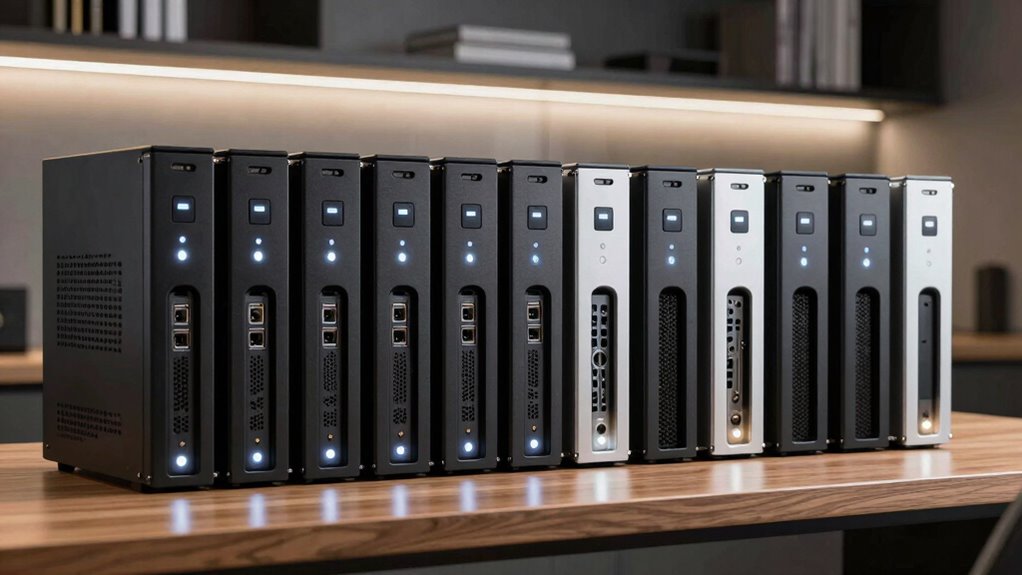

Choosing a raid enclosure for media storage involves balancing capacity, performance, and ease of setup. The Yottamaster 5 Bay RAID Hard Drive Enclosure stands out as the overall best for its high capacity and versatile RAID options. For those seeking a budget-friendly yet reliable solution, the ORICO 5 Bay RAID External Hard Drive Enclosure offers impressive storage at a competitive price. If premium features like hardware RAID management matter most, the QNAP TR-004 4-Bay USB-C DAS delivers top-tier performance. These options highlight the main tradeoffs: capacity versus cost, ease of use versus advanced features. Continue reading to see a detailed breakdown of these and other top contenders.

Get the latest gadgets delivered free — and shop member deals
- Fast, free delivery on millions of items
- Access to Prime Big Deal Days deals on October 6–7
- Prime Video, Amazon Music and more included
Complete the kit



Key Takeaways
- High-capacity enclosures like the Yottamaster excel for large media libraries, but they come at a higher cost.
- Enclosures with hardware RAID support, such as the QNAP TR-004, offer more reliable RAID management and better performance for demanding workflows.
- Ease of installation and maintenance varies widely; models with tool-free design reduce setup time significantly.
- Cooling features like built-in fans are critical for heavy-use media storage to prevent overheating and prolong drive lifespan.
- Budget options can deliver solid performance but may lack advanced features like hardware RAID or extensive build quality.
| Yottamaster 5 Bay RAID Hard Drive Enclosure (FS5RU3) |  | Best Overall | Bays: 5 | Maximum Capacity: 120TB (5x24TB) | RAID Modes: RAID 0/1/5/10, JBOD, CLONE, Normal | VIEW ON AMAZON | See Our Full Breakdown |
| ORICO 5 Bay RAID External Hard Drive Enclosure |  | Best for 24/7 Media Servers | Bays: 5 | Maximum Capacity: 110TB | RAID Modes: 0, 1, 3, 5, 10, JBOD, Clone, Clear | VIEW ON AMAZON | See Our Full Breakdown |
| TERRAMASTER D2-320 USB RAID Enclosure 2-Bay |  | Best for Speed | Bays: 2 | Interface: USB 3.2 Gen2 (10Gbps) | Maximum Drive Capacity: 22TB per drive (44TB total) | VIEW ON AMAZON | See Our Full Breakdown |
| ORICO 5-Bay RAID HDD Enclosure |  | Best Value 5-Bay | Bays: 5 | Maximum Capacity: 110TB | RAID Modes: 0, 1, 3, 5, 10, JBOD, CLONE, CLEAR | VIEW ON AMAZON | See Our Full Breakdown |
| CENMATE Aluminum 2 Bay Hard Drive RAID Enclosure |  | Best Budget Pick for Beginners | Bays: 2 | Maximum Capacity: 40TB (2x20TB) | RAID Modes: RAID 0, RAID 1, Normal, JBOD | VIEW ON AMAZON | See Our Full Breakdown |
| MAIWO 4 Bay HDD RAID Enclosure for 3.5″ SATA Drives with Cooling Fan and USB-C/USB-A 3.0 |  | Best Overall for Flexibility and Capacity | RAID support: Normal, 0, 3, 5, 10, Clone, JBOD | Transfer speed: up to 5Gbps | Drive capacity: up to 96TB | VIEW ON AMAZON | See Our Full Breakdown |
| QNAP TR-004 4-Bay USB Type-C Direct Attached Storage (DAS) with Hardware RAID |  | Best for Cross-Platform Compatibility and Security | Number of Bays: 4 | Interface: USB Type-C | Supported OS: Windows, macOS, Linux | VIEW ON AMAZON | See Our Full Breakdown |
| ORICO 2.5-inch All-Flash Enclosure, 4 Bay RAID Storage with USB 3.2 Gen 2, Supports Up to 40TB SSD/HDD |  | Best for High-Speed Portable Media Editing | Hardware Interface: USB 3.2 Gen 2×2 | Memory Storage Capacity: 32 TB | Supported Devices: Desktop, Laptop, Smartphone, Tablet | VIEW ON AMAZON | See Our Full Breakdown |
| Dual Bay RAID SSD Enclosure with Clone Mode, RAID 0/1, JBOD, and 20Gbps Transfer Speed |  | Best for High-Speed Backup and Clone Operations | Hardware Interface: PCI Express 3.0 | Memory Storage Capacity: 16 TB | Supported Devices: M.2 2280 NVMe SSD | VIEW ON AMAZON | See Our Full Breakdown |
| MAIWO 2 Bay SATA RAID Enclosure for 3.5″ HDD/SSD |  | Best Budget-Friendly Dual Bay RAID Solution | Hardware Interface: USB Type C | Memory Storage Capacity: up to 60 TB | Supported Devices: Desktop, Gaming Console, Laptop, Tablet | VIEW ON AMAZON | See Our Full Breakdown |
| raid enclosure for media storage | Interface | Bays | RAID Modes | Drive Support |
|---|---|---|---|---|
| Yottamaster 5 Bay RAID Hard Dr | USB 3.0 Type-B (5Gbps) | 5 | RAID 0/1/5/10, JBOD, CLONE, Normal | 2.5" and 3.5" SATA HDD/SSD |
| ORICO 5 Bay RAID External Hard | USB 3.0 | 5 | 0, 1, 3, 5, 10, JBOD, Clone, Clear | 2.5" and 3.5" SATA HDDs and SSDs |
| TERRAMASTER D2-320 USB RAID En | USB 3.2 Gen2 (10Gbps) | 2 | RAID 0, RAID 1, JBOD, SINGLE | 2.5" and 3.5" SATA HDD/SSD |
| ORICO 5-Bay RAID HDD Enclosure | USB 3.0 (5Gbps) | 5 | 0, 1, 3, 5, 10, JBOD, CLONE, CLEAR | 3.5" SATA HDDs |
| CENMATE Aluminum 2 Bay Hard Dr | USB 3.0 (5Gbps), USB-A and USB-C cables included | 2 | RAID 0, RAID 1, Normal, JBOD | 2.5" and 3.5" SATA HDD/SSD |
| MAIWO 4 Bay HDD RAID Enclosure | — | — | — | — |
| QNAP TR-004 4-Bay USB Type-C D | USB Type-C | — | — | — |
| ORICO 2.5-inch All-Flash Enclo | — | — | — | — |
| Dual Bay RAID SSD Enclosure wi | — | — | — | — |
| MAIWO 2 Bay SATA RAID Enclosur | — | — | — | — |
More Details on Our Top Picks
Yottamaster 5 Bay RAID Hard Drive Enclosure (FS5RU3)
The Yottamaster FS5RU3 earns the top spot because it balances massive capacity with a hardware RAID chip that handles RAID 0/1/5/10, JBOD, and CLONE without leaning on your computer’s CPU. For a media storage workflow, RAID 5 support is the differentiator: compared with the CENMATE 2-bay, which only offers RAID 0/1 mirroring, this enclosure survives a single drive failure while keeping most of your raw capacity — a real advantage when 120TB of footage is at stake. The removable aluminum trays make swapping drives painless, and the 150W internal power supply plus 80mm fan keep five spinning drives stable during long editing sessions. The tradeoff is USB 3.0: at 5Gbps, it lags well behind the TERRAMASTER D2-320’s 10Gbps link, so editors scrubbing 4K multicam timelines may feel the ceiling.
Pros:- Hardware RAID 5 support protects large media libraries from a single drive failure
- Up to 120TB capacity across five drives with removable tool trays
- 150W power supply and aluminum body with 80mm fan sustain long sessions
- Intelligent 10-minute sleep mode can be adjusted or disabled
Cons:- USB 3.0 caps real-world throughput well below 10Gbps alternatives
- Only 7 reviews so far, so long-term reliability is less proven than established rivals
Best for: Video editors and studios who need 100TB+ of fault-tolerant direct-attached storage for archives and project files
Not ideal for: Anyone working with high-bitrate 4K/8K footage that demands fast scrubbing — the 5Gbps USB 3.0 pipe becomes the bottleneck
- Bays:5
- Maximum Capacity:120TB (5x24TB)
- RAID Modes:RAID 0/1/5/10, JBOD, CLONE, Normal
- Interface:USB 3.0 Type-B (5Gbps)
- Drive Support:2.5″ and 3.5″ SATA HDD/SSD
- Power Supply:150W internal
- Cooling:Aluminum chassis, 80mm low-noise fan
- Compatibility:Windows, Linux, macOS
Our verdict“The most sensible pick for content creators who need huge, redundant media storage and can live with 5Gbps transfer speeds.”
ORICO 5 Bay RAID External Hard Drive Enclosure
Where the Yottamaster FS5RU3 targets the editing desk, this ORICO 5-bay is built for always-on duty. The honeycomb vent design paired with a silent 80mm fan is oriented toward continuous operation, which matters if your enclosure lives next to a media server feeding Plex or a surveillance recording rig rather than being powered off between edits. RAID 3 support is a rarity here too — compared with the QNAP TR-004, which stops at 4 bays, this gives you a fifth drive’s worth of capacity headroom (110TB max) for growing libraries. The honest tradeoff is the same USB 3.0 ceiling as its rivals: around 230MB/s means initial library migrations of tens of terabytes will take days, and configuring eight RAID modes demands some comfort with storage concepts out of the box.
Pros:- Cooling design rated for continuous 24/7 operation
- 110TB maximum capacity across five drives
- Rare RAID 3 mode alongside 0/1/5/10, JBOD, Clone and Clear
- Built-in 150W power supply avoids a bulky external brick
Cons:- USB 3.0 limits throughput to roughly 230MB/s
- RAID configuration assumes prior technical knowledge
- Large tower footprint is not desk- or travel-friendly
Best for: Home media server and Plex owners who need a large, always-on RAID array attached to a dedicated machine
Not ideal for: Anyone migrating huge existing libraries on a deadline — 230MB/s over USB 3.0 makes multi-terabyte transfers painfully slow
- Bays:5
- Maximum Capacity:110TB
- RAID Modes:0, 1, 3, 5, 10, JBOD, Clone, Clear
- Interface:USB 3.0
- Transfer Speed:Up to 230MB/s
- Power Supply:150W built-in
- Cooling:80mm silent fan with honeycomb vents
- Drive Support:2.5″ and 3.5″ SATA HDDs and SSDs
Our verdict“A strong fit for always-on media serving at scale, provided slow transfers during initial setup are acceptable.”
TERRAMASTER D2-320 USB RAID Enclosure 2-Bay
The D2-320 is the only enclosure in this lineup with USB 3.2 Gen2 at 10Gbps, and that changes what it’s good for. Loading SSDs pushes past 1GB/s in RAID 0, which means scrubbing ProRes files or offloading camera cards happens at speeds the Yottamaster FS5RU3 and both ORICO 5-bays simply cannot match. Its push-lock tool-free trays are also the friendliest drive installation here — no screwdriver, no tray screws, which editors who rotate project drives weekly will appreciate. The obvious cost of that speed is scale: two bays cap you at 44TB and RAID options stop at 0, 1, JBOD, and SINGLE. Compared with the MAIWO 2-bay, you’re paying a premium for the faster interface, and if you only run spinning HDDs, much of that bandwidth sits unused.
Pros:- 10Gbps USB 3.2 Gen2 doubles the ceiling of every USB 3.0 rival here
- Over 1GB/s achievable with SSDs in RAID 0
- Push-lock tool-free trays make drive swaps effortless
- Temperature-controlled fan scales cooling to workload
Cons:- Only two bays and no parity RAID mode
- Premium price per bay compared with budget 2-bay options
- Speed advantage largely wasted on mechanical HDDs
Best for: Editors and photographers who prioritize fast active-project storage and quick offloads over raw archive capacity
Not ideal for: Archivists sitting on 50TB+ of footage — two bays and no RAID 5 make this the wrong tool for bulk redundant storage
- Bays:2
- Interface:USB 3.2 Gen2 (10Gbps)
- Maximum Drive Capacity:22TB per drive (44TB total)
- RAID Modes:RAID 0, RAID 1, JBOD, SINGLE
- Drive Support:2.5″ and 3.5″ SATA HDD/SSD
- Speed:521MB/s (HDD RAID 0), 1075MB/s (SSD RAID 0)
- Installation:Tool-free push-lock trays
- Cooling:Intelligent temperature-controlled fan
Our verdict“The clear choice when your active editing media needs to move fast, as long as your archive lives elsewhere.”
ORICO 5-Bay RAID HDD Enclosure
For buyers who want the five-bay, multi-RAID format without paying flagship prices, this ORICO unit undercuts the Yottamaster FS5RU3 while matching its core pitch: 110TB across five drives, RAID 0/1/3/5/10 plus JBOD, CLONE, and CLEAR, an aluminum body, a 150W supply, and active cooling. What you give up is polish. There’s no bundled software or thorough setup documentation, so first-time RAID builders are on their own in a way they wouldn’t be with the TERRAMASTER — and since switching RAID modes wipes the array, that missing guidance carries real risk of lost media. The USB 3.0 link lands around 235MB/s, a hair faster than the other ORICO 5-bay but still half the D2-320’s ceiling. This pick makes the most sense for budget-conscious users who already understand RAID and just need capacity per dollar.
Pros:- Five bays and 110TB capacity at a lower price than comparable 5-bay rivals
- Full RAID menu including parity-based RAID 3 and 5
- Aluminum chassis with cooling fan for heat management
- 150W power supply sized for five spinning drives
Cons:- No included software or detailed setup instructions
- Changing RAID modes erases data with little hand-holding
- USB 3.0 throughput is modest for large media transfers
Best for: Savvy DIY users who want maximum terabytes per dollar and already know how to configure RAID safely
Not ideal for: First-time RAID buyers — the absent documentation plus destructive mode-switching is a risky combination for beginners
- Bays:5
- Maximum Capacity:110TB
- RAID Modes:0, 1, 3, 5, 10, JBOD, CLONE, CLEAR
- Interface:USB 3.0 (5Gbps)
- Transfer Speed:Up to 235MB/s
- Drive Support:3.5″ SATA HDDs
- Power Supply:150W
- Build:Aluminum enclosure with cooling fan
Our verdict“The cheapest route to redundant five-bay media storage — but bring your own RAID knowledge.”
CENMATE Aluminum 2 Bay Hard Drive RAID Enclosure
The CENMATE is the entry point of this roundup: two bays, four simple RAID modes (0, 1, Normal, JBOD), and a price that leaves room in the budget for the drives themselves. Its tool-free design and plug-and-play setup make it the least intimidating option here — far friendlier for a first-time RAID user than the undocumented ORICO 5-bay, and both USB-A and USB-C cables come in the box, so it hooks up to nearly anything. Set RAID 1 and you have a mirrored pair protecting family photos and a modest media library. The compromises are real, though: the fan runs 40–50 decibels, loud enough to notice in a quiet room, macOS users lose RAID software support, and capacity tops out at 40TB — a quarter of what the Yottamaster offers. The JMS561 chipset is also dated, so this is a backup box, not an editing scratch disk.
Pros:- Lowest-cost entry into RAID 1 mirrored backup in this lineup
- Tool-free installation with both USB-A and USB-C cables included
- Four RAID modes cover the basics for home media protection
- Aluminum body with active fan cooling
Cons:- Fan noise of 40–50dB is louder than every rival here
- No macOS RAID software support
- 40TB ceiling and 5Gbps JMS561 chipset limit growth and speed
Best for: Home users building their first mirrored backup for photos, music, and a modest video library on a tight budget
Not ideal for: Quiet studios or bedrooms — the 40–50dB fan noise is intrusive — and anyone needing more than 40TB or fast edit-grade throughput
- Bays:2
- Maximum Capacity:40TB (2x20TB)
- RAID Modes:RAID 0, RAID 1, Normal, JBOD
- Interface:USB 3.0 (5Gbps), USB-A and USB-C cables included
- Drive Support:2.5″ and 3.5″ SATA HDD/SSD
- Controller:JMS561 chipset
- Cooling:2-inch fan (40–50dB), aluminum alloy body
- Compatibility:Windows 7+, Mac 9.1+, Linux
- Warranty:1 year
Our verdict“A sensible starter enclosure for simple mirrored backups, provided fan noise and modest capacity don’t bother you.”
MAIWO 4 Bay HDD RAID Enclosure for 3.5″ SATA Drives with Cooling Fan and USB-C/USB-A 3.0
This MAIWO enclosure stands out for its broad support of RAID configurations, making it a versatile choice for demanding media storage needs. Unlike the simpler MAIWO 2 Bay model, this unit offers RAID 0, 1, 3, 5, 10, Clone, and JBOD, providing tailored security and performance options. Its high capacity—up to 96TB—appeals to users managing large media libraries or backups. Dual cooling fans and adjustable controls help maintain optimal drive temperatures, essential for long-term reliability. The main tradeoff is its bulkier design, which might deter those seeking portable solutions. Compared to the Yottamaster 5 Bay, it offers more RAID flexibility but at the expense of size and portability.
Pros:- Supports a wide range of RAID configurations for tailored data management
- High storage capacity up to 96TB for large media libraries
- Fast transfer speeds up to 5Gbps via USB-C and USB-A interfaces
- Effective cooling with dual adjustable fans
Cons:- Requires some technical knowledge to configure RAID settings properly
- Bulkier design reduces portability
Best for: Media professionals or small studios needing extensive, customizable storage with reliable cooling.
Not ideal for: Frequent travelers or those with limited space, as its size and weight make it less portable.
- RAID support:Normal, 0, 3, 5, 10, Clone, JBOD
- Transfer speed:up to 5Gbps
- Drive capacity:up to 96TB
- Number of bays:4
- Drive size compatibility:3.5″ SATA
- Cooling fans:2 built-in, switch-controlled
Our verdict“This enclosure is ideal for users needing flexible, high-capacity storage with efficient cooling, willing to manage its size.”
QNAP TR-004 4-Bay USB Type-C Direct Attached Storage (DAS) with Hardware RAID
The QNAP TR-004 excels for users needing a simple external RAID solution compatible across Windows, macOS, and Linux. Unlike the MAIWO 4 Bay, it lacks advanced cooling features but compensates with lockable bays and straightforward hardware RAID support, making it a secure choice for sensitive data. Its support for RAID 0, 1, 5, JBOD, and individual disks provides flexible protection, though it won’t work as a NAS within QNAP’s network ecosystem. Compared to the Yottamaster 5 Bay, it offers more security features but less raw capacity. It’s best suited for professionals who prioritize cross-platform compatibility and physical security over extensive RAID options.
Pros:- Supports multiple hardware RAID levels for flexible data protection
- Compatibility with Windows, macOS, and Linux
- Lockable bays enhance physical security
- Plug-and-play with easy setup
Cons:- Limited to external RAID, cannot serve as a NAS
- No advanced cooling system, potentially leading to higher internal temperatures
Best for: IT professionals or content creators needing robust, portable RAID storage with security features.
Not ideal for: Home users seeking a plug-and-play solution or those needing NAS functionality.
- Number of Bays:4
- Interface:USB Type-C
- Supported OS:Windows, macOS, Linux
- RAID Support:RAID 0, 1, 5, JBOD, individual
- Includes:USB Type-C to Type-A cable
- Lockable Bays:Yes
Our verdict“This device suits users seeking secure, cross-platform external RAID storage with straightforward operation.”
ORICO 2.5-inch All-Flash Enclosure, 4 Bay RAID Storage with USB 3.2 Gen 2, Supports Up to 40TB SSD/HDD
The ORICO 2.5-inch enclosure is designed for speed and portability, supporting up to 40TB of SSD or HDD storage. Its USB 3.2 Gen 2 interface delivers transfer rates of 10 Gbps, making it ideal for video editors or photographers needing rapid access to large files. Unlike larger 3.5-inch enclosures like the MAIWO 4 Bay, this compact unit is more portable but limited to 2.5-inch drives, which may restrict total capacity for some users. It offers flexible RAID modes, but you’ll need to purchase drives separately. This makes it perfect for mobile professionals who prioritize speed and convenience over raw capacity.
Pros:- High-speed data transfer up to 10Gbps with USB 3.2 Gen 2
- Supports up to 40TB total storage capacity
- Portable, shock-resistant design
- Flexible RAID options
Cons:- Limited to 2.5-inch drives, restricting maximum capacity
- No included drives, requiring separate purchase
Best for: On-the-go media professionals who need fast, portable storage for editing workflows.
Not ideal for: Users with extensive media libraries requiring more than 40TB or those preferring larger drives for cost efficiency.
- Hardware Interface:USB 3.2 Gen 2×2
- Memory Storage Capacity:32 TB
- Supported Devices:Desktop, Laptop, Smartphone, Tablet
- Hard Disk Form Factor:2.5 inches
- Supported Devices Quantity:4
- Data Transfer Rate:10 Gbps
Our verdict“This enclosure is best for mobile professionals needing fast, reliable RAID storage for editing and media workflows.”
Dual Bay RAID SSD Enclosure with Clone Mode, RAID 0/1, JBOD, and 20Gbps Transfer Speed
This SSD enclosure is designed specifically for professionals needing rapid data handling, supporting NVMe M.2 SSDs up to 16TB. Its support for RAID 0, 1, JBOD, and clone mode offers versatile backup options. The tool-free setup simplifies drive swapping, while the aluminum casing helps dissipate heat during intensive tasks. Compared to the larger MAIWO or Yottamaster enclosures, this unit is more compact and geared towards high-speed SSD workflows. Its main limitation is that it only supports two drives, which might not suit those with larger storage demands. Nevertheless, it excels for quick backups, high-speed cloning, and rapid file transfers.
Pros:- Supports multiple RAID modes including RAID 0, 1, JBOD, and clone
- High data transfer speed of 20Gbps for large file transfers
- Tool-free design for quick installation
- Durable aluminum case for effective heat dissipation
Cons:- Limited to two NVMe M.2 SSDs, restricting total capacity
- Requires compatible NVMe SSDs for optimal performance
Best for: Media editors or IT professionals needing rapid SSD backups and clone operations in a portable form factor.
Not ideal for: Users with larger storage pools or those requiring multi-drive RAID configurations beyond two drives.
- Hardware Interface:PCI Express 3.0
- Memory Storage Capacity:16 TB
- Supported Devices:M.2 2280 NVMe SSD
- Supported Devices Quantity:2
- Data Transfer Rate:20 Gbps
- Enclosure Material:Metal
Our verdict“Ideal for professionals needing rapid SSD backups and cloning in a lightweight, high-performance enclosure.”
MAIWO 2 Bay SATA RAID Enclosure for 3.5″ HDD/SSD
The MAIWO 2 Bay SATA enclosure offers a practical option for users needing basic RAID configurations like RAID 0, 1, or JBOD. Its simple design and USB 3.0 interface support transfer speeds up to 5Gbps, comparable to other budget models like the CENMATE enclosure. While it provides solid value for everyday storage, it falls short on advanced features like active cooling or larger capacity options. Its external power supply adds some setup complexity but ensures stable operation. This product makes the most sense for users seeking affordable RAID management for smaller media collections or backups, but those with larger or more demanding workflows should consider higher-end options.
Pros:- Supports multiple RAID modes for flexible storage management
- Fast data transfer up to 5Gbps
- Durable aluminum and plastic enclosure
- Simple, tool-free drive installation
Cons:- Limited to 2 drives, not suitable for larger storage pools
- External power supply adds setup complexity
Best for: Budget-conscious users needing reliable RAID storage for small media libraries or backups.
Not ideal for: Power users or professionals handling large files or requiring advanced cooling and high capacity.
- Hardware Interface:USB Type C
- Memory Storage Capacity:up to 60 TB
- Supported Devices:Desktop, Gaming Console, Laptop, Tablet
- Supported Devices Quantity:2
- Data Transfer Rate:5 Gbps
- Enclosure Material:Aluminum, Plastic
Our verdict“This enclosure is a good choice for budget-minded users with small media or backup needs who value simplicity.”

How We Picked
Products were selected based on their capacity, RAID support, build quality, ease of setup, and value. Priority was given to models that balance performance with user-friendly features, ensuring they cater to a range of media storage needs. We favored enclosures with reliable cooling, flexible RAID options, and good expandability. The ranking reflects a combination of these factors, emphasizing those that offer the best overall balance for media professionals and enthusiasts alike.| raid enclosure for media storage | Interface |
|---|---|
| Yottamaster 5 Bay RAID Hard Dr | USB 3.0 Type-B (5Gbps) |
| ORICO 5 Bay RAID External Hard | USB 3.0 |
| TERRAMASTER D2-320 USB RAID En | USB 3.2 Gen2 (10Gbps) |
| ORICO 5-Bay RAID HDD Enclosure | USB 3.0 (5Gbps) |
| CENMATE Aluminum 2 Bay Hard Dr | USB 3.0 (5Gbps), USB-A and USB-C cables included |
| MAIWO 4 Bay HDD RAID Enclosure | — |
| QNAP TR-004 4-Bay USB Type-C D | USB Type-C |
| ORICO 2.5-inch All-Flash Enclo | — |
| Dual Bay RAID SSD Enclosure wi | — |
| MAIWO 2 Bay SATA RAID Enclosur | — |
Factors to Consider When Choosing Raid Enclosure For Media Storage
When choosing a raid enclosure for media storage, several factors influence long-term satisfaction. Capacity determines how much media you can store without upgrades, but larger enclosures often mean higher costs. Compatibility with your drives and RAID levels affects how flexible the system will be for future needs. Ease of installation, maintenance, and management features play a significant role, especially for users without technical expertise. Cooling and build quality impact reliability, particularly for extended use or high workloads. Finally, consider your budget against the features you prioritize most, balancing upfront costs with potential long-term benefits.Capacity and Scalability
Media storage needs vary widely, from small video projects to extensive libraries. Enclosures with higher maximum capacities, like 120TB or more, are ideal for large collections but come with a higher price tag. Some models support multiple drives with RAID configurations that can expand capacity or improve redundancy. Think about your current needs and future growth—selecting an enclosure that can scale up prevents early obsolescence and additional costs.
RAID Support and Management
Hardware RAID support offers better performance and more reliable data protection compared to software RAID, especially for media workflows. Enclosures with dedicated RAID controllers often include management features like monitoring and automatic rebuilds, reducing the risk of data loss. However, they tend to cost more and may have a steeper learning curve. For casual users, JBOD or simpler configurations might suffice, but professionals should prioritize hardware RAID for peace of mind and efficiency.
Ease of Installation and Maintenance
Models with tool-free drive bays significantly reduce the complexity of installing or replacing drives, saving time and frustration. Clear labeling, accessible ports, and straightforward setup procedures also matter, especially for users who intend to change drives regularly. Consider whether the enclosure supports hot-swapping if you need to replace drives without shutting down. Maintenance features like firmware updates and health monitoring can prolong the lifespan of your media storage setup.
Cooling and Build Quality
Overheating can severely impact drive longevity, making cooling features like built-in fans or heat sinks essential for high-usage environments. Aluminum enclosures often offer better heat dissipation than plastic ones. A sturdy build quality ensures the enclosure withstands regular use and transport, which is important if you move your setup frequently. Investing in a well-ventilated, durable enclosure minimizes downtime and preserves your media collection.
Budget and Long-Term Value
While budget options can provide decent storage, compromising on features like RAID support or cooling might lead to higher costs down the line due to drive failures or data loss. High-quality enclosures with advanced features tend to last longer and require less maintenance. Consider the total cost of ownership, including potential future upgrades, before settling on a model. Sometimes, paying more upfront results in better performance, reliability, and peace of mind over time.
Frequently Asked Questions
Can I use a RAID enclosure with different brands of drives?
Yes, most RAID enclosures support drives from various brands as long as they meet the drive specifications (such as SATA or NVMe). However, for optimal compatibility and performance, using drives of the same brand and model is recommended, especially within RAID configurations. Mixing different drives can sometimes cause issues with rebuild times or stability, so checking the enclosure’s compatibility list and manufacturer recommendations is advisable.
Is hardware RAID worth the extra cost for media storage?
Hardware RAID typically provides better performance, more reliable management, and easier recovery options compared to software RAID. For media professionals working with large files or requiring fast access, hardware RAID makes a significant difference. However, for casual users or small-scale setups, software RAID or JBOD may suffice, saving money while still offering adequate performance. The choice depends on your workload demands and budget.
How important is cooling in a media RAID enclosure?
Cooling is vital, especially for prolonged use or heavy workloads. Drives generate heat, which can lead to failures or data corruption if not properly managed. Enclosures with built-in fans or heat-dissipating materials help maintain optimal operating temperatures, extending drive life. Neglecting cooling can result in frequent drive replacements and increased downtime, making it a key factor in choosing a reliable media storage solution.
Can I expand my storage later with the same enclosure?
Many enclosures support additional drives or larger capacities through expansion bays or compatible drives. However, some models are limited in number or capacity, so planning ahead is crucial. Check whether the enclosure allows for hot-swapping or easy drive replacements, which simplifies future upgrades. If future expansion is a priority, selecting a model with modular design and high scalability is a wise choice.
What is the difference between JBOD and RAID modes in media enclosures?
JBOD (Just a Bunch Of Disks) combines drives without redundancy, offering maximum capacity but no data protection. RAID modes like 1, 5, or 10 add redundancy, protecting against drive failure at the cost of some storage efficiency. For media storage, RAID can improve performance and safeguard your library, but it also introduces complexity. Understanding your priorities—whether capacity, speed, or data security—helps determine the best mode for your setup.
Conclusion
For media creators with extensive libraries and high-performance needs, the Yottamaster 5 Bay RAID Enclosure offers unmatched capacity and flexible RAID options, making it the ideal best overall choice. Budget-conscious users will find the ORICO 5 Bay RAID Enclosure provides excellent value without sacrificing essential features. Professionals seeking premium features and top-tier reliability should consider the QNAP TR-004 for its advanced hardware RAID support. Beginners or those prioritizing simplicity might prefer enclosures with tool-free drives and straightforward management. Ultimately, your choice depends on your storage demands, technical comfort, and budget.
Fall Picks
fall essentials
As an affiliate, we earn on qualifying purchases.