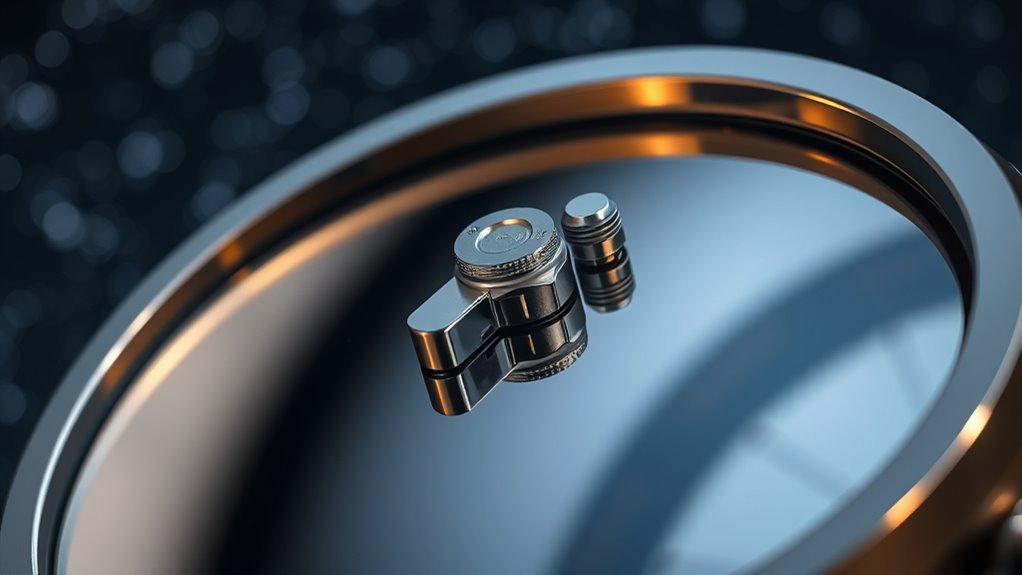

Choosing the right telescope collimation tools is essential for maintaining optimal image quality and focus. The best options range from simple sight tubes to advanced laser collimators, each suited to different skill levels and telescope types. The Alstar Red Laser Collimator stands out for its reliability and precision, making it ideal for experienced users, while the Celestron Cheshire offers simplicity for beginners. Tradeoffs often involve balancing ease of use against accuracy and cost. Keep reading to see a detailed comparison of the top tools to help you make an informed choice.
Key Takeaways
- Laser collimators generally provide faster, more precise alignment than traditional sight tube or Cheshire tools.
- Quality build and ease of adjustment are critical for consistent collimation results, especially for beginners.
- Higher-priced tools tend to offer better durability and more reliable calibration features, justifying the investment for serious astronomers.
- Combining a sight tube with a laser collimator can improve accuracy across different telescope sizes and types.
- Many affordable options work well for casual use, but professional-grade tools are necessary for high-precision astrophotography.


More Details on Our Top Picks
Alstar 1.25-Inch Metal Collimating Cheshire Eyepiece for Newtonian Reflector Telescopes
This Alstar Cheshire stands out for its combination of accuracy and durability, making it ideal for those who prefer visual collimation methods over laser. Its 45-degree plate and crosshair facilitate straightforward alignment, especially compared to the SVBONY SV197, which offers fine crosshairs but lacks the physical sighting features. While it requires some familiarity to use effectively, it offers reliable results without batteries or electronics, ensuring consistent performance. The main tradeoff is that it’s less suited for quick, on-the-fly adjustments than laser models like the Alstar Red Laser Collimator, which provides rapid setup at the expense of needing alignment calibration. This pick makes the most sense for amateur astronomers seeking precise, manual collimation with durable tools.
Pros:- Provides precise and easy telescope collimation
- Durable aluminum construction resists wear
- Compatible with standard 1.25-inch focusers
Cons:- May require some experience to use effectively
- No laser feature included, limiting speed
Best for: Intermediate to experienced visual astronomers who prioritize mechanical precision over electronic aids
Not ideal for: Beginners or those seeking quick, effortless collimation without learning manual techniques
- Material:Aluminum alloy
- Focal Size:1.25 inches
- Type:Cheshire eyepiece
- Compatibility:Newtonian and Schmidt-Cassegrain reflector telescopes
- Features:45-degree plate, crosshair for centering
Our verdict“This Cheshire is best suited for users who value manual, high-precision collimation and durability over speed or automation.”
Alstar Red Laser Collimator 1.25 inch for Newtonian Telescopes with 2 inch Adapter
This Alstar Laser Collimator excels in delivering fast, accurate collimation with the convenience of laser guidance, making it a better choice than the SVBONY Red Laser Collimator for those who need speed and ease. Its adjustable brightness and sturdy metal body allow for flexible use across various lighting conditions, aligning well with the needs of both beginners learning the basics and seasoned users who want quick, reliable setup. Compared with the SVBONY SV197 Cheshire, which requires manual adjustments and experience, the laser offers instant visual confirmation of alignment, though it necessitates proper calibration and occasional battery swaps. The main drawback is that its laser beam can be affected by ambient lighting or improper setup, and it requires familiarity with laser collimation procedures. This model makes the most sense for users who want precise, fast setup with minimal fuss.
Pros:- Precise alignment with laser accuracy
- Durable metal construction
- Adjustable brightness levels for various conditions
Cons:- Requires CR2032 battery replacements
- Laser visibility can be affected by ambient light
Best for: Beginners and experienced astronomers seeking quick, accurate laser collimation
Not ideal for: Users who prefer manual, visual techniques or avoid laser-based tools due to calibration concerns
- Fit Size:1.25 inch with 2 inch adapter
- Brightness Levels:7 levels (635-655nm, 3.8mW)
- Battery:CR2032 included
- Material:Metal
- Adjustment Ports:Three at 120-degree intervals
Our verdict“Ideal for users who prioritize speed and precision in telescope collimation without sacrificing durability.”
SVBONY SV197 Collimating Cheshire Eyepiece, 1.25 Inch for Newtonian Reflector Telescopes
The SVBONY SV197 offers a straightforward, battery-free approach to optical collimation, making it well-suited for daytime use and precise secondary mirror adjustments. Its fine crosshairs and bright mirror enhance visibility during daytime observations, outperforming the Alstar 1.25-inch Cheshire in ease of use without batteries. However, it’s limited to secondary mirror alignment and daytime use, which can be a drawback for those wanting all-in-one tools or night-time operation. While it’s easy to use for experienced users, beginners might need to read the instructions carefully to avoid misalignment. Compared to laser tools like the SVBONY Red Laser Collimator, it’s slower but offers a more traditional, battery-free approach. This makes it ideal for those who want reliable, manual calibration during the day or in controlled environments.
Pros:- Provides accurate optical alignment without batteries
- Easy to use during the day
- Durable aluminum construction
Cons:- Limited to secondary mirror collimation
- Requires experience for precise adjustments
- Not suitable for night-time or full system collimation
Best for: Daytime astronomers and those who prefer manual, battery-free collimation methods
Not ideal for: Nighttime users or those needing to align primary mirrors or do quick adjustments
- Compatibility:Newtonian, SCT, refractors
- Diameter:1.25 inches
- Material:Aluminum
- Features:Peephole sighting, fine crosshairs, bright mirror
Our verdict“This Cheshire is best for daytime use and secondary mirror alignment, especially for experienced users who prefer manual tools.”
Alstar 1.25 Inch Metal Collimating Cheshire Eyepiece for Newtonian Reflector Telescopes
This Alstar Long Version Cheshire enhances manual collimation precision in Newtonian and Schmidt-Cassegrain telescopes, especially for those who prefer visual adjustments. Its 45-degree plate simplifies alignment, and the longer body provides additional sighting length for better accuracy, compared to the shorter version. While it excels at delivering clear, sharp images after proper collimation, it lacks laser functionality, which reduces speed for quick adjustments. It’s particularly suited for users who want a durable, manual tool with an extended sighting path, though it requires manual calibration and some experience to achieve perfect alignment. Compared to laser collimators like the Alstar Red Laser Collimator, it offers a more tactile, visual process at the expense of convenience. This choice is ideal for those who value hands-on, manual control over their telescope’s optical setup.
Pros:- Provides precise, clear manual alignment
- Longer sighting path improves accuracy
- Suitable for multiple telescope types
Cons:- No laser or electronic features
- Requires manual adjustment and experience
- Limited portability due to size
Best for: Experienced amateur astronomers who prefer visual, manual collimation methods
Not ideal for: Beginners seeking quick, automated setup or those uncomfortable with manual adjustments
- Diameter:1.25 inches
- Type:Cheshire Collimating Eyepiece
- Application:Newtonian and Schmidt-Cassegrain telescopes
- Design:Long version with 45-degree plate
Our verdict“This long-version Cheshire is best for those who want detailed manual control and accurate visual collimation in larger or more complex telescopes.”
SVBONY Red Laser Collimator for Newtonian and Marca Telescopes, 1.25 inches with 2-inch Adapter
This SVBONY Laser Collimator combines ease of use with broad compatibility, supporting both 1.25-inch and 2-inch focusers, making it an excellent choice for quick, precise reflector telescope alignment. Its adjustable laser brightness and durable metal body ensure consistent performance across different lighting conditions, surpassing the simpler SVBONY SV121 in versatility. While it’s faster than Cheshire tools like the SV197, it requires some familiarity with laser collimation procedures to avoid misalignment. The main limitation is that it’s primarily designed for reflector telescopes, so refractors or other types might not benefit from this tool. Compared to the more manual Cheshire options, it offers a significant speed advantage at the expense of a learning curve for proper laser calibration. This product is perfect for those who want rapid, accurate setup in a versatile package.
Pros:- Fast, accurate laser alignment
- Adjustable brightness for various conditions
- Includes removable 2-inch adapter
Cons:- Requires familiarity with laser collimation procedures
- Laser calibration depends on proper setup
Best for: Reflector telescope users who need quick, reliable laser collimation with adaptable sizing
Not ideal for: Refractor owners or those uncomfortable with laser calibration procedures
- Compatibility:Reflecting telescopes, 1.25 inches and 2 inches
- Brightness levels:7
- Material:Metal
- Lens:Triple cemented lens
- Adapter:Removable 2-inch
Our verdict“This laser collimator suits users seeking quick, accurate, and versatile reflector telescope alignment with minimal hassle.”
SVBONY SV121 Next-Generation Red Laser Collimator, 1.25 inch Adjustable Collimation Eyepiece with Upgraded Triangular Screw and Dual-Rubber Rings for Precise & Reliable Telescope Alignment
The SVBONY SV121 stands out for its combination of precision and durability, with an upgraded triangular screw lock that ensures stable, coaxial laser alignment. Its all-metal construction and dual rubber rings offer excellent stability during use, making it a solid choice over simpler laser models like the Alstar Red Laser Collimator. While setup can be slightly complex for newcomers, its compatibility with both refractors and reflectors makes it highly versatile. The inclusion of a 45° aluminum scale helps achieve accurate mirror checks, which is vital for high-quality imaging. However, careful handling is essential to maintain calibration, and it’s limited to 1.25-inch focusers, which could be restrictive for larger scopes. This collimator is best suited for users who prioritize stable, precise laser alignment in a durable package, willing to handle a slightly more involved setup process.
Pros:- Precise coaxial laser alignment with upgraded triangular screw
- Durable all-metal construction with anti-corrosion finish
- Universal fit for refractor and reflector telescopes
- Easy brightness adjustment for different environments
Cons:- Requires careful handling to maintain calibration accuracy
- Limited to telescopes with 1.25 inch interface
- Setup process may be complex for beginners
Best for: Advanced amateur astronomers who need reliable, precise laser collimation for both refractors and reflectors.
Not ideal for: Beginners who prefer plug-and-play simplicity or those with telescopes larger than 1.25 inches, due to setup complexity and size limitations.
- Brand:SVBONY
- Model Number:FF9192B
- Interface:1.25 inch
- Included Components:Instruction manual, SVBONY SV121 Laser Collimator, Rubber Rings (3x)
- Warranty:1 year
Our verdict“This laser collimator makes the most sense for experienced users who need stable, precise alignment in a durable design, accepting some setup complexity.”
1.25 Inch Metal Collimating Cheshire Eyepiece – Short Version
This Cheshire eyepiece excels at visual mirror alignment, especially for users working with Newtonian, Dobsonian, or Schmidt-Cassegrain telescopes. Its 45-degree plate and crosshair facilitate quick, precise centering, making it more user-friendly than the Astromania 1.25-inch Collimating Cheshire. While manual focusing is required, its durable aluminum construction ensures longevity, and its compatibility with various 1.25-inch focusers offers flexibility. The short form factor makes it easier to handle in tight setups, but it might be less ideal for slow optics where longer collimators provide more accuracy. No included case means it’s better suited for those who store equipment carefully. Overall, this pick works best for visual astronomers seeking straightforward, reliable optical alignment without the complexity of laser tools.
Pros:- Easy to use for telescope alignment
- Precise centering with crosshair
- Compatible with various reflector telescopes
- Durable aluminum construction
Cons:- Requires manual focus adjustment
- Limited to 1.25-inch focusers
- No carrying case included
Best for: Amateur astronomers focused on visual observing who need a straightforward, manual mirror alignment tool.
Not ideal for: Users with slow optics or those seeking automated or laser-assisted collimation, due to manual focus and limited features.
- Mount:Altazimuth
- Focus Type:Manual
- Finderscope:Reflex
- Compatible Devices:Newtonian, Dobsonian, Schmidt-Cassegrain
- Lens Material:Aluminum
- Size:1.25 inch
Our verdict“Ideal for visual users who prefer manual, reliable mirror alignment in a compact, durable design.”
Alstar Red Laser Collimator for Newtonian Telescopes – 1.25 inch, Next Generation with 7 Brightness Levels
The Alstar Red Laser Collimator offers an accessible entry point for Newtonian telescope alignment, with 7 adjustable brightness levels that make it easier to see the laser beam in various lighting conditions. It’s a practical choice compared to more manual tools like the Astromania Cheshire, especially for those new to collimation. The all-metal build ensures durability, and the adjustable brightness helps in achieving clear, accurate laser points without glare. However, it’s designed specifically for Newtonians, limiting its versatility for other telescope types. Battery operation adds convenience but requires users to purchase batteries separately, which can be a minor inconvenience. This device suits those who want quick, effective collimation with minimal fuss, especially newcomers who appreciate adjustable laser visibility.
Pros:- Precise and easy to use for collimation
- Adjustable brightness levels for various conditions
- Durable metal construction
- Suitable for both beginners and experienced users
Cons:- Battery not included, needs separate purchase
- Designed only for Newtonians
- Manual adjustment needed for perfect alignment
Best for: Beginners or casual astronomers seeking an easy, quick laser collimation solution for Newtonian scopes.
Not ideal for: Advanced users or those with multiple telescope types who need a more universal or high-precision solution, as it’s laser-specific and limited to Newtonians.
- Material:Metal
- Wavelength:635 to 655 nm
- Output Power:Less than 5 mW
- Brightness Levels:7
- Focuser Compatibility:1.25 inch
- Battery:CR2032 Lithium Cell (not included)
Our verdict“This laser collimator makes the most sense for beginners seeking a straightforward, adjustable laser tool for Newtonian scopes, accepting the need for batteries and manual fine-tuning.”
Astromania 1.25-Inch Metal Collimating Cheshire Eyepiece Without Laser for Newtonian Reflector Telescopes – Short Version
The Astromania Cheshire eyepiece provides a reliable, manual method of collimation, especially suitable for Newtonian, Dobsonian, and Schmidt-Cassegrain telescopes. Its short, 45-degree form factor simplifies visual alignment, and the crosshair feature offers quick, precise mirror centering. Compared to laser models like the SVBONY SV121, it requires manual focus, which might slow down the process but offers fine control for experienced users. Made from durable aluminum with a high-quality coating, it is built to last through many sessions. The absence of a laser means there’s no need to worry about safety or calibration drift, but this also makes it less suitable for quick adjustments in low-light conditions. This tool is best for those who prefer a straightforward, visual approach over laser-based solutions.
Pros:- Easy to use with 1.25-inch focusers
- Precise alignment with crosshair
- Made from durable aluminum
- No batteries or calibration needed
Cons:- Manual focus adjustment required
- Short version may be less effective for slow optics
- Limited to visual, not laser-assisted collimation
Best for: Visual astronomers who favor manual, highly accurate mirror alignment without the complexity of lasers.
Not ideal for: Users who prefer quick, laser-guided collimation or need a tool for fast, routine adjustments, as manual focus can slow the process.
- Eye Piece Lens Description:Collimating
- Mount:Altazimuth
- Focus Type:Manual
- Finderscope:Reflex
- Coating:StarBright XLT
- Focal Length:6.6 cm
Our verdict“This collimation tool suits visual users who prioritize manual precision and durability over speed or laser convenience.”
Astromania Laser Collimator for Newtonian Dobsonian Telescopes, 1.25 Inch with 2 Inch Adapter, Brightness Levels, Laser Alignment Tool
The Astromania Laser Collimator offers a flexible, quick solution for Newtonian and Dobsonian scopes, featuring both 1.25-inch and 2-inch adapters for compatibility with various setups. Its 7 brightness levels allow customization for different ambient conditions, making it a versatile choice over single-level laser models. The durable metal build enhances longevity, and the included 2-inch adapter simplifies use with larger focusers. While it provides rapid alignment, it demands a basic understanding of laser collimation techniques to avoid misalignment, and safety precautions are necessary due to its Class 3R laser. For users who aim for fast, dependable collimation across multiple scope sizes, this tool offers a balanced mix of simplicity and flexibility.
Pros:- Provides quick and precise collimation
- Compatible with both 1.25-inch and 2-inch focusers
- Adjustable brightness levels for various lighting conditions
- Durable metal construction
Cons:- Requires some technical knowledge for proper adjustments
- Laser safety precautions necessary due to Class 3R laser
- May need further calibration for perfect alignment
Best for: Intermediate or advanced amateur astronomers who need a flexible, quick, laser-based collimation tool for multiple telescope sizes.
Not ideal for: Beginners or casual observers who lack familiarity with laser safety or prefer simpler tools, as it requires some technical understanding.
- Compatibility:Newtonian Dobsonian
- Adapter Size:1.25 inch and 2 inch
- Laser Wavelength:635-655 nm
- Output Power:3.8mW
- Laser Class:3R
- Battery:CR2032 included
- Brightness Levels:7
Our verdict“This laser collimator is well-suited for users seeking quick, flexible, and adjustable alignment across different telescope sizes, with an understanding of laser safety.”
Celestron 94182 Cheshire 1.25 inch Collimation Eyepiece
The Celestron 94182 Cheshire stands out for its precision and ease of use, especially compared to simpler collimation tools like basic crosshair eyepieces. Its design makes it suitable for detailed Newtonian corrections, providing more accurate alignment than standard sight tubes. However, it is primarily geared toward users with some experience, as its manual focus and alignment process can be less intuitive for beginners. Compared with laser collimators, it offers more mechanical accuracy but requires more time and skill to operate effectively. The sturdy build and clear sighting features make it a reliable choice for dedicated amateur astronomers needing fine control over their optics.
Pros:- Provides highly accurate collimation for Newtonian scopes
- Easy to use with 1.25-inch focusers or diagonals
- More precise than simple sighting tools
Cons:- Limited to telescopes with 1.25-inch focusers
- Requires some experience to operate effectively
Best for: Advanced amateur astronomers who prioritize precise, mechanical collimation for their Newtonian telescopes.
Not ideal for: Beginners or casual users who prefer quick, effortless setup without detailed manual adjustments.
- Model:94182
- Diameter:1.25 inches
- Type:Collimation Eyepiece
Our verdict“This product is best for experienced users seeking high-precision optical alignment in Newtonian telescopes.”
Astromania 1.25-Inch Metal Collimating Cheshire Eyepiece for Newtonian Reflector Telescopes
The Astromania Metal Collimating Cheshire offers a cost-effective yet precise tool for aligning Newtonian, Dobsonian, and Schmidt-Cassegrain scopes, making it a versatile choice when compared to more specialized laser collimators like the Astromania Laser Collimator. Its sturdy aluminum construction ensures durability, and the crosshair feature simplifies centering for better correction accuracy. However, it requires removing diagonals and may involve a steeper learning curve for newcomers. Unlike laser tools, it relies solely on visual alignment, which can be less convenient but more mechanically reliable for those comfortable with manual adjustments.
Pros:- Durable aluminum construction
- Enhances image quality through precise collimation
- Suitable for multiple telescope types
Cons:- Requires removing diagonal for use
- No laser alignment feature
Best for: Intermediate hobbyists who want a durable, reliable collimation tool without the complexity of laser systems.
Not ideal for: Complete beginners or those seeking quick collimation without removing diagonals or manual visual adjustments.
- Compatibility:Newtonian, Dobsonian, Schmidt-Cassegrain
- Focal Size:1.25 inches
- Material:Aluminum
- Version:Long Version
Our verdict“This is an excellent choice for users seeking a durable, manual collimation tool that balances precision and affordability.”
Farpoint Collimating Cheshire, 1.25″ Diameter, FP260
The Farpoint FP260 Cheshire emphasizes straightforward, dependable collimation without electronic components, making it an appealing alternative to laser collimators like the Astromania Laser Collimator. Its durable build and included templates facilitate accurate alignment with minimal fuss, ideal for those with some prior experience. While it lacks the quick visual feedback of lasers, it offers a consistent, battery-free method that many experienced amateurs prefer for its simplicity and longevity. This tool’s straightforward approach makes it a reliable choice for regular optical adjustments, especially in environments where electronic devices may be less desirable.
Pros:- Durable and practically indestructible
- No batteries or electronic components needed
- Includes templates and instructions for ease of use
Cons:- Limited to 1.25-inch focusers
- Requires some experience to use effectively
Best for: Experienced amateur astronomers who favor mechanical tools over electronic or laser options for routine collimation.
Not ideal for: Beginners or users who need fast, foolproof setup without experience or manual adjustments.
- Diameter:1.25 inches
- Mount:Altazimuth
- Focus Type:Manual
- Additional Features:No batteries
Our verdict“This simple, rugged tool suits those who value durability and straightforward manual collimation over high-tech options.”
Astromania Laser Collimator for Newtonian Dobsonian Telescopes, 1.25 Inch with 7 Brightness Levels
The Astromania Laser Collimator offers rapid, precise alignment for 1.25-inch Newtonian and Dobsonian telescopes, outperforming manual tools in speed and ease. Its adjustable brightness levels and durable metal construction make it suitable for frequent use, and the safety features help prevent misuse. Compared to Cheshire tools like the Farpoint FP260, it provides instant visual confirmation of collimation status, reducing setup time and minimizing user error. However, it relies on batteries, which introduces the possibility of needing replacements, and some users might find the laser adjustment process slightly technical. This makes it ideal for those who prioritize quick results and have some familiarity with laser alignment.
Pros:- Fast and precise collimation process
- Adjustable brightness levels for different environments
- Durable metal construction with safety features
Cons:- Requires CR2032 battery, which may need frequent replacement
- Adjustment can be technically demanding for some users
Best for: Intermediate to advanced users who want quick, reliable laser-based collimation for their reflector telescopes.
Not ideal for: Beginners or those uncomfortable handling laser devices and replacing batteries regularly.
- Mount:1.25 inches
- Focus Type:Manual
- Power Source:CR2032 battery
- Wavelength:635-655 nm
- Output Power:3.8mW
- Brightness Levels:7
Our verdict“This laser collimator is ideal for users seeking fast, accurate adjustments and are comfortable with laser technology.”
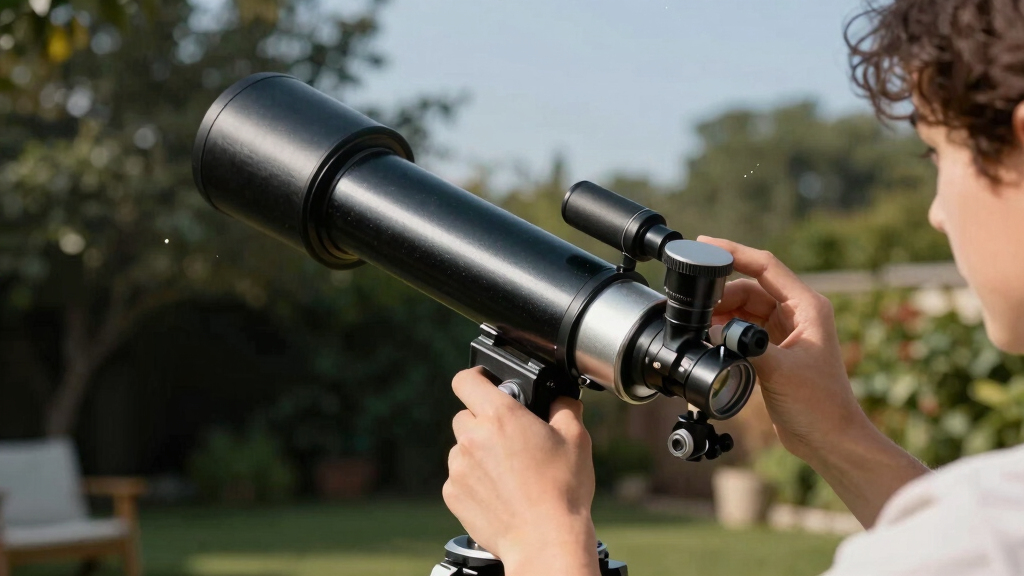
How We Picked
The products in this roundup were evaluated based on their build quality, ease of use, accuracy, versatility, and value for money. We prioritized tools that are suitable for a range of telescope sizes and user experience levels, from beginners to advanced astronomers. Our ranking favors tools that combine reliable performance with durable construction, while also considering price and user feedback. The goal was to identify options that offer the best balance of precision and practicality, ensuring that each tool serves a specific role in the collimation process.
Factors to Consider When Choosing Telescope Collimation Tools
When selecting a telescope collimation tool, it’s important to consider how it fits your specific needs and skill level. The right tool can save you time and frustration, but choosing poorly can lead to inaccurate collimation and compromised image quality. Here are the key factors to keep in mind:Type of Collimation Tool
Deciding between a laser collimator, Cheshire, or sight tube depends on your experience and telescope type. Laser tools are quick and precise, making them popular among seasoned users, but they require careful calibration. Cheshire eyepieces are straightforward and reliable for manual alignment, especially on Newtonians. Sight tubes are simple but less precise, ideal for quick checks or beginners. Consider your comfort with alignment techniques and the level of accuracy you need before choosing.
Ease of Use
Ease of use varies widely; some tools require fine adjustments and calibration, while others are plug-and-play. Beginners should prioritize tools with clear markings, straightforward adjustments, and minimal setup. More advanced users might prefer features like adjustable brightness, fine-tuning screws, or dual-purpose functionalities. Remember, a complex tool with too many adjustments can be frustrating if you’re just starting out, so balance features with your comfort level.
Build Quality and Durability
Collimation tools are precision instruments that need to withstand frequent use. Look for sturdy materials like metal rather than plastic, especially for laser collimators, which can be sensitive to knocks. Well-made tools maintain calibration longer and provide consistent results. Cheap, lightweight models may warp or lose accuracy over time, leading to repeated adjustments and wasted time. Investing in a durable tool pays off in long-term reliability.
Compatibility and Versatility
Ensure the tool fits your telescope’s aperture and focusing system. Some collimators are designed for 1.25-inch eyepieces, while others accommodate 2-inch or larger setups. Versatility also means compatibility with different telescope types—Newtonians, Dobsonians, or catadioptrics. Consider whether you’ll need a tool that can handle multiple configurations or if a specialized model suits your specific setup better. Compatibility issues can impair accuracy or require additional adapters.
Price and Value
Pricing varies from affordable sight tubes to high-end laser collimators. While lower-cost options can be sufficient for casual use, they often sacrifice precision or durability. Investing more in a well-made tool can improve your collimation results and reduce calibration time. Balance your budget against the level of accuracy you need—serious astronomers or astrophotographers should consider higher-end models, while casual users can get by with simpler, budget-friendly options.
Frequently Asked Questions
Are laser collimators worth the extra cost over traditional sight tubes?
Laser collimators typically offer faster and more precise alignment, especially for larger or more complex telescopes. They reduce the chance of user error and often require fewer adjustments. However, they are more expensive and require careful calibration to maintain accuracy. For those who frequently collimate or want the most reliable results, investing in a laser tool can be worthwhile, but beginners might find a sight tube sufficient for basic needs.
Can I use a single collimation tool for different telescope types?
Many collimation tools are designed to be versatile, fitting various telescope sizes and configurations with optional adapters. However, some are optimized for specific setups, such as 1.25-inch or 2-inch focusers. Check the product specifications to ensure compatibility with your telescope. Using the right tool for your setup ensures more accurate collimation and avoids unnecessary adjustments or damage.
How often should I check my telescope’s collimation?
Regular checks are recommended, especially before each observing session, to ensure optimal performance. Collimation can shift due to transport, temperature changes, or minor knocks. If you notice star images are distorted or blurry, it’s a sign to recheck and realign. Advanced users or those engaged in astrophotography may want to verify collimation more frequently to maintain image sharpness over extended sessions.
Is it better to buy a kit that includes both laser and Cheshire tools?
Combining a laser collimator with a Cheshire eyepiece provides a comprehensive approach, leveraging the speed of laser alignment with the manual precision of a Cheshire. This setup can help cross-verify collimation results and improve overall accuracy. However, it may cost more upfront and require familiarity with both techniques. For dedicated astronomers, this combination offers flexibility and peace of mind, but beginners might prefer starting with a single, straightforward tool.
What is the most common mistake when collimating a telescope?
The most frequent error is misaligning the primary mirror or not verifying the collimation after adjustments. Many users focus only on the secondary mirror or make quick adjustments without checking the overall image quality. It’s essential to follow a step-by-step process, double-check each alignment, and verify results by observing a star or planetary object. Proper technique ensures that your collimation holds, providing sharper images.
Conclusion
For most users, the Alstar Red Laser Collimator offers a solid balance of precision and ease of use, making it the best overall choice. Casual observers or beginners will find the Celestron Cheshire or Astromania Short Cheshire ideal for straightforward manual adjustments. Serious astronomers or those engaged in astrophotography should consider investing in a high-end laser collimator like the SVBONY SV121 for maximum accuracy. If budget is a concern, reliable budget options still provide decent results for casual stargazing. Ultimately, your choice depends on your experience level, telescope type, and how critical perfect collimation is to your observing goals.