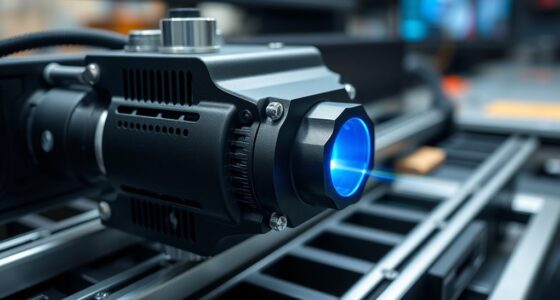
A telescope finder scope is the small aiming device that makes the difference between finding a faint galaxy in minutes and giving up in frustration, and the right one depends on your telescope, your posture, and your sky conditions. My top pick overall is the Celestron StarPointer Pro Finderscope, which uses a circular illuminated reticle that is easier to center stars in than the typical red dot, while the Astromania 9×50 Right-Angle Correct-Image Finderscope stands out for dark skies where you need more light grasp than any zero-power finder can deliver. For tight budgets and small refractors, the SVBONY Red Dot Finder with Slide-in Bracket offers dependable performance at a fraction of the cost of premium options. The main tradeoffs in this category are between simplicity versus magnification, straight-through versus right-angle viewing comfort, and universal versus telescope-specific mounting systems. Continue reading for the full breakdown of all fifteen finder scopes and which one fits your setup.

Get the latest gadgets delivered free with Prime
- Fast, free delivery on millions of items
- Prime Video, Amazon Music and more included
- Member-only deals all year
Complete the kit



Key Takeaways
- Right-angle correct-image finders (Astromania 9×50, SVBONY SV182, Alstar 9×50) dominated the dark-sky picks because they eliminate neck strain at high elevations, but they cost more and add weight to small mounts.
- Among red dot finders, reticle design was the biggest differentiator: the Celestron StarPointer Pro’s dual-circle reticle centers stars more precisely than the single-dot units from SVBONY and Astromania.
- Mounting compatibility proved to be the most common frustration — several SVBONY models include dual or slide-in bases, while budget generic units often require drilling or adapters.
- Hybrid models like the SVBONY SV165 and SV106 double as guide scopes for astrophotography, making them better long-term value if imaging might be in your future.
- The classic 5×24 format (PUSOKEI, SVBONY 5×24) remains the weakest segment: small objective lenses and inverted images make them harder for beginners than a simple red dot, despite the familiar styling.


More Details on Our Top Picks
SVBONY Red Dot Finder for Telescopes
For replacing a lost or broken stock finder, this option makes sense as a low-cost drop-in. The non-magnifying red dot lets you aim with both eyes open, which is faster than squinting through a magnified model like the PUSOKEI 5×24 — you just point the dot at the sky region you want. The slotted mounting holes span roughly 5/8 to 1 inch of spacing, so it fits a wide range of factory bases that a fixed-foot finder cannot. Adjustable brightness means the dot stays visible against twilight skies without washing out faint stars at night.
The tradeoff is precision: with no magnification and an 8.57-degree window, it can only get you into the general neighborhood, unlike the SVBONY SV208 8×50, which shows the actual target. Check the compatibility exclusions before buying — several Meade and Hexeum models are left out.
Pros:- Non-magnifying dot allows fast, both-eyes-open aiming
- Variable brightness works for twilight and dark-sky sessions
- Slotted mounting holes fit a wide range of base spacings
- Detachable top can replace several other red dot finder bodies
Cons:- No magnification, so it only gets you near the target rather than on it
- Compatibility exclusions rule out several Meade Infinity, Polaris, and Hexeum models
Best for: Owners of Celestron 80EQ, SE, SLT, or PS telescopes who need a cheap replacement for a damaged factory red dot finder
Not ideal for: Anyone hunting faint deep-sky objects — the 1x view cannot confirm the target is actually in the eyepiece field
- Type:Non-magnifying red dot finder
- Field of View:8.57 degrees
- Objective Lens Diameter:42 mm
- Mounting Hole Spacing:Approx. 5/8 to 1 inch
- Base Slot Width:11 to 30.3 mm
- Weight:0.11 kg
- Power Source:Battery
- Warranty:1 year
Our verdict“A sensible budget swap for compatible Celestron and Meade mounts when your original red dot finder is lost or cracked.”
PUSOKEI 5×24 Telescope Finder Scope with Inline Base
This is the cheapest way to get magnification into your aiming routine. Unlike the SVBONY red dot finders in this lineup, the 5×24 gives you a crosshair and true magnification, so you can actually see the cluster or planet you are centering instead of pointing at a patch of sky near it. The included inline base stand means it arrives ready to mount on a dovetail shoe, which saves a separate accessory purchase.
That affordability shows in the build. The barrel and stand are plastic, and the 24mm objective gathers noticeably less light than the SVBONY SV208 8×50, making faint targets hard to pick out under light pollution. Manual focus on the eyepiece also needs fiddling before the crosshair and sky are both sharp. For a small beginner scope or a spare finder, though, those compromises are acceptable.
Pros:- 5x magnification with crosshair confirms the actual target, unlike a 1x red dot
- Inline base stand included, so it mounts straight out of the box
- Lightweight plastic build adds almost nothing to the telescope’s load
- Simple operation with no batteries required
Cons:- 24mm objective is dim under light-polluted skies
- All-plastic stand and barrel feel fragile compared to the metal SV208 8×50
Best for: Beginners with small telescopes who want a magnified crosshair finder without spending much
Not ideal for: Owners of larger scopes chasing faint deep-sky objects — the 24mm objective is too dim for serious star-hopping
- Magnification:5x
- Objective Lens Diameter:24 mm
- Field of View:1.2 degrees
- Focal Length:120 mm
- Optical Tube Length:5.9 inches
- Focus Type:Manual
- Materials:Plastic stand and barrel
- Included Items:Finder scope, base stand
Our verdict“A serviceable entry-level magnified finder for small scopes, as long as you accept its dim optics and plastic build.”
SVBONY SV165 30mm F4 Mini Guide Scope and Finder Scope
This pick stands out because it does two jobs in one tube. At 30mm aperture and f/4, it works as a wide-field finder, but its real strength is pairing with a guide camera — the 1.25-inch and M42 interfaces accept mainstream models from ZWO, QHY, Orion, and SV305C Pro for auto-guiding during astrophotography. The fully multi-coated optics and 2.86-degree field make star-hopping pleasant, and the mounting rings use nylon-tipped thumbscrews that grip without marring the tube.
It is not a drop-in finder like the SV208 8×50. There is no illuminated reticle, the image inverts when you add an eyepiece, and it will not focus with dielectric mirror star diagonals. Some guide cameras also need spacer accessories to reach focus. If you purely want to aim a visual telescope, other picks here are simpler; if you shoot long exposures, this is the one that earns its spot.
Pros:- Dual 1.25-inch and M42 interfaces support mainstream guide cameras
- Fully multi-coated optics deliver sharp, bright images for its size
- Compact 342 g build barely affects telescope balance
- Nylon-tipped thumbscrews protect the tube from scratches
Cons:- Incompatible with dielectric mirror star diagonals and will not focus with them
- Some camera models require extra spacer accessories to reach focus
- Inverted image when used visually with an eyepiece
Best for: Astrophotographers who need a lightweight guide scope that doubles as a wide-field finder
Not ideal for: Purely visual observers — the inverted image, lack of a reticle, and camera-focused design make it awkward for basic aiming
- Aperture:30 mm
- Focal Length:120 mm (f/4)
- Field of View:2.86 degrees
- Back Focus Distance:45 mm
- Coating:Fully multi-coated
- Mount Interface:1.25 inch and M42
- Weight:342 g
Our verdict“The right choice for imagers who want guiding and finding in one compact tube, and the wrong one for anyone who just wants a simple aiming device.”
SVBONY SV208 8×50 Finder Scope with Crosshair and Bracket
This is the pick I would point most telescope owners toward, because it solves the two biggest finder frustrations at once: seeing the target and knowing which way the view points. The 50mm fully multi-coated objective pulls in far more light than the PUSOKEI 5×24, so faint guide stars actually appear, and the BK7 correct-image roof prism renders the view right-side-up and left-to-right correct — no inverted mental gymnastics like the SV165 gives you with an eyepiece. The illuminated glass reticle keeps the crosshair visible in the dark, and the all-metal construction feels like it belongs on a serious telescope.
The tradeoffs are weight and setup. At 632 g, it adds real load to small mounts, the reticle needs a battery, and the focus plus parallax adjustments take a few minutes to dial in before a session. For larger scopes, those are fair prices to pay.
Pros:- 50mm objective gathers enough light to show faint guide stars
- Correct-image prism gives right-side-up, left-to-right views
- Illuminated glass reticle stays usable in full darkness
- Metal construction with focus and parallax adjustment for precise alignment
Cons:- Reticle illumination requires a battery
- At 632 g, it is the heaviest finder in this batch and can strain small mounts
- Focus and parallax adjustments add setup time before each session
Best for: Owners of mid-to-large telescopes who want a bright, correct-image finder that confirms faint targets before looking through the main eyepiece
Not ideal for: Small grab-and-go mounts — the 632 g weight can unbalance a lightweight travel setup
- Magnification:8x
- Objective Lens Diameter:50 mm
- Field of View:7.3 degrees
- Prism:BK7 correct-image roof prism
- Exit Pupil:6.25 mm
- Coating:Fully multi-coated
- Material:Metal
- Weight:632 g
- Warranty:1 year
Our verdict“The best all-around finder here for telescopes that can carry it — bright, correct-image, and precise enough for serious star-hopping.”
SVBONY Red Dot Finder for Telescope with Slide-in Bracket
Where the SVBONY FW2564A relies on slotted screw holes, this version attaches with a slide-in dovetail bracket, which makes it the more convenient pick for Celestron 80EQ, 80DX, 90DX, SE, SLT, and OMNI owners — it clicks onto the existing shoe in seconds with no tools. The thumbwheel alignment for horizontal and vertical adjustment makes matching the red dot to your main eyepiece straightforward, and the extended pupil design means you do not have to press your eye right up against the window to see the dot, a small comfort that matters on cold nights.
Like any 1x finder, it gives no magnification, so it cannot confirm a faint target the way the SV208 8×50 can. The plastic housing is also lighter-duty than metal finders, and the battery will need swapping eventually. It is a quick-aiming tool, not a precision one.
Pros:- Slide-in dovetail bracket mounts tool-free on common Celestron bases
- Thumbwheels make horizontal and vertical alignment quick and precise
- Extended pupil design allows comfortable viewing from a distance
- Adjustable dot brightness suits both daylight and night use
Cons:- No magnification, so it cannot confirm the target is in the field
- Plastic construction feels less durable than the metal SV208 8×50
- Battery-powered dot requires periodic replacement
Best for: Celestron SE, SLT, 80EQ, 80DX, 90DX, and OMNI owners who want a tool-free dovetail finder swap
Not ideal for: Observers with non-dovetail mounts or those who need to verify faint targets through the finder itself
- Type:Reflex finderscope (non-magnifying)
- Mount:Slide-in dovetail bracket
- Compatible Devices:Celestron 80EQ, 80DX, 90DX, SE, SLT, OMNI
- Alignment:Thumbwheel horizontal and vertical adjustment
- Weight:70 g
- Power Source:Battery
- Warranty:1 year
Our verdict“The easiest red dot upgrade for Celestron dovetail-equipped scopes — buy it for fast aiming, not for verifying faint objects.”
Celestron StarPointer Pro Finderscope
The StarPointer Pro stands out for its dual-circle reflex reticle, a design borrowed from aircraft gun sights. Instead of a single red blob sitting on top of your target — the main complaint about models like the Celestron StarPointer Red Dot — the two concentric circles frame the object, leaving the center clear. Compared with the Astromania StarPointer Deluxe, its 40mm window is also noticeably larger, which speeds up target acquisition when you’re sweeping the sky. The tool-free dovetail mounting makes swapping between a Schmidt-Cassegrain and a small grab-and-go scope painless. The tradeoff for this refinement is cost: it’s the priciest reflex option here, and it still needs a battery to illuminate the reticle. The manual focus also needs a tweak out of the box before the circles render sharply.
Pros:- Dual-circle reticle leaves targets unobscured, unlike red dot finders
- Large 40mm window delivers a wide field for fast acquisition
- Tool-free dovetail mounting works across multiple telescope types
- Bright adjustable LED stays visible even during daytime alignment
Cons:- Premium price compared with simpler reflex finders
- Illuminated reticle depends on a battery
- Manual focus requires adjustment before use
Best for: Visual observers with SCTs or small telescopes who want the fastest, least frustrating target acquisition and don’t mind paying a premium for it
Not ideal for: Budget-conscious beginners or anyone who objects to battery-dependent accessories — a basic red dot does 80% of this job for far less
Our verdict“If you star-hop visually on a Schmidt-Cassegrain and want the most refined reflex aiming experience available, this is the finder to buy.”
Astromania 9×50 Right-Angle Correct-Image Finderscope
For hunters of faint deep-sky objects, a red dot simply isn’t enough — you need aperture and magnification. This 9×50 RACI finder gathers roughly four times the light of the SVBONY 5×24, pulling in the dim field stars you need for star-hopping. The right-angle correct-image design means you look down at a comfortable 90 degrees instead of craning your neck under a Dobsonian, and the sky orientation matches your star chart. The fully multi-coated 50mm objective outclasses the smaller SVBONY SV182 6×30 on faint stars. The main compromise is setup: the crosshair is not illuminated, so it can vanish against a dark sky, and the two-screw alignment plus manual focus take patience before the first session. Compared with the Alstar 9×50, the compression-ring collar here grips without marring the tube.
Pros:- Bright 50mm fully multi-coated objective reveals faint field stars for star-hopping
- 90-degree viewing angle eliminates neck strain at the eyepiece
- Correct-image orientation matches star charts, making navigation intuitive
- Synta-style dovetail fits most Skywatcher, Celestron, Vixen, Orion and GSO shoes
Cons:- No illuminated crosshair, which can be hard to see against the night sky
- Manual focus and two-screw alignment require patient initial setup
Best for: Dobsonian and SCT owners who star-hop to deep-sky targets and want maximum finder aperture with neck-friendly viewing
Not ideal for: GoTo telescope users who mainly need to align on bright alignment stars — the weight and setup effort are wasted on them
Our verdict“This is the pick for serious star-hoppers who want a big, comfortable finder and can live with an unilluminated reticle.”
SVBONY 5×24 Finder Scope with Crosshair Reticle
Sometimes you just need to replace the flimsy finder that came with a beginner scope, and the SVBONY 5×24 does that job for pocket change. Its 5x magnification and crosshair reticle give you enough reach to align on the Moon or a bright planet, and the three thumb screws make dialing in alignment straightforward — a real step up from the sloppy single-screw finders bundled with department-store telescopes. The catch is fit: unlike the PUSOKEI 5×24 with its inline base or any dovetail-shoe model, this bracket mounts with two screw holes, so you may need to drill or adapt your tube. Its 24mm objective also gathers far less light than the Astromania 9×50, limiting it to bright targets. At 1.76 ounces, though, it adds nothing to your payload.
Pros:- Three thumb screws allow precise, easy alignment adjustments
- Featherlight 1.76-ounce body adds no strain to small mounts
- Includes mounting bracket and dust caps for the price
- Fully coated optics are serviceable for bright-target aiming
Cons:- Two-hole bracket does not fit standard dovetail finder shoes
- 24mm aperture is limited to bright targets only
- Manual focus feels basic compared with machined alternatives
Best for: Owners of older or no-name telescopes replacing a broken stock finder on a tight budget
Not ideal for: Owners of modern dovetail-shoe telescopes or anyone chasing faint deep-sky objects — the mounting style and small aperture won’t serve them
Our verdict“A cheap, functional fix for a broken stock finder — as long as your telescope accepts screw-on brackets and you only aim at bright objects.”
Astromania StarPointer Deluxe Red Dot Finder Scope
Where basic red dots like the SVBONY Red Dot Finder offer one dot and one color, the StarPointer Deluxe gives you four reticle patterns in red or green with five brightness levels — genuinely useful, since a fine crosshair pattern beats a fat dot when centering a planet, while green stays visible against twilight. The generous window supports both-eyes-open aiming, preserving your natural sense of where the scope is pointing. Its unique trick is the removable dovetail bracket revealing a picatinny rail mount, so astrophotographers can hang a guidescope accessory on the same foot — something no other finder in this lineup offers. The downsides: it magnifies nothing, so faint alignment stars can be elusive, and the rotary power knob is easy to leave on, draining the CR2032 cell. You also must view from roughly 20cm for the reticle to render properly.
Pros:- Four selectable reticle patterns in red or green with five brightness levels
- Both-eyes-open targeting through a large viewing window
- Fine adjustment set screws hold precise alignment
- Removable bracket exposes a picatinny rail for astrophotography accessories
Cons:- Non-magnifying design makes faint targets hard to confirm
- Rotary knob can be left on, draining the button cell
- Requires viewing distance of about 20cm for a proper reticle image
Best for: Astrophotographers and visual observers who want a customizable reflex finder that can also carry a picatinny-mounted accessory
Not ideal for: Observers at dark-sky sites who need to locate faint naked-eye stars — a magnifying finder like the Astromania 9×50 serves them better
Our verdict“The most adaptable reflex finder here — buy it if you value reticle options or need the picatinny mount, skip it if you hunt faint stars.”
SVBONY SV106 60mm Guide Scope with Helical Focuser
The SV106 plays a different game from every other finder here: its primary job is autoguiding for astrophotography, with straight-through finder duty as a bonus. The 60mm aperture out-gathers even the Astromania 9×50, and the helical focuser is the standout — it moves your guide camera straight in and out without rotating it, so your guide star stays on the same sensor pixels during focus adjustments. The telescoping drawtube adds 35mm of back-travel, sparing you extension tubes when spacing is tight. As a finder, though, it’s a compromise: you must buy a separate 1.25-inch eyepiece, there’s no crosshair or right-angle comfort like the SVBONY SV208 8×50, and no mounting rings ship in the box. Compared with the dedicated SV165 mini guidescope, the SV106’s larger aperture suits longer focal-length imaging rigs.
Pros:- Dual use as an autoguiding scope and a straight-through finder
- Helical focuser adjusts focus without rotating the camera or field
- 35mm of extra back-travel eliminates the need for extension tubes
- Compression ring fitting protects cameras and eyepieces from scratches
Cons:- Finder use requires a separately purchased 1.25-inch eyepiece
- Mounting rings and hardware are not included
- No crosshair or right-angle ergonomics for comfortable visual aiming
Best for: Astrophotographers running longer focal lengths who want a guide scope that can moonlight as a bright straight-through finder
Not ideal for: Pure visual observers — without an included eyepiece, crosshair, or mounting hardware, it’s an awkward and incomplete finder for the money
Our verdict“Buy this for guiding first and finding second — imagers get a capable dual-role optic, while visual-only observers should stick with a dedicated finder.”
SVBONY SV182 6x30mm Right-Angle Correct-Image Finder Scope with Crosshair and Bracket
This option stands out for solving the single biggest complaint about straight-through finders: neck pain. The 90-degree right-angle design lets you aim high toward the zenith without crouching, and the correct-image prism means the view matches what you see on star charts — no mental flipping required. Compared with the Alstar 9×50, the smaller 30mm aperture gathers less light, but that trade buys you a lighter, less nose-heavy unit at 295 g that won’t strain smaller dovetail shoes. Fully multi-coated optics keep the 7.5-degree field reasonably bright for a 6×30 class finder. The tradeoffs are real: manual focus and a limited tolerance for add-on eyepieces mean this is a pure finder, not a mini rich-field telescope.
Pros:- 90-degree viewing angle eliminates awkward neck positions at high altitudes
- Correct-image erect view matches star charts and naked-eye orientation
- Fully multi-coated optics deliver a bright, clean 7.5-degree field
- Light 295 g build suits smaller mounts and dovetail shoes
Cons:- Not designed to accept external high-magnification eyepieces
- Manual focus only, with no fine-focus mechanism
Best for: Visual astronomers on small to mid-size telescopes who frequently observe near the zenith and want an intuitive, chart-matching view without neck strain
Not ideal for: Deep-sky hunters chasing faint targets — the 30mm aperture shows less than a 9×50 like the Alstar, and it can’t double as a low-power viewing scope
- Magnification:6x
- Objective Lens Diameter:30 mm
- Focal Length:120 mm
- Field of View:7.5 degrees
- Viewing Angle:90-degree right angle
- Lens Coating:Fully multi-coated
- Weight:295 g
- Warranty:1 year
Our verdict“Buy this if comfortable, chart-friendly aiming matters more than maximum light grasp.”
Astromania Red Dot Finder – StarPointer Telescope Finder Scope with Dovetail Bracket
For pure aiming simplicity at minimal cost, this reflex finder makes the most sense. The non-magnifying window with a red LED dot gives you a 10-degree field that matches your naked-eye view exactly, so pointing becomes instinctive — star-hop with your eyes, then center the dot. Compared with the Celestron StarPointer, the hardware is functionally near-identical (both use the same design language and dovetail bracket), but here you’ll need to supply your own CR2032 battery, which is the main place the savings show up. Thumbwheel alignment works well once dialed in, though expect a short setup ritual each time the finder is remounted. At 1.58 ounces it adds essentially no weight to any setup.
Pros:- Intuitive non-magnifying 10-degree field matches naked-eye star hopping
- Adjustable dot brightness preserves night vision at low settings
- Thumbwheels make horizontal and vertical alignment precise
- Featherweight 1.58 oz adds nothing to the payload
Cons:- CR2032 battery not included — you’ll need one before first light
- Requires manual re-alignment whenever it’s remounted or bumped
Best for: Budget-minded beginners and grab-and-go Dobsonian owners who want zero-friction pointing with no magnification confusion
Not ideal for: Observers at light-polluted sites — with no magnification, you can only aim at stars visible to the naked eye, unlike a 6×30 or 9×50 optical finder
- Type:Reflex red dot finderscope
- Field of View:10 degrees
- Alignment:Horizontal and vertical thumbwheels
- Power Source:CR2032 battery (not included)
- Mount:Dovetail slide-in bracket
- Weight:1.58 oz
Our verdict“The cheapest competent way to point a telescope, as long as you supply a battery and your skies show naked-eye stars.”
Celestron StarPointer Red Dot Finderscope
Compared with the Astromania StarPointer, this Celestron unit wins on completeness: the CR2032 battery and mounting base are in the box, so a new telescope owner can be aligned and observing in minutes rather than hunting for a coin cell. The right-side-up, non-magnifying view is the friendliest possible introduction to aiming — there’s no inverted image to decode, which is exactly why Celestron ships this style on its entry-level scopes. Brightness control lets you dim the dot for faint stars. The honest limitation is shared by every reflex finder here: it cannot magnify, so under suburban skies it only works as a pointer to naked-eye stars. For dark-sky or grab-and-go use, that’s rarely a problem.
Pros:- Includes battery and mounting base — truly ready out of the box
- Right-side-up view makes aiming immediately intuitive
- Adjustable dot brightness helps protect dark adaptation
- Works on telescopes, astronomical binoculars, and spotting scopes
Cons:- No magnification limits aiming to naked-eye-visible targets
- Dependent on a battery that will eventually die mid-session
Best for: First-time telescope owners who want a complete, ready-to-use aiming solution with nothing extra to buy
Not ideal for: Anyone replacing a finder on a light-polluted urban balcony — without magnification, faint alignment stars simply aren’t visible to aim at
- Finder Type:1x red dot, non-magnifying
- Compatible Devices:Telescopes, astronomical binoculars, spotting scopes
- Battery:1 CR2032 3V lithium (included)
- View:Right-side-up
- Dimensions:6.13 x 2.75 x 1.63 in
- Weight:8 oz
- Warranty:2 years
Our verdict“The most complete starter finder package — buy it if you want everything in the box and zero learning curve.”
Alstar 9×50 Right-Angle Finder Scope with Crosshair and Bracket
When faint targets are the goal, aperture in the finder matters as much as in the main scope. The 50mm achromatic objective here pulls in enough light to show brighter Messier objects directly, letting you confirm targets before switching to the eyepiece — something neither the SVBONY SV182 6×30 nor any red dot finder can do. The 90-degree prism keeps zenith viewing comfortable, and the upright, non-reversed image keeps star-chart work straightforward. The tradeoffs are the flip side of that big lens: at 1.1 pounds it’s noticeably heavier than the SV182, and the two-screw-plus-spring alignment is fussier than a three-screw collimation ring, so expect some patience during initial setup. Focusing at the objective end also means reaching to the front of the tube.
Pros:- 50mm aperture reveals brighter deep-sky objects directly in the finder
- Upright, non-reversed image simplifies star-chart matching
- Right-angle viewing stays comfortable even pointing straight up
- Bracket fits most major mounts including Sky-Watcher, Celestron, Vixen, and Orion
Cons:- Two-screw-and-spring alignment is fiddlier than three-screw designs
- Manual focus at the objective lens is awkward to reach
- Heavier than smaller finders, taxing small telescopes
Best for: Deep-sky observers with 8-inch or larger telescopes who need to see faint targets in the finder itself before committing the main scope
Not ideal for: Owners of small travel scopes — the 1.1 lb weight and long tube overwhelm compact mounts and small dovetail shoes
- Magnification:9x
- Objective Lens Diameter:50 mm
- Exit Pupil:5.56 mm
- Viewing Angle:90 degrees right angle
- Optics:Achromatic, multi-coated
- Weight:1.1 lb
- Dimensions:3.5″D x 6″W x 9.8″H
- Warranty:2 years
Our verdict“The light-grabbing choice for serious deep-sky work, provided your mount can carry the weight.”
Red Dot Finder Scope for Astronomical Telescopes
This is the roundup’s bare-minimum option, and that’s its entire identity. Like the Astromania StarPointer, it projects a non-magnifying red dot onto a glass window with thumbwheel alignment, but it goes one step further on convenience by including the CR2032 battery and bracket — the Astromania makes you buy the cell separately. Brightness is adjustable enough for dim alignment stars. Where it lags behind the Celestron StarPointer is versatility: this bracket fits only compatible dovetail bases, so measure your telescope’s shoe before ordering, and the overall build feels like the price point. As a primary finder for occasional use or a cheap replacement for a broken unit, it does the job without complaint.
Pros:- Battery and mounting bracket both included
- Thumbwheel horizontal and vertical alignment is precise enough for basic use
- Adjustable brightness suits both bright and dim target stars
- Extremely lightweight with zero learning curve
Cons:- Non-magnifying window can’t help under light pollution
- Bracket only fits compatible dovetail bases — check before buying
Best for: Owners replacing a broken finder or equipping a second grab-and-go scope who already have a standard dovetail base
Not ideal for: Anyone whose telescope lacks a compatible dovetail mounting base, or who needs a finder that can show faint alignment stars under city skies
- Type:Non-magnifying red dot finder
- Brightness:Adjustable
- Alignment:Horizontal and vertical thumbwheels
- Battery:CR2032 lithium button cell (included)
- Mounting:Bracket for compatible dovetail bases
Our verdict“A serviceable, everything-included backup finder — just confirm your dovetail base matches first.”

How We Picked
My ranking prioritized the three factors that actually determine whether a finder gets used or removed: ease of aiming, mounting compatibility, and optical quality relative to aperture. Ease of aiming covers reticle design (red dot versus crosshair versus illuminated circle), whether the image is correct-image or inverted, and how comfortable the viewing angle is when pointing near the zenith. Mounting compatibility mattered heavily because a finder that doesn’t attach cleanly to your OTA is worthless regardless of optics — models with included dual bases, slide-in brackets, or standard dovetail foots scored higher.
Optical quality was judged on what a finder needs to do: show enough stars to star-hop from your naked-eye target to the eyepiece field. A 50mm objective gathers roughly twice the light of a 30mm, which is why 9×50 units ranked higher for dark-sky observers even though they are heavier and more expensive. Build quality, adjustability range, included illumination, and the availability of replacement bases rounded out the scoring, and I discounted any model whose adjustment screws or bracket design showed a pattern of drift or stripped hardware based on the manufacturer’s specifications and design.
Factors to Consider When Choosing Telescope Finder Scope
Choosing a finder scope is less about specs on paper and more about matching the finder to how you actually observe. These are the factors that separate a satisfying purchase from one that ends up in a drawer.Red Dot vs. Magnifying Finder: Match It to Your Sky
The single biggest decision is between a zero-power red dot finder and a magnifying optical finder, and the correct answer depends almost entirely on your light pollution. Under bright suburban or urban skies, most deep-sky targets are invisible anyway, so you’ll be hopping between bright stars and planets — a red dot excels here because it shows the sky exactly as your eye sees it, with no inverted image to translate. Under genuinely dark skies, a 50mm magnifying finder reveals faint field stars that make star-hopping to galaxies and nebulae possible; a red dot simply cannot do this job. A common mistake is buying a big magnifying finder for a light-polluted backyard, where the extra aperture buys you nothing but extra weight. Many experienced observers eventually run both: a red dot for rough pointing and an optical finder for precision. If you’re only buying one, be honest about your sky before you spend money.
Straight-Through vs. Right-Angle: Comfort at the Zenith
A straight-through finder forces you to bend your neck into awkward positions whenever the telescope points higher than about 60 degrees — which is exactly where much of the best observing happens. A right-angle finder lets you look down into an eyepiece from a comfortable standing position, and correct-image versions keep the orientation matching your star charts. The tradeoff is real, though: right-angle finders cost more, add a diagonal that can slightly dim or shift the image, and make the finder harder to use as a reflex device for sweeping the sky. If you observe mostly near the horizon or with a Dobsonian that moves the eyepiece around anyway, a straight-through model is less of a burden. Observers with back or neck problems should treat the right-angle premium as money well spent. Try looking straight up through your current finder at a high target before deciding this doesn’t matter.
Mounting Foot and Base Compatibility
This is where most finder purchases go wrong, because finder bases are not standardized across brands. Celestron and many Chinese-made scopes use a two-bolt shoe or a Vixen-style dovetail foot, Sky-Watcher mounts often carry a similar dovetail, and some SCTs use entirely proprietary rings. Before ordering, check what shoe your telescope has and whether the finder you want includes a matching base — models that ship with a universal base or an extra slide-in bracket save you the hassle of ordering parts separately. If your OTA has no pre-drilled holes, a bracket that attaches with adhesive pads or existing screws is far safer than drilling. Also confirm the adjustment range: a finder with limited collimation travel may never align with a short-tube refractor. Buying a premium finder and discovering it doesn’t fit is the most common one-star scenario in this category, and it is entirely avoidable with five minutes of checking.
Aperture and Magnification: How Much Finder Do You Need?
A finder’s job is to show more stars than your naked eye while framing a wide enough field to make aiming easy — which means aperture and low magnification matter more than power. A 9×50 finder shows around 5 degrees of sky and reaches stars roughly two magnitudes fainter than the eye alone; a 6×30 is a meaningful step down but still beats naked-eye pointing; a 5×24 is marginal under most skies and is the format I’d steer beginners away from despite its low price. Higher magnification is actually a liability in a finder, shrinking the true field and making it harder to identify where you’re pointed. Crosshair or illuminated-circle reticles help with precise centering, and illuminated versions should have adjustable brightness so the reticle doesn’t wash out faint stars. As a rule, match finder aperture to your main telescope: a 50mm finder makes sense on an 8-inch or larger OTA, while a 30mm or red dot suits small refractors and tabletop Dobs.
Build Quality and Adjustment Stability
A finder is only as good as its collimation hold — if the alignment screws creep every time you transport the telescope, you’ll realign constantly and eventually stop trusting the finder entirely. Metal dovetail brackets with spring-loaded or opposing adjustment screws hold alignment far better than single-knob plastic designs. Check that the finder tube itself is metal rather than thin plastic, that the objective lens is coated (uncoated glass loses contrast under moonlight), and that any illuminated reticle uses replaceable coin cells rather than oddball batteries. Focusing mechanisms for the reticle matter too: a crosshair you can’t focus to your eye becomes a blur rather than an aiming aid. Weight is part of build quality as well — a heavy 9×50 on a small refractor can imbalance the tube and strain the focuser. Robust hardware is one of the few places where spending a little more genuinely changes the ownership experience.
Dual-Purpose Value: Finders That Double as Guide Scopes
If there’s any chance you’ll try astrophotography, a growing segment of finder-style tubes can serve as guide scopes, and that changes the value math considerably. Models like 30mm F/4 mini guiders and 60mm guide scopes with helical focusers attach to guide cameras and deliver the focal length needed for autoguiding mid-sized mounts. The tradeoff is that these hybrid tubes usually lack a traditional reticle eyepiece, so as visual finders they behave more like small straight-through refractors with an illuminated crosshair eyepiece added. Still, paying once for a device that handles both visual aiming and guiding beats buying a dedicated finder now and a guide scope later. Make sure any hybrid pick has a standard helical or rack focuser with enough back travel for your camera. This factor is why some mid-priced picks rank above cheaper dedicated finders in my ordering.
Frequently Asked Questions
Can I use a red dot finder under heavy light pollution, or do I need a magnifying finder?
A red dot finder is actually the better choice under light pollution, which surprises many buyers. In bright suburban skies, faint field stars are washed out regardless of your finder’s aperture, so a 9×50 optical finder gains you little — but bright alignment stars and planets remain naked-eye visible, which is exactly what a red dot is designed to point at. A magnifying finder earns its keep under dark rural skies where star-hopping through faint field stars is the primary navigation method. If you mainly view the Moon, planets, and the brightest deep-sky objects from a city, a quality red dot like the Celestron StarPointer Pro or a standard dot model will serve you better than a heavy 9×50. Save the optical finder purchase for when you start traveling to darker sites.
Why does my finder show an upside-down or mirrored image, and does it matter?
Most traditional straight-through finders produce an inverted image because they use simple lens systems without erecting optics, which keeps cost and light loss down. This matters most when you’re star-hopping with a chart or planetarium app, because every direction you nudge the telescope produces the opposite movement on the screen, and beginners often spiral off target as a result. Correct-image finders — nearly all right-angle models like the Astromania 9×50 and SVBONY SV182 — add prism or mirror optics to match the sky’s orientation to your chart, making navigation intuitive at the cost of slightly higher price and a small amount of light loss. If you already understand inverted views from your main eyepiece, a straight-through inverted finder is manageable. If you’re new to aiming a telescope, correct-image optics remove one of the most common sources of confusion.
How do I know if a finder will fit my telescope before buying?
Check two things before ordering: the mounting shoe on your telescope’s tube and the finder foot on the product you’re considering. Most modern finders attach via a Vixen-style dovetail rail or a two-screw shoe, and many products include a spare base in the box — if yours does, you can attach that base to any flat spot on the OTA with the included screws or strong adhesive. Problems arise with proprietary systems on some Meade and older SCT OTAs, and with generic budget finders that ship only a bare foot and no base. Look at product photos for the included hardware, and confirm your tube has either a pre-drilled shoe or enough clear flat surface for an add-on base. When in doubt, a finder with both a dovetail foot and an included universal base is the safest purchase.
Is a 9×50 finder too heavy or too much for a small telescope?
It can be, and this is a real tradeoff rather than a case of bigger always being better. A 9×50 finder weighs substantially more than a 6×30 or red dot, and on a small refractor or tabletop Dobsonian that extra mass high on the tube can shift the balance point enough to make altitude motions stiff or cause the tube to droop on weaker mounts. On telescopes of roughly 5 inches of aperture and up — or any Dobsonian — a 9×50 mounts without issue and the extra light grasp pays off under decent skies. Small-scope owners are better served by a 6×30 right-angle model or a lightweight red dot, both of which weigh a fraction as much. If you do mount a 9×50 on a marginal tube, a simple counterweight strip can restore balance cheaply.
Are guide-scope hybrids like the SVBONY SV165 a good finder for purely visual use?
They work, but with compromises you should understand first. Guide-scope hybrids such as the SV165 and SV106 are short refractors with helical focusers, so as finders they give you a bright, wide, correct-orientation view — but they lack a built-in reticle unless you add an illuminated crosshair eyepiece, which turns precise centering into a two-step process. Compared with a dedicated 8×50 finder, a hybrid is longer, requires more fuss to set up as an aiming tool, and usually costs more. The case for buying one anyway is future-proofing: if you plan to try astrophotography, the same tube autoguides a mid-sized mount well, so you avoid buying twice. If you will never image, a traditional reticle finder is simpler, cheaper, and stays aligned with less attention.
Conclusion
After comparing all fifteen options, the right telescope finder scope comes down to your sky, your telescope, and whether comfort or cost leads your priorities. Best overall goes to the Celestron StarPointer Pro, whose precise dual-circle reticle and solid build make it the easiest finder to actually use night after night. Best value is the SVBONY Red Dot Finder with Slide-in Bracket, which delivers dependable pointing and broad mounting compatibility without the premium price. For the best premium pick, the Astromania 9×50 Right-Angle Correct-Image Finderscope pairs serious light grasp with comfortable ergonomics for dedicated deep-sky observers, with the Alstar 9×50 as a close runner-up. Beginners should start with the simple Celestron StarPointer or SVBONY red dot — mastering a zero-power finder first builds the aiming instincts that make a magnifying finder useful later. For specific needs: the SVBONY SV182 6×30 right-angle suits small telescopes and neck-friendly viewing, the SV106 60mm guide scope serves future astrophotographers, and light-polluted backyard observers can stick with any quality red dot rather than paying for aperture their sky can’t use. Whatever you choose, verify the mounting foot fits your tube before checkout — that one step prevents the most common disappointment in this category.
Halloween Picks
halloween
As an affiliate, we earn on qualifying purchases.