
TL;DR

Get the latest gadgets delivered free — and shop member deals
- Fast, free delivery on millions of items
- Access to Prime Big Deal Days deals on October 6–7
- Prime Video, Amazon Music and more included
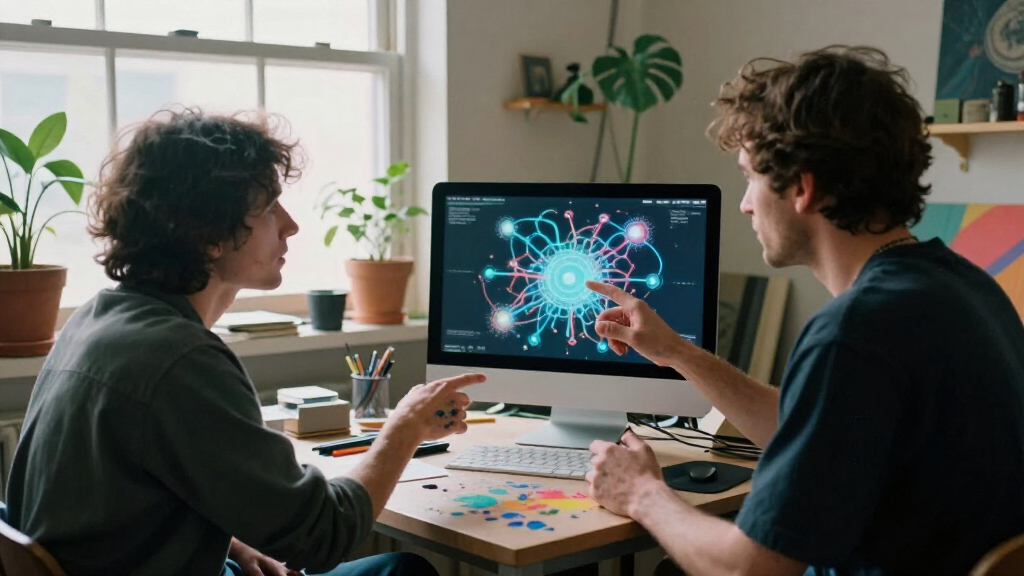
Xin Liu and Eunjo Lee have created two artworks during an online residency with LAS Art Foundation and Google Arts & Culture Lab. The projects use Google AI tools to explore collective intelligence, living systems, language and Buddhist philosophy.
Artists Xin Liu and Eunjo Lee have presented two artworks developed during an online residency with LAS Art Foundation in collaboration with Google Arts & Culture Lab, using AI tools to explore questions about intelligence, consciousness and the relationships between living systems. The works, “nom nom” and “In Your Eyes, Before My Own,” draw on different combinations of artificial life research, philosophy, psychology and digital image-making.
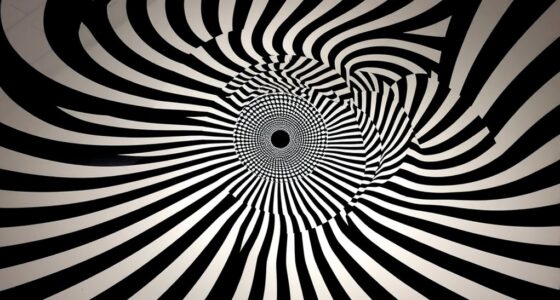
Liu’s “nom nom” examines how collective intelligence can emerge through interactions among many small elements. Google says the artist drew on research into artificial life and emergent computation by Google researchers Blaise Agüera y Arcas and Alexander Mordvintsev, as well as Neural Cellular Automata, models in which large numbers of particles interact, form patterns and dissolve. The project frames intelligence as an ecology of components responding to their surroundings rather than as a single controlling mind.
Lee’s “In Your Eyes, Before My Own” combines hand-drawn sketches converted into 3D assets with motion-captured choreography and Korean Hangul phonetics. According to Google’s account, Lee used Nano Banana and Veo in the process, then mapped the phonetics across a 3D environment so that the linguistic system reflected the landscape’s geometry. The work links ancient philosophy and linguistics with modern psychology and digital media.
The residency was designed to support artists working with digital world-building and simulations of living systems. Google describes Liu and Lee as selected for their technical skill and artistic imagination. The published account presents the artists’ methods and intentions, but does not report independent evaluation of the works or provide audience, exhibition or technical performance data.
AI as an Artistic Medium
The commissions show how artists are using generative and computational tools to develop ideas about how intelligence and relationships take shape. Liu’s work approaches intelligence as distributed interaction, while Lee’s brings philosophical ideas about interconnectedness into a constructed digital landscape. Together, the projects make AI part of an artistic process concerned with perception and meaning, rather than presenting it solely as a tool for producing images.
The announcement also connects a technology company’s research and products with an arts institution’s commissioning program. That makes the works relevant to readers following how AI tools enter cultural production. The source describes the tools and concepts involved, but does not establish how much the software shaped the final works compared with the artists’ direction.
Inside the Online Residency
The Online Artist Residency was organized by LAS Art Foundation in collaboration with Google Arts & Culture Lab. Its stated focus was digital world-building and the simulation of living systems, themes that connect the two commissions despite their different approaches. Liu’s project draws on computational models of interacting elements; Lee’s uses language, movement and visual space to build a symbolic environment.
Google’s September 29, 2026, report introduces the works and describes selected steps in their creation. It names Google AI tools used for Lee’s conversion of sketches and animation workflow, and identifies research that informed Liu’s project. The article does not give a fuller residency timeline, selection process, budget or account of how the artists’ work was reviewed.
““I want to explore an image of intelligence distributed across millions of tiny neural networks that react only to their surroundings — not as a singular mind above the world, but as a living ecology of fragments.””
— Xin Liu, artist
What the Announcement Leaves Open
The published report does not specify where or when audiences can view the works, whether they will be shown in a physical exhibition, or whether interactive versions will be made available. It also does not describe the datasets, model configurations or technical limits involved in their creation. Those details would help clarify how the AI systems contributed to each finished artwork.
Google’s account explains the artists’ intentions and selected production steps, but offers no independent assessment of the works’ effects on viewers or of the scientific ideas they reference. The projects are presented as artworks informed by research and philosophy; the source does not claim that they validate scientific findings or provide evidence about consciousness.
Where the Projects Go Next
The announcement provides no schedule for later exhibitions, public demonstrations or additional residency projects. Details about access and future presentation have not been stated in the source material. For now, the confirmed development is the release of descriptions of Liu’s and Lee’s completed commissions and the methods and ideas that informed them.
Key Questions
What are the two artworks?
They are “nom nom” by Xin Liu and “In Your Eyes, Before My Own” by Eunjo Lee, created during an online residency with LAS Art Foundation and Google Arts & Culture Lab.
What does “nom nom” explore?
Liu’s work explores collective intelligence arising from interactions among many small elements, drawing on artificial life research and Neural Cellular Automata.
How did Eunjo Lee make her artwork?
Google says Lee converted hand-drawn sketches into 3D assets using Nano Banana and Veo, added motion-captured choreography and mapped Korean Hangul phonetics over the digital environment.
Where can the public see the artworks?
The source announcement does not specify exhibition dates or public access details.
Source: rss
Fall Picks
fall essentials
As an affiliate, we earn on qualifying purchases.