
Natural dyes and sustainable textiles offer eco-friendly options that help reduce environmental impact. By choosing plant, mineral, or insect-derived dyes and organic fibers like cotton or hemp, you’re supporting biodegradable and less polluting practices. These methods use less energy, avoid harmful chemicals, and promote soil health. If you want to learn how these sustainable choices can transform your fashion choices and benefit the planet, keep exploring the benefits behind natural dyes and eco-friendly textiles.
Key Takeaways
- Natural dyes require less energy and produce fewer toxins, making textile coloring more eco-friendly.
- Eco-friendly mordants like alum and tannins fix dyes without harmful heavy metals.
- Organic fiber cultivation promotes soil health, reduces water use, and minimizes chemical runoff.
- Natural dyes offer unique hues with improved colorfastness, supporting sustainable textile lifecycle.
- Using natural dyes and organic fibers reduces ecological impact and aligns with eco-conscious fashion practices.
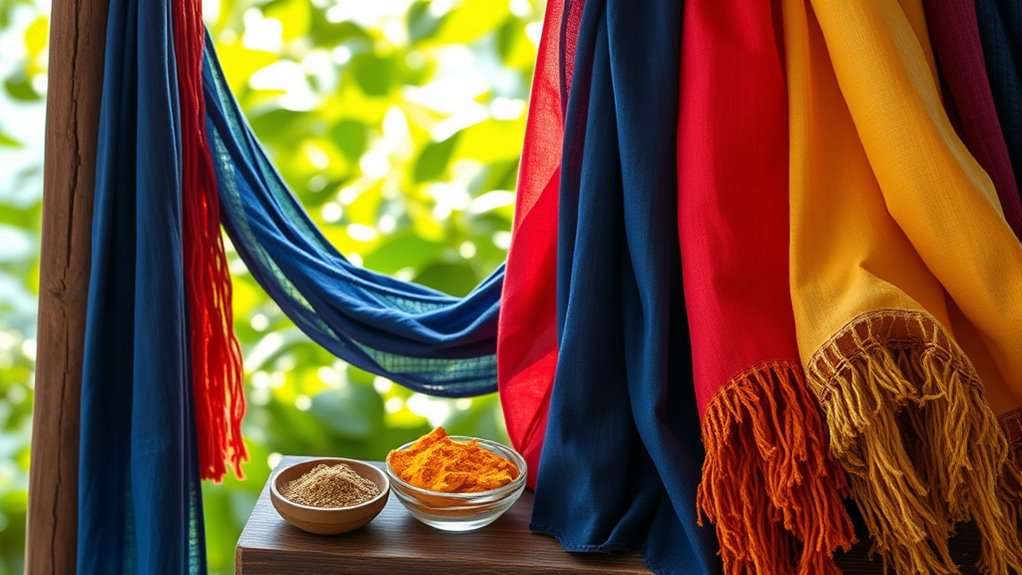
As the fashion industry faces increasing pressure to reduce its environmental impact, natural dyes have emerged as a sustainable alternative to synthetic colors. You can make a meaningful difference by choosing dyes derived from plants, minerals, and insects, which typically require less energy and produce fewer toxins during production. One key to enhancing the durability and vibrancy of these dyes lies in the use of eco-friendly mordants. Unlike traditional mordants that often contain heavy metals, eco friendly mordants such as alum, iron, and tannins help fix colors securely onto fabrics without harming the environment. This means you can enjoy beautifully dyed textiles that are not only aesthetically pleasing but also safer for the planet.
When you opt for natural dyes, you’re supporting organic fiber cultivation, which plays a vital role in sustainable textiles. Organic farming practices avoid synthetic pesticides and fertilizers, promoting soil health and biodiversity. By choosing fabrics made from organically cultivated fibers like cotton, hemp, or linen, you guarantee that the entire process—from fiber growth to dyeing—is aligned with environmentally responsible principles. Organic fiber cultivation minimizes water use, reduces chemical runoff, and encourages crop rotation, which helps maintain healthy ecosystems. This holistic approach to textile production is indispensable for reducing the ecological footprint associated with conventional textile manufacturing. Additionally, the colorfastness of natural dyes has improved significantly with modern techniques, making them more practical for everyday wear.
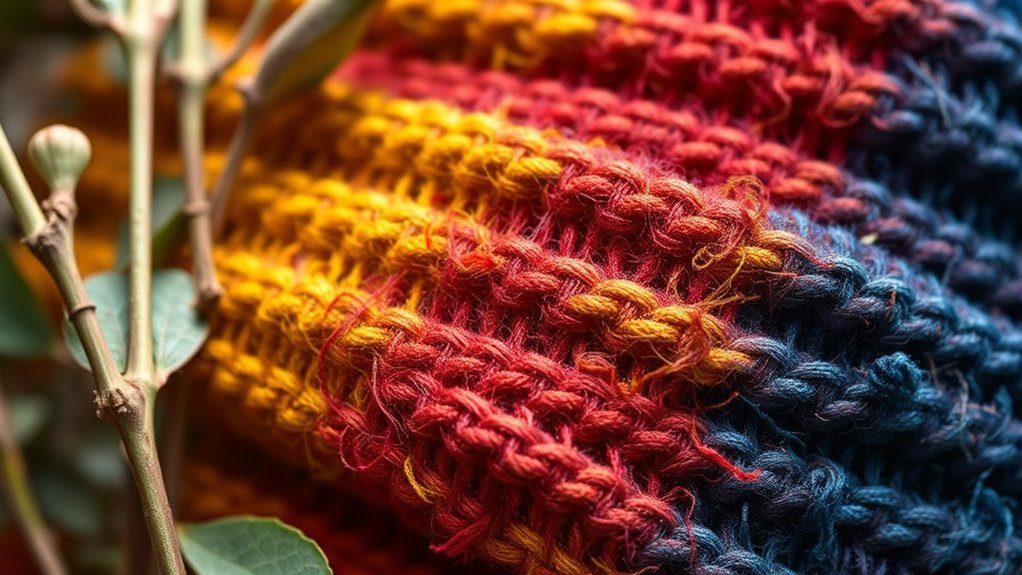
Incorporating natural dyes into your wardrobe isn’t just about aesthetics; it’s a conscious choice to support sustainable agriculture and eco-friendly processing methods. When natural dyes are paired with organically grown fibers and eco friendly mordants, the entire lifecycle of the textile becomes more sustainable. You’ll find that these fabrics often have a unique, organic hue that synthetic dyes can’t replicate, giving your garments a distinctive, authentic look. Furthermore, natural dyes tend to be biodegradable, meaning they break down more easily after disposal, reducing long-term pollution.

Honey Oak Natural Tie Dye Kit | 3 Color Extract Set – Olive Green, Sunflower Yellow, Turkey Red | Plant-Based Fabric Dyes for Shibori & DIY Fabric Art | Easy to Use Craft Kit
Natural & Non-Toxic Dye – Made from 100% natural sources, Honey Oak’s dye is safe, chemical-free, and perfect…
As an affiliate, we earn on qualifying purchases.
As an affiliate, we earn on qualifying purchases.
Frequently Asked Questions
How Do Natural Dyes Compare in Colorfastness to Synthetic Dyes?
Natural dyes generally have lower colorfastness and fade resistance compared to synthetic dyes. You’ll notice that natural dyes tend to fade faster over time, affecting color longevity. While they can produce beautiful, earthy tones, their ability to withstand washing and exposure to sunlight isn’t as strong as synthetic options. To maintain vibrant colors longer, you might need to take extra care during cleaning and storage.
What Are the Environmental Impacts of Harvesting Natural Dye Materials?
Imagine your choices rippling through the environment. Harvesting natural dye materials can cause biodiversity loss if done irresponsibly, and it often leads to water pollution from runoff containing dyes and chemicals. These impacts threaten ecosystems and water quality, making sustainable harvesting practices essential. By choosing ethically sourced dyes, you help protect delicate habitats and reduce pollution, turning your fashion choices into a positive force for environmental health.
Can Natural Dyes Be Used on All Types of Textiles?
You can’t use natural dyes on all textiles because of textile compatibility and dye absorption levels. Some fabrics, like cotton and silk, absorb dyes well, resulting in vibrant colors, while synthetics like polyester may not take natural dyes effectively. To achieve good results, you need to contemplate the fabric’s porosity and how well it interacts with the dye, ensuring the color is even and long-lasting.
How Long Does the Dyeing Process With Natural Dyes Typically Take?
The dyeing process with natural dyes usually takes anywhere from a few hours to several days, depending on factors like fabric type and desired color intensity. The dyeing duration varies because of process variability, such as pre-treatment steps and dye concentration. You should plan for extra time if you want deeper, more vibrant hues, and always test small samples first to perfect your technique.
Are There Any Health Risks Associated With Natural Dye Production?
Think of it like a vintage vinyl—sometimes charming, but with a few risks. You should know that natural dye production can pose health considerations, especially if workers aren’t protected from dye powders or chemicals. Proper safety gear and ventilation help reduce risks. While overall safer than synthetic dyes, it’s essential to prioritize worker safety and handle plant materials carefully to avoid allergic reactions or skin irritation.

Organic Cotton Muslin Fabric by Yard – 2 Yards, 60" Wide, Unbleached Dress Fabric for Blouses, Liners, Aprons and Bags – Lightweight Cotton Material in Plain Weave (2 Yards)
Organic Cotton Muslin Dress-Making Fabric – This 100% cotton muslin fabric is 60 inches wide and 2 yards…
As an affiliate, we earn on qualifying purchases.
As an affiliate, we earn on qualifying purchases.
Conclusion
By choosing natural dyes and sustainable textiles, you’re not just making a small change — you’re transforming the entire fabric of our planet! Every time you opt for eco-friendly materials, you’re wielding the power to save oceans, forests, and countless species from extinction. Imagine a world where every thread you wear fuels a revolution of hope and harmony. So, go ahead, make that choice — it’s your superhero move for a greener, brighter future!
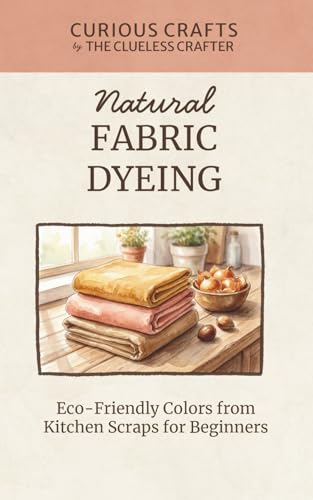
Natural Fabric Dyeing – Eco-Friendly Colors from Kitchen Scraps for Beginners: A Step-by-Step Pocket Guide to Dyeing Cloth with Food Waste at Home (Curious Crafts)
As an affiliate, we earn on qualifying purchases.
As an affiliate, we earn on qualifying purchases.

NS HEMP Hemp T-Shirt for Men (Classic Blue, XL)
55%Hemp 45%Organic cotton
As an affiliate, we earn on qualifying purchases.
As an affiliate, we earn on qualifying purchases.