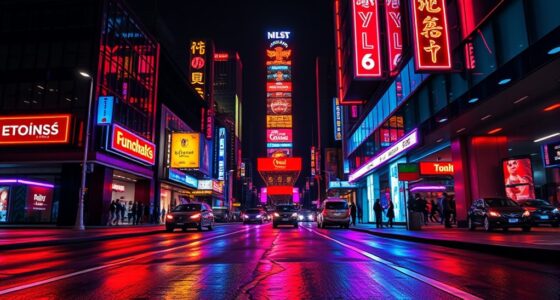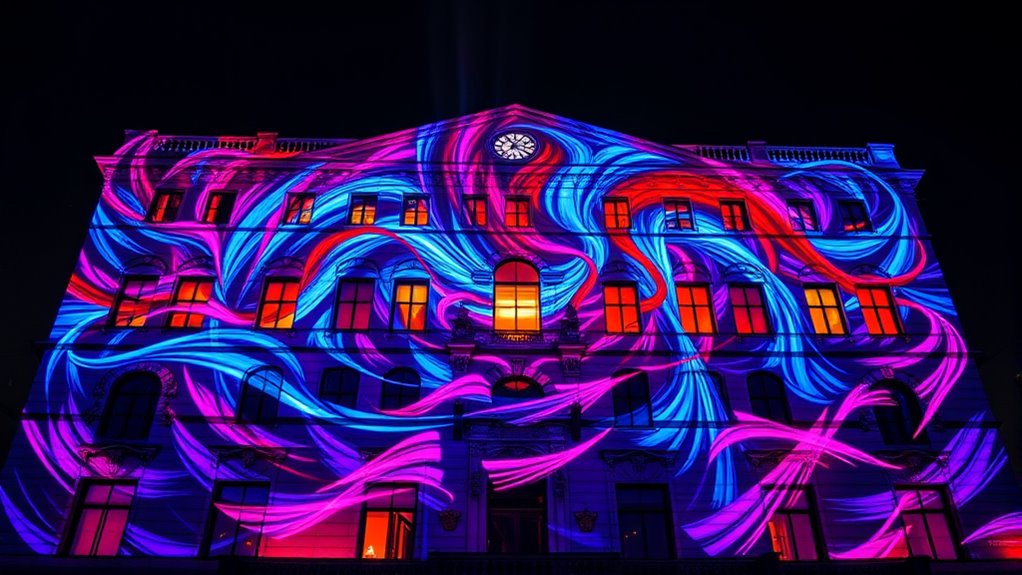
Projection mapping lets you transform ordinary surfaces into stunning visual displays by using light as your brush. You align digital visuals precisely with architecture, creating illusions like rippling walls or portals that seem to breathe or move. This technique combines art and technology, making viewers feel part of a dynamic story or immersive environment. If you want to explore how these mesmerizing effects are achieved, there’s more to discover beneath the surface.
Key Takeaways
- Projection mapping uses light as a digital brush to turn surfaces into dynamic visual canvases.
- It aligns images precisely with physical surfaces to create immersive architectural illusions.
- The technique enhances visual storytelling by transforming ordinary structures into captivating displays.
- Interactivity allows viewers to influence visuals through movement or real-time inputs.
- Combining technology and artistry, projection mapping creates memorable, multisensory light paintings.
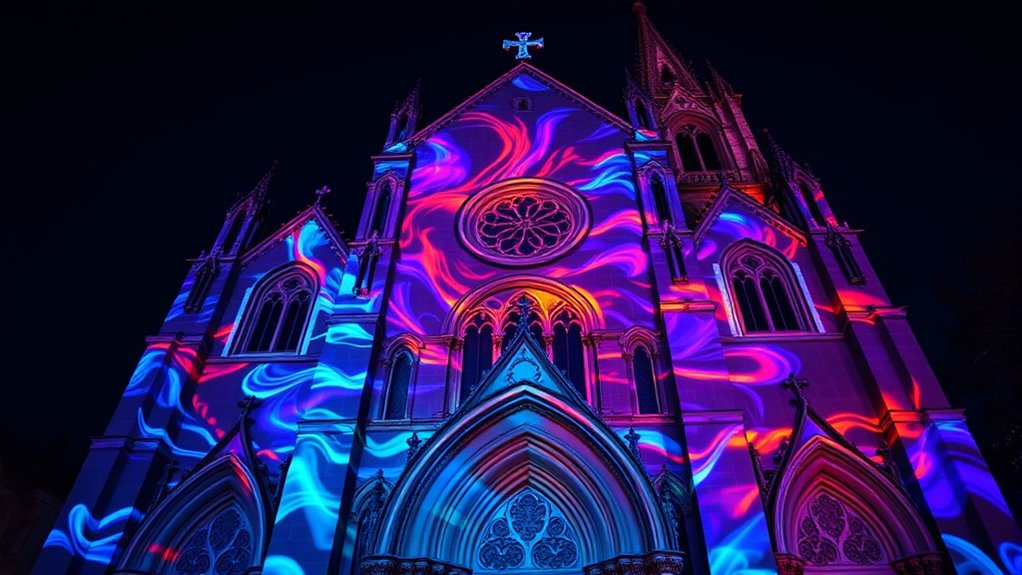
Have you ever marveled at buildings or objects transforming with stunning visuals during a concert or festival? That’s the magic of projection mapping at work, where light becomes your brush and surfaces serve as the canvas. It’s a fascinating blend of technology and artistry that turns ordinary structures into dynamic stories, immersive environments, or eye-catching displays. When you witness a building’s façade suddenly morph into a surreal landscape or a moving piece of art, you’re experiencing how projection mapping creates architectural illusions that captivate and surprise.
One of the most compelling aspects of this technique is its ability to create interactive displays. You don’t just watch static images; you become part of the experience. Interactive displays invite you to engage directly, whether by triggering visual effects with your movements or by influencing what’s projected in real-time. This interactivity amplifies the sense of wonder, making you feel as if you’ve stepped into a living, breathing piece of art. It’s these moments of participation that elevate projection mapping from mere visual spectacle to an immersive encounter. Imagine walking around a monument, and as you approach, the visuals shift and respond to your presence, revealing hidden layers or stories embedded within the architecture.
The core of projection mapping lies in its mastery of architectural illusions. Artists and technologists meticulously align digital projections with physical surfaces, transforming ordinary buildings into extraordinary displays. By exploiting the unique features of each surface—its shape, texture, and contours—they craft illusions that seem to defy reality. Walls appear to ripple, windows transform into portals, and entire facades seem to breathe and pulse with life. This precision demands a detailed understanding of the architecture and sophisticated software that can map every pixel onto the surface. The result is a seamless illusion that makes viewers question what’s real and what’s digital, creating a powerful and often emotional connection to the visual story. Additionally, the use of natural materials like wood and stone in architecture can enhance the authenticity and impact of the projections.
When you witness projection mapping, you’re experiencing a sophisticated dance between technology and creativity. It’s about more than just light; it’s about crafting stories, illusions, and experiences that linger long after the visuals fade. Whether used for marketing, art installations, or entertainment, projection mapping fascinates because it pushes the boundaries of perception. It transforms simple surfaces into portals of imagination, where architecture becomes a canvas and your sense of reality is gently challenged.

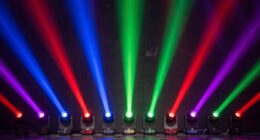
2Pack Moving Heads dj Lighting 30w Led Moving Head dj Lights for Parties, Mini GOBO Projector Lights for Spotlight Stage Light, Club Dance Spot Light DMX and Sound Activation for Party
Rich color pattern effects: 7 color wheels + white light and 7 gobo wheels + white light, adjustable...
As an affiliate, we earn on qualifying purchases.
Frequently Asked Questions
What Equipment Is Essential for Projection Mapping?
You need crucial projection gear like high-lumen projectors, sturdy mounts, and quality cables to guarantee clear visuals. Calibration techniques are essential; you’ll align your projections accurately onto surfaces, preventing distortion. A powerful computer with mapping software helps you design and fine-tune your visuals. Don’t forget tools like measuring tapes and laser pointers for precise setup. With the right equipment and calibration, your projection mapping will look seamless and engaging.
How Long Does a Typical Projection Mapping Setup Take?
A typical projection setup takes about 4 to 8 hours, depending on complexity. Did you know that intricate projects can sometimes extend to two days? You’ll need to allocate ample time for calibration and testing. Your time estimation should include space preparation, equipment setup, and adjustments. By planning ahead, you’ll guarantee your projection mapping project runs smoothly, allowing you to create stunning visual displays without unnecessary stress or delays.
Can Projection Mapping Be Done Outdoors?
Yes, you can do projection mapping outdoors. Just keep weather considerations in mind—rain, wind, or extreme temperatures can affect your equipment and image quality. Make sure outdoor safety by securing all gear properly and using weatherproof hardware. You should also have backup plans, like protective covers or tents, to keep your setup safe and functioning well during different outdoor conditions. Proper planning guarantees a successful outdoor projection experience.
What Are Common Challenges Faced During Projection Mapping?
You often face challenges like calibration issues, which can distort your images, and surface irregularities that make alignment tricky. Uneven surfaces or textures can cause your projections to misalign or look distorted. Lighting conditions also impact visibility, making it harder to achieve sharp, vibrant visuals. To overcome these, you need precise calibration and surface analysis beforehand, ensuring your projection maps correctly and looks seamless regardless of outdoor elements.
How Does Projection Mapping Differ From Traditional Light Shows?
Did you know that projection mapping enhances digital creativity by transforming ordinary surfaces into dynamic displays? Unlike traditional light shows, projection mapping uses precise 3D alignment to create immersive visual storytelling that interacts with the environment. You actively design and manipulate digital content to fit complex shapes, making each display uniquely mesmerizing. This technique elevates visual storytelling, offering more engaging and customized experiences compared to conventional light shows.

YSKE Professional Optical Snoot Attachment - Bowens Mount Spotlight Projector with 35 Metal Gobos, 5 Color Gels & Focus Control | Compatible with Aputure, Godox, Neewer, Profoto LED Video Lights
Full Metal Construction: The spotlight optical snoot is crafted entirely from premium aluminum alloy, ensuring long-lasting durability while...
As an affiliate, we earn on qualifying purchases.
Conclusion
As you step back and admire the magic you’ve helped create, it’s like watching a delicate dance of light and shadow, gently transforming ordinary surfaces into enchanting stories. Your hands have guided the luminous brush, painting dreams that softly whisper to the night. In this silent symphony of colors, you’ve woven a fleeting masterpiece—an ephemeral bloom that, even in its gentle fade, leaves a lingering glow in all who witness it.
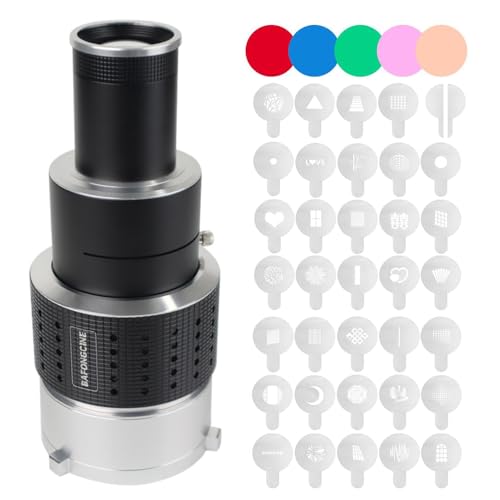
BAFONGCINE Optical Bowens Mount Projector Attachment Spotlight Conical Optical Snoot Photography Kit with Color Filters Various Gobos for Aputure Amaran 100DS/XS 200XS/DS 300C/DII/X 60D/XS Godox SL60
【Bowens Mount Snoot】Equipped with bowens mount,suits for most led lights or spotlights.compatible with Aputure Amaran 100DS 100XS 200XS...
As an affiliate, we earn on qualifying purchases.

NEEWER LS-300 Spotlight Optical Snoot for 300W Bowens Mount LED Video Lights with 16x GOBO 19° Projection Lens 98% Light Transmittance Geometric Shaper for Creative Photography & Enhanced Illuminance
【Advanced Optical Spotlight Snoot】 With precise optical aspheric lenses and advanced multicoating technology, this spotlight offers 98% light...
As an affiliate, we earn on qualifying purchases.