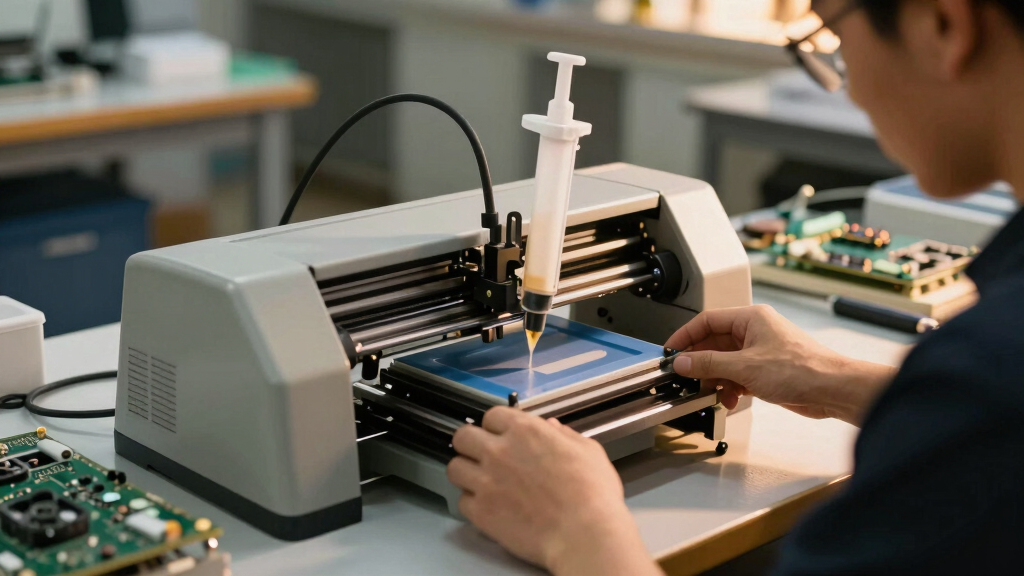

The best solder paste stencil printers combine stable PCB support, precise registration, and repeatable stencil placement without making every setup tedious. My best overall pick is the 3040 Manual Solder Paste Stencil Printer with ±0.01mm Accuracy because its X-Y fine-tuning and honeycomb base provide the most complete alignment and support package in this lineup. The iDili Upgraded Mini CNC Printer is a more approachable choice for small boards, while the 3040 High Accuracy Printer with Horizontal Angle Adjustment suits buyers who want finer rotational control. The main tradeoffs are compactness versus working area, simple fixtures versus multi-axis adjustment, and attractive accuracy claims versus hardware that can reproduce those results consistently. Continue reading for the full breakdown of where each option fits and which features merit a higher price.
Complete the kit


Key Takeaways
- X-Y fine-tuning and a honeycomb base separated the best overall 3040 model from the many listings that offer little beyond height adjustment.
- The two mini printers are better matched to small-board prototyping, but their restricted working areas make them weaker choices for larger panels or varied production work.
- Horizontal-angle adjustment gives the premium 3040 pick a meaningful advantage when stencil and pad edges are parallel but rotationally misaligned.
- Repeated use of the 3040 label hides meaningful differences: fixture design, adjustment axes, and support structure matter more than the shared model number.
- Published claims such as ±0.01mm accuracy carry more weight when paired with fine controls and rigid workholding; the number alone does not establish repeatable printing.
| 3040 Manual Solder Paste Stencil Printer |  | Best Overall | Repeatability: ±0.01 mm | Maximum print size: 300 × 400 mm | Maximum print size in inches: 11.8 × 15.7 inches | VIEW LATEST PRICE | See Our Full Breakdown |
| 3040 SMT PCB Stencil Printer |  | Best for Routine Bench Work | Printing width: 300 mm | Printing depth: 400 mm | Platform material: Aluminum | VIEW LATEST PRICE | See Our Full Breakdown |
| iDili Upgraded Mini CNC Solder Paste Stencil Printer |  | Best Compact Pick | Material: CNC aluminum | Maximum PCB size: 10.9 × 13.5 cm | Component height support: Up to 6 mm | VIEW LATEST PRICE | See Our Full Breakdown |
| 3040 Screen Stencil Printer | | Best for Flexible Positioning | Print size: 300 × 400 mm | Repeatability: ±0.01 mm | Base type: Honeycomb plate | VIEW LATEST PRICE | See Our Full Breakdown |
| 3040 SMT Screen PCB Stencil Printer |  | Best Crossover Pick | Platform size: 11.81 × 15.75 inches | Metric size: Approximately 300 × 400 mm | Material: Aluminum and steel | VIEW LATEST PRICE | See Our Full Breakdown |
| JINHZIXIU 3040 Solder Paste Printer |  | Best Overall | Model: 3040 | Printing Size: 300 x 400 mm | Repeatability: ±0.01 mm | VIEW LATEST PRICE | See Our Full Breakdown |
| Mini CNC Solder Paste Stencil Printer with Dual-Sided PCB Fixture |  | Best Compact Pick | Alignment Accuracy: ±0.1 mm | Maximum PCB Size: 11 x 17 cm | Supported PCB Thicknesses: 0.8, 1.0, 1.2, and 1.6 mm | VIEW LATEST PRICE | See Our Full Breakdown |
| 3040 Solder Paste Printer with Adjustable Height and High Repetition Accuracy | | Best for Fine Calibration | Model: 3040 | Printer Type: Manual solder paste stencil printer | Repeatability: ±0.01 mm | VIEW LATEST PRICE | See Our Full Breakdown |
| 3040 SMT Screen Manual Stencil Printer |  | Best for Thick Workpieces | Printer Type: Manual SMT screen stencil printer | Material: Aluminum | Repeatability: ±0.01 mm | VIEW LATEST PRICE | See Our Full Breakdown |
| PCB Stencil Printer High Accuracy SMT Solder Paste Printing Machine |  | Best Heavy-Duty Build | Printer Type: Manual SMT solder paste printer | Repeatability: ±0.01 mm | Positioning System: Honeycomb base plate with movable supports | VIEW LATEST PRICE | See Our Full Breakdown |
| 3040 Solder Paste Stencil Printer, High Accuracy ±0.01mm | | Best for Multi-Material Printing | Accuracy: ±0.01mm | Operation: Manual | Angle adjustment: Manual horizontal adjustment | VIEW LATEST PRICE | See Our Full Breakdown |
| Solder Paste Printer, 3040 Model, Manual Stencil Printer for SMT PCB | | Best for Thick Workpieces | Model: 3040 | Operation: Manual | Thickness range: 0–3.15 inches | VIEW LATEST PRICE | See Our Full Breakdown |
| 3040 Solder Paste Printer, Manual SMT PCB Stencil Printer, 300x400mm | | Best for Medium PCB Layouts | Model: 3040 | Operation: Manual | Print width: 300mm (11.8 inches) | VIEW LATEST PRICE | See Our Full Breakdown |
| solder paste stencil printer | Repeatability | Height adjustment |
|---|---|---|
| 3040 Manual Solder Paste Stenc | ±0.01 mm | — |
| 3040 SMT PCB Stencil Printer | ±0.01 mm | Yes |
| iDili Upgraded Mini CNC Solder | — | — |
| 3040 Screen Stencil Printer | ±0.01 mm | — |
| 3040 SMT Screen PCB Stencil Pr | ±0.01 mm | Yes |
| JINHZIXIU 3040 Solder Paste Pr | ±0.01 mm | Yes |
| Mini CNC Solder Paste Stencil | — | — |
| 3040 Solder Paste Printer with | ±0.01 mm | Adjustable |
| 3040 SMT Screen Manual Stencil | ±0.01 mm | Yes |
| PCB Stencil Printer High Accur | ±0.01 mm | — |
| 3040 Solder Paste Stencil Prin | — | — |
| Solder Paste Printer | ±0.01mm | Adjustable |
| 3040 Solder Paste Printer | ±0.01mm | Adjustable |
More Details on Our Top Picks
3040 Manual Solder Paste Stencil Printer
I rank the 3040 Manual Solder Paste Stencil Printer first because its positioning controls, documented build quality, and large work area form the strongest all-around package here. The ±0.01 mm repeatability supports consistent stencil registration, while X-Y fine-tuning and adjustable stencil height let an operator correct alignment without repeatedly repositioning the board. Its honeycomb base also accommodates varied PCB layouts. Compared with the 3040 Solder Paste Printer B0D9BKDRBN, this model provides a more clearly specified fixture and adjustment system; compared with the compact iDili printer, it accepts far larger boards. That flexibility comes with a learning curve: every print remains operator-controlled, and the machine offers no automation for production runs. Its 300 × 400 mm capacity is generous for bench work but still sets a firm upper limit.
Pros:- ±0.01 mm repeatability supports consistent stencil registration
- X-Y fine-tuning permits controlled alignment corrections
- Honeycomb base accommodates varied PCB layouts
- Aluminum-and-steel construction provides a stable printing platform
Cons:- Manual printing quality depends on operator setup and technique
- Maximum board area is limited to 300 × 400 mm
- No automated features for production-scale throughput
Best for: I would choose this for prototyping labs and small PCB assembly shops that need fine alignment control across varied board sizes.
Not ideal for: I would skip it for high-volume lines that require automated paste dispensing, board transport, or programmed print cycles.
- Repeatability:±0.01 mm
- Maximum print size:300 × 400 mm
- Maximum print size in inches:11.8 × 15.7 inches
- Frame material:Aluminum and steel
- Base type:Honeycomb
- Alignment adjustment:X-Y axis fine-tuning
- Stencil adjustment:Adjustable height
- Operation:Manual
Our verdict“I recommend this as the most balanced choice for buyers who want large-format capacity, precise adjustment, and durable manual construction.”
3040 SMT PCB Stencil Printer
The 3040 SMT PCB Stencil Printer is my pick for repeatable bench work where a large printing area matters more than elaborate fixture controls. Its aluminum platform and steel base provide a rigid foundation, and ±0.01 mm repeatability places its claimed precision alongside the higher-ranked 3040 Manual Solder Paste Stencil Printer. Height adjustment and straightforward calibration make it suitable for recurring stencil jobs once an operator has established the setup. The difference is documentation: unlike that Best Overall model, this printer does not specify X-Y fine-tuning or a honeycomb base, leaving less certainty about handling unusually shaped boards. It also remains fully manual, so output consistency and speed depend on operator technique. I see its 300 × 400 mm work area as a practical fit for established processes rather than frequent fixture changes.
Pros:- Large 300 × 400 mm printing area
- ±0.01 mm claimed repeatability
- Aluminum platform and steel base resist movement
- Height adjustment supports stencil calibration
Cons:- No documented X-Y fine-adjustment mechanism
- Manual operation demands practiced squeegee and setup technique
- No automated cycle or production-line features
Best for: I would choose this for repair departments and low-volume assembly benches that repeatedly print similarly sized PCBs.
Not ideal for: I would skip it for prototype teams that frequently change board shapes and need clearly documented multi-axis fixture controls.
- Printing width:300 mm
- Printing depth:400 mm
- Platform material:Aluminum
- Base material:Steel
- Repeatability:±0.01 mm
- Height adjustment:Yes
- Calibration:Manual
- Operation:Manual
Our verdict“I recommend this for established manual workflows that need a rigid, full-size platform without paying for features beyond basic calibration.”
iDili Upgraded Mini CNC Solder Paste Stencil Printer
I place the iDili Upgraded Mini CNC Printer ahead of larger alternatives for compact boards and dual-sided assembly. Its CNC-aluminum fixture, laser-etched scales, and tool-free clamping favor quick, repeatable board placement without occupying the space of a 3040 frame. More important, support for components up to 6 mm high makes flipping and securing populated boards more practical. The 3040 Manual Solder Paste Stencil Printer offers a much larger 300 × 400 mm area, but the iDili is better matched to small dual-sided PCBs and frequent benchtop setup changes. Its limitations are equally clear: boards cannot exceed 10.9 × 13.5 cm, supported thicknesses are restricted to four listed sizes, and some assemblies may need extra shims. I view its specialized fixture design as an advantage only when compact PCB work dominates.
Pros:- Compact CNC-aluminum fixture resists corrosion
- Supports dual-sided boards with components up to 6 mm high
- Tool-free clamping speeds board changes
- Laser-etched scales aid repeatable alignment
Cons:- Maximum PCB size is only 10.9 × 13.5 cm
- Compatibility is limited to four listed board thicknesses
- Some board setups may require additional shims
Best for: I would choose this for makers, repair technicians, and prototype engineers assembling compact dual-sided PCBs.
Not ideal for: I would skip it for shops printing panels or boards larger than 10.9 × 13.5 cm, or anyone needing broad thickness compatibility without shims.
- Material:CNC aluminum
- Maximum PCB size:10.9 × 13.5 cm
- Component height support:Up to 6 mm
- Compatible PCB thicknesses:0.8, 1.0, 1.2, and 1.6 mm
- Board support:Dual-sided PCB processing
- Clamping:Tool-free
- Alignment markings:Laser-etched scales
- Corrosion resistance:Yes
Our verdict“I recommend the iDili for compact dual-sided assembly where fast clamping matters more than large-board capacity.”
3040 Screen Stencil Printer
The 3040 Screen Stencil Printer earns its place through a flexible board-positioning arrangement rather than a distinctive capacity advantage. Its honeycomb plate and movable support let an operator adapt the fixture to different PCB placements, while separate X-Y calibration reduces the need to disturb the board when correcting registration. That gives it an alignment advantage over the more simply documented 3040 SMT PCB Stencil Printer B0D9BKDRBN. It does not outrank the Best Overall 3040 model because the listing provides less detail about construction and PCB compatibility, despite claiming the same ±0.01 mm repeatability and 300 × 400 mm area. Manual calibration also leaves results dependent on setup discipline. I would treat this as a positioning-focused alternative for changing layouts, provided the buyer verifies that the movable supports suit the intended boards.
Pros:- Honeycomb base supports flexible fixture placement
- Movable support accommodates changing board positions
- X-Y calibration allows controlled registration corrections
- Adjustable stencil-holder height supports varied setups
Cons:- Construction materials are not specified
- PCB compatibility details are limited
- Manual calibration and printing require operator skill
Best for: I would choose this for prototype benches that frequently reposition different PCB layouts within a full-size 3040 printing area.
Not ideal for: I would skip it for buyers who need documented material specifications or confirmed compatibility with a defined range of PCB sizes.
- Print size:300 × 400 mm
- Repeatability:±0.01 mm
- Base type:Honeycomb plate
- Board support:Movable
- X-axis adjustment:Yes
- Y-axis adjustment:Yes
- Stencil-holder height:Adjustable
- Operation:Manual
Our verdict“I recommend this for varied prototype layouts when fixture flexibility matters more than fully documented construction details.”
3040 SMT Screen PCB Stencil Printer
I see the 3040 SMT Screen PCB Stencil Printer as the crossover choice for workshops handling PCB stencils alongside packaging or advertising print tasks. Its 11.81 × 15.75-inch platform matches the capacity of the other 3040 machines, while the honeycomb positioning plate and adjustable height support varied workpiece placement. Compared with the positioning-focused 3040 Screen Stencil Printer B0GFDCM4DK, however, this model does not clearly specify movable supports or independent X-Y controls. That makes its claimed ±0.01 mm repeatability less persuasive for buyers who need fully documented PCB registration features. Aluminum-and-steel construction gives it a sturdier case than listings that omit material details, but manual calibration can still be demanding for beginners. I rank it lower for dedicated electronics work, yet its mixed-application flexibility gives it a clear role in a multipurpose shop.
Pros:- Full-size 11.81 × 15.75-inch printing platform
- Honeycomb base supports flexible workpiece positioning
- Aluminum-and-steel construction offers corrosion resistance
- Adjustable height accommodates different printing setups
Cons:- Independent X-Y fine-tuning is not specified
- Manual calibration may be difficult for beginners
- Compatible PCB sizes and thicknesses are not documented
Best for: I would choose this for small fabrication shops that divide a manual screen-printing station between PCB, packaging, and advertising work.
Not ideal for: I would skip it for first-time PCB assemblers or fine-pitch specialists who need clearly specified X-Y controls and board compatibility.
- Platform size:11.81 × 15.75 inches
- Metric size:Approximately 300 × 400 mm
- Material:Aluminum and steel
- Repeatability:±0.01 mm
- Base type:Honeycomb plate
- Height adjustment:Yes
- Positioning:Flexible manual positioning
- Calibration:Manual
Our verdict“I recommend this for multipurpose workshops, while dedicated PCB buyers should favor a model with better-documented alignment controls.”
JINHZIXIU 3040 Solder Paste Printer
I rank the JINHZIXIU 3040 highest because it combines ±0.01 mm repeatability with a documented 300 x 400 mm printing area and four support feet. Compared with the 3040 Solder Paste Printer B0FCLL5YWB, its stated capacity makes project planning less uncertain, while the honeycomb plate and movable supports accommodate varied board layouts. Height adjustment also gives operators more control over paste deposition than a fixed fixture. This is still a manual production tool, so consistent results depend on careful calibration and squeegee technique. It also occupies far more bench space than the Mini CNC Solder Paste Stencil Printer and lacks that model’s double-sided-board support. I see it as the strongest general-purpose choice for experienced prototype labs, but excessive for occasional small-board work.
Pros:- ±0.01 mm repeatability supports consistent stencil alignment
- 300 x 400 mm printing area accommodates medium and larger PCB projects
- Honeycomb plate and movable supports allow flexible board positioning
- Four support feet and height adjustment provide a stable, controllable setup
Cons:- Manual calibration and printing technique require operator skill
- Larger footprint is poorly suited to crowded workbenches
- No automated alignment or print cycle
Best for: Prototype labs and low-volume SMT workshops that print varied PCB layouts within a 300 x 400 mm working area
Not ideal for: First-time assemblers or space-limited benches that would benefit from a smaller, simpler fixture
- Model:3040
- Printing Size:300 x 400 mm
- Repeatability:±0.01 mm
- Height Adjustment:Yes
- Base Plate:Honeycomb
- Positioning:Movable support components
- Support Feet:4
Our verdict“I recommend this model to experienced shops seeking the best balance of documented capacity, positioning flexibility, and repeatability.”
Mini CNC Solder Paste Stencil Printer with Dual-Sided PCB Fixture
The Mini CNC Solder Paste Stencil Printer is my compact pick for small, fine-pitch projects, especially when components already populate the reverse side. Its fixture accepts boards up to 11 x 17 cm, four common thicknesses, and underside components as tall as 6 mm. Unlike the JINHZIXIU 3040, it offers dual-sided PCB support and tool-free knobs in a much smaller format. Laser-etched scales aid repeatable setup, while the CNC-machined aluminum body resists flex and corrosion. The compromise is ±0.1 mm alignment accuracy, which is looser than the ±0.01 mm figure claimed by the larger 3040 machines. Board capacity is also restrictive, and users must manually configure the fixture for each thickness. I would choose it for compact assembly work, not larger panels or operators wanting the simplest first setup.
Pros:- Dual-sided fixture accommodates underside components up to 6 mm high
- Tool-free hand knobs speed up board changes
- Laser-etched scales support controlled manual alignment
- CNC-machined aluminum construction is rigid and corrosion resistant
Cons:- Maximum 11 x 17 cm board size excludes larger PCBs and panels
- ±0.1 mm alignment accuracy trails the listed repeatability of 3040 models
- Thickness changes require manual fixture adjustment
Best for: Small electronics labs assembling fine-pitch or double-sided PCBs no larger than 11 x 17 cm
Not ideal for: Panelized-board production or buyers who need the ±0.01 mm repeatability claimed by full-size 3040 printers
- Alignment Accuracy:±0.1 mm
- Maximum PCB Size:11 x 17 cm
- Supported PCB Thicknesses:0.8, 1.0, 1.2, and 1.6 mm
- Component Height Support:Up to 6 mm
- Material:CNC-machined aluminum
- Setup:Tool-free hand-tightened knobs
- Alignment Scales:Laser etched
- PCB Configuration:Dual sided
Our verdict“I recommend this compact fixture for small double-sided boards, provided its limited work area and looser alignment specification fit the project.”
3040 Solder Paste Printer with Adjustable Height and High Repetition Accuracy
I would select this 3040 Solder Paste Printer when fine setup control matters more than clearly documented board capacity. Its standout feature is X- and Y-axis fine-tuning, paired with movable supports, positioning pins, and a universal honeycomb plate. Those controls make it easier to correct small stencil-to-pad offsets without rebuilding the whole fixture. It shares the claimed ±0.01 mm repeatability and height adjustment of the JINHZIXIU 3040, but the JINHZIXIU listing provides a clearer 300 x 400 mm printing limit and four-foot support specification. A knob-driven pressure plate keeps the assembly firm once aligned, which favors repeat runs. The drawback is setup complexity: beginners may need several calibration attempts, and the missing maximum PCB dimensions create purchasing uncertainty. I rank it below the JINHZIXIU for general buying confidence, yet above simpler fixtures for alignment control.
Pros:- X- and Y-axis fine-tuning permits precise alignment corrections
- ±0.01 mm stated repeatability suits repeated print runs
- Movable supports and pins adapt to different PCB layouts
- Pressure plate and knobs hold the calibrated setup firmly
Cons:- Maximum supported PCB size is not documented
- Multiple manual adjustments create a steeper learning curve
- No automated calibration or printing functions
Best for: Experienced prototyping teams that frequently correct X-Y stencil alignment across short, repeated PCB runs
Not ideal for: Buyers who need a verified maximum board size before ordering or beginners seeking quick setup
- Model:3040
- Printer Type:Manual solder paste stencil printer
- Repeatability:±0.01 mm
- Axis Calibration:X- and Y-axis fine-tuning
- Height Adjustment:Adjustable
- Base Plate:Universal honeycomb
- Positioning:Movable supports and pins
- Clamping:Knob with pressure plate
Our verdict“I favor this model for skilled operators who value granular X-Y calibration more than fully documented capacity.”
3040 SMT Screen Manual Stencil Printer
The 3040 SMT Screen Manual Stencil Printer earns its place through unusually broad workpiece adjustment rather than portability. It accepts material from 0 to 80 mm thick, while its worktable moves 10 mm vertically and horizontally. That range makes it better suited to fixtures, raised substrates, and mixed printing tasks than the JINHZIXIU 3040, whose listed data does not provide comparable thickness capacity. It also handles a 300 x 400 mm print area and screen frames up to 370 x 470 mm, backed by rigid aluminum construction and ±0.01 mm stated repeatability. Those capabilities come with a large, less portable format, and every alignment and print stroke remains manual. For standard flat PCBs, the X-Y fine-tuning emphasis of model B0FCLL5YWB may be more appealing. I would reserve this one for workshops that can use its extra vertical clearance.
Pros:- Supports material thicknesses from 0 to 80 mm
- 300 x 400 mm maximum printing area handles larger work
- 10 mm vertical and horizontal table adjustment broadens positioning options
- Aluminum construction provides a rigid working structure
Cons:- Large format and weight reduce portability
- Manual operation demands practiced alignment and paste control
- Extra thickness capacity offers little benefit for basic flat-PCB work
Best for: Workshop operators printing on thick fixtures, raised substrates, or varied materials up to 80 mm deep
Not ideal for: Mobile technicians and compact electronics benches that only handle thin, conventional PCBs
- Printer Type:Manual SMT screen stencil printer
- Material:Aluminum
- Repeatability:±0.01 mm
- Maximum Printing Size:300 x 400 mm
- Supported Screen Frame Size:Up to 370 x 470 mm
- Worktable Adjustment:10 mm vertical and horizontal
- Material Thickness Support:0–80 mm
- Height Adjustment:Yes
Our verdict“I recommend this printer when thick-workpiece clearance and large screen support justify its bulk and manual workflow.”
PCB Stencil Printer High Accuracy SMT Solder Paste Printing Machine
I give this PCB Stencil Printer the heavy-duty role because it pairs an aluminum working platform with a steel bottom plate. That mixed-material structure should favor rigidity during repeated manual strokes, while a honeycomb plate and movable supports accommodate changing PCB layouts. A spiral screw bar controls height, and X-Y fine-tuning addresses stencil alignment. Compared with the Mini CNC Solder Paste Stencil Printer, it offers the tighter stated figure of ±0.01 mm and a more substantial base, but it lacks the mini model’s tool-free convenience and explicit dual-sided support. It also trails the JINHZIXIU 3040 in purchasing clarity because no maximum printing dimensions are supplied. The calibration process requires training, and the potentially higher cost is difficult to justify for occasional assembly. I would pick it for a fixed production bench where durability outweighs speed of setup.
Pros:- Steel bottom plate supplies a rigid foundation for repeated printing
- Aluminum work platform balances durability with corrosion resistance
- X-Y fine-tuning and movable supports provide flexible alignment
- Spiral screw height control supports controlled stencil positioning
Cons:- Calibration may require training and repeated adjustment
- Maximum printing size is not stated
- Potential cost is hard to justify for infrequent PCB assembly
Best for: Established low-volume SMT benches that prioritize a rigid metal platform and repeatable manual alignment
Not ideal for: Occasional hobbyists who need documented board capacity, low cost, or a quick tool-free setup
- Printer Type:Manual SMT solder paste printer
- Repeatability:±0.01 mm
- Positioning System:Honeycomb base plate with movable supports
- Axis Adjustment:X- and Y-axis fine-tuning
- Height Control:Spiral screw bar
- Working Platform Material:Aluminum
- Bottom Plate Material:Steel
Our verdict“I would choose this model for a permanent SMT workstation where structural rigidity matters more than easy setup or clearly stated capacity.”
3040 Solder Paste Stencil Printer, High Accuracy ±0.01mm
I rank the 3040 High Accuracy Stencil Printer as the most versatile of these three because its stated applications extend beyond PCB assembly to packaging, advertising, craft, and glass printing. Its ±0.01mm positioning accuracy and adjustable X-Y axes support careful stencil alignment, while manual horizontal-angle control helps correct a slightly skewed setup. Compared with the 3040 Manual SMT PCB Stencil Printer B0D2WCJMXY, this model emphasizes cross-industry flexibility rather than a defined workpiece-thickness range. That makes it a better fit for a mixed-use workshop, but a less predictable choice when board thickness is the main constraint. I would also expect a steeper setup routine than with a compact fixture: every adjustment is manual, operator technique affects results, and the supplied data does not identify any production-assist or automatic features.
Pros:- Stated ±0.01mm positioning accuracy supports fine alignment
- Adjustable X and Y axes allow controlled calibration
- Manual angle correction accommodates skewed workpieces
- Aluminum-and-steel construction suits repeated workshop use
Cons:- Manual alignment demands operator skill and setup time
- No workpiece-thickness range is supplied
- No automatic functions are identified for production runs
Best for: Mixed-use workshops printing PCBs, glass, packaging, or craft materials that need fine manual alignment
Not ideal for: High-volume SMT lines that need automatic paste deposition or buyers who require a documented board-thickness capacity
- Accuracy:±0.01mm
- Operation:Manual
- Angle adjustment:Manual horizontal adjustment
- Positioning:Adjustable X and Y axes
- Construction:Aluminum and steel
- Applications:PCB, packaging, advertising, craft, and glass printing
Our verdict“I recommend this model for buyers who value application flexibility and precise manual positioning more than throughput or clearly documented capacity limits.”
Solder Paste Printer, 3040 Model, Manual Stencil Printer for SMT PCB
The deciding advantage of the 3040 Manual Stencil Printer B0D2WCJMXY is its documented 0–3.15-inch thickness range. I would choose it when fixtures, substrates, or unusually thick assemblies make vertical clearance a buying priority. Its honeycomb base aids flexible PCB placement, while separate X- and Y-axis knobs make small alignment corrections easier to repeat. The 3040 High Accuracy Stencil Printer B0B6HRGWB7 advertises broader printing applications and horizontal-angle adjustment, but it does not provide an equivalent thickness limit. This model gives buyers a clearer capacity figure, though its ±0.01mm claim describes repeatability rather than absolute accuracy. It is still a manual machine, so calibration skill and production pace remain operator-dependent. The substantial height allowance also brings little benefit to a shop handling only thin, standardized PCBs, where a smaller fixture may be quicker to set up.
Pros:- Documented 0–3.15-inch thickness range supports varied workpieces
- ±0.01mm repeatability favors consistent manual print cycles
- Separate X- and Y-axis knobs simplify fine calibration
- Honeycomb base provides flexible PCB positioning
Cons:- Manual printing is slower and more operator-dependent than automated equipment
- Calibration requires technical familiarity
- Repeatability specification does not establish absolute positioning accuracy
Best for: Prototype labs and mixed-substrate workshops that need adjustable clearance for boards, fixtures, or workpieces up to 3.15 inches thick
Not ideal for: High-throughput assembly lines or small-board users who do not need the added vertical capacity
- Model:3040
- Operation:Manual
- Thickness range:0–3.15 inches
- Repeatability:±0.01mm
- X-axis adjustment:Knob controlled
- Y-axis adjustment:Knob controlled
- Height adjustment:Adjustable
- Working surface:Aluminum
- Base:Steel with honeycomb layout
Our verdict“I favor this printer for buyers who need verified vertical capacity and repeatable adjustment across boards or fixtures of different thicknesses.”
3040 Solder Paste Printer, Manual SMT PCB Stencil Printer, 300x400mm
I place the 3040 Manual SMT PCB Stencil Printer B0F2HQBYHD here for buyers who want an explicitly stated 300x400mm working format. That footprint makes project planning easier than with the B0B6HRGWB7 model, whose supplied data does not state a print area. Adjustable height and flexible positioning help align small or medium boards, while the aluminum platform and steel structure provide a stable base for repeated squeegee passes. Compared with the 3040 Manual Stencil Printer B0D2WCJMXY, however, this unit lacks a documented thickness range, so the other model is the safer choice for tall fixtures or layered assemblies. Its ±0.01mm repeatability is attractive for recurring jobs, but manual setup still limits speed and makes results dependent on calibration technique. Large panels and production-scale batches fall outside this model’s strongest use case.
Pros:- Clearly stated 300x400mm format simplifies board-size matching
- ±0.01mm repeatability supports consistent recurring layouts
- Height adjustment helps accommodate different stencil setups
- Honeycomb base allows flexible PCB placement
Cons:- Cannot accommodate PCB layouts beyond the stated 300x400mm format
- No maximum workpiece-thickness figure is provided
- Manual alignment and printing limit high-volume productivity
Best for: Small SMT shops and prototyping teams that regularly print boards within a clearly defined 300x400mm format
Not ideal for: Fabricators working with panels larger than 300x400mm, tall fixtures requiring a stated clearance, or automated production lines
- Model:3040
- Operation:Manual
- Print width:300mm (11.8 inches)
- Print length:400mm (15.7 inches)
- Working format:300x400mm
- Height adjustment:Adjustable
- Repeatability:±0.01mm
- Construction:Aluminum and steel
- Base plate:Honeycomb design
Our verdict“I would pick this model for repeatable prototype and small-batch printing when a documented 300x400mm work area matters more than automation or tall-fixture capacity.”
How We Picked
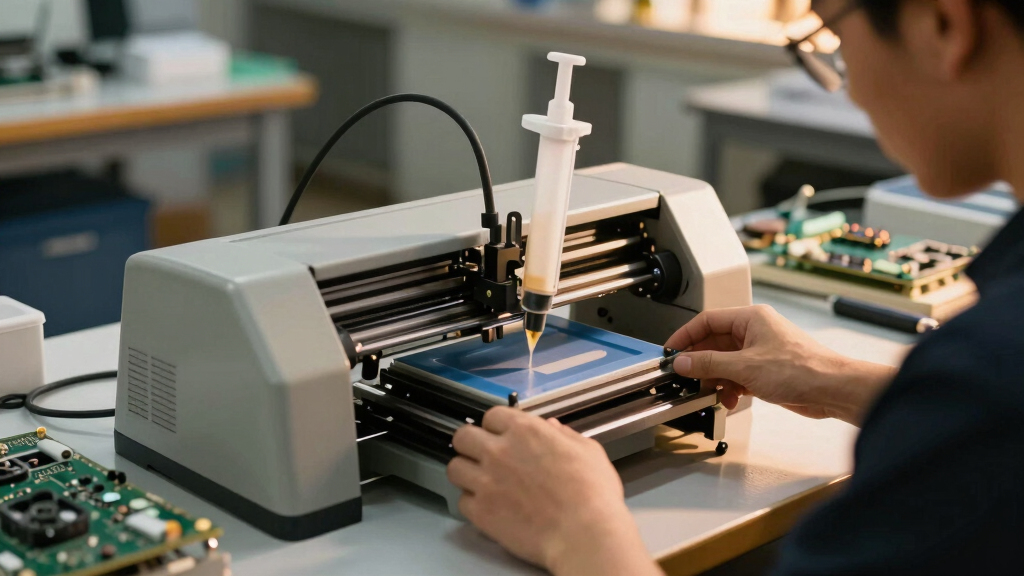
I ranked these printers by how well their listed designs address the real sources of poor paste deposits: movement, incomplete board support, awkward registration, and inconsistent stencil height. My highest weighting went to alignment control, followed by fixture stability, usable print area, repeatability, and setup speed. Claimed accuracy helped a product move upward only when the listing also identified hardware capable of making small corrections. This approach placed the X-Y-adjustable, honeycomb-base model ahead of basic 3040 machines that mention only height adjustment.
I also judged how clearly each printer serves a defined buyer. Compact dual-sided fixtures earned credit for prototype-friendly handling, while 300 x 400mm platforms ranked better for board variety and larger stencils. I treated near-identical generic listings cautiously because unclear differentiation makes build quality, replacement parts, and after-sale support harder to judge. The ordering reflects the published configurations supplied for this roundup rather than hands-on testing, so seller documentation and current pricing should still be checked before purchase.
| solder paste stencil printer | Repeatability | Height adjustment |
|---|---|---|
| 3040 Manual Solder Paste Stenc | ±0.01 mm | — |
| 3040 SMT PCB Stencil Printer | ±0.01 mm | Yes |
| iDili Upgraded Mini CNC Solder | — | — |
| 3040 Screen Stencil Printer | ±0.01 mm | — |
| 3040 SMT Screen PCB Stencil Pr | ±0.01 mm | Yes |
| JINHZIXIU 3040 Solder Paste Pr | ±0.01 mm | Yes |
| Mini CNC Solder Paste Stencil | — | — |
| 3040 Solder Paste Printer with | ±0.01 mm | Adjustable |
| 3040 SMT Screen Manual Stencil | ±0.01 mm | Yes |
| PCB Stencil Printer High Accur | ±0.01 mm | — |
| 3040 Solder Paste Stencil Prin | — | — |
| Solder Paste Printer | ±0.01mm | Adjustable |
| 3040 Solder Paste Printer | ±0.01mm | Adjustable |
Factors to Consider When Choosing Best Solder Paste Stencil Printers
A stencil printer should match the boards, stencils, and production rhythm around it rather than merely offer the largest platform. I would start with the adjustment system and workholding design, then decide how much print area is genuinely useful. The sections below explain where buyers commonly overspend, where basic machines become limiting, and which specifications deserve closer scrutiny.
Match the Print Area to the Entire Stencil Setup
A 300 x 400mm rating usually describes the nominal printing area, not every stencil frame or PCB arrangement the machine can accept. I would check the frame dimensions, clamp travel, and board clearance against the tooling already planned for the bench. A large platform gives more freedom for panels and mixed projects, but it also occupies more space and can slow small-board setup. Mini printers suit compact prototypes when the board remains comfortably inside the supported zone. Placing a small PCB near the edge of an oversized, poorly supported stencil may create more flex than expected. The right choice leaves working margin around the board without paying for unused capacity.
Choose Adjustment Axes Based on Registration Difficulty
Height adjustment controls stencil contact, but it does not correct a board that sits left, right, forward, or at a slight angle. X-Y fine controls save time when pad alignment must be corrected without repeatedly loosening the PCB fixture. Rotational adjustment becomes valuable for fine-pitch layouts because a small angular error grows across a long row of pads. Basic height-only 3040 models can still work for forgiving footprints, reusable jigs, and boards with generous pad spacing. I would pay more for multiple adjustment axes when the workload changes often or includes QFNs, dense connectors, and fine-pitch ICs. For repeat jobs built around a fixed jig, simple controls may be faster than a more elaborate mechanism.
Examine Workholding and Support Beneath the PCB
Good registration cannot compensate for a board that shifts or bows while the squeegee passes over it. A honeycomb base offers flexible mounting points and distributed support, which is useful when board sizes change regularly. Dual-sided fixtures can hold small PCBs neatly while giving the operator more placement options than a single fixed edge. Boards with bottom-side components need dedicated support blocks or relief areas so they sit flat without crushing installed parts. I would also check whether clamps can stay clear of the squeegee path and stencil frame. Flat, repeatable workholding often improves deposits more than an ambitious accuracy number printed in a listing.
Separate Claimed Accuracy From Practical Repeatability
A ±0.01mm figure sounds decisive, yet the listing may not state how that number was measured or which movement it describes. Practical results also depend on frame rigidity, screw backlash, hinge play, and clamp consistency. Repeatability matters more than a best-case measurement when several boards must receive similar paste volumes. I favor models whose adjustment hardware, base structure, and fixture design support the precision being claimed. Buyers should ask the seller for a manual, close-up mechanism photos, and repeatability data when fine-pitch work drives the purchase. A machine with credible mechanical control is a safer choice than a bare precision claim attached to an otherwise basic frame.
Account for Setup Time, Cleaning, and Seller Support
The purchase price covers only one part of the printing workflow. Frequent product changes make fast clamping, readable scales, and accessible adjustment knobs more valuable because they reduce alignment work between runs. Paste residue can collect around clamps, guides, and fine-adjustment screws, so exposed mechanisms should be easy to wipe without dismantling the machine. Replacement clamps, support pins, and frame hardware also affect how long a generic printer remains useful. I would favor a well-documented seller when two 3040 listings appear mechanically similar, even if the better-supported option costs a little more. Clear parts availability and setup documentation can outweigh a minor price difference.
Frequently Asked Questions
Should I Buy a Full-Size 3040 Printer or a Mini Stencil Printer?
I would choose a 3040 printer for larger boards, panels, framed stencils, or a workshop that handles varied projects. A mini model makes more sense for compact prototypes, limited bench space, and buyers who work repeatedly with small PCBs. The smaller fixture may also feel less cumbersome during quick setup, but it leaves little room for future board growth. Compare the largest planned board and stencil frame with the machine’s actual clamp range rather than relying on the model name. If both formats fit, let project variety and workspace decide.
Are X-Y and Angle Adjustments Worth Paying More For?
X-Y adjustment is worth the added cost when boards change frequently or pad spacing leaves little tolerance for registration error. Angle control solves a different problem: it corrects rotation that cannot be removed by moving the board only sideways or forward. Basic height-only machines remain reasonable for coarser components and fixtures that return each PCB to the same location. I would prioritize X-Y control before angle adjustment for general-purpose work, then add angle control for long fine-pitch footprints or larger boards. The benefit is faster correction with less fixture disturbance, not merely a longer specification list.
Can I Rely on a Listed ±0.01mm Accuracy Rating?
I would treat ±0.01mm as a comparison clue, not a guaranteed printing result. The completed deposit also depends on stencil thickness, aperture design, paste condition, squeegee pressure, board flatness, and mechanical play. Ask whether the figure describes adjustment resolution, positioning accuracy, or measured repeatability across multiple cycles. A rigid base and fine controls make the claim more believable than height adjustment alone. For demanding assemblies, request measurement methods and repeatability data from the seller before paying a premium.
When Is a Dual-Sided PCB Fixture Useful?
A dual-sided fixture is useful when small boards need support from different edges or when component placement limits where clamps can touch. It can shorten setup for prototypes by providing more ways to locate the PCB without building a dedicated jig. The design does not automatically accommodate populated underside components, since those parts may still require relief below the board. Large or thin PCBs can also need extra support outside the fixture to prevent flex. I see this feature as strongest for small, frequently changed boards rather than large production panels.
Is a Packaging-Oriented Screen Printer Suitable for Fine-Pitch PCB Work?
A printer marketed for both PCB and packaging work may handle solder paste, but the broader description does not confirm fine-pitch registration capability. Check the clamp design, adjustment resolution, stencil separation action, and PCB support system closely. Packaging-focused flexibility offers little benefit if the platform lacks controlled X-Y or angular correction. Such a machine may still suit larger pads, simple boards, or non-electronic screen-printing jobs. For dense SMT layouts, I would choose a model with PCB-specific positioning hardware and clearer repeatability information.
Conclusion
For most buyers, my best overall choice is the 3040 Manual Solder Paste Stencil Printer with ±0.01mm Accuracy, X-Y Fine-Tuning, and a Honeycomb Base because it combines the strongest alignment and workholding features in the group. The Mini CNC Solder Paste Stencil Printer with Dual-Sided PCB Fixture is my best-value pick for small boards when its current price sits below the upgraded iDili version. Beginners should choose the iDili Upgraded Mini CNC Printer, whose laser-etched scales and compact fixture make registration easier to understand. Buyers seeking premium adjustment should favor the 3040 High Accuracy Printer with Manual Horizontal Angle Adjustment, especially for layouts where rotational error is hard to remove. For frequent board changes requiring direct axis correction, the PCB Stencil Printer with Adjustable Height and X-Y Axis is the stronger specialist choice, while a basic height-adjustable 3040 model suits larger, forgiving boards and fixed jigs. I would make the final decision by matching the printer’s adjustment system to the finest footprint and largest board actually planned for the bench.