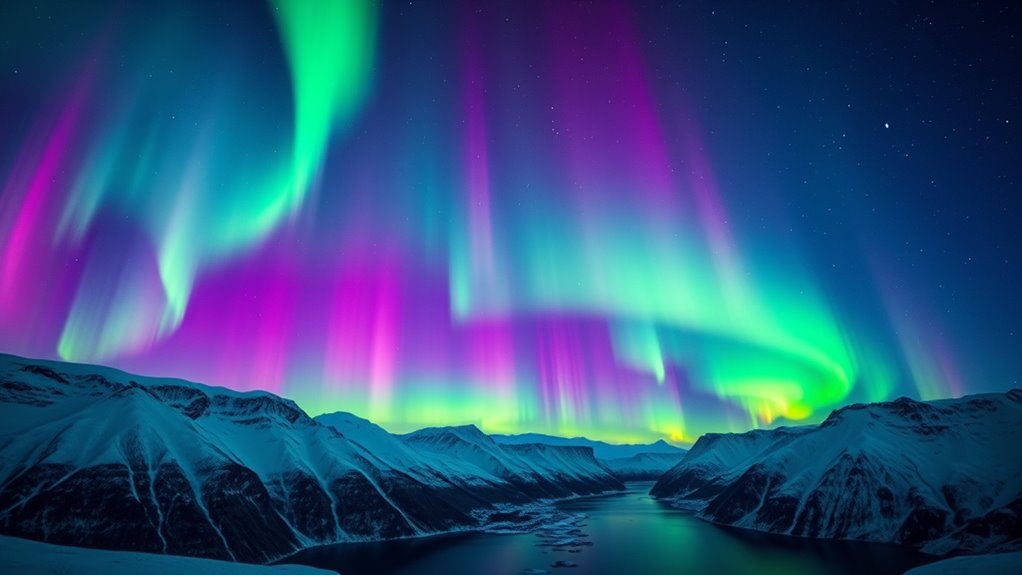

Aurora legends tell stories that transform these dazzling lights into mythical beings, ancestral spirits, or celestial warriors. Many cultures see them as signals from gods or spirits dancing across the sky, symbolizing protection, bravery, or divine power. These stories help connect people with nature, the universe, and their cultural roots. If you keep exploring, you’ll discover how these legends deepen our understanding of the mysteries behind the auroras.

Get the latest gadgets delivered free with Prime
- Fast, free delivery on millions of items
- Prime Video, Amazon Music and more included
- Member-only deals all year
Key Takeaways
- Aurora legends depict the lights as spirits, gods, or mythical creatures guiding, protecting, or battling across the sky.
- Indigenous Arctic cultures see the lights as ancestral spirits or animals, embodying divine presence and guidance.
- Legends symbolize bravery, divine intervention, and cosmic battles, portraying the auroras as warriors or divine messengers.
- Stories connect the lights to cultural values, emphasizing respect for nature, spiritual realms, and ancestral wisdom.
- These myths transform natural phenomena into symbols of wonder, linking human history, mythology, and cultural identity.
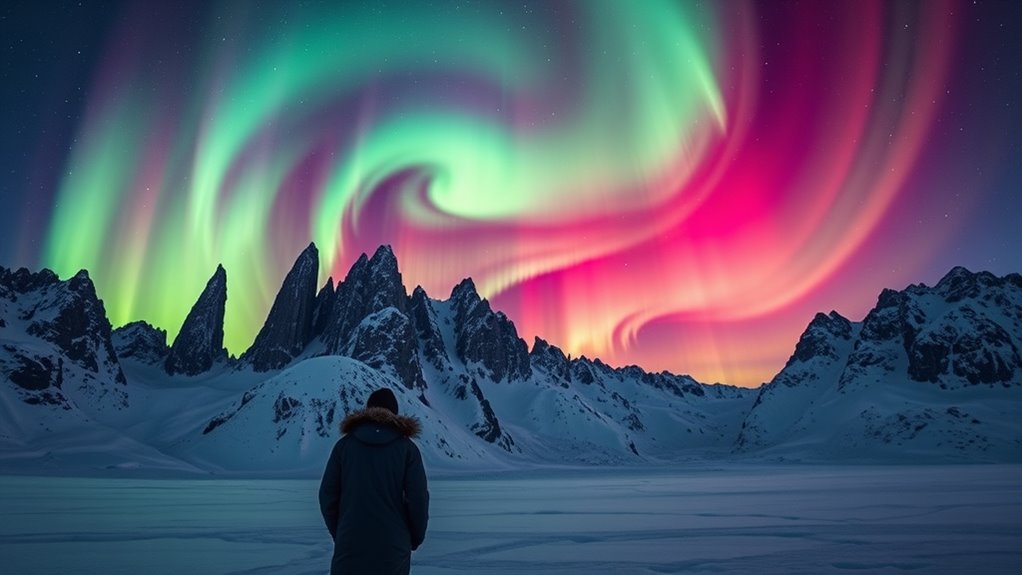
Have you ever wondered about the stories behind the stunning northern lights? These dazzling displays of color in the night sky have fascinated humans for centuries, inspiring myths and legends across cultures. In many traditions, the northern lights are more than just natural phenomena; they’re believed to be the domain of mythical creatures or spiritual symbols that carry deep cultural meaning. You might picture spirits dancing across the sky or celestial beings weaving vibrant tapestries of light, depending on the story you hear. These legends often serve to explain the lights’ mysterious movements and shimmering hues, giving them a storybook quality that sparks the imagination.
Northern lights inspire myths, depicting spirits dancing and celestial beings weaving vibrant stories across the night sky.
In some indigenous Arctic cultures, the northern lights are seen as the spirits of ancestors or animals, guiding and watching over their descendants. For instance, the Inuit believed that the lights represented the spirits of their loved ones, and they would often perform rituals to honor these luminous ancestors. To others, the lights were signals from mythical creatures—like great sea serpents or giant birds—whose movements created the mesmerizing displays. These stories weren’t just entertainment; they held cultural symbolism, reinforcing respect for nature and the unseen forces believed to influence life on Earth. The lights became a visual language, a way to connect the spiritual and physical worlds, reminding people of their place within a larger cosmic order.
Across Siberia and Northern Europe, legends often depict the lights as the armor or spirits of celestial warriors, battling in the sky or celebrating victorious battles. These stories imbue the lights with strength and energy, symbolizing bravery, protection, or divine intervention. In some Scandinavian myths, the northern lights were thought to be the reflections of valkyries’ armor, illuminating the heavens as they led fallen heroes to Valhalla. The cultural symbolism tied to these legends emphasizes themes of honor, courage, and the divine, transforming a natural phenomenon into a sacred spectacle that connects humans with their gods and ancestors. Additionally, understanding the cultural significance of the northern lights helps deepen appreciation for their enduring presence in human stories and traditions.
Whether viewed as spirits of loved ones, mythical guardians, or celestial warriors, the northern lights serve as powerful cultural symbols. They remind you of the rich tapestry of stories woven through human history, where natural wonders are personified and celebrated. These legends aren’t just about the sky; they’re about understanding the universe, finding meaning in the mysterious, and feeling a deep connection to something greater than yourself. As you watch the shimmering lights dance across the night, remember that you’re witnessing centuries of myth, symbolism, and cultural storytelling—an enduring legacy of wonder and reverence.
As an affiliate, we earn on qualifying purchases.
Frequently Asked Questions
How Do Scientists Predict Aurora Activity Levels?
Scientists predict aurora activity levels through aurora forecasting by analyzing geomagnetic indices like the Kp index. You can monitor real-time data from satellites and ground-based observatories that track solar wind conditions and magnetic disturbances. When these indices rise, it indicates heightened geomagnetic activity, increasing the chances of visible auroras. By understanding these patterns, you can better anticipate when and where the lights might appear.
Can Auroras Be Seen From Space?
Imagine the sky as a canvas where the gods paint their stories in shimmering greens and purples. Yes, you can see auroras from space, as astronauts often capture stunning aurora photography. These celestial displays embody ancient aurora myths, symbolizing divine presence and natural wonder. From orbit, the lights become a cosmic dance, reminding you that the universe itself is alive with stories waiting to be told through your lens.
What Are the Cultural Taboos Related to Auroras?
You should be aware that many cultures have traditional beliefs and superstitions about auroras. Some see them as bad omens or warnings of disaster, so avoiding certain activities during aurora displays is common. In other regions, people believe auroras are spirits or ancestors watching over them. Respect these cultural superstitions, and understand that these traditional beliefs shape how different communities interpret the stunning lights in the sky.
Are There Any Health Risks Associated With Viewing Auroras?
You might stumble upon a surprising coincidence—viewing auroras usually isn’t risky, but you should still be cautious. Prolonged exposure to cold temperatures can cause hypothermia if you’re not dressed warmly, and if you have visual impairments, you might overlook hazards in the dark. Stay warm, keep an eye on your surroundings, and enjoy the breathtaking lights safely without risking cold-related health issues or injury.
How Do Auroras Influence Local Wildlife Behavior?
You might notice that auroras influence local wildlife behavior by disrupting natural patterns. For example, polar bears could experience changes in migration timing, as the lights affect their environment. Birds that rely on celestial cues for navigation might become disoriented during intense auroral displays. These natural phenomena can temporarily alter animal behaviors, highlighting the profound connection between auroras and the ecosystems they illuminate.
As an affiliate, we earn on qualifying purchases.
Conclusion
As you watch the dancing lights streak across the sky, remember they’re like celestial storytellers, whispering age-old legends through shimmering ribbons. These auroras are nature’s own fireworks, painting the night with stories of gods, spirits, and magic. Just as a lantern guides your way in darkness, the northern and southern lights illuminate the mystery and wonder of our world. Embrace their beauty, for they remind us that even in darkness, there’s a breathtaking light waiting to be discovered.
cultural stories of the northern lights
As an affiliate, we earn on qualifying purchases.
As an affiliate, we earn on qualifying purchases.
mythology of the southern lights
As an affiliate, we earn on qualifying purchases.
As an affiliate, we earn on qualifying purchases.
Halloween Picks
halloween
As an affiliate, we earn on qualifying purchases.