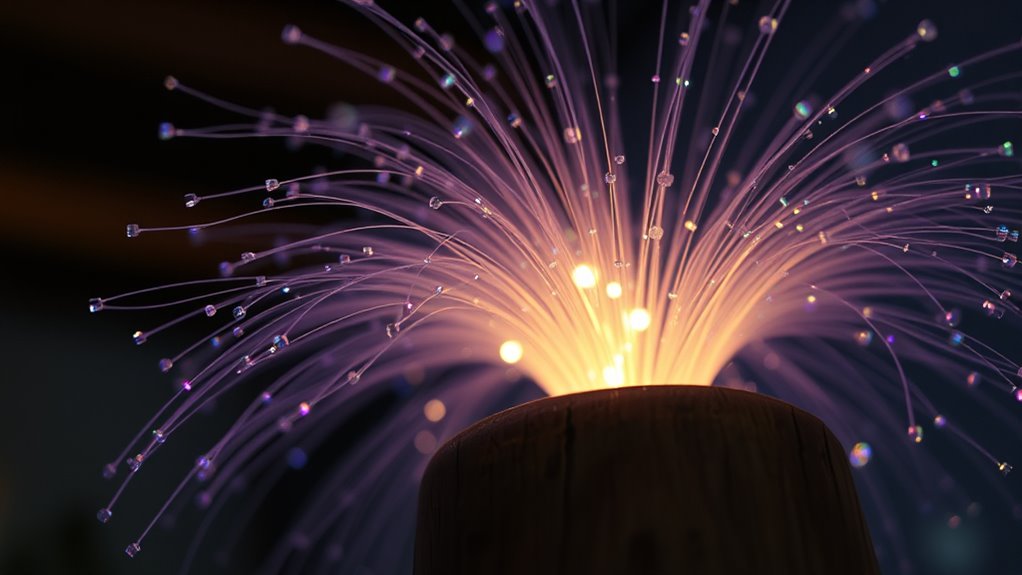
To build a homemade fiber optic lamp, gather fiber optic cables, a light source like LED or small bulb, and a base or holder. Carefully strip the cable ends and insert them into your chosen base, securing them in place. Connect the fibers to the light source, ensuring minimal light loss, and turn it on to see the fibers glow and shimmer. Experiment with colors, lengths, and arrangements to create your desired effect—there’s more to discover as you get started.
Key Takeaways
- Gather fiber optic cables, a suitable light source (LED or bulb), and a secure base or holder for assembly.
- Carefully strip and prepare the fiber optic strands to prevent damage and ensure optimal light transmission.
- Insert and secure the fibers into the base, aligning them with the light source for maximum glow and shimmer.
- Connect the light source, such as an LED, ensuring minimal light loss and considering dimmer or color-changing options.
- Experiment with fiber arrangements, colors, and lengths to create a unique, mesmerizing lighting effect in your homemade lamp.
Creating a homemade fiber optic lamp is a fun and rewarding project that transforms simple materials into a stunning lighting piece. This project leverages fiber optic technology, allowing you to craft a unique and mesmerizing light display right in your own space. Whether you’re a beginner or an experienced DIY enthusiast, building your own fiber optic lamp offers a perfect blend of creativity and technical skill, making it an ideal addition to your collection of DIY lighting projects.
Creating a fiber optic lamp is a fun, creative DIY project that transforms simple materials into stunning lighting displays.
The core of this project involves understanding how fiber optic technology works. Fiber optics use thin strands of glass or plastic to transmit light over long distances with minimal loss. In your homemade lamp, these strands will serve as the “light show,” glowing and shimmering in response to your chosen light source. To start, you’ll need a light source—typically an LED or small bulb—that can be connected to a power supply. The LED should emit bright, consistent light to ensure your fiber optic strands glow vividly.
Next, you’ll gather your fiber optic cables. These are available in various lengths and colors, giving you the freedom to customize your lamp’s appearance. When selecting fiber optic cables, opt for those with a high core diameter, as they will transmit more light and produce a more vibrant display. Carefully strip the ends of the cables if necessary, ensuring you’re not damaging the fibers. Once prepared, insert the fiber optic strands into a base or holder that keeps them secure and allows for arrangement in an aesthetically pleasing pattern. You can use a small container, a custom-made frame, or even carve out a section of wood or plastic to serve as the base.
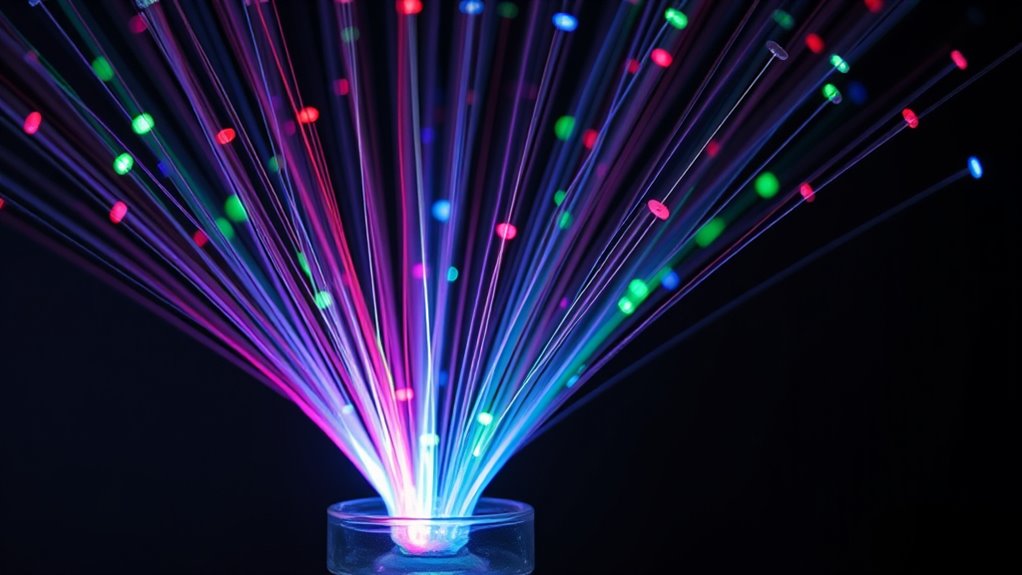
Connecting the fiber optic cables to your light source is straightforward but requires precision. Secure the cables in an opening or port that aligns with the light source, ensuring minimal light loss. As you power up your DIY lighting project, you’ll notice the fibers start to glow, creating a starry or shimmering effect. You can experiment with different arrangements, colors, and lengths to achieve your desired look. Adding a dimmer switch or color-changing LED can enhance the visual impact and make your homemade fiber optic lamp even more mesmerizing.
Throughout the process, remember that patience is key. Handling delicate fiber optic strands requires care, but the satisfaction of seeing your creation come to life makes every effort worthwhile. Building your own fiber optic lamp not only introduces you to fiber optic technology but also encourages creativity within the domain of DIY lighting projects. In the end, you’ll have a custom-made lamp that illuminates your space beautifully and showcases your craftsmanship.

AZIMOM PMMA Plastic End Glow Fiber Optic Cable 0.75mm(0.03in) 100m(328ft)/Roll for Star Sky Ceiling All Kind Led Light Engine Driver Source
Length : 328ft(100M) ,The quantity of optical fiber:1pcs,PMMA plastic fiber optic cable, great optical conductivity and flexible to…
As an affiliate, we earn on qualifying purchases.
As an affiliate, we earn on qualifying purchases.
Frequently Asked Questions
What Safety Precautions Should I Take During Assembly?
You should wear safety gear like goggles and gloves to protect your eyes and hands during assembly. Always prioritize electrical safety by unplugging components before working on them and avoiding water contact with electrical parts. Keep your workspace dry and organized, and handle tools carefully to prevent injuries. Double-check connections before powering up your fiber optic lamp to confirm safety and proper function. Staying cautious helps prevent accidents and ensures a successful build.
Can I Customize the Fiber Optic Colors?
Think of your fiber optic lamp as a painter’s palette; you can mix and match colors to suit your style. Yes, you can customize fiber hues by choosing different fiber optic color options, giving your lamp a personalized glow. You simply select and replace the fibers with your preferred shades, creating a unique lighting masterpiece. Experiment with various colors to craft a vibrant, eye-catching display that reflects your personality.
What Tools Are Essential for This Project?
You’ll need essential tools like a screwdriver and wire cutters to assemble your fiber optic lamp. Make certain you have fiber optic connectors for secure connections and a reliable lamp power supply to guarantee consistent illumination. A soldering iron is handy for wiring, and a hot glue gun helps secure components. Having these tools on hand makes the DIY process smoother and ensures your fiber optic lamp functions safely and beautifully.
How Long Does the Lamp Last Before Maintenance?
Fiber’s fine flicker fades fairly quickly, so your homemade fiber optic lamp typically lasts around 1 to 3 years before needing maintenance. With proper care, you can prolong its durability and preserve the fiber lifespan. Regularly clean the fibers, check for damage, and replace worn parts. This simple upkeep guarantees your lamp stays luminous longer, providing vibrant visual effects and a satisfying glow for years to come.
Is It Suitable for Outdoor Use?
It’s not suitable for outdoor use because your homemade fiber optic lamp lacks weather resistance and outdoor durability. Exposure to rain, humidity, or direct sunlight can damage the components and reduce its lifespan. To protect it, you’d need to add weatherproofing measures like sealing the connections and housing it in a waterproof enclosure. Without these, the lamp’s performance and longevity won’t hold up in outdoor conditions.

EVESOAR Side Glow Fiber Optic USB Light Source Illuminator Fiber lamp Light Source Guide Fiber LED Light Source 5V Fiber Small Light Source (Red, 3mm)
Light body material:Aluminum
As an affiliate, we earn on qualifying purchases.
As an affiliate, we earn on qualifying purchases.
Conclusion
Now that you’ve built your own fiber optic lamp, you’ve created a stunning, personalized piece of decor. Did you know that LED fiber optic lighting uses up to 80% less energy than traditional bulbs? This means your beautiful lamp is not only eye-catching but also eco-friendly and cost-effective. Keep experimenting with different colors and shapes to make your space truly unique. Enjoy your new creation—brightening your home while saving energy feels pretty amazing, doesn’t it?

SimplyFiber Optic Assembly Fixture Base with 900µm Fiber Holder – Precision Fiber Handling – SF-SCAFBH
Precision Fiber Alignment – Designed for secure and accurate positioning of 900µm fibers, ensuring stable and reliable assembly…
As an affiliate, we earn on qualifying purchases.
As an affiliate, we earn on qualifying purchases.

PEN&H Sensory Fiber Optic Lamp – Fiber Optic Lights with Cone Base ,LED Color Changing Calming Mood Night Light (2 Pack)
Calming Effect: It can help you relax and ease your tight emotion. This soothing mood light creates a…
As an affiliate, we earn on qualifying purchases.
As an affiliate, we earn on qualifying purchases.