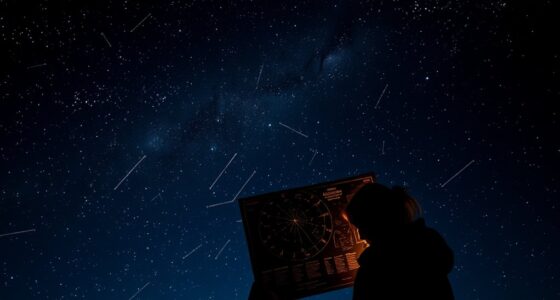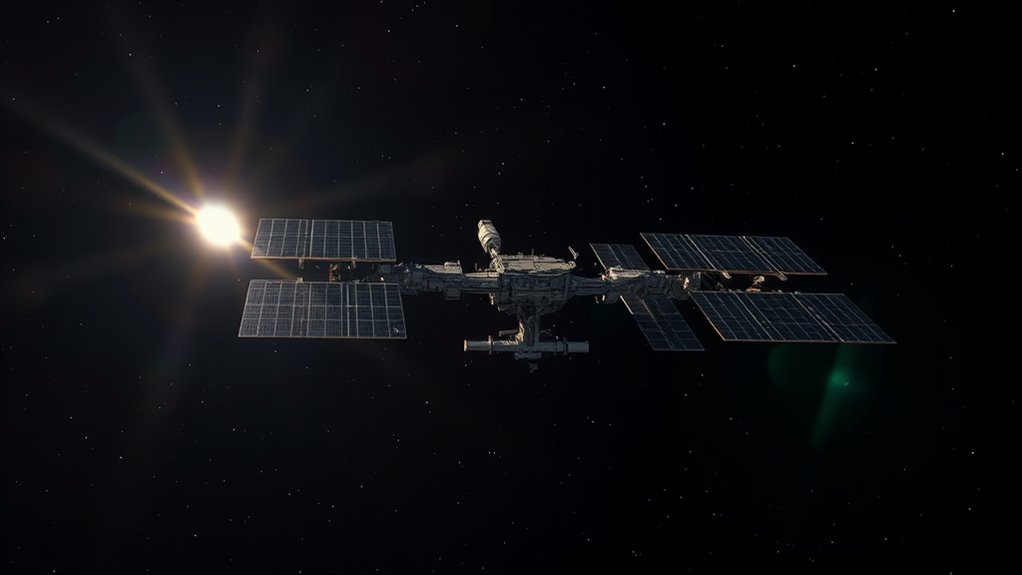
To spot the International Space Station, check a satellite tracking app like Heavens-Above or NASA’s Spot the Station for your location. Look for passes around dawn or dusk when the sky is dark enough. The ISS appears as a bright, fast-moving light streaking across the sky, often outshining stars. To improve your chances, find a clear, dark spot and plan your viewing based on the schedule provided. Keep watching to discover more tips on catching this amazing sight.

Get the latest gadgets delivered free with Prime
- Fast, free delivery on millions of items
- Prime Video, Amazon Music and more included
- Member-only deals all year
Key Takeaways
- Use satellite tracking apps like Heavens-Above or ISS Tracker for accurate pass times and directions.
- Check pass schedules around dawn or dusk for optimal visibility in dark skies.
- Look for a bright, fast-moving object that outshines stars and moves steadily across the sky.
- Find a dark, unobstructed viewing spot and turn off lights to enhance visibility.
- Plan your viewing based on predicted times to maximize chances of spotting the ISS.
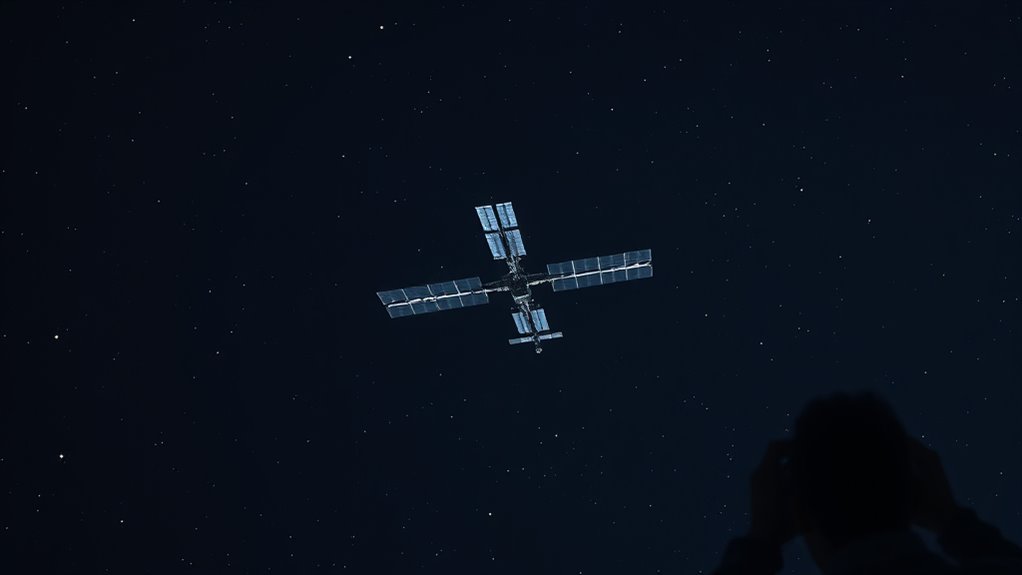
Have you ever wondered how to see the International Space Station (ISS) with the naked eye? If you’re interested in catching a glimpse of this incredible feat of engineering orbiting overhead, you’re in the right place. The key to spotting the ISS lies in understanding satellite tracking and knowing when to look for space station passes. With a little planning, you can enjoy the thrill of watching a bright object streak across the sky, moving faster than any airplane, and knowing it’s the ISS passing overhead.
To start, you’ll want to use satellite tracking tools or apps designed specifically for this purpose. These tools can tell you exactly when the space station will be visible from your location. They provide detailed schedules of space station passes, including the time, duration, and direction to look. Most apps are user-friendly; simply enter your city or coordinates, and they’ll generate a list of upcoming passes. Some popular options include Heavens-Above, ISS Tracker, and NASA’s Spot the Station. These resources are invaluable because they account for your specific geographic location, guaranteeing you don’t miss the space station when it’s visible.
Use satellite tracking apps like Heavens-Above or NASA’s Spot the Station for precise viewing schedules.
Space station passes usually occur around dawn or dusk when the sky is dark enough for the ISS to stand out against the background but still close enough to sunset or sunrise to be illuminated by the sun. During these passes, the ISS appears as a bright, fast-moving point of light, often outshining stars and other satellites. It travels in a straight line across the sky, and its speed makes it easily distinguishable from planes or stars. Planning your viewing session around the predicted times ensures you don’t miss this fleeting sight.
Understanding satellite tracking is crucial because it helps you predict these passes accurately and makes your viewing experience more rewarding. When the time comes, find a dark, unobstructed spot with a clear view of the sky. Turn off any bright lights to avoid ruining your night vision. As the ISS approaches, look to the indicated direction on your tracking app. When it appears, enjoy watching it glide smoothly across the sky. Remember, the pass can last from a few seconds to several minutes, giving you a comfortable window to observe or even snap photos. Keep in mind that weather conditions matter—cloud cover or fog can obscure your view, so check the forecast beforehand.
As an affiliate, we earn on qualifying purchases.
Frequently Asked Questions
How Often Does the ISS Pass Over My Location?
The ISS passes over your location roughly 3 to 5 times a week, but pass frequency varies with your geographic location. Its orbit duration is about 90 minutes, so you’ll see it moving across the sky multiple times during a clear night. To find the exact pass times, check online tools or apps that track the ISS based on your coordinates, ensuring you don’t miss those spectacular sightings.
What Is the Best Time of Day to See It?
The best time of day to see the ISS depends on orbital timing and viewing conditions. Usually, early mornings and evenings offer the brightest chances because the station reflects sunlight against a darker sky. Clear skies and minimal light pollution improve visibility. Check your local pass times, and aim for moments when the ISS is high above the horizon, ensuring ideal viewing conditions for a clear, exciting sighting.
Can I See the ISS With Just My Eyes?
Yes, you can see the ISS with just your eyes. Despite its size, the spacecraft’s visual visibility is impressive when it passes overhead, making eye observation possible without any special equipment. The station appears as a bright, fast-moving point across the sky, contrasting with the stars. To catch it, look during dawn or dusk when the sky is darker, and the ISS is illuminated by the sun, enhancing your chance of sighting it.
How Bright Is the ISS Compared to Stars?
The space station luminosity is much brighter than most stars, making it easily visible to the naked eye. Its brightness can reach about magnitude -2, comparable to the brightest planets, which is notably higher than star brightness. Compared to stars, the ISS appears as a steady, fast-moving point of light across the sky. Its brightness and movement make it an enthralling sight, often outshining many celestial objects in the night sky.
Are There Apps to Track the ISS in Real-Time?
Yes, there are satellite tracking apps that help you track the space station orbit in real-time. These apps use GPS and real-time data to show the ISS’s current position and upcoming passes over your location. You can set alerts to know when it will be visible, making it easy to spot the space station orbit when it’s overhead. Popular options include Heavens-Above, ISS Tracker, and Star Walk.
As an affiliate, we earn on qualifying purchases.
Conclusion
So, next time you’re gazing up at the night sky, don’t pretend you’re just admiring stars. With a little patience and a quick glance at your app, you could be waving at astronauts cruising in the ISS. Who knew that the coolest thing overhead isn’t some distant galaxy, but a giant metal spaceship doing laps above your head? Go ahead, impress your friends—tell them you’ve just spotted a piece of sci-fi in real life.
As an affiliate, we earn on qualifying purchases.
As an affiliate, we earn on qualifying purchases.
Columbus Day / Indigenous Peoples' Day Picks
long weekend sales
As an affiliate, we earn on qualifying purchases.