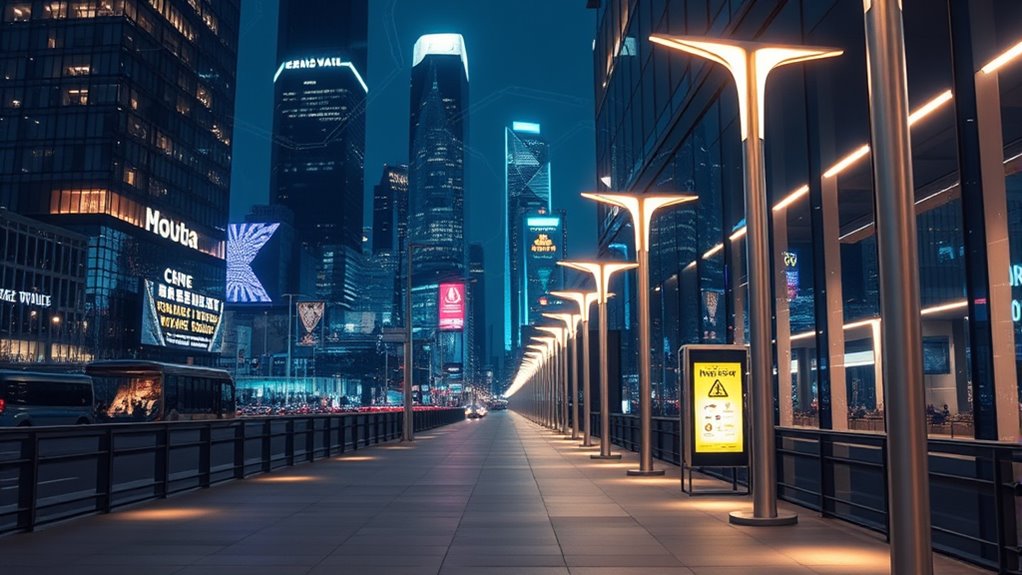

Smart street lighting, integrated with urban IoT, uses sensors and real-time data to improve energy efficiency and safety. By connecting streetlights to a central system, you can automatically adjust lighting based on ambient light, motion, and weather conditions. This approach reduces electricity use, lowers costs, and creates a safer environment for residents. Exploring how these systems work will reveal more about their impact on creating smarter, more sustainable cities.
Key Takeaways
- IoT-enabled sensors in streetlights enable real-time data collection for adaptive urban lighting management.
- Smart street lighting reduces energy consumption and operational costs through automated dimming and switching.
- Integration of sensor networks enhances safety by ensuring sufficient illumination during pedestrian and vehicle movement.
- Data analytics from IoT systems inform urban planning, maintenance schedules, and infrastructure investments.
- Future advancements include AI-driven automation, predictive maintenance, and increased system resilience for smarter cities.
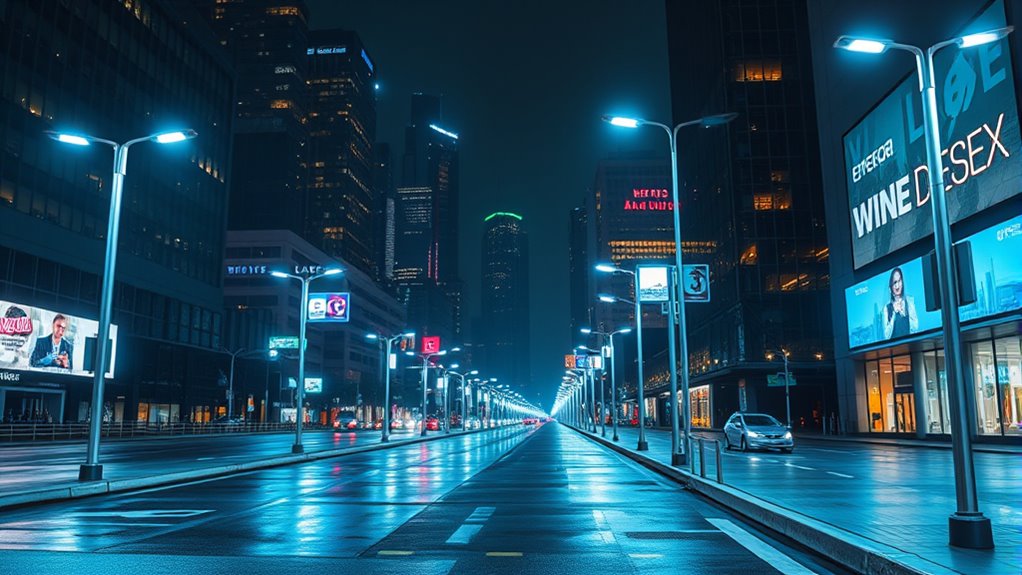
Smart street lighting is transforming urban environments by leveraging the power of the Internet of Things (IoT). You can see how this innovative approach enhances city living by making streets safer, more sustainable, and more cost-effective. At the core of this transformation are sensor networks, which connect streetlights to a central system, allowing real-time data collection and control. These sensor networks monitor various factors like ambient light, motion, and weather conditions, enabling streetlights to adapt dynamically to the environment. As a result, energy efficiency becomes a key benefit, since lights only turn on at full brightness when needed, and dim or turn off during low-traffic hours. This targeted lighting reduces electricity consumption considerably, helping cities cut costs and lower their carbon footprint.
With sensor networks, you’re empowered to optimize lighting based on actual conditions, not just fixed schedules. For example, if sensors detect no movement in a particular area, lights can automatically dim or shut off, saving energy without compromising safety. Conversely, if pedestrians or vehicles are detected, the lights brighten instantly, ensuring visibility and security. This real-time responsiveness is a game-changer for urban management, as it minimizes waste and promotes sustainability. Moreover, data collected by these sensors can be analyzed to identify patterns, such as high-traffic zones or times when lighting is most needed. This insight allows city planners to make informed decisions about infrastructure investments and maintenance, ultimately improving the quality of urban life. Additionally, integrating sensor networks with smart city initiatives can foster further innovations in urban infrastructure.
Integrating sensor networks with smart street lighting also enhances safety. When streetlights respond to movement or environmental changes, you reduce the risk of accidents and crime, creating a more secure environment for residents and visitors. Plus, the automated nature of these systems means less manual intervention is needed, freeing up resources for other critical city services. Over time, as technology advances, these systems can become even smarter, incorporating AI to predict lighting needs and further optimize energy use.
In essence, sensor networks embedded in smart street lighting make cities more efficient and livable. They help you save energy, cut costs, and reduce environmental impact—all while improving safety and convenience. As urban areas continue to grow, embracing this IoT-driven approach will be essential for creating resilient, sustainable, and smarter cities for everyone.

EVEO Screen Cleaner Spray - Large Screen Cleaner Bottle - TV Screen Cleaner, Computer Screen Cleaner, for Laptop, Phone, Ipad - Computer Cleaning kit Electronic Cleaner (1 Pack)
- Versatile Screen Cleaner: Cleans TVs, computers, and phones
- Gentle on All Screens: Safe for LCD, LED, and OLED
- Includes Microfiber Cloth: Soft cloth for streak-free cleaning
As an affiliate, we earn on qualifying purchases.
Frequently Asked Questions
How Does Smart Street Lighting Reduce Energy Consumption?
Smart street lighting reduces energy consumption by using sensor integration to adjust lighting levels based on real-time conditions. When no one’s around, the lights dim or turn off, saving energy. As people or vehicles approach, lights brighten automatically. This targeted approach guarantees you get energy savings without sacrificing safety. By optimizing lighting, you’ll cut costs and contribute to a more sustainable environment while enjoying well-lit streets when needed.
What Are the Privacy Concerns With Urban Iot Sensors?
You should be aware that urban IoT sensors raise privacy concerns due to data collection and surveillance worries. These sensors gather personal data, such as location and behavior patterns, which can be misused or improperly accessed. You might feel uneasy knowing that your movements could be tracked or monitored without explicit consent. Addressing these concerns requires strict data protection measures and transparent policies to make sure your privacy stays protected.
How Is Data Security Maintained in Smart Lighting Systems?
Your data security is safeguarded through robust encryption protocols that shield sensitive information from hackers, making cyber threats nearly impossible. Access controls ensure only authorized personnel can manage or view system data, creating an impenetrable fortress around your smart lighting system. These measures work together to maintain the integrity and confidentiality of your data, preventing any unauthorized access and keeping your urban environment safe and secure at all times.
What Is the Cost of Implementing Smart Street Lighting?
The cost to implement smart street lighting varies based on your project’s size and features, typically ranging from moderate to high. You should conduct a detailed cost analysis to understand expenses like installation, maintenance, and upgrades. Funding sources such as government grants, public-private partnerships, or municipal budgets can help cover costs. By evaluating these options, you can plan effectively and guarantee your smart lighting project fits your financial capabilities.
How Do Smart Lights Adapt to Weather Conditions?
Smart lights adapt to weather conditions by using weather sensors that detect changes like rain, fog, or wind. When these sensors pick up specific weather patterns, the lights automatically adjust their brightness through adaptive brightness technology, ensuring visibility and safety. This real-time response helps optimize energy use and maintain consistent illumination, making urban environments safer and more efficient, even during unpredictable weather.

iO CLEAN (16 fl. oz Screen Cleaner Spray – Best Large Cleaning Kit
- Comprehensive cleaning kit: Includes spray and microfiber cloth
- Gentle on delicate screens: Safe for all electronic devices
- Advanced cleaning formula: Removes dust, stains, and fingerprints
As an affiliate, we earn on qualifying purchases.
Conclusion
You’ve seen how smart street lighting transforms urban living, making cities safer and more energy-efficient. Did you know that IoT-enabled street lights can reduce energy consumption by up to 70%? This statistic shows just how impactful these innovations are. By embracing urban IoT, you help create smarter, more sustainable cities that benefit everyone. The future of urban living is bright—and connected—thanks to smart lighting and innovative technology.

Earbudz 10 Pairs Medium Earbud Tips Silicone Replacement Ear Bud Tips – Black
- Quantity: 10 pairs of earbud tips
- Size Compatibility: Fits 3.9mm - 4.8mm connections
- Brand Compatibility: Works with various popular brands
As an affiliate, we earn on qualifying purchases.