UV germicidal irradiation effectively disinfects surfaces, air, and water by inactivating germs with UV-C light; however, safety is essential. Direct exposure can cause skin burns and eye injuries, so always use protective gear and make certain of proper shielding. Many devices include safety features like automatic shutoffs to prevent accidents. Following strict protocols enhances both safety and efficacy. To discover key safety practices and how to maximize sterilization benefits, explore the detailed guide further.
Listen free for 30 days with Audible
Thousands of audiobooks and originals — cancel anytime.
As an affiliate, we earn on qualifying purchases.
Key Takeaways
- UV germicidal irradiation effectively inactivates microorganisms without chemicals, but safety precautions are essential to prevent skin and eye injuries.
- Proper device design features like shielding, interlocks, and automatic shutoffs ensure safe operation during sterilization.
- UV-C wavelengths damage microbial DNA/RNA, providing efficient disinfection when used correctly and combined with other sterilization methods.
- Regular maintenance, calibration, and adherence to safety protocols minimize risks and enhance UV sterilization effectiveness.
- Clear warning signs and controlled environments are necessary to prevent accidental UV exposure during operation and maintenance.

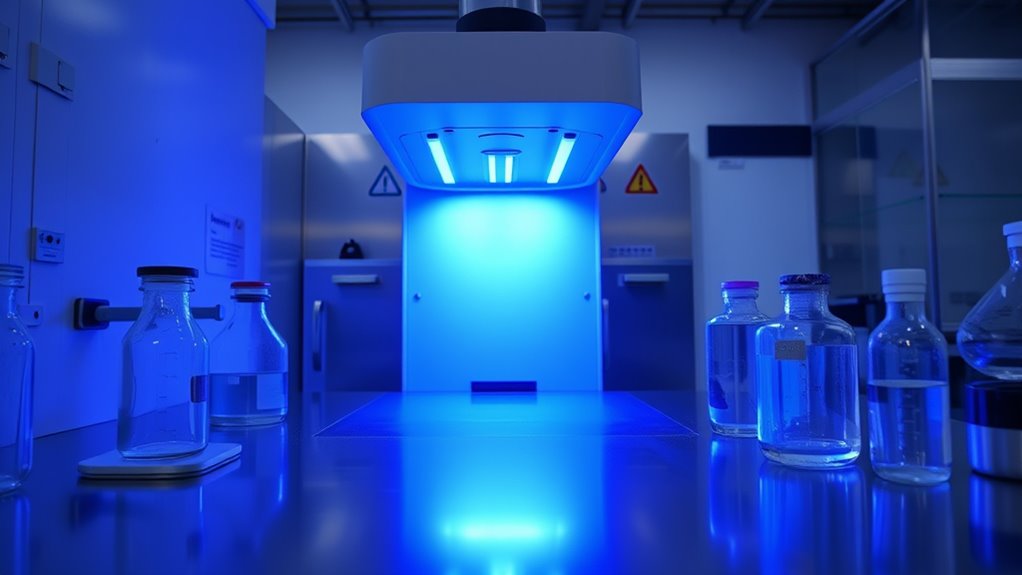
UV germicidal irradiation is a proven method for disinfecting surfaces, air, and water by using ultraviolet light to kill or inactivate microorganisms. This technology has become increasingly popular in recent years due to its effectiveness and efficiency. However, understanding UV safety is essential when implementing this irradiation technology, as improper use can pose health risks. When you work with UV germicidal systems, it’s important to follow safety guidelines to prevent accidental exposure, which can cause skin burns or eye injuries. Proper shielding, safety interlocks, and protective gear are indispensable components of safe operation. Many UV devices are designed with safety features that automatically turn off the light when someone opens a cover or enters a restricted area, reducing the risk of accidental exposure.
UV germicidal systems require strict safety measures to prevent skin and eye injuries during operation.
You should also be aware that UV irradiation technology relies on specific wavelengths of ultraviolet light, primarily UV-C, to achieve germicidal effects. These wavelengths are highly effective at damaging the DNA or RNA of microorganisms, rendering them inactive. But because UV-C light doesn’t penetrate surfaces deeply and is absorbed by the outer layers of your skin or eyes, direct exposure can be harmful. That’s why adherence to safety protocols isn’t just recommended; it’s necessary. When used correctly, UV germicidal systems are safe and reliable, providing a chemical-free alternative for sterilization.
It’s worth noting that UV safety extends beyond personal protection. Regular maintenance and calibration of UV devices ensure they operate as intended, maximizing their germ-killing efficacy while minimizing potential hazards. If you’re installing or operating UV sterilization equipment, you should also guarantee that the environment is appropriately controlled—keeping people away during operation and posting clear warning signs. Additionally, some irradiation technology includes features like automatic shutoff or motion sensors to prevent accidental exposure, which further enhances safety.
While UV germicidal irradiation is highly effective, it’s important to remember that it’s not a stand-alone solution for all sterilization needs. Combining it with other safety measures, such as physical cleaning and air filtration, can provide extensive protection. Proper use of filtering technologies ensures comprehensive sterilization and safety. Ultimately, your responsibility is to understand the principles behind UV safety and irradiation technology, follow best practices, and keep safety at the forefront of your sterilization efforts. When properly managed, UV germicidal systems offer a safe, efficient way to reduce harmful microorganisms and improve hygiene in various settings.
UV germicidal lamp with safety features
As an affiliate, we earn on qualifying purchases.
As an affiliate, we earn on qualifying purchases.
Frequently Asked Questions
Are UVGI Systems Safe for Human Exposure During Operation?
UVGI systems are generally safe for human exposure during operation if proper precautions are in place. You should avoid direct UV exposure to your skin and eyes, as it can cause harm. Many systems are designed with safety features like shields and interlocks to prevent accidental exposure. Always follow manufacturer instructions and safety guidelines to make certain of your safety while benefiting from UVGI’s germicidal effects.
How Does UV Germicidal Irradiation Compare to Chemical Disinfectants?
Imagine a silent guardian, invisible yet powerful. UV germicidal irradiation kills microbes with light, often surpassing chemical disinfectants in chemical efficiency. It leaves no chemical residues, making it eco-friendly and reducing environmental impact. Unlike chemicals that may cause harm or require frequent reapplication, UV offers a quick, sustainable solution. You get effective disinfection without chemical mess, protecting both your health and the planet’s future.
Can UVGI Eliminate All Types of Pathogens Effectively?
UVGI can effectively eliminate most pathogens, but it doesn’t guarantee 100% removal due to pathogen resistance and variability in UV dosage optimization. You need to verify proper UV exposure, as some microorganisms are more resistant to UV light. By carefully adjusting the UV dosage, you improve effectiveness. However, always combine UVGI with other disinfection methods for thorough safety, especially against highly resistant or unknown pathogens.
What Are the Maintenance Requirements for UVGI Equipment?
Remember, “A stitch in time saves nine.” To keep your UVGI system running smoothly, you need regular maintenance. This includes replacing lamps before their output diminishes and performing system calibration to guarantee ideal UV intensity. Check the manufacturer’s guidelines for specific intervals, typically annually, and inspect for any damage or dirt buildup. Proper maintenance guarantees the system’s safety and effectiveness in pathogen elimination.
Are There Any Long-Term Health Risks Associated With UV Exposure?
Long-term health risks from UV exposure are possible if you experience chronic exposure over time. You might develop eye injuries like photokeratitis or skin issues such as burns or increased cancer risk. To protect yourself, avoid direct exposure, wear protective gear, and follow safety guidelines. Regularly monitor your environment and limit exposure duration to minimize potential long-term health effects associated with UV radiation.
UV-C sterilization device for home use
As an affiliate, we earn on qualifying purchases.
As an affiliate, we earn on qualifying purchases.
Conclusion
Think of UV germicidal irradiation as a vigilant lighthouse guiding ships safely through foggy waters. It shines a powerful, invisible beam that neutralizes harmful microbes, keeping your environment safe. While it’s a reliable protector, remember, like any lighthouse, it’s most effective when used correctly and with caution. Embrace this technology as your steadfast guardian in the fight against germs, illuminating the path to a healthier, safer space.
protective gear for UV light exposure
As an affiliate, we earn on qualifying purchases.
As an affiliate, we earn on qualifying purchases.
As an affiliate, we earn on qualifying purchases.
NFL season / tailgating Picks
team gear
As an affiliate, we earn on qualifying purchases.