Light therapy is a proven way to speed up your athletic recovery naturally. It uses specific red or near-infrared wavelengths to boost cellular energy, reduce inflammation, and promote tissue repair. This non-invasive method enhances your body’s healing process and can cut down soreness and downtime. By incorporating regular sessions, you can support better performance and quicker recovery. Keep exploring to discover how this innovative technique can fit into your recovery routine and help you perform your best.
Key Takeaways
- Light therapy uses red or near-infrared wavelengths to stimulate cellular activity, promoting faster tissue healing and reducing soreness.
- It enhances mitochondrial function, increasing ATP production for improved energy and recovery in muscles.
- Protocols specify safe session durations, typically 10-20 minutes, using devices like panels or handheld lamps.
- Regular treatment accelerates inflammation reduction, tissue repair, and supports quicker return to peak athletic performance.
- Scientific studies validate light therapy’s effectiveness for both injury recovery and ongoing athletic performance enhancement.
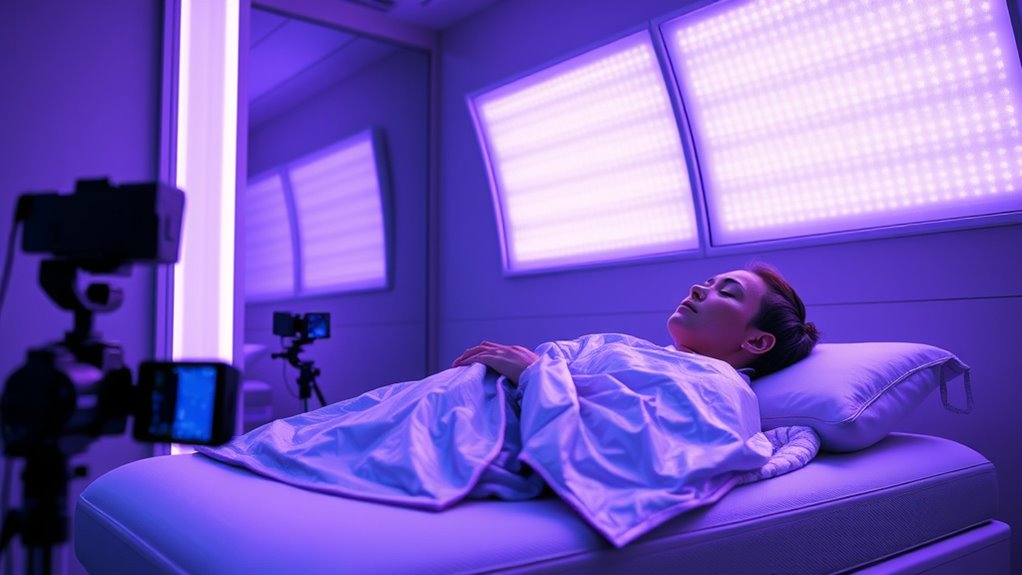
Light therapy is gaining popularity as a natural way to enhance athletic recovery. If you’re looking for a non-invasive method to reduce soreness, speed up healing, and improve your overall performance, understanding how photobiomodulation research supports these benefits is vital. Photobiomodulation involves using specific wavelengths of light, typically in the red or near-infrared spectrum, to stimulate cellular activity. Numerous studies have shown that this kind of therapy can promote faster tissue repair, decrease inflammation, and alleviate pain—all essential factors for athletes aiming to bounce back quickly after intense workouts or injuries.
Photobiomodulation with specific light wavelengths accelerates recovery and reduces inflammation for athletes.
When you explore red light therapy protocols, you’ll notice that they are carefully designed to maximize benefits while guaranteeing safety. These protocols usually specify the wavelength, power density, and duration of each session. For best results, you’ll want to follow evidence-based guidelines established through photobiomodulation research, which has demonstrated that consistent application of red or near-infrared light can activate mitochondria—the energy powerhouses of your cells—leading to increased ATP production. This boost in cellular energy helps repair damaged tissues more efficiently and reduces inflammation, which is often a major culprit behind lingering soreness and delayed recovery.
Implementing red light therapy protocols into your recovery routine is straightforward. You can use handheld devices, panels, or specialized lamps, making it convenient to incorporate sessions into your daily schedule. Typically, sessions last between 10 to 20 minutes, during which the light penetrates your skin and reaches deeper tissues. Regular use, guided by research-backed protocols, can lead to noticeable improvements in muscle recovery and reduced downtime between training sessions. The key is consistency—sticking to a protocol that’s tailored to your needs and supported by current photobiomodulation research ensures you’re getting the most out of this treatment.
Understanding the science behind photobiomodulation research gives you confidence in the efficacy of red light therapy. It’s not just a trendy wellness hack; numerous scientific studies validate its use for athletic recovery. By following established red light therapy protocols, you can enhance cellular function, expedite healing, and ultimately boost your athletic performance. This approach is also increasingly being integrated with other Jeep Tuning modifications, highlighting the importance of optimizing performance through multiple avenues. Whether you’re a professional athlete or a weekend warrior, integrating this science-backed approach into your recovery regimen could be the game-changer you need to stay at the top of your game.

Red Light Therapy Pad for Body Back Knee Shoulder Hands Feet Portable 660nm 850nm Home Use 3 Chips in 1 Infrared Light Heating Wrap Belt Gift for Women Men (Corded)
bonodave Corded Red Light Pad: It with light heating function can warm body up, supports 10HZ pulse mode…
As an affiliate, we earn on qualifying purchases.
As an affiliate, we earn on qualifying purchases.
Frequently Asked Questions
How Soon Can I Expect Results From Light Therapy?
You can typically expect visible improvements within a few sessions, often after 1-2 weeks of consistent light therapy. Timing expectations vary depending on your individual response and the severity of your recovery needs. Some people notice quicker results, while others may take longer. Keep up with your sessions regularly, and you’ll likely see positive changes in your recovery process sooner rather than later.
Are There Any Side Effects of Light Therapy?
You might experience mild side effects like skin irritation or eye discomfort when using light therapy. To guarantee eye safety, avoid direct exposure to the lights and wear protective goggles if recommended. Skin irritation is usually temporary and resolves quickly. Follow usage instructions carefully, and if you notice persistent irritation or eye issues, consult a healthcare professional. Overall, light therapy is safe when used properly and with proper precautions.
Can Light Therapy Replace Traditional Recovery Methods?
You might find it surprising, but light therapy can’t fully replace traditional recovery methods. Instead, it works best as a complementary approach alongside exercises, rest, and nutrition. While some see it as an alternative therapy, relying solely on light therapy isn’t enough for ideal recovery. Incorporate it into your routine to enhance your overall recovery process, but don’t abandon proven methods that address your body’s complex needs.
Is Light Therapy Safe for All Athletes?
Light therapy is generally safe for most athletes, but safety concerns and athlete suitability vary. You should consult a healthcare professional to assess your specific health conditions before starting. While side effects are rare, some individuals may experience skin irritation or eye sensitivity. Always follow recommended guidelines to minimize risks. If you’re an athlete with particular health issues, discuss with your doctor to determine if light therapy is appropriate for you.
How Often Should I Undergo Light Therapy Sessions?
You should undergo light therapy sessions 2 to 3 times a week for ideal scheduling. The exact session frequency depends on your individual recovery needs and response to treatment. Consistency is key, so stick to a routine that allows your body to benefit without overdoing it. It’s best to consult with a healthcare professional to tailor the session frequency to your specific athletic goals and recovery timeline.

LHCYLDQ 275W Infrared Light Therapy Lamp – Red Near Infrared Heat Lamp for Joint Muscle Pain, Adjustable Standing Lamp Head with Freely Adjustable Temperatur(White)
275W High-Power Near Infrared Light Bulb for Targeted Relief:This infrared light therapy lamp is equipped with a 275W…
As an affiliate, we earn on qualifying purchases.
As an affiliate, we earn on qualifying purchases.
Conclusion
Imagine harnessing the power of light to heal and recover faster—it’s like revealing a secret weapon in your athletic journey. By embracing light therapy, you’re not just healing; you’re illuminating your path to peak performance. Don’t let soreness or fatigue shadow your progress. With each session, you’re turning darkness into opportunity, transforming setbacks into comebacks. So, step into the light and let it guide you toward your strongest, most resilient self.

LifePro Near Infrared Red Light Therapy for Body Joints & Muscles Wellness Support, Lumicure Portable Red Light Therapy Torch with 630nm, 660nm, 850nm LEDs – Support Daily Relaxation and Comfort
PREMIUM INFRARED RED LIGHT DEVICE: The LifePro LumiCure red light therapy lamp combines 3 wavelengths of soothing light,…
As an affiliate, we earn on qualifying purchases.
As an affiliate, we earn on qualifying purchases.
Red Light Therapy Panels for Beginners and Home Users: A Complete Guide to Choosing the Right Device, Understanding Wavelengths, and Using Light … Pain Relief, Skin Renewal, Energy, and Sleep
As an affiliate, we earn on qualifying purchases.
As an affiliate, we earn on qualifying purchases.