TL;DR

Get the latest gadgets delivered free — and shop member deals
- Fast, free delivery on millions of items
- Access to Prime Big Deal Days deals on October 6–7
- Prime Video, Amazon Music and more included
Perseverance rover found complex macromolecular carbon on a Martian surface rock at Bright Angel. The carbon’s origin—biotic or abiotic—remains unclear, prompting further investigation.
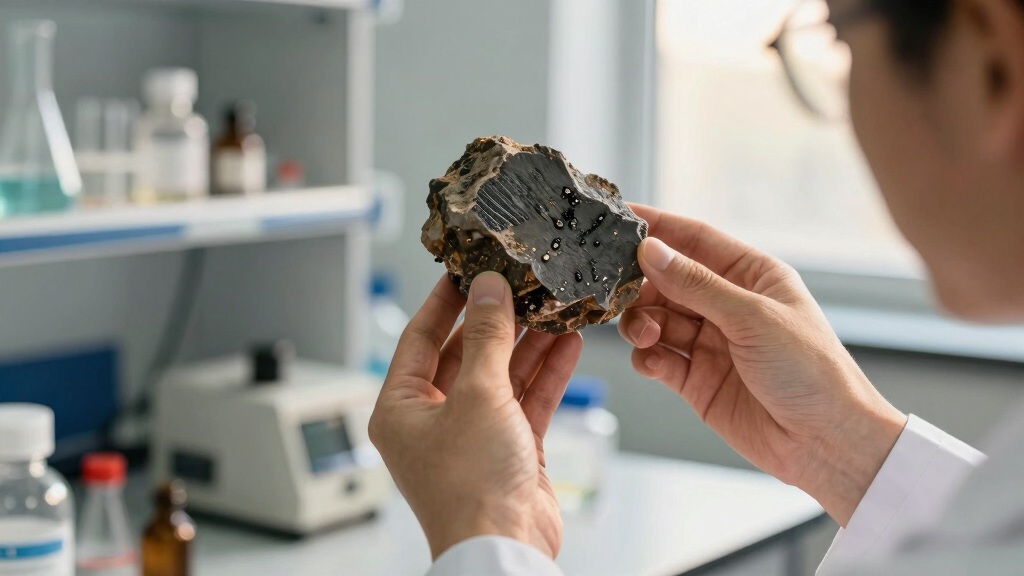
NASA’s Perseverance rover has identified complex macromolecular carbon sitting directly on the surface of a rock at an outcrop called Bright Angel in Jezero Crater. This represents the shallowest detection of organic matter on Mars to date, raising new questions about the planet’s chemical history and potential habitability.
The detection was made using SHERLOC, a UV Raman spectrometer on Perseverance’s robotic arm, which identified a graphitic band indicating tangled, cross-linked carbon molecules resistant to breakdown. The targeted rocks included Cheyava Falls, Apollo Temple, and Walhalla Glades, with the surface sample from Bright Angel showing the presence of this complex carbon. The material’s spectral signature roughly matches terrestrial kerogen, a complex organic substance often associated with biological origins, though the researchers emphasize that the carbon’s source remains uncertain.
Scientists have refrained from labeling the material as kerogen, as this term implies a biological origin, which cannot be confirmed on Mars. The findings suggest the presence of organic molecules that could have formed through biological or abiotic processes, but further analysis and sample return are required to clarify the origin.
Potential Implications for Martian Organic Chemistry
This discovery matters because the presence of macromolecular carbon on the Martian surface challenges previous assumptions that organic matter on Mars is only found beneath the surface. If the carbon is biogenic, it could indicate past life or prebiotic chemistry; if abiotic, it still demonstrates complex organic chemistry occurred on Mars. Understanding its origin could influence future missions’ search for signs of life and inform models of Mars’s chemical evolution.
As an affiliate, we earn on qualifying purchases.
Recent Advances in Martian Organic Detection
NASA’s Perseverance rover has been exploring Jezero Crater since 2021, focusing on its ancient river delta and lakebed deposits. Prior to this, organic molecules have been detected mainly within rocks that required drilling or abrasion, often deep below the surface. The recent detection at Bright Angel marks the first instance of complex organic material directly on the surface, suggesting that organic compounds may be more widespread and accessible than previously thought.
Scientists have long debated whether Mars ever supported life or if its organic molecules are purely abiotic. The detection of macromolecular carbon adds a new dimension to this debate, emphasizing the need for sample return missions to definitively determine the origin of these compounds.
“The presence of complex carbon on the surface raises important questions about Mars’s chemical processes and the potential for past habitability.”
— an anonymous researcher
As an affiliate, we earn on qualifying purchases.
Uncertain Origins of Surface Carbon
It is not yet clear whether the detected macromolecular carbon originated from biological activity, such as past microbial life, or from abiotic processes like mineral-organic reactions. The researchers emphasize that the spectral data alone cannot determine the carbon’s source, and further analysis—potentially involving sample return—is needed to clarify this.
As an affiliate, we earn on qualifying purchases.
Future Missions and Sample Return Plans
NASA plans to collect samples from Bright Angel and other sites for return to Earth, where detailed laboratory analyses can be performed. These efforts aim to determine the precise chemical and isotopic nature of the organic material, helping to resolve whether it is biogenic or abiotic. The findings could influence the design of future Mars exploration missions and the ongoing search for life beyond Earth.
As an affiliate, we earn on qualifying purchases.
Key Questions
Why is the detection of surface carbon on Mars important?
It suggests that complex organic molecules are present on the surface, which could be related to past life or chemical processes, and challenges previous assumptions about organic matter only being found underground.
Can we determine if the carbon is from life or non-life sources now?
No, the current spectral data cannot definitively identify the origin. Sample return and detailed laboratory analysis are needed to clarify whether the carbon is biogenic or abiotic.
What are the next steps for investigating this discovery?
NASA plans to collect samples from Bright Angel for return to Earth, where scientists can perform comprehensive chemical and isotopic analyses to determine the origin of the organic material.
Does this mean Mars once supported life?
The detection of organic molecules alone does not confirm past life. It indicates that Mars had the chemical ingredients necessary for life, but further evidence is required to establish biological activity.
Source: Ars Technica
Halloween Picks
halloween
As an affiliate, we earn on qualifying purchases.