
The Bortle Scale helps you measure your night-sky darkness and see how much light pollution affects your view of celestial objects. It ranges from Class 1, where the sky is very dark and detailed, to Class 9, with heavily light-polluted urban skies. By observing star visibility and other features, you can determine your local sky’s Bortle class. Keep exploring, and you’ll discover how to better identify your sky conditions and improve your stargazing experience.
Key Takeaways
- The Bortle Scale rates sky darkness from Class 1 (darkest) to Class 9 (brightest urban skies).
- It helps determine how visible celestial objects are in your location.
- You can assess your sky using visual observations or online Bortle scale calculators.
- The scale guides astronomers in choosing optimal sites for stargazing or astrophotography.
- Understanding your Bortle class promotes awareness of light pollution and supports dark sky preservation efforts.
Have you ever wondered how dark your night sky truly is? The answer lies in understanding the level of light pollution in your area. Light pollution, caused by excessive or misdirected artificial lighting, washes out the stars and diminishes our view of the cosmos. If you live in an urban setting, bright streetlights, illuminated buildings, and billboards can make it nearly impossible to see more than a handful of stars. This is where the Bortle Scale comes into play, offering a practical way to measure your night-sky darkness and gauge your potential for urban astronomy.
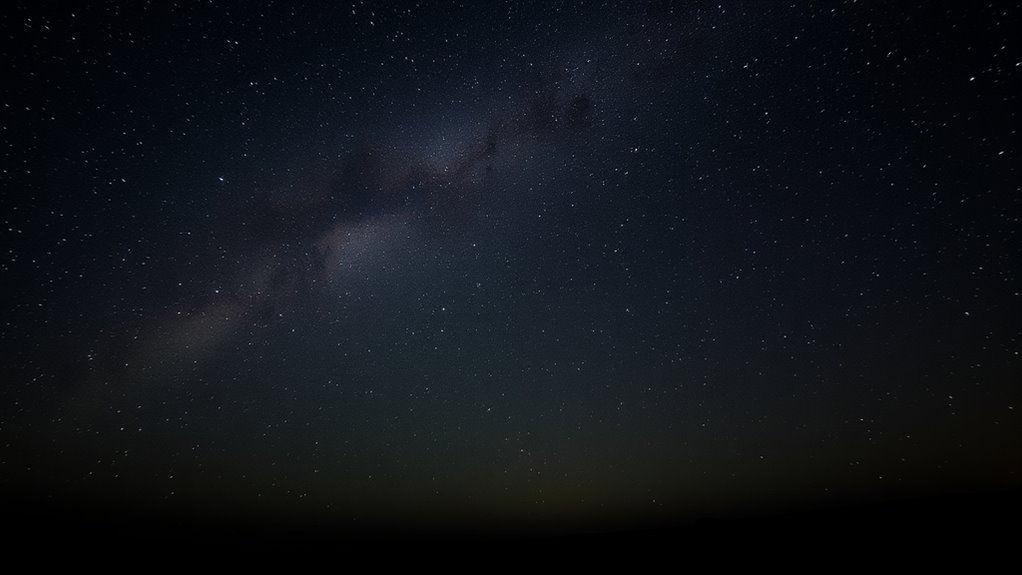
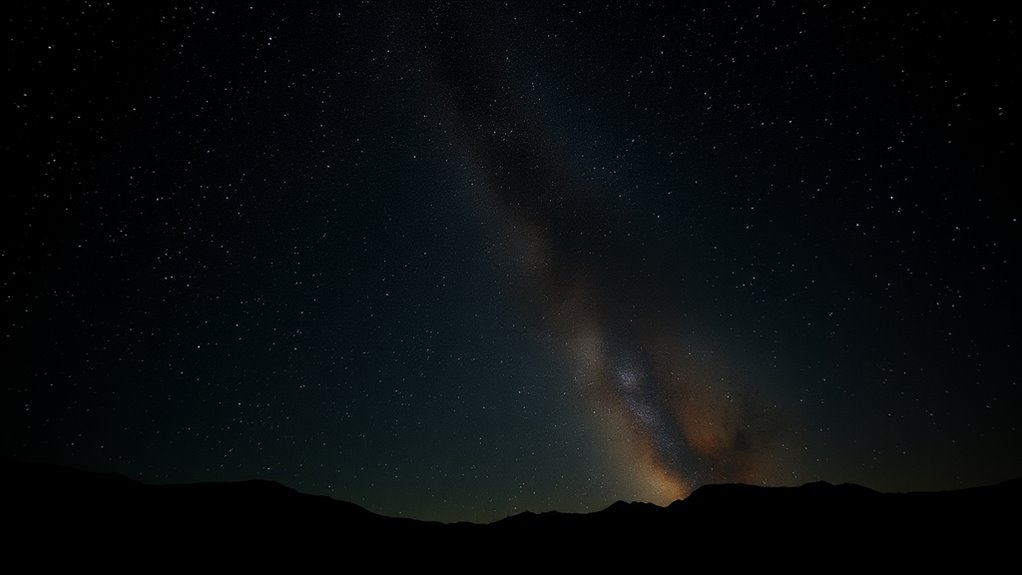
The Bortle Scale ranges from Class 1 to Class 9, with Class 1 representing the darkest skies, akin to remote wilderness areas, and Class 9 indicating heavily light-polluted urban skies. As you move up the scale, the visibility of stars diminishes, and the sky’s brightness increases. In a Class 1 sky, you’ll be able to see the Milky Way in great detail, with countless stars shining brightly. Conversely, in a Class 9 environment, only the brightest stars are visible, and the sky often appears as a dull, orange glow.
Understanding where your location falls on this scale can help you plan better for astronomy activities. If you’re interested in urban astronomy, knowing your Bortle Class can help you set realistic expectations and find ways to maximize your stargazing sessions. For example, if you’re in a Class 8 or 9 area, you might consider traveling to darker sites or participating in organized star parties held in remote locations. Alternatively, you can use light pollution filters or specialized telescopes designed to improve visibility under brighter skies.
The Bortle Scale also aids in raising awareness about light pollution’s impact on both astronomy and the environment. By identifying how much artificial light obscures your night sky, you can advocate for better lighting practices in your community—like shielding outdoor lights and reducing unnecessary illumination. These small steps can considerably improve urban astronomy opportunities and help preserve dark skies for future generations.
In essence, the Bortle Scale provides a straightforward, effective way to quantify and understand the darkness of your night sky. Whether you’re a casual stargazer or an avid astronomer, knowing your Bortle Class empowers you to make informed decisions about when and where to observe. It also highlights the importance of controlling light pollution to keep the wonder of the night sky accessible to everyone, regardless of where they live. So, next time you look up, consider where your sky falls on the scale and what you can do to enjoy it more fully.
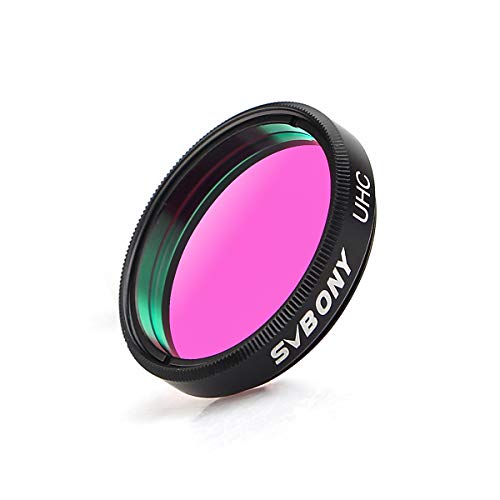
SVBONY Telescope Filter 1.25" UHC Filter Astrophotography to Improve The Image Contrast Reduces Light Pollution (1.25 inch)
UHC filters or light pollution reduction filters are designed to selectively reduce the transmission of certain wavelengths of…
As an affiliate, we earn on qualifying purchases.
As an affiliate, we earn on qualifying purchases.
Frequently Asked Questions
How Does Light Pollution Affect Wildlife in Dark Sky Areas?
You might not realize it, but light pollution effects urban wildlife markedly. Artificial lights disrupt natural behaviors like foraging, migration, and reproduction, especially in dark sky areas. These changes threaten species’ survival and alter ecosystems. As you enjoy darker skies, you’re helping reduce light pollution effects, giving wildlife a better chance to thrive. Protecting dark skies isn’t just about stargazing—it’s about safeguarding the delicate balance of local ecosystems.
Can the Bortle Scale Predict Star Visibility on Any Given Night?
You might wonder if the Bortle Scale can predict star visibility on any given night. While it gives a good general idea of sky darkness, actual star visibility depends on sky clarity and atmospheric conditions like humidity and air pollution. So, even in a dark sky area, poor weather can limit your view. The Bortle Scale helps set expectations, but real-time conditions ultimately determine what you’ll see.
Are There Mobile Apps to Determine Bortle Class Instantly?
You wonder if there are mobile apps that can instantly determine sky quality or Bortle class. Yes, several apps use your location and user input to estimate sky darkness, providing quick Bortle class assessments. Keep in mind, app accuracy depends on data quality and user measurements, so they’re helpful but not perfect. Use these tools as a rough guide to plan your stargazing, but always verify with actual sky observations.
How Do Urban Developments Influence Bortle Scale Ratings Over Time?
A rising tide lifts all boats, and urban expansion certainly impacts Bortle scale ratings over time. As cities grow, increased light pollution from new developments and policy changes often degrade night-sky darkness. These changes tend to push Bortle ratings higher, making it harder to observe stars. You’ll notice darker skies diminish as urban growth continues, highlighting the vital role of policy impact in preserving natural nightscapes amid ongoing development.
Is the Bortle Scale Used Internationally or Only in Specific Countries?
You might wonder if the Bortle Scale is used worldwide or only in some countries. It’s not an official international standardization, but many stargazers and astronomy groups adopt it regionally. Its simplicity makes it popular globally, though some countries develop their own versions or guidelines. Overall, you’ll find the Bortle Scale helpful across various regions, but regional adoption varies depending on local astronomy communities and resources.

Youngever 6 Pack Multi-Color Laminated Dry Erase Incentive Chart with 120 Reward Star Stickers for Chore Responsibility, School Attendance, Homework Progress Tracking Chart (17 Inch x 22 Inch)
INCENTIVE CHART – 6 Pack High end multi-color laminated dry erase incentive Chart and 120 Reward Star Stickers.
As an affiliate, we earn on qualifying purchases.
As an affiliate, we earn on qualifying purchases.
Conclusion
So, next time you marvel at a starry sky, remember the Bortle Scale. It’s funny how we chase the brightest lights, yet the true beauty often hides where the sky’s darkest. Ironically, the more you understand your night sky’s darkness, the more you realize how much of it we’re losing. Maybe, instead of just gazing upward, it’s time we start protecting those precious, pristine skies—before they’re gone for good.

Telescope for Adults & Kids, 70mm Aperture Refractor (15X-150X) Portable Travel Telescope with Phone Adapter & Wireless Remote, Astronomy Beginners Gifts, Black
【Great Telescope for Kids& Beginners!】 The telescope meets all the needs of astronomy beginners, the adults & kids’…
As an affiliate, we earn on qualifying purchases.
As an affiliate, we earn on qualifying purchases.

The Night Sky 30°-40° (Large; North Latitude)
Used Book in Good Condition
As an affiliate, we earn on qualifying purchases.
As an affiliate, we earn on qualifying purchases.