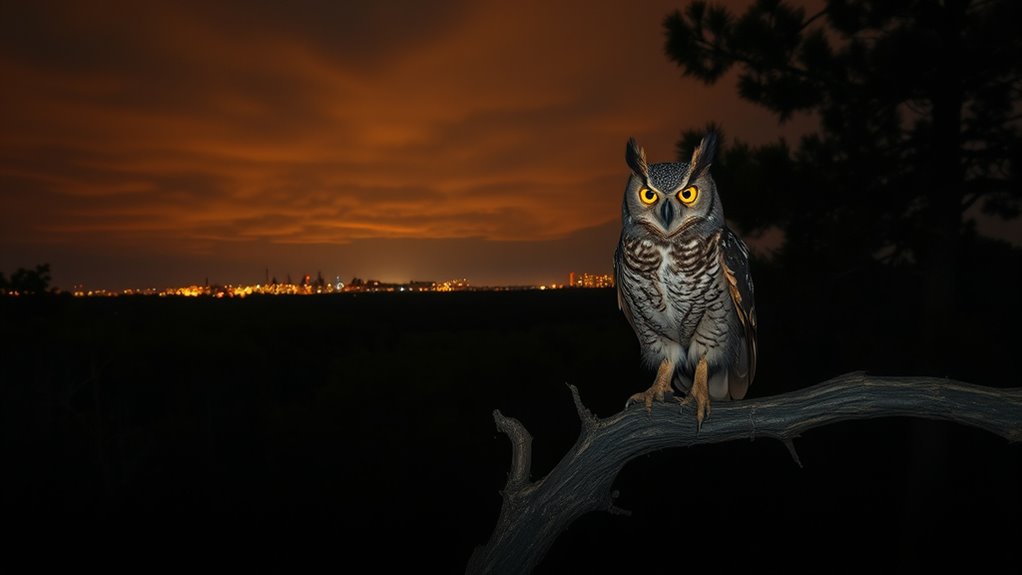
Light pollution from artificial lighting disrupts wildlife by altering natural behaviors, especially for nocturnal animals. It can disorient species like sea turtle hatchlings and migrating birds, making them head away from their habitats or off course. Artificial lights also increase predator risks, reduce insect populations, and disturb ecosystems. These impacts threaten biodiversity and ecosystem balance. To understand how light pollution affects wildlife and what can be done, you just need to continue exploring this important topic.
Key Takeaways
- Artificial lighting disrupts nocturnal animals’ behaviors, increasing predation risk and reducing survival rates.
- Light pollution interferes with animals’ biological clocks, causing disorientation and impacting reproduction and migration.
- Disrupted light cues affect predator-prey relationships and plant pollination by altering insect activity patterns.
- Artificial lights attract insects, reducing their populations and affecting food webs and pollination processes.
- Mitigation measures like reducing outdoor lighting help restore natural behaviors and protect ecosystem health.
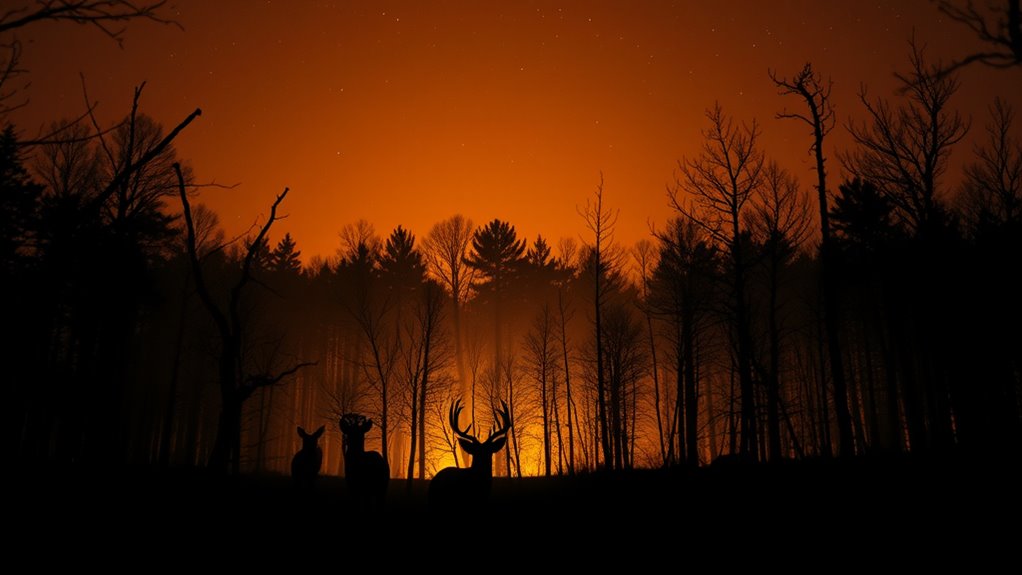
Light pollution is disrupting wildlife behaviors and habitats in ways that often go unnoticed. When artificial lighting spills into natural environments, it doesn’t simply brighten the night; it alters the delicate balance of ecosystems. One of the most affected aspects is artificial lighting effects on nocturnal animal behavior. Many creatures that thrive in darkness rely on the absence of light for survival. When you introduce artificial light into these habitats, it interfere with their natural routines, confusing their instincts and disrupting their daily activities.
For nocturnal animals, darkness is essential. It helps them hunt, avoid predators, and navigate their surroundings. But when artificial lighting brightens the night, it creates a false daytime environment. You might think that a well-lit area is safer, but for nocturnal animals, it often means increased vulnerability. Predators can see better, making prey animals more exposed and less likely to venture out. Conversely, some predators also become more active, taking advantage of the altered environment. This cycle throws off their natural hunting and foraging behaviors, leading to declines in populations or shifts in community dynamics.
Artificial lighting effects don’t just influence animals’ behaviors—they also impact their internal biological clocks. Many nocturnal species depend on light cues to regulate their circadian rhythms. When you interfere with these cues, animals may become disoriented, leading to reduced reproductive success, impaired immune systems, or altered migration patterns. For example, sea turtles hatchlings instinctively head toward the brightest horizon, which is usually the ocean. Bright artificial lights near beaches can lead them inland instead, endangering their survival. Similarly, migrating birds often rely on stars and natural light cues; artificial lighting can disorient them, causing fatal collisions or navigation failures.
The consequences extend beyond individual species. Disrupted nocturnal behaviors ripple through ecosystems, affecting predator-prey relationships and plant pollination cycles. Insects, which are essential pollinators and food sources, are particularly vulnerable. Artificial lighting attracts many insects, causing them to congregate around artificial sources instead of their natural habitats. This not only reduces their chances of survival but also diminishes food availability for other nocturnal animals that depend on insects.
You might not realize it, but your use of artificial lighting can have a profound impact on wildlife. By understanding how artificial lighting effects disturb nocturnal animal behavior, you can make choices that minimize harm. Using shielded lights, reducing unnecessary illumination, and turning off outdoor lights at night are simple steps you can take to help restore the natural rhythms of these creatures. Protecting darkness isn’t just about aesthetics; it’s about safeguarding the intricate web of life that depends on a natural night. Additionally, promoting dark sky initiatives can help reduce light pollution on a broader scale, benefiting ecosystems and human health alike.
Frequently Asked Questions
How Does Light Pollution Affect Plant Growth?
Artificial lighting can disrupt plant development by altering their natural growth cycles. When you expose plants to artificial lighting at night, it can interfere with their photoperiod, affecting flowering and seed production. This disruption may stunt growth or cause premature blooming. You should be aware that excessive or poorly timed artificial lighting hampers healthy plant growth, making it essential to manage light exposure to support ideal plant development.
Are Certain Species More Vulnerable to Light Pollution?
Yes, certain species are more vulnerable to light pollution. Nocturnal animals, for example, rely on darkness for their nocturnal behavior, and sensory disruption from artificial lights can disorient them, making it harder to find food or mates. You might notice these species struggle more in brightly lit areas because their natural behaviors are disrupted, increasing their risk of predation and decreasing their chances of survival.
What Are the Economic Costs of Light Pollution on Wildlife?
You might not realize it, but light pollution has a significant economic impact on wildlife conservation costs. When ecosystems are disrupted, authorities spend more on mitigation efforts and habitat restoration. These increased conservation costs strain budgets and divert resources from other priorities. By reducing light pollution, you help lower these economic costs, ensuring funds are better allocated, and preserving wildlife more effectively. Your actions can make a real difference in protecting biodiversity and managing conservation expenses.
Can Artificial Light Confuse Migratory Animals?
Yes, artificial light can confuse migratory animals. It interferes with their nocturnal navigation, causing disorientation during migration. Bright lights attract and trap them, leading to migration disruption and increased mortality rates. You might notice birds colliding with buildings or failing to reach their destinations. Reducing unnecessary lighting and using wildlife-friendly fixtures can help minimize this confusion, supporting the natural migration paths of these animals.
How Does Light Pollution Influence Predator-Prey Relationships?
Light pollution disrupts predator-prey relationships by impairing nocturnal animals’ behavior. You might notice that predators struggle with predator detection, making it harder to hunt effectively. Conversely, prey animals can become more exposed because artificial light reduces their ability to stay hidden during their nocturnal behavior. This imbalance can lead to shifts in local ecosystems, affecting species survival and overall biodiversity.
Conclusion
As you witness the glow of city lights, remember how it disrupts wildlife’s natural rhythms. You can choose to turn off unnecessary lights, protect dark skies, and support measures that reduce light pollution. By doing so, you help restore natural cycles, preserve ecosystems, and guarantee wildlife’s survival. You have the power to make a difference—by dimming lights, by raising awareness, by acting consciously. Because in darkness, there’s life; in darkness, there’s hope; in darkness, there’s a chance for wildlife to thrive.