Understanding color temperature and white light standards helps you choose lighting that suits your space’s mood, function, and color accuracy. Color temperatures range from warm white (2700K–3000K) for cozy environments to cool white (5000K–6500K) for energizing spaces. High CRI ratings ensure colors appear vibrant and true. Knowing these standards guides you to select energy-efficient, ideal lighting solutions tailored to your needs, so if you want to explore more, you’ll find useful details ahead.
Key Takeaways
- Standard color temperature ranges define warm (2700K–3000K), neutral (3500K–4100K), and cool (5000K–6500K) white light classifications.
- Lighting standards specify minimum CRI values (usually 80 or higher) for accurate color rendering in various environments.
- ANSI and IEC standards establish guidelines for measuring, labeling, and testing color temperature and CRI in lighting products.
- Regulatory requirements may mandate specific color temperature and CRI levels for safety, efficiency, and visual quality in commercial and residential lighting.
- Industry standards help ensure consistency, compatibility, and optimal performance of white light sources across applications.
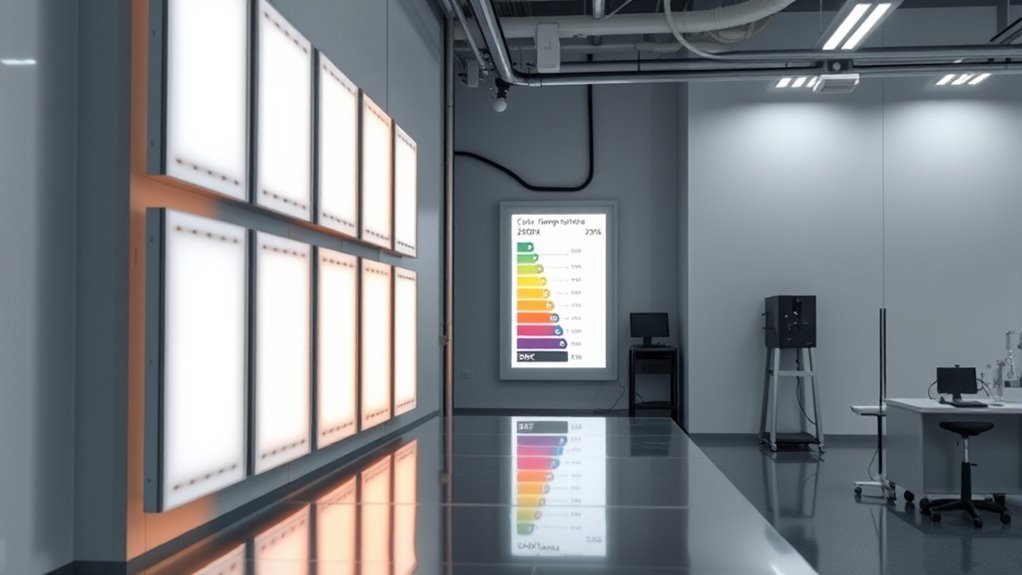
Understanding color temperature is essential when choosing white light sources, as it influences the appearance and mood of a space. When you select lighting, the color temperature determines whether the environment feels warm, cool, or neutral. This choice impacts how colors are perceived and the overall ambiance. For example, warm white light with a lower color temperature (around 2700K to 3000K) creates a cozy, inviting atmosphere, perfect for living rooms or restaurants. In contrast, higher color temperatures (5000K to 6500K) produce a crisp, energizing light suitable for workspaces or task lighting. Recognizing these differences helps you craft spaces that align with their intended function and mood.
In recent years, LED lighting has gained popularity due to its remarkable efficiency and long lifespan. LED lighting efficiency means you get more lumens per watt, which translates into less energy consumption and lower utility bills. Plus, LEDs offer a wide range of color temperatures, allowing you to tailor the light to your needs without sacrificing power or durability. When choosing LEDs, it’s also crucial to consider the color rendering index (CRI), which measures how accurately a light source displays colors compared to natural light. A higher CRI (close to 100) ensures that colors appear vibrant and true to life. This is especially important in settings like retail stores, art galleries, or kitchens, where color accuracy matters. Combining high LED lighting efficiency with a suitable CRI helps you create well-lit spaces that are both energy-efficient and visually appealing.
Understanding color temperature also involves paying attention to how different light sources render colors. Some LED lights, despite being energy-efficient, may have a lower CRI, causing colors to look dull or distorted. Consequently, when selecting white light, look for options that balance efficiency with a high CRI for the best visual experience. Additionally, many LED lights now come with adjustable color temperatures, allowing you to modify the light based on your activities or preferences. This flexibility makes it easier to set the right mood or function for any room, whether you need bright, energizing light for working or softer, warmer tones for relaxation. Moreover, awareness of lighting standards ensures that the light you choose meets safety and quality benchmarks for different environments.
Frequently Asked Questions
How Does Color Temperature Affect Human Circadian Rhythms?
Higher color temperatures, like cool white light, can suppress melatonin production, making you feel more alert and awake. Conversely, lower temperatures, such as warm light, promote melatonin release, helping you wind down and prepare for sleep. By adjusting light’s color temperature, you influence your circadian rhythms, either enhancing alertness during the day or supporting relaxation at night. This control can improve your overall sleep and daytime functioning.
Are There Health Risks Associated With Specific White Light Standards?
Like a knight in shining armor, safety regulations aim to protect you from health risks. Specific white light standards can pose health implications if not properly governed, such as eye strain or disruption of circadian rhythms. While generally safe, prolonged exposure to certain light types may increase risks. Always follow safety guidelines to minimize health risks and guarantee your well-being when using artificial lighting.
How Do LED Lights Compare to Incandescent in Color Temperature Accuracy?
LED lights generally offer better color temperature accuracy than incandescent bulbs, which tend to have inconsistent color output over time. You’ll notice that LEDs provide more precise and stable color temperature, making them ideal for tasks requiring accurate color rendering. Incandescent bulbs, on the other hand, have less consistency, often shifting in color temperature as they age. So, if accuracy matters, LEDs are the smarter choice for reliable lighting.
What Industries Prioritize Specific White Light Standards for Safety?
You should know that industries like manufacturing, healthcare, and transportation prioritize specific white light standards for safety. They use precise color temperature and white light standards to guarantee clear visibility, reduce errors, and maintain industrial safety. Proper lighting also supports color coding, helping workers quickly identify hazards or equipment. By adhering to these standards, your work environment stays safe, efficient, and compliant with safety regulations.
Can Color Temperature Influence Mood or Productivity in Workspaces?
You might think color temperature doesn’t impact mood or productivity, but it truly can. When you choose warmer tones, you create a cozy ambient ambiance that promotes relaxation, while cooler tones enhance visual comfort and alertness. Adjusting color temperature strategically can boost focus and energy levels in workspaces, making your environment more conducive to productivity. So, yes, the right lighting can markedly influence how you feel and perform.
Conclusion
Think of white light standards as the map guiding you through a world of colors, where each color temperature paints a different mood. Just like a lighthouse guides ships safely home, understanding these standards helps you choose the perfect light for every space. When you grasp the nuances of color temperature, you navigate lighting choices with confidence, transforming your environment into a vibrant, harmonious landscape. Embrace these standards, and let your space shine with clarity and purpose.