
Lab color space is a perceptual model designed to represent colors in a way that matches how humans see them. It is device-independent, meaning it maintains consistent color representation across different screens and printing methods. By quantifying color differences through metrics like ΔE, it helps you match and compare colors accurately. Understanding Lab can enhance your color adjustments and ensure your colors remain true across various media—continue exploring to learn more about this essential color tool.
Key Takeaways
- Lab color space is designed to be device-independent and reflects human color perception for consistent color representation.
- It translates colors into a standardized, perceptually uniform space that bridges differences between various device color interpretations.
- Color difference metrics like ΔE use Lab values to quantify perceptible differences between colors accurately.
- Lab serves as a universal language for precise color communication across digital, print, and fabric media.
- Its use improves color matching, quality control, and ensures high fidelity and consistency in color reproduction.
Have you ever wondered how colors are accurately represented across different devices and mediums? It’s a common curiosity, especially when you notice that a shade of blue looks vibrant on your phone but dull on your computer monitor. This inconsistency arises because each device interprets color differently, making color management a complex challenge. That’s where the Lab color space comes into play, offering a perceptual model designed to bridge these gaps. Unlike traditional RGB or CMYK systems, Lab is built to be device-independent, meaning it aims to represent colors according to how humans perceive them rather than how devices produce them. This feature makes Lab a powerful tool for ensuring color consistency across various platforms and media.
At the core of Lab’s effectiveness are color difference metrics, which quantify how perceptibly different two colors are. These metrics are essential because they allow you to measure and compare colors in a way that aligns with human vision. Instead of relying solely on numerical differences that might be misleading—like a small numerical gap that looks significant to your eye—the color difference metrics in Lab help you understand how noticeable a change will be to someone viewing the color. For instance, the ΔE (delta E) value is a widely used metric that indicates the perceived difference between two colors; a smaller ΔE means the colors look almost identical, while a larger one signals a more obvious difference. This approach enables precise color matching, which is fundamental in industries like printing, photography, and manufacturing, where color fidelity is paramount.
Because Lab is designed to be device-independent, it serves as a universal language for color communication. Whether you’re working with digital images, printed materials, or even fabric dyes, Lab provides a consistent framework that transcends device-specific color spaces. This means that when you convert colors from RGB to Lab, you’re translating them into a perceptual space that reflects human vision more accurately. Additionally, understanding the regional differences in divorce rates can be crucial for businesses and service providers aiming to tailor their offerings or communications to specific demographics, similar to how color management adapts to different media. As a result, color adjustments, comparisons, and quality control become more reliable and meaningful. You don’t have to worry about the quirks and limitations of individual devices skewing your perception of color; instead, you work within a standardized, perceptually uniform space. Overall, Lab color space streamlines color management, making it easier for you to achieve consistent, accurate colors across any medium or device.
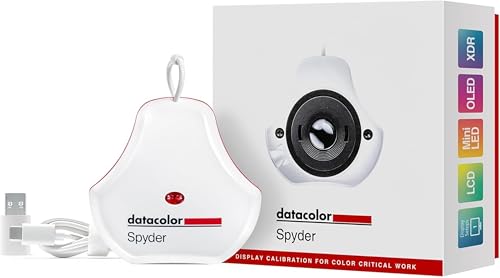
datacolor Spyder – Monitor Calibrator for Graphic Designers, Photographers, and Content Creators, Shows You True Colors, Works on OLED Monitors & LED Screens, Easy-to-Use Color Calibration Tool
Color “Surprises” Are a Thing of the Past: Datacolor’s exclusive DevicePreview TM Beta feature simulates what your photos…
As an affiliate, we earn on qualifying purchases.
As an affiliate, we earn on qualifying purchases.
Frequently Asked Questions
How Does Lab Compare to Other Color Models Like RGB or CMYK?
You’ll find Lab color space offers a wider color gamut and better perceptual uniformity than RGB or CMYK. Unlike RGB, which is device-dependent, Lab models colors based on human vision, making it easier to match colors accurately across devices. CMYK is limited for printing, but Lab helps guarantee consistent colors in digital and print. Overall, Lab is ideal for precise color communication and editing.
Can Lab Color Space Be Used for Real-Time Image Processing?
You can use Lab color space for real-time image processing, but it depends on your hardware and the task’s complexity. While Lab offers excellent perceptual accuracy, its computational efficiency isn’t as high as RGB or YUV, making it challenging for some real-time applications. Hardware implementation can speed things up, especially with GPUs or specialized processors, allowing you to leverage Lab’s advantages without sacrificing performance.
What Are Common Applications of Lab in Digital Imaging?
You can use Lab color space for digital imaging in applications like color correction and feature extraction. Its perceptual uniformity helps you accurately adjust colors, ensuring natural-looking results. Additionally, Lab makes it easier to extract features based on color differences, which is useful in object recognition and image segmentation. By leveraging Lab’s capabilities, you enhance image quality and analysis, making your digital imaging projects more precise and effective.
How Does Lab Account for Human Color Perception Differences?
You might think all colors look the same to everyone, but Lab accounts for human perception differences by emphasizing perceptual uniformity, meaning equal color differences in Lab appear equally noticeable to the eye. This way, it models how we perceive color differences, making color comparisons more accurate. By focusing on perceptual uniformity, Lab helps guarantee that color differences reflect what humans actually see, improving digital imaging and color matching.
Are There Limitations or Challenges in Using Lab Color Space?
You may encounter limitations with Lab color space, such as color gamut limitations, meaning it can’t represent all colors within certain devices or displays. Additionally, it involves computational complexity, making color conversions and processing more resource-intensive. These challenges can affect color accuracy and efficiency, especially in real-time applications. Despite its perceptual advantages, you should consider these factors when using Lab for color management tasks.

Photoshop LAB Color: The Canyon Conundrum and Other Adventures in the Most Powerful Colorspace
As an affiliate, we earn on qualifying purchases.
As an affiliate, we earn on qualifying purchases.
Conclusion
You now hold the key to understanding how Lab color space paints a vivid picture of perception. Like a master artist blending hues seamlessly, it bridges the gap between human vision and digital color, making images more true to life. Embrace this perceptual model, and watch your digital worlds come alive with richer, more accurate colors—transforming simple pixels into a stunning symphony of visual harmony that resonates with your senses.

Handheld Color Analyzer Digital Precise Colorimeter WR10QC Precision Color Difference Meter Tester Portable Colorimeter with 4mm Aperture for Color Checking
· Hand-held colorimeter WR10QC is the high-precision basic version colorimeter, serially developed according to the measuring requirements on…
As an affiliate, we earn on qualifying purchases.
As an affiliate, we earn on qualifying purchases.

Understanding Color Management (The Wiley-IS&T Series in Imaging Science and Technology)
As an affiliate, we earn on qualifying purchases.
As an affiliate, we earn on qualifying purchases.