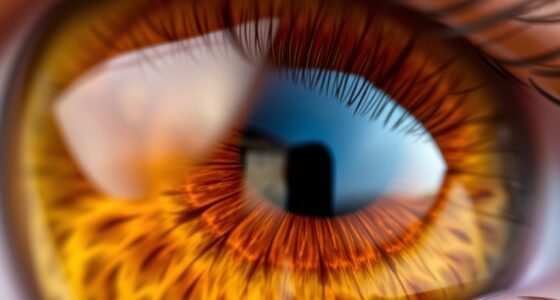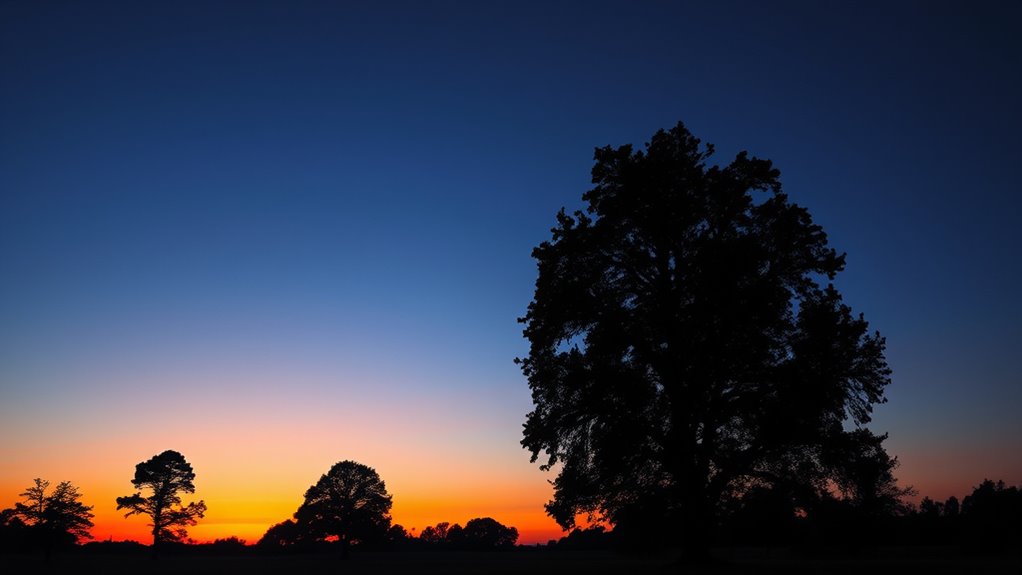

The Purkinje Effect explains why colors shift as daylight fades at dusk. As light diminishes, your eyes switch from cone cells to rod cells, making your vision more sensitive to blue and green hues. Warm colors like red and orange fade or appear dull, while cooler shades stand out more clearly. This natural change helps your eyes adapt to low light. To discover how this phenomenon influences what you see in the dark, keep exploring the details.

Get the latest gadgets delivered free with Prime
- Fast, free delivery on millions of items
- Prime Video, Amazon Music and more included
- Member-only deals all year
Key Takeaways
- The Purkinje Effect describes how red and yellow colors fade while blue and green hues become more prominent at dusk.
- It occurs because the eye’s sensitivity shifts from cone cells to rod cells, which are more responsive to blue-green light.
- As light diminishes, our visual system prioritizes brightness and contrast over color detail, altering perceived colors.
- The effect explains why objects with warm colors appear duller or darker in low-light conditions.
- This phenomenon helps improve night vision by emphasizing cooler hues and reducing reliance on less sensitive warm colors.
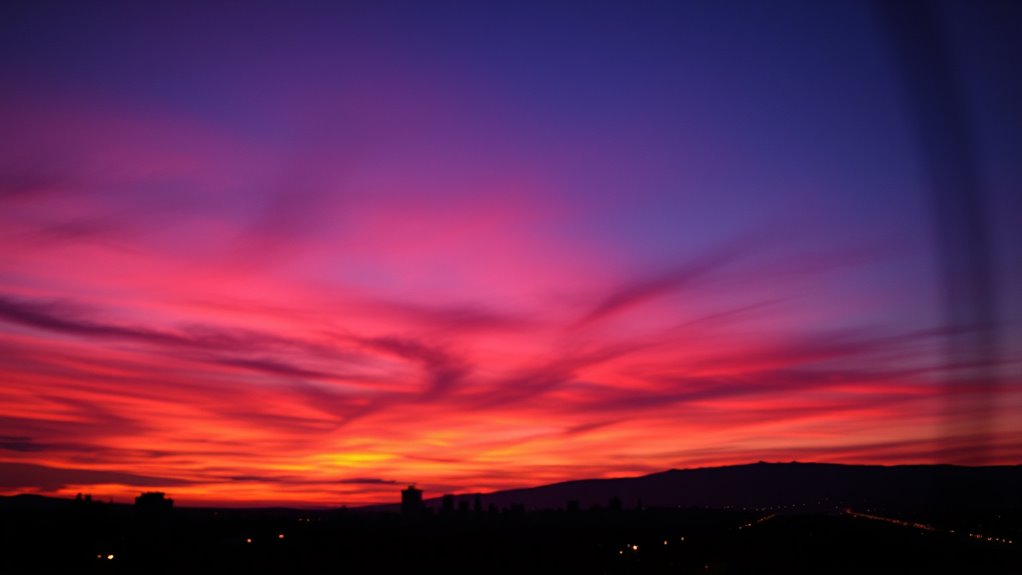
The Purkinje Effect explains why colors appear different under low light conditions, especially during twilight or nighttime. As you shift from daylight into darkness, your visual perception shifts, making some colors seem more vivid while others fade into the background. This phenomenon directly impacts your night vision, highlighting how your eyes adapt when light levels drop. When the sun sets and the world darkens, your eyes rely more heavily on rod cells than cone cells. Rods are highly sensitive to light but don’t detect color, which is why your perception of color changes during these moments. Bright, saturated colors like reds and yellows become less prominent, while cooler hues like blues and greens seem more noticeable. This change helps your brain interpret the environment more effectively when illumination is limited.
You might notice that in dim settings, objects that once appeared vibrant now look dull or washed out. For example, a bright red apple might appear more muted under moonlight, while a dark blue shirt might stand out more clearly. This is because your visual perception adapts to prioritize contrast and brightness over color details. The Purkinje Effect fundamentally causes a redistribution of color sensitivity, favoring the blue-green spectrum, which is more easily detected by your rods. As a result, your night vision becomes more attuned to shades of blue and green, but less responsive to warm colors like red and orange. This is why pilots, astronomers, and anyone working in low-light environments notice a difference in how they see colors once the sun dips below the horizon.
Furthermore, advances in understanding AI vision systems are helping researchers develop technology that mimics this natural adaptation, potentially improving low-light image processing.
Understanding the Purkinje Effect can help you better interpret what you see at dusk or in dark settings. It’s not that your eyes are failing; instead, your visual system is dynamically adjusting to optimize your night vision. This adjustment is fundamentally important for survival, allowing you to detect movement and contrast in conditions where color perception is limited. When you walk outside at night, you might find that familiar objects look different because your brain is interpreting visual cues differently. Recognizing this shift can improve your awareness and prevent misjudgments in low-light situations. In essence, the Purkinje Effect highlights the remarkable adaptability of your eyes and brain, ensuring you can navigate and perceive your environment even when lighting isn’t ideal.
As an affiliate, we earn on qualifying purchases.
Frequently Asked Questions
How Does the Purkinje Effect Impact Night Vision?
The Purkinje effect enhances your night vision by shifting your color sensitivity toward blue and green hues when it gets dark. As your eyes adapt visually, you’ll notice brighter reds fade, but blues and greens stand out more clearly. This adaptation helps you see better in low-light conditions, making it easier to spot objects and navigate in darkness by prioritizing colors your eyes are more sensitive to during nighttime.
Can the Purkinje Effect Influence How Animals Perceive Colors at Dusk?
Yes, the Purkinje effect influences how you perceive colors at dusk, especially in animals with nocturnal vision. As light diminishes, they see brighter, more luminous colors like yellows and greens more clearly, while reds fade. This shift helps nocturnal animals detect movement and objects in low light, optimizing their color perception for survival. So, at dusk, their vision adapts, emphasizing different hues than during the day.
Are There Any Practical Applications of Understanding the Purkinje Effect?
Understanding the Purkinje effect helps you improve color perception in low-light conditions, which is vital for lighting design. You can create environments that enhance visibility and safety by choosing colors that appear more vivid at dusk or night. This knowledge allows you to optimize lighting schemes for settings like theaters, outdoor spaces, and signage, ensuring that colors remain distinguishable even when natural light diminishes, making your designs more effective and user-friendly.
How Does Age Affect the Perception of Colors During Dusk?
As you age, your age-related vision changes impact how you perceive colors during dusk. You might notice colors become less vibrant and more challenging to distinguish, especially reds and greens. These shifts occur because your eyes’ ability to adapt to low light diminishes, affecting color perception. Understanding this helps you appreciate how age influences your visual experience at dusk, highlighting the importance of proper lighting and vision care for older adults.
Does the Purkinje Effect Vary Across Different Human Populations?
You’d find that the Purkinje effect varies across populations due to genetic differences affecting color perception. Some groups may perceive color shifts more vividly, influenced by their genetic makeup. Cultural perceptions also shape how you interpret these changes, making the experience feel different depending on your background. So, both genetics and culture influence how you perceive the Purkinje effect, highlighting the diversity in human visual experience during dusk.
As an affiliate, we earn on qualifying purchases.
Conclusion
As dusk falls, your eyes become painters blending shades from day to night, guided by the Purkinje Effect. Colors shift like a sunset melting into twilight, revealing how your vision adapts to changing light. Understanding this phenomenon helps you see beyond what’s obvious, like a secret language of the fading day. So next time you notice colors deepening or fading, remember, your eyes are performing a silent dance, painting the world in hues only they can truly understand.
As an affiliate, we earn on qualifying purchases.
As an affiliate, we earn on qualifying purchases.
Halloween Picks
halloween
As an affiliate, we earn on qualifying purchases.